Artwork
Marsh Hawk
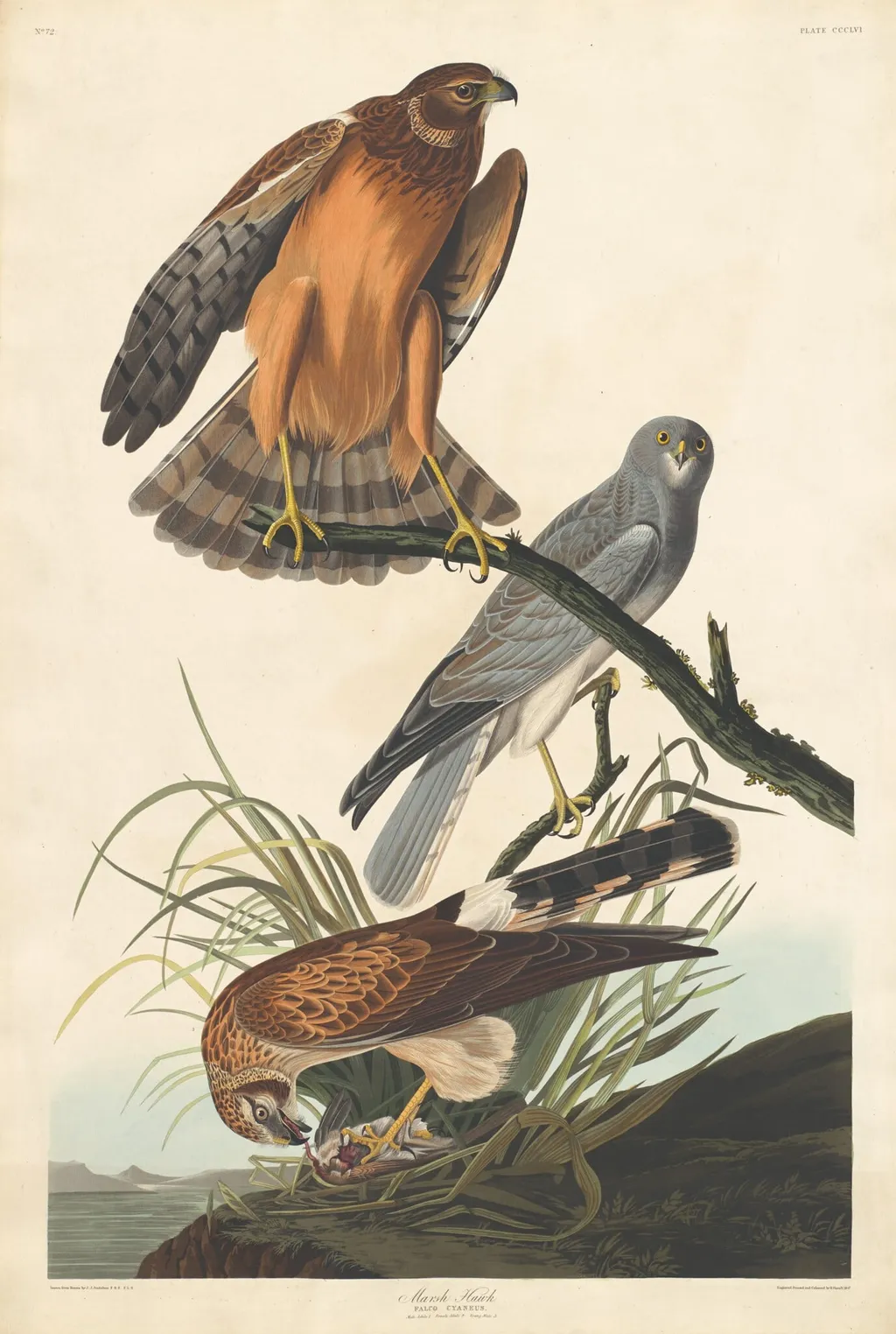
Marsh Hawk is an ink print by the Romanticist artist Robert Havell Jr.. It dates from 1837 and is held in the collection of the National Gallery of Art.
About this work
Overview
Produced within a family of skilled engravers, the work exemplifies the period’s commitment to documenting wildlife with scientific accuracy.
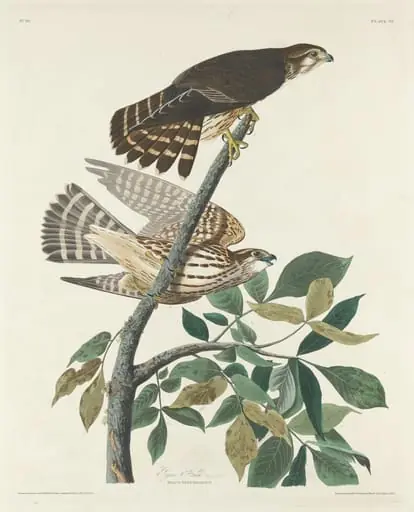
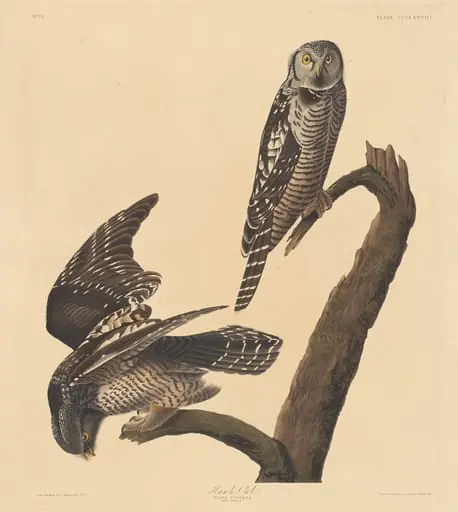
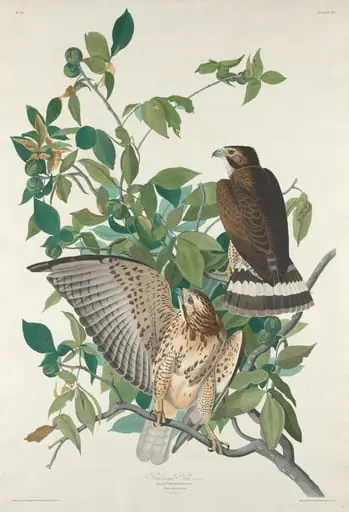
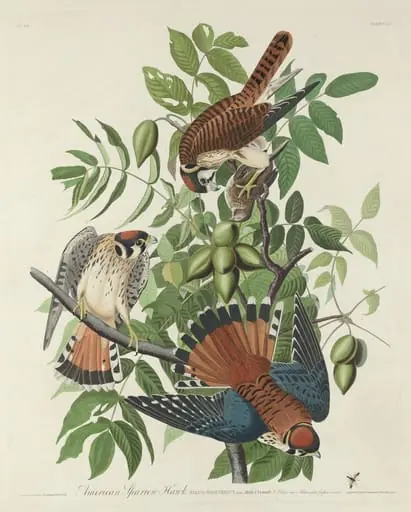
Robert Havell Jr.’s 1837 print, Marsh Hawk, is a hand-colored engraving and aquatint on Whatman wove paper, reflecting the technical precision of 19th-century natural history illustration. Produced within a family of skilled engravers, the work exemplifies the period’s commitment to documenting wildlife with scientific accuracy. The choice of paper and color application aligns with contemporary standards for high-quality ornithological prints.
Subject & Meaning
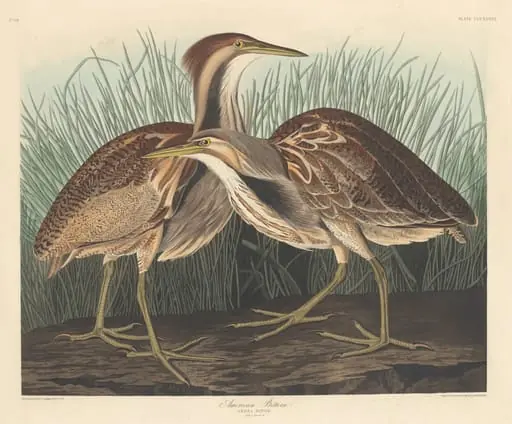
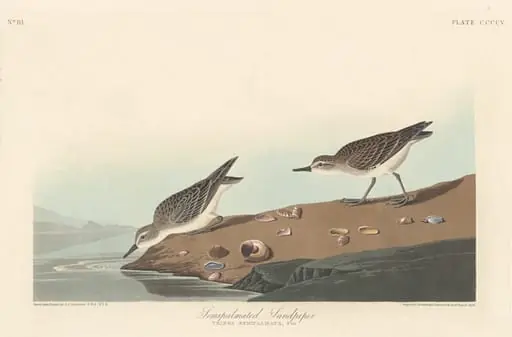
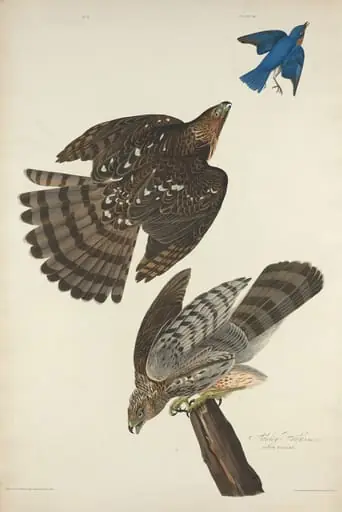
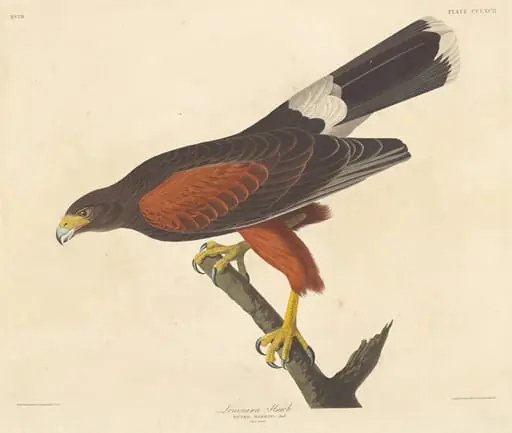
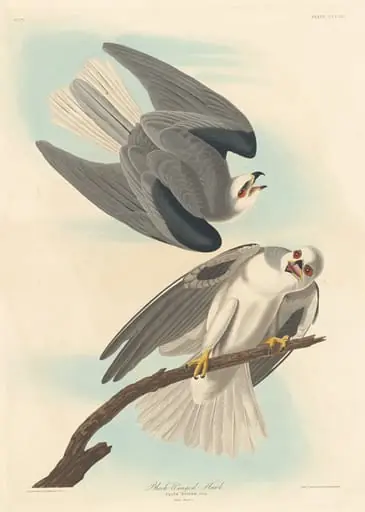
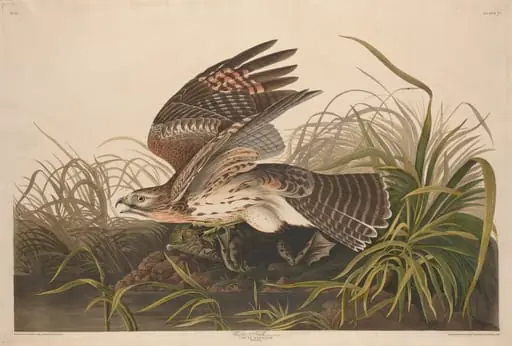
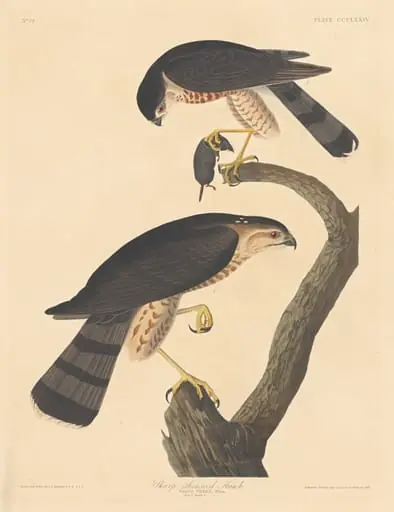
The image depicts three marsh hawks in dynamic interaction within a wetland environment. One bird rests on a branch, another glides overhead, and a third is captured mid-hunt, talons gripping prey. The scene conveys the predator’s role in its ecosystem without anthropomorphism, emphasizing natural behavior over dramatic narrative. The setting—tall grasses and distant water—anchors the birds in a specific habitat, reinforcing observational fidelity.
Technique & Style
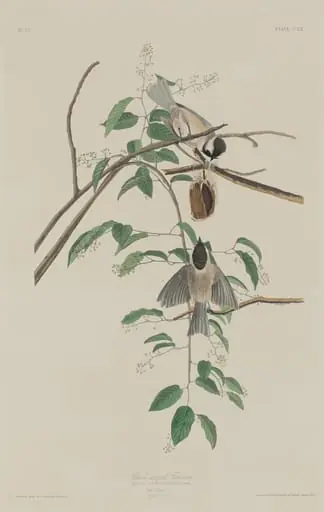
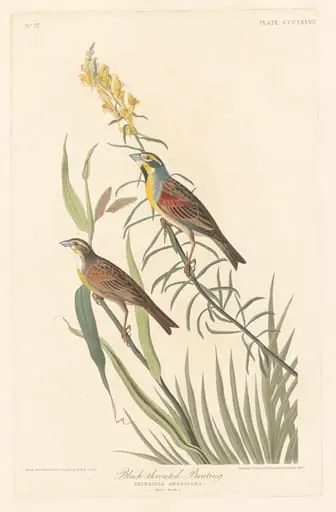
Havell employed fine-line engraving and aquatint to render intricate feather textures and vegetative detail. Cross-hatching and controlled ink tones create depth and volume, while hand-coloring adds subtle realism to plumage and landscape. The method prioritizes clarity and anatomical precision, typical of scientific illustrations produced for naturalists and collectors. The composition avoids idealization, favoring observed movement and spatial relationships.
History & Provenance
Robert Havell Jr. was part of a multi-generational family of English engravers based in Reading, Berkshire, known for their work on natural history publications. His prints often accompanied major scientific projects, including those linked to the British colonial interest in global fauna. This piece likely originated as part of a larger series, though its specific publication context remains undocumented. The use of Whatman paper confirms its place in the premium print market of the era.
Context
Created during a period of expanding natural science inquiry, the print reflects growing public and academic interest in accurate wildlife representation. European artists increasingly collaborated with naturalists to produce detailed imagery for educational and archival purposes. Havell’s work aligns with contemporaries like John James Audubon, though his style is more restrained, emphasizing technical execution over theatrical presentation.
Legacy
Marsh Hawk stands as an example of the transition from artistic interpretation to empirical documentation in ornithological illustration. While not widely exhibited today, it contributes to the historical record of how natural history was visually communicated before photography. Its survival in institutional collections underscores its value as a specimen of 19th-century printmaking craft and ecological observation.
Artist & collection

Artist
The Havell family of Reading, Berkshire, England, included a number of notable engravers, etchers and painters, as well as writers, publishers, educators, and musicians.