Artwork
Untitled
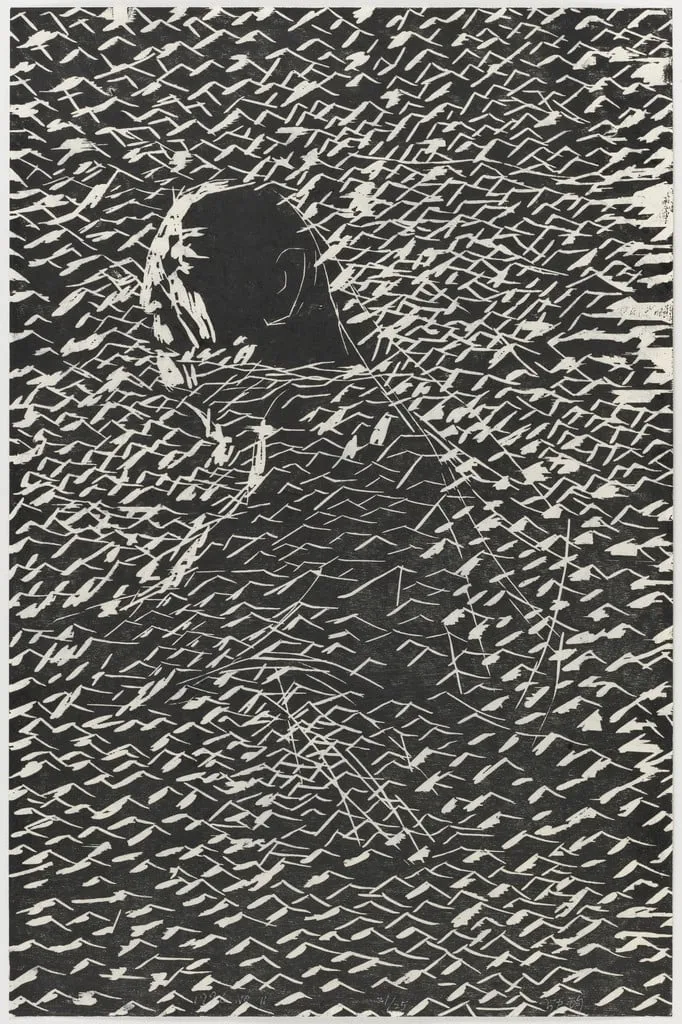
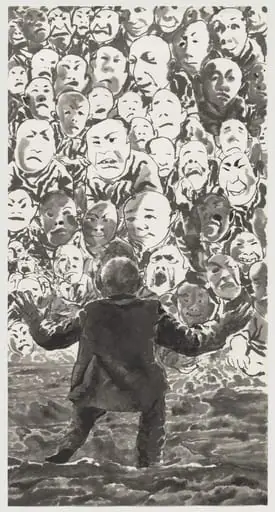
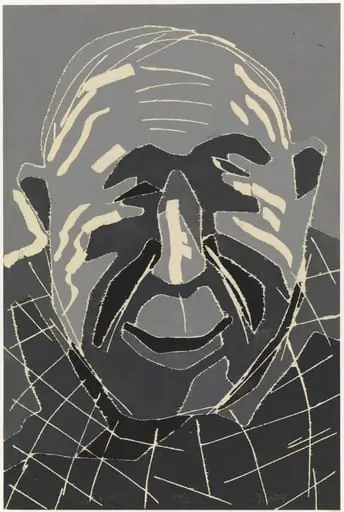
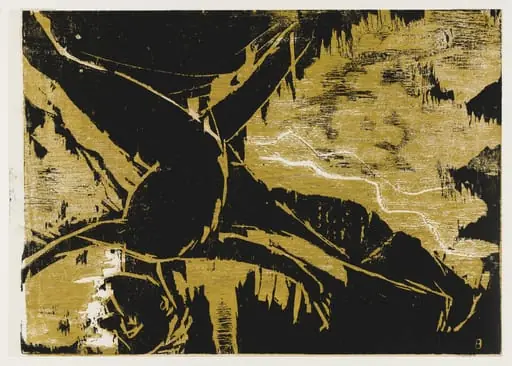
Untitled is an ink print by Fang Lijun. It dates from 1996 and is held in the collection of the Museum of Modern Art.
About this work
In the center, a rough circle has a face inside—just eyes, a nose, and a mouth drawn in simple lines.
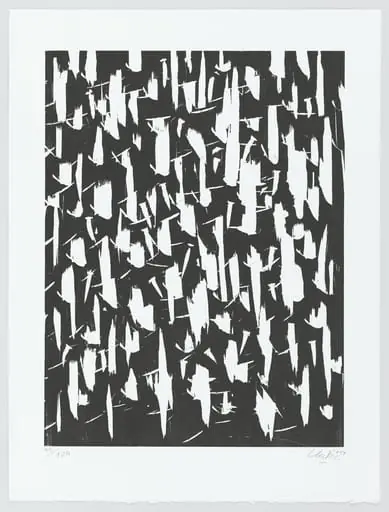
This picture shows a black background covered in sharp, white zigzag lines. In the center, a rough circle has a face inside—just eyes, a nose, and a mouth drawn in simple lines. The lines outside the circle look like they’re all pointing away from it.
The artist used a woodcut method, where lines are carved into wood and then inked. This piece is part of a set of five prints made in 1996.
Next, check out woodcut to see how this technique works.
Overview
Untitled (1996) is a series of five woodcut prints by Beijing-based artist Fang Lijun, created during a pivotal period of cultural and social transformation in China.
Subject & Meaning
The central image features a simplified face (eyes, nose, mouth) enclosed in a rough circle, surrounded by sharp, white zigzag lines on a black background, radiating outward. This composition may symbolize the artist's perspective on individual identity amidst turmoil.
Technique & Style
Executed using the woodcut method, the work showcases bold, expressive lines carved into wood and inked. The stark contrast between black and white enhances the graphic intensity characteristic of Fang Lijun's Cynical Realism affiliation.
History & Provenance
Created in 1996, the series is now part of The Museum of Modern Art's collection, reflecting its significance within contemporary Chinese art movements of the 1990s.
Context
Emerging from the Cynical Realism movement, this work reflects Fang Lijun's experience of China's rapid social and cultural changes in the 1990s, offering a visual commentary on the individual's place within this landscape.
Artist & collection
Artist
Fang Lijun (Chinese: 方力钧; born 1963) is a Chinese artist based in Beijing. He was born into a wealthy family with a high social status. In the 1990s, there was a cultural movement in China referred to as Cynical Realism…