Artwork
H Beard Print Collection
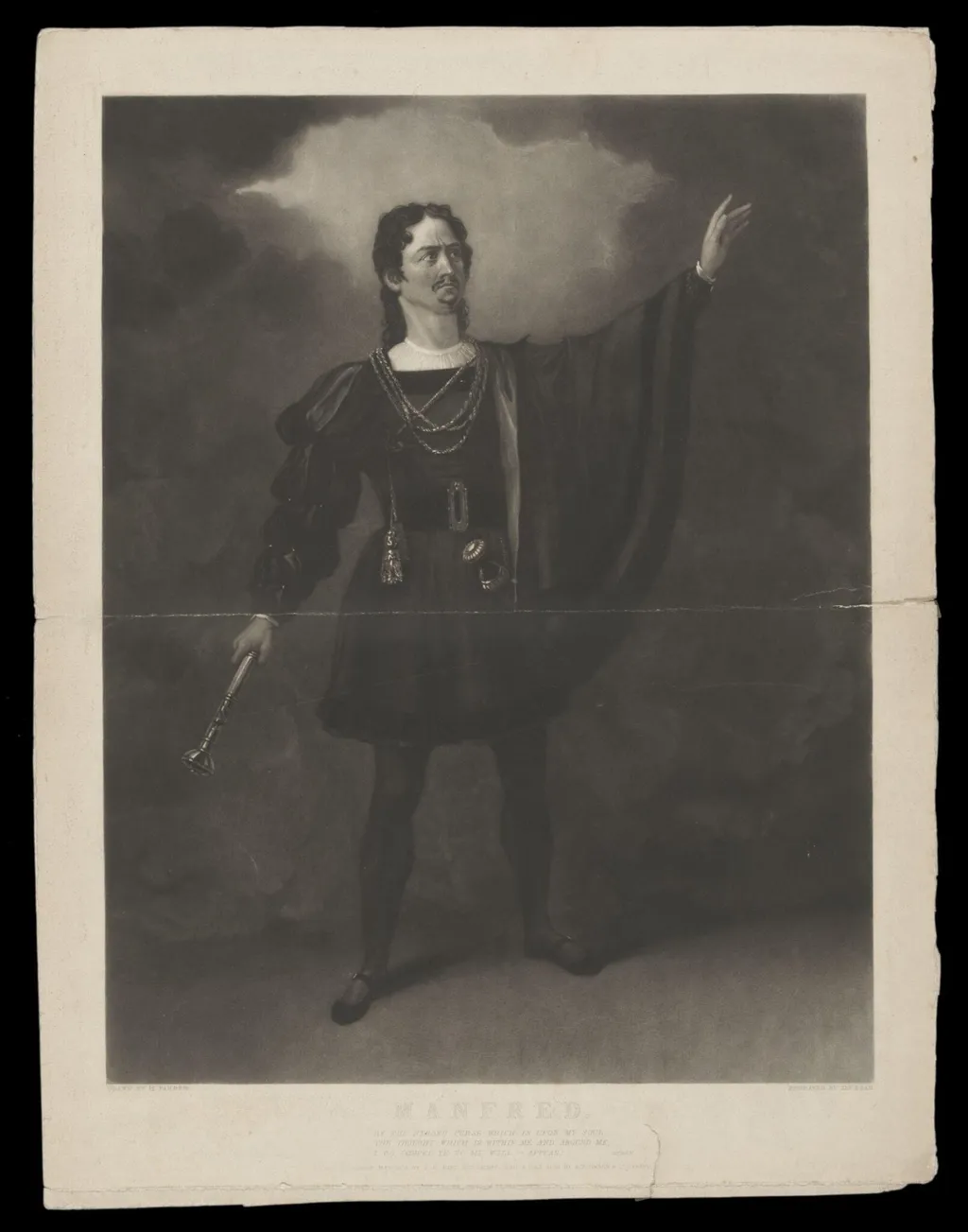
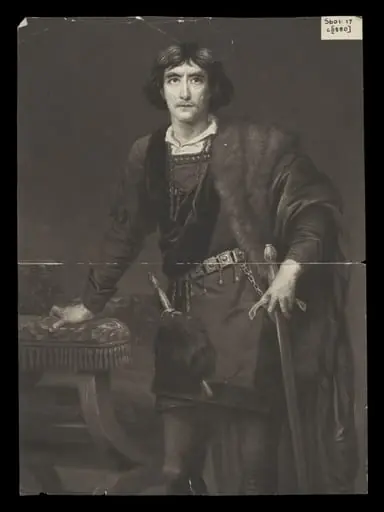
H Beard Print Collection is a print by the Romanticist artist H. Farrer. It dates from 1835 and is held in the collection of the Victoria and Albert Museum. This 1835 print depicts Manfred, the brooding protagonist of Lord Byron’s dramatic poem, rendered in the visual language of Romanticism.
About this work
The print belongs to the Romantic movement, which often focused on dramatic emotion and individual heroes.
This print shows a romantic portrait of Manfred, a character from Lord Byron’s poem. It was made by H. Farrer in 1835 and printed in London. The image was published and sold by two well-known London firms at the time.
The print belongs to the Romantic movement, which often focused on dramatic emotion and individual heroes. It’s part of a larger collection at the Victoria and Albert Museum.
Look up the artist H. Farrer next.
Overview
This 1835 print depicts Manfred, the brooding protagonist of Lord Byron’s dramatic poem, rendered in the visual language of Romanticism. Produced by H. Farrer and published in London by B. B. King, with distribution handled by Ackermann & Co., it was part of a broader cultural engagement with Byron’s literary figures. The work resides today in the H. Beard Print Collection at the Victoria and Albert Museum.
Subject & Meaning
Manfred, a tormented nobleman haunted by guilt and isolation, embodies the Romantic ideal of the solitary, introspective hero. The print captures his psychological depth through somber expression and dramatic posture, reflecting Byron’s exploration of inner turmoil, moral ambiguity, and the limits of human redemption. His portrayal avoids literal narrative, instead emphasizing emotional resonance over plot.
Technique & Style
Executed as a line engraving, the image relies on fine, controlled strokes to model form and shadow, characteristic of mid-19th-century book illustration. The composition is tightly framed, focusing on Manfred’s figure against a minimal background, heightening the sense of introspection. The tonal range is restrained, aligning with the subdued mood of the literary source and the era’s preference for emotional restraint in visual form.
History & Provenance
Printed and distributed by two prominent London publishers of the period, the work was intended for a literate middle-class audience familiar with Byron’s poetry. Its inclusion in the H. Beard Print Collection, now held by the Victoria and Albert Museum, reflects its status as a cultural artifact of literary illustration. The print’s survival underscores the popularity of illustrated literary characters in Victorian domestic spaces.
Context
Produced during the height of Byron’s posthumous influence, the print responds to a surge in illustrated editions of his works. Romanticism’s emphasis on individual emotion and sublime suffering found visual expression in such prints, which bridged literature and popular visual culture. Similar images of literary figures circulated widely, reinforcing national literary identity through accessible imagery.
Legacy
Though not widely attributed to a major artist, the print remains a representative example of how Romantic literature was visually interpreted in the 1830s. It contributes to the historical record of how poetry was consumed beyond the page, shaping public perception of literary characters through standardized imagery. Its preservation allows ongoing study of the intersection between print media and literary reception.
Artist & collection
Artist
H. Farrer made prints in early 19th-century Britain. They carved detailed scenes into metal plates and inked them onto paper—like the H Beard Print Collection from May 1835, a crisp snapshot of city life. These prints…

 H Beard Print Collection
 H Beard Print Collection
 H Beard Print Collection
 Print Collection
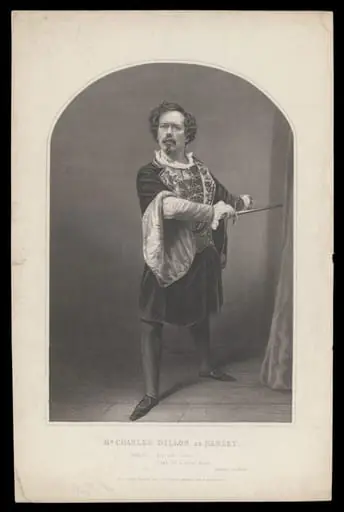
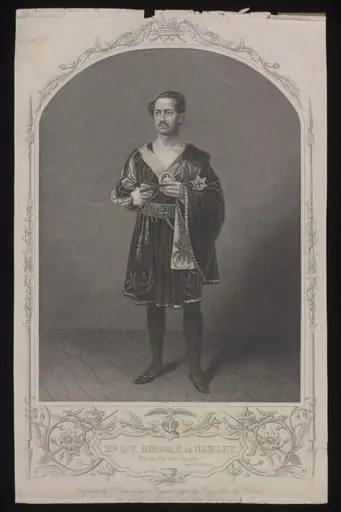 Mr G.V. Brooke as Hamlet
 H Beard Print Collection
 H Beard Print Collection
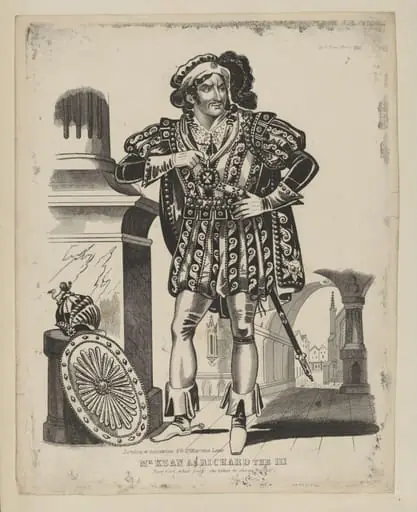 H Beard Print Collection
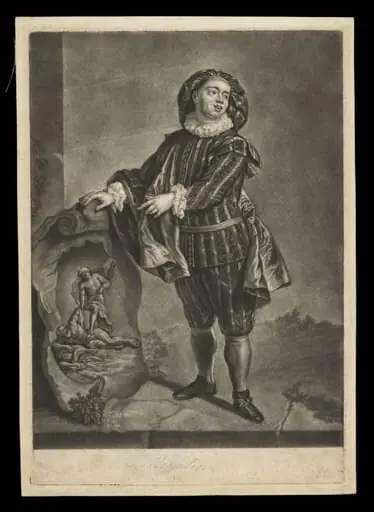 H Beard Print Collection
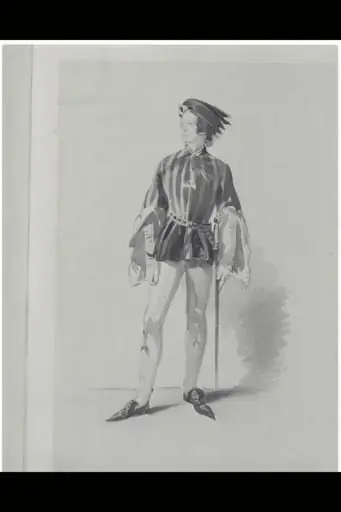 Captain the Hon. Arthur Duncombe, R.N., as a nobleman of the 14th century
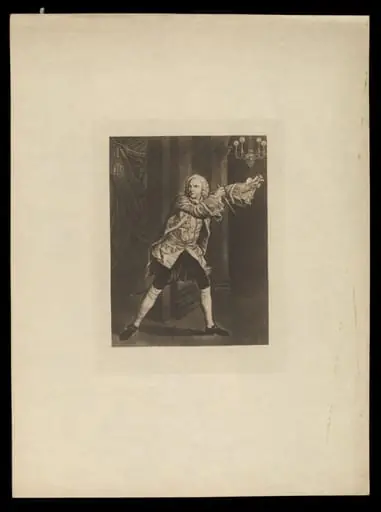 H Beard Print Collection
 Harry Beard Print Collection