Artwork
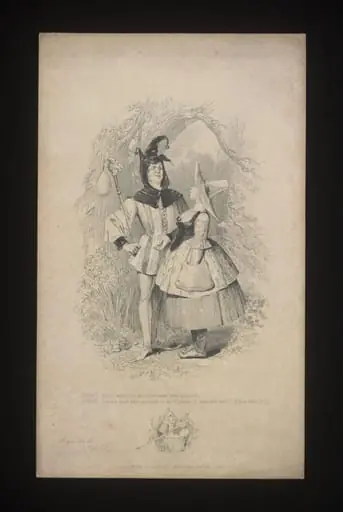
Captain the Hon. Arthur Duncombe, R.N., as a nobleman of the 14th century
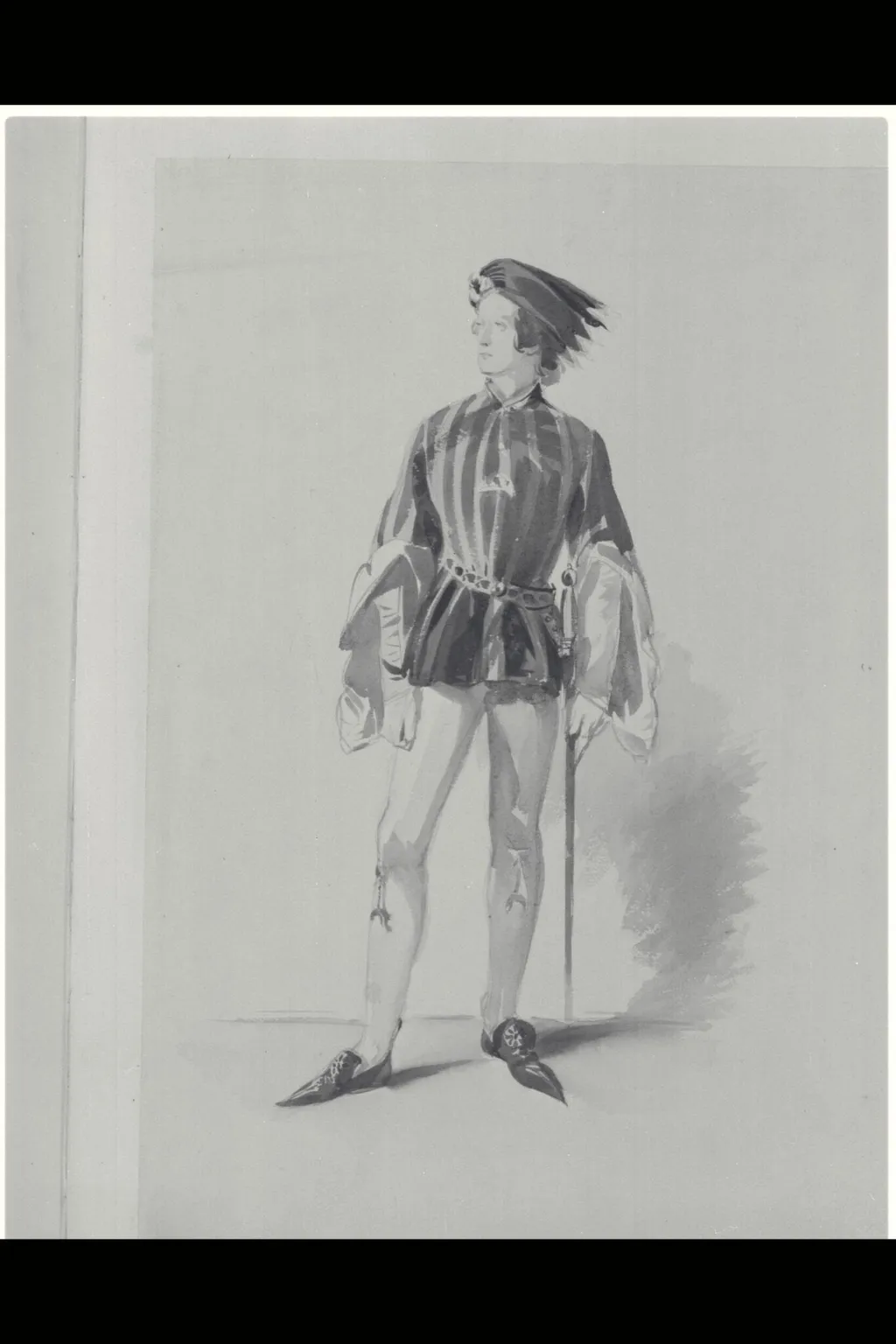
Captain the Hon. Arthur Duncombe, R.N., as a nobleman of the 14th century is a watercolor drawing by the Romanticist artist Coke Smyth. It dates from 1842 and is held in the collection of the Victoria and Albert Museum.
About this work
The artist dressed him up to look like someone from the past, even though this was drawn in 1842.
This drawing shows a man dressed like a knight from the 1300s. He’s wearing a black hat, a dark tunic with white sleeves, and tight black pants. One hand rests on his belt, and he’s holding a folded cloth in the other. His shoes are simple and dark, and the background is just a plain, light gray.
The artist dressed him up to look like someone from the past, even though this was drawn in 1842. The loose, sketchy lines make it feel quick and lively, not stiff.
Look up Coke Smyth to see more of his playful, historical drawings.
Overview
This watercolour drawing, created in 1842 by Coke Smyth, is a portrait of Captain the Hon. Arthur Duncombe dressed as a 14th-century nobleman. It is one of 40 costume drawings from a masked ball at Buckingham Palace.
Subject & Meaning
The subject is depicted in attire reminiscent of a medieval knight, with a black hat, dark tunic, and tight black pants. The drawing captures a moment from a historical costume event, showcasing the dress of a bygone era.
Technique & Style
The loose, sketchy lines and watercolour medium give the drawing a sense of spontaneity and liveliness. Smyth's style is characterized by a playful approach to historical representation, evident in the quick and expressive rendering of the subject.
History & Provenance
The drawing is part of an album commissioned by Queen Victoria, comprising 42 pages of watercolour drawings bound in red morocco. The album was acquired in 1940, and the drawings document the costumes worn at the masked ball held on May 12, 1842.
Artist & collection

Artist
John Richard Coke Smyth (1808–1882) was a British artist and traveller. Smyth produced a few collections of prints from his travels. A few works arose out of a visit to Constantinople where he collaborated with the…

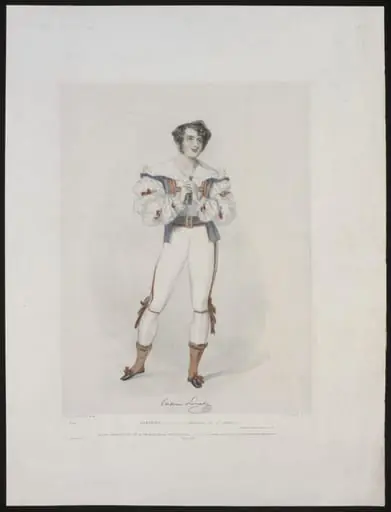 H Beard Print Collection
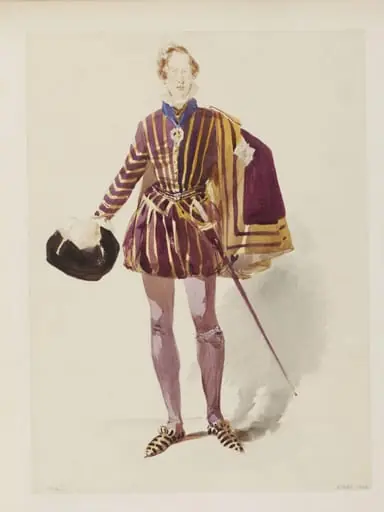 The Duke of Devonshire as an Elizabethan nobleman, c.1600
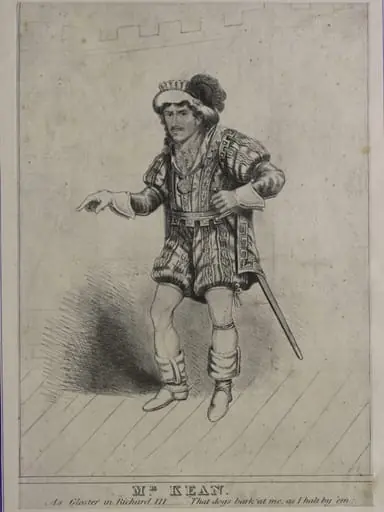 H Beard Print Collection
 H Beard Print Collection
 Untitled
 H Beard Print Collection
 H Beard Print Collection
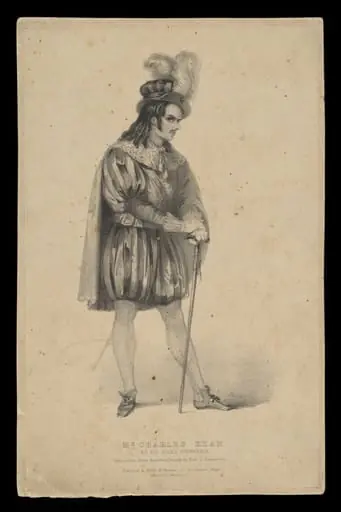 H Beard Print Collection
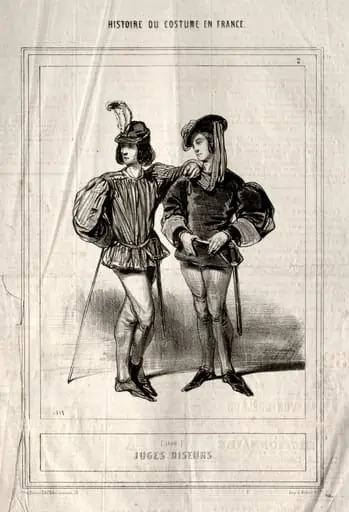 Histoire du Costume en France: Juges diseurs
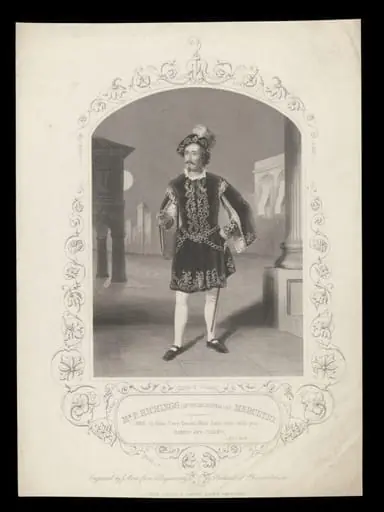 H Beard Print Collection
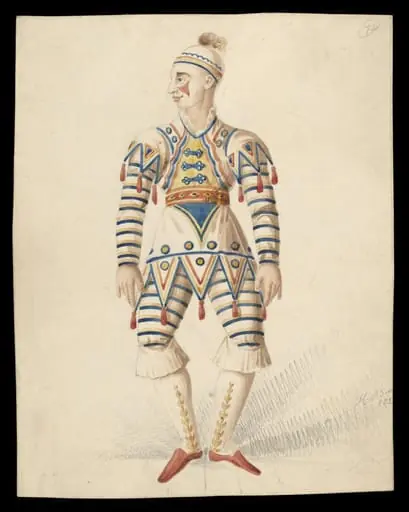 H Beard Print Collection
 As You Like It