Artwork
Αδάμ και Εύα
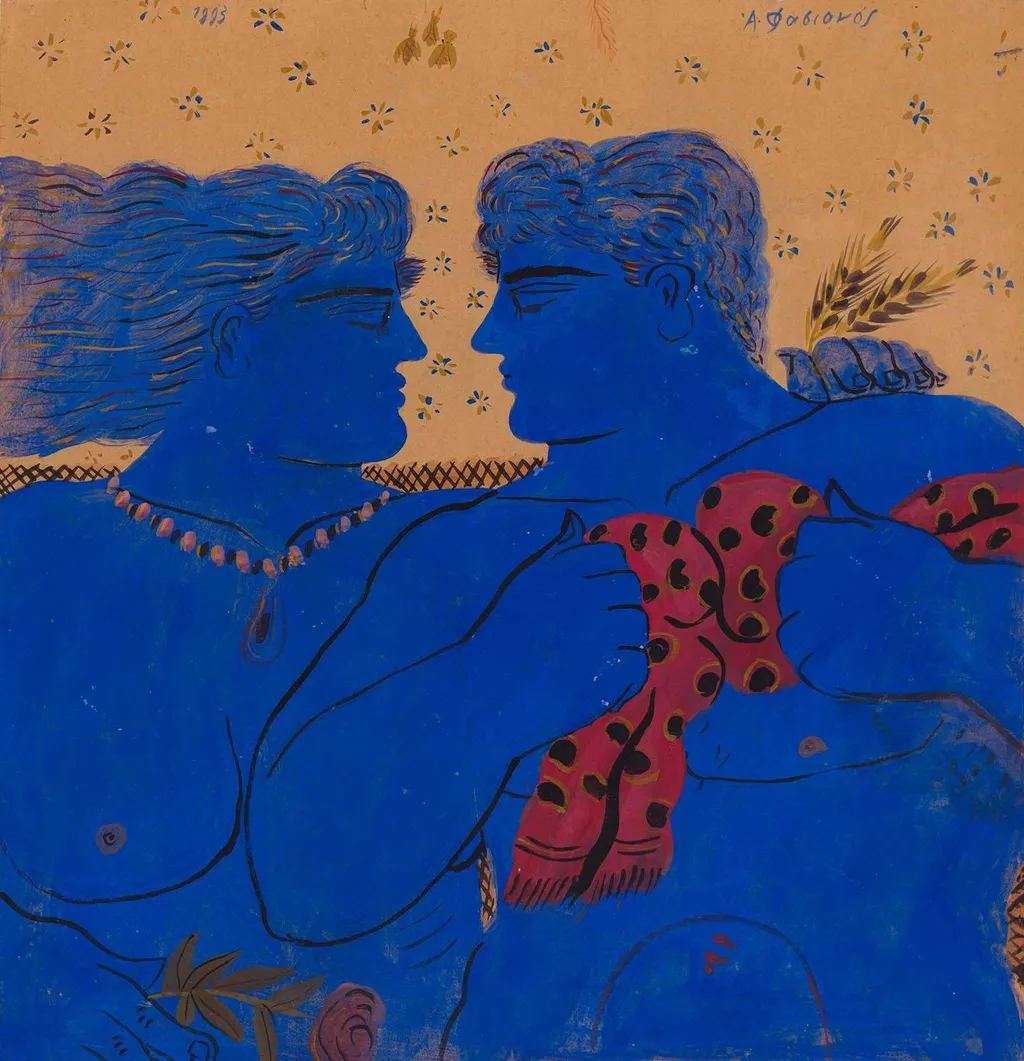
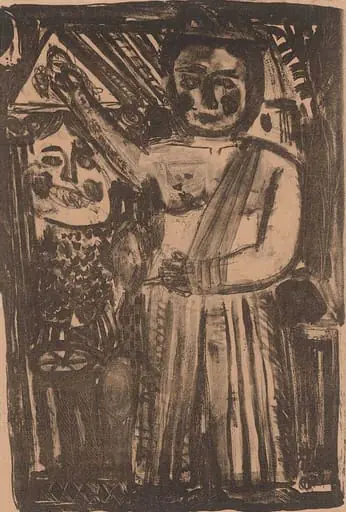
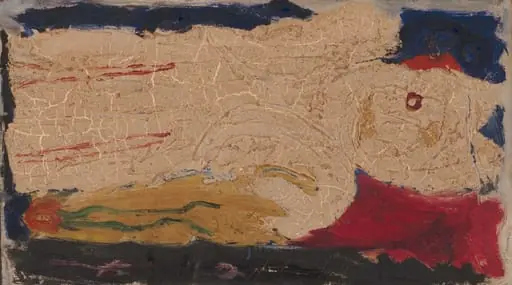
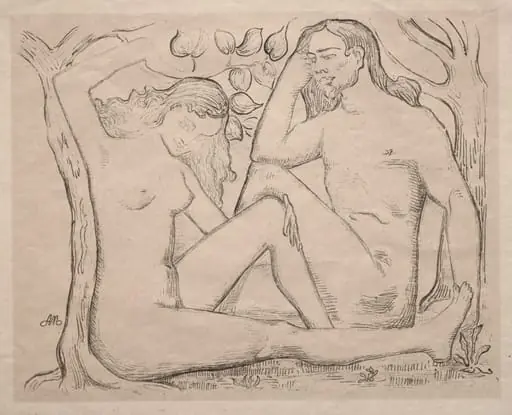
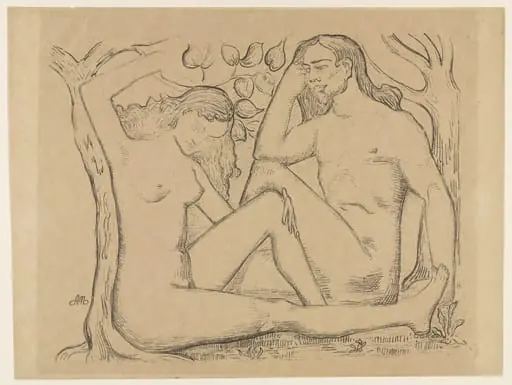
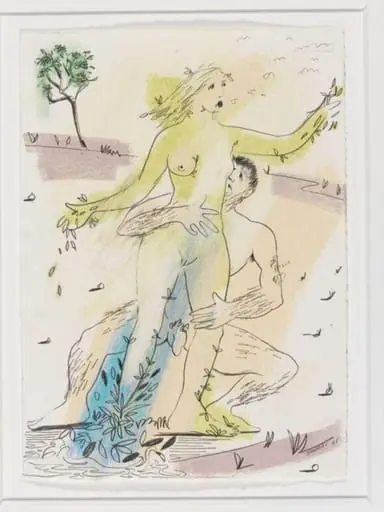
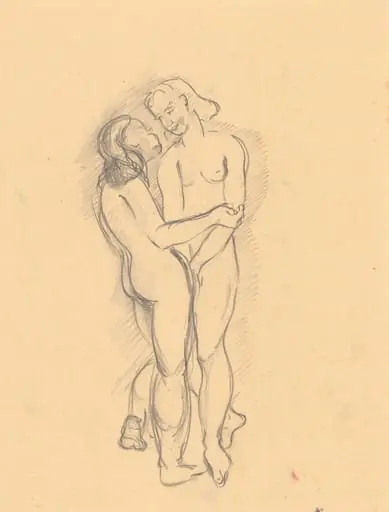
Αδάμ και Εύα is a drawing by Alekos Fassianos. It dates from 1993 and is held in the collection of the Metropolitan Organisation of Museums of Visual Arts of Thessaloniki – MOMus.
About this work
Overview
The composition centers the figures against a minimal background, emphasizing their presence through deliberate simplicity and rhythmic structure.
Alekos Fassianos developed a unique visual language in the 1960s that fused elements from ancient Greek vase painting, Byzantine iconography, and Greek folk traditions. His work on 'Adam and Eve' exemplifies this synthesis, reducing form to essential lines and flat color while retaining emotional resonance. The composition centers the figures against a minimal background, emphasizing their presence through deliberate simplicity and rhythmic structure.
Subject & Meaning
The biblical figures of Adam and Eve are rendered not as theological symbols but as intimate, humanized beings. Their posture and gesture suggest a quiet moment of connection, stripped of moral judgment. Decorative elements—a scarf, a flower, flowing hair—act as narrative cues, grounding the myth in everyday life. Fassianos transforms the sacred into the domestic, inviting viewers to see the primal pair through the lens of personal, rather than doctrinal, experience.
Technique & Style
Fassianos employs bold, incised outlines to define the figures, creating a sense of sculptural solidity. The uniform blue tonality unifies the forms, while subtle variations in line weight suggest movement and volume. Background motifs, resembling patterned wallpaper, provide contrast without distraction. The absence of shading and the reliance on contour reflect influences from folk art and shadow theatre, prioritizing clarity and symbolic presence over naturalism.
History & Provenance
Created during the height of Fassianos’s stylistic maturation, this work emerged from a period when he was actively reinterpreting Greek visual heritage through modernist lenses. It belongs to a series of mythological and literary subjects he revisited throughout the 1960s and 70s. The painting entered public collections in the late 20th century, where it has been recognized for its role in redefining contemporary Greek painting through cultural memory and personal expression.
Context
Fassianos worked amid a postwar Greek cultural revival that sought to reconnect with indigenous artistic forms. His engagement with Theofilos and Tsarouchis, alongside Byzantine and folk traditions, positioned him as a bridge between ancient motifs and modern sensibilities. 'Adam and Eve' reflects this broader movement: a quiet rebellion against Western academic norms, favoring instead a localized, poetic visual vocabulary rooted in Greece’s layered visual past.
Legacy
The painting exemplifies Fassianos’s lasting contribution to Greek art: the elevation of everyday aesthetics into mythic narratives. His use of line, color, and symbolic detail influenced a generation of artists who sought to express national identity without overt nationalism. 'Adam and Eve' remains a touchstone for its ability to convey universal themes through restrained, culturally specific means.
Artist & collection

Artist
Alekos Fassianos was a renowned Greek painter. He gained recognition for his distinctive style, which was characterized by immediacy and a deliberate departure from standardized painting techniques.
Museum
Metropolitan Organisation of Museums of Visual Arts of Thessaloniki – MOMus
Continue through works from the same source collection.