Artwork
a) On Maneuvers (recto); b) On Maneuvers (verso) (Alle Manovre)
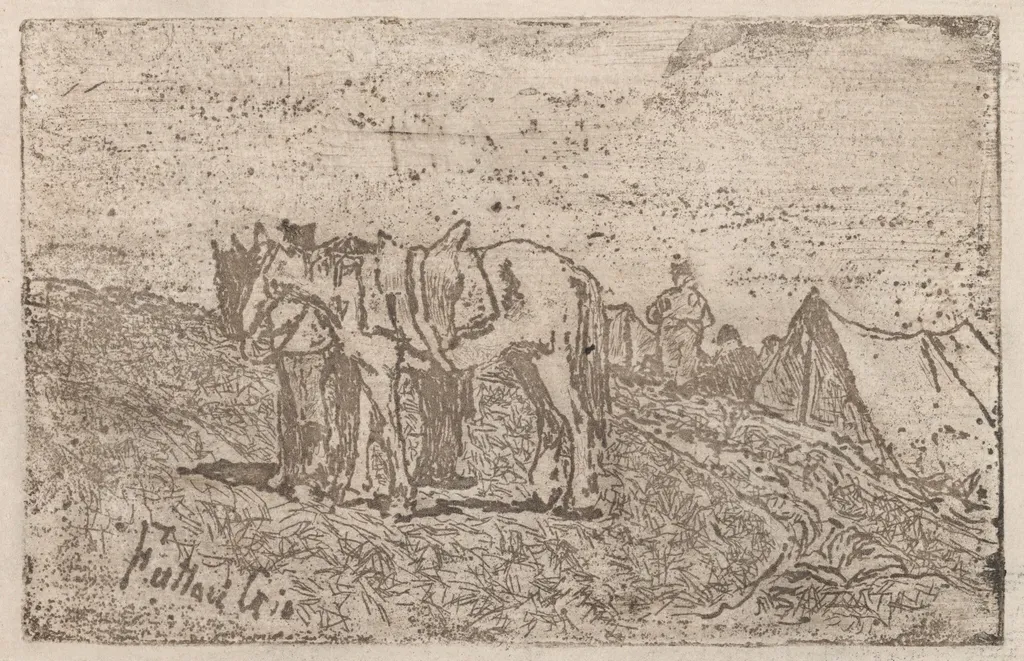
a) On Maneuvers (recto); b) On Maneuvers (verso) (Alle Manovre) is an ink print by the Impressionist artist Giovanni Fattori. It is held in the collection of the National Gallery of Art.
About this work
Overview
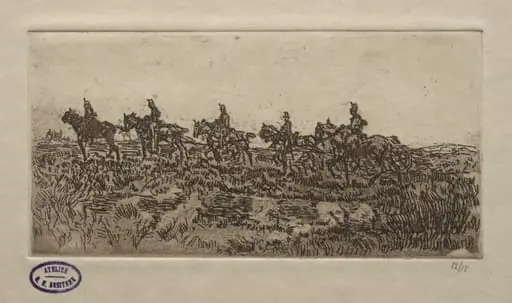
Created in 1888, this double-sided etching by Giovanni Fattori presents two impressions of the same scene: soldiers marching across a rugged terrain.
Created in 1888, this double-sided etching by Giovanni Fattori presents two impressions of the same scene: soldiers marching across a rugged terrain. Both recto and verso bear the same composition, suggesting the artist explored the motif through repeated impressions. The work is held in the National Gallery of Art, Washington, and exemplifies Fattori’s interest in military life rendered with minimal detail and tactile surface.
Subject & Meaning
The image depicts a line of soldiers moving through a barren, hilly landscape, their uniforms rendered in dark, uniform strokes. No individual features distinguish them; the focus is on collective movement and the austerity of military routine. The sparse background—partial trees, distant tents—suggests temporary encampment, reinforcing themes of transience and discipline rather than heroism or battle.
Technique & Style
Fattori employed etching to achieve a raw, textured surface, using acid to bite lines into a metal plate and pressing ink onto laid paper. The marks are deliberate yet unpolished—lines are broken, shadows uneven, contours suggestive rather than defined. The paper’s texture and signs of handling contribute to the work’s immediacy, aligning with the Macchiaioli preference for direct observation over idealized finish.
History & Provenance
This print is one of several proof impressions Fattori produced during his late career, likely for personal study or limited circulation. Its survival in good condition, despite visible wear, suggests it was preserved as an artistic document rather than a commercial product. It entered the National Gallery of Art’s collection through established acquisition channels, reflecting its recognized place in 19th-century Italian printmaking.
Context
Fattori created this work after decades of observing Italian military life, particularly during the Risorgimento. By 1888, the unification of Italy had stabilized, and soldiers were no longer revolutionary figures but part of a bureaucratic state. His muted, sketch-like approach reflects a shift from nationalistic fervor to quiet, observational realism, distancing himself from grand historical narratives.
Legacy
This etching exemplifies Fattori’s contribution to modern printmaking in Italy, emphasizing process over polish. Its unfinished quality influenced later artists who valued the expressive potential of the print medium’s inherent imperfections. Though not widely exhibited, it remains a key example of how Italian realists used etching to convey psychological and social nuance without embellishment.
Artist & collection


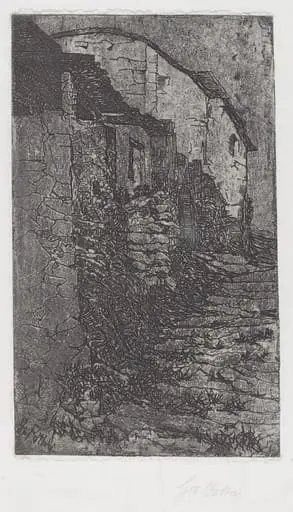 Bauco near Rome (Bauco presso Roma)
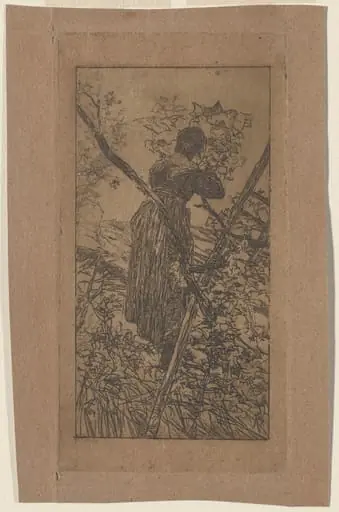 Gathering Leaves (Raccoglitrice di foglie)
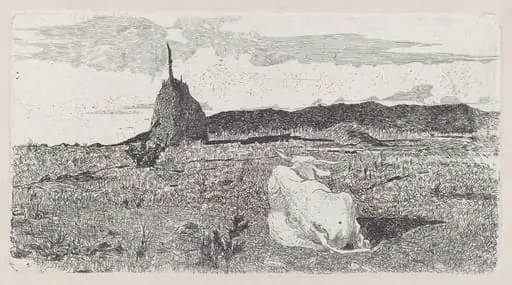 Holy Cow (Pio bove)
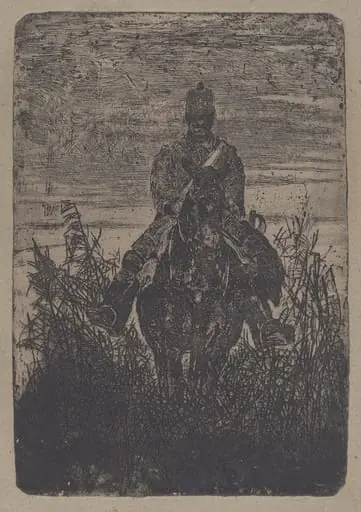 Patrol (Esplorazione)
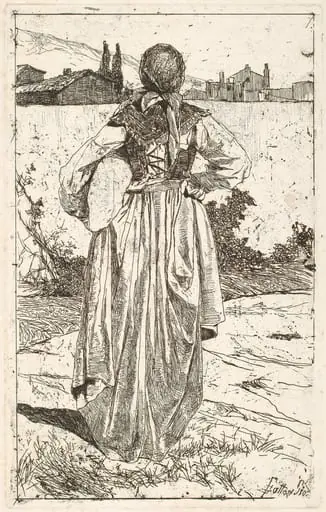 Woman of the Gabbro (Donna al gabbro)
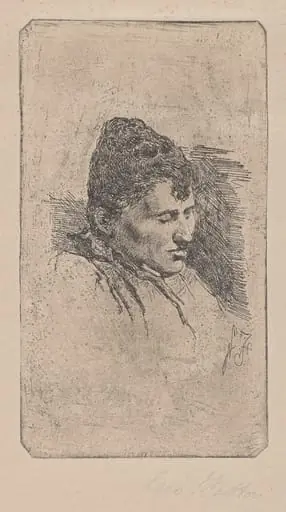 Portrait of the Artist's Second Wife (Ritratto della seconda moglie)
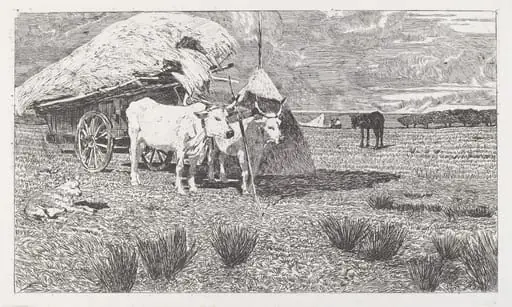 Oxen Yoked to a Cart (Maremma) (Bovi al carro (Maremma))
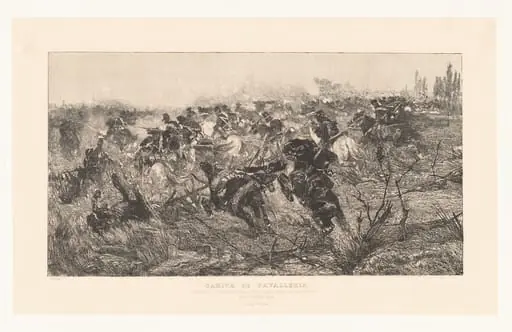 Carica di cavalleria (Calvary Charge)