Artwork
Man holding a horse by the bridle
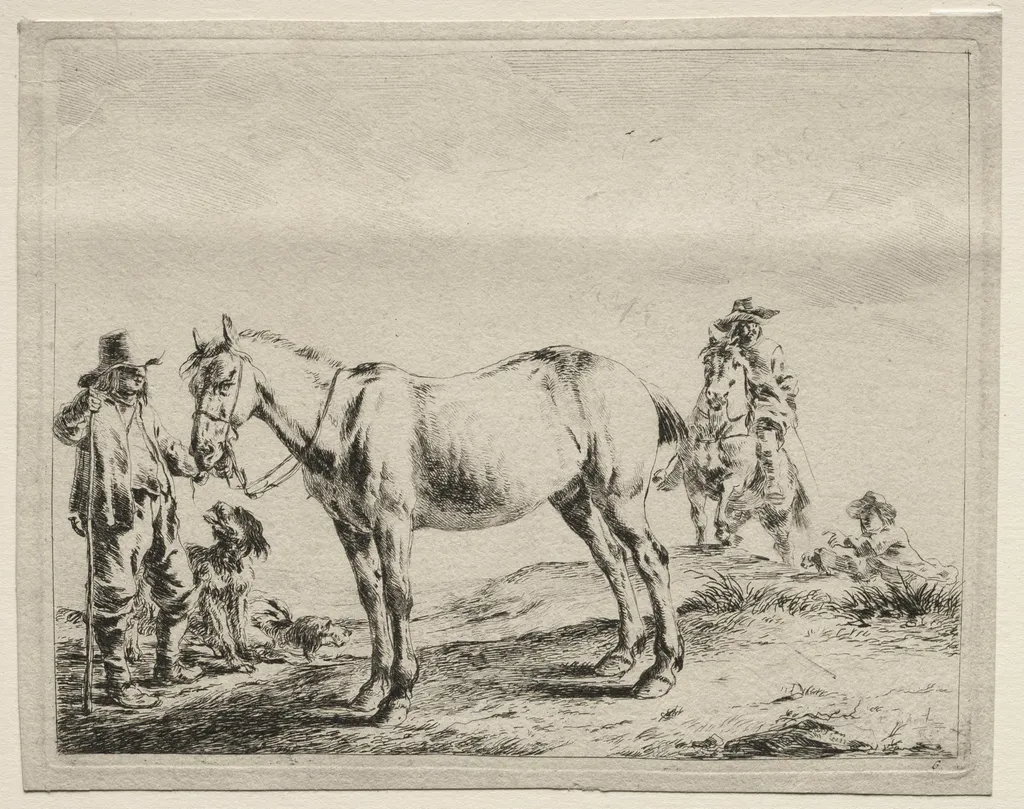
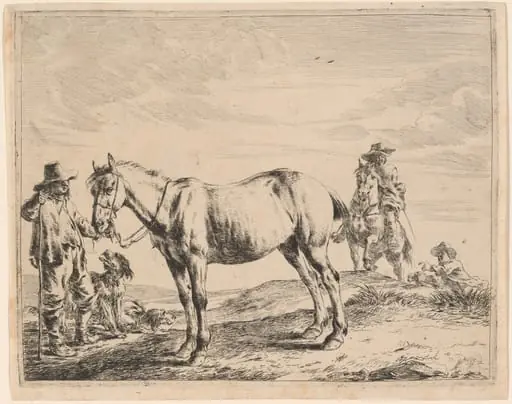
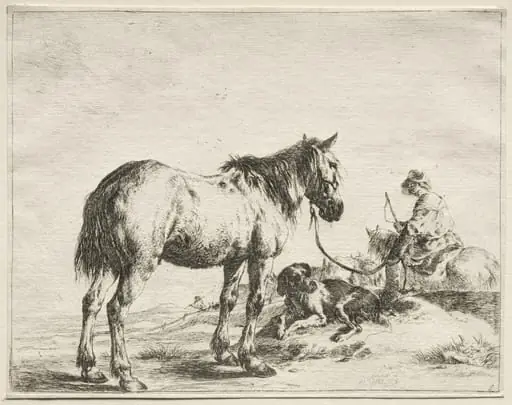
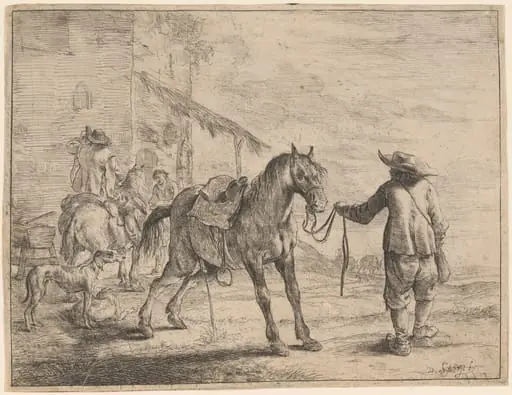
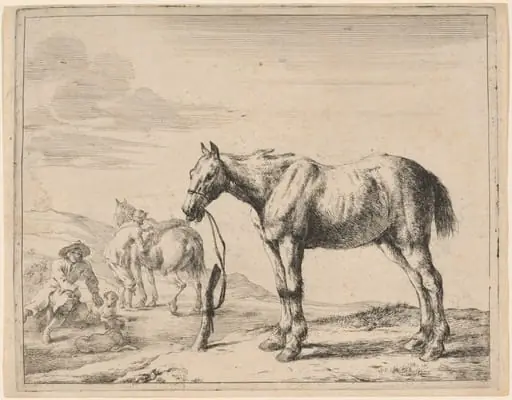
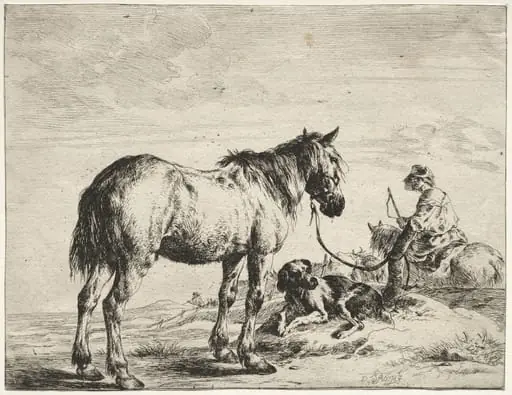
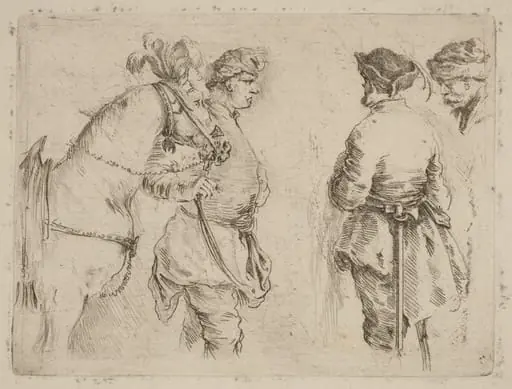
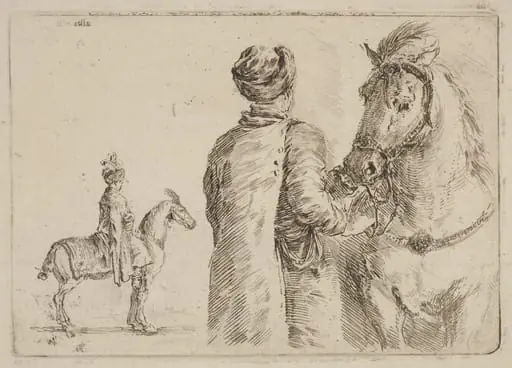
Man holding a horse by the bridle is a print by Dirk Stoop. It dates from 1659 and is held in the collection of the Cleveland Museum of Art. Created around 1659, this print by Dirck Stoop portrays a man restraining a horse by its bridle.
About this work
Overview
The composition is minimal, with no landscape or architectural context, directing attention solely to the physical relationship between human and animal.
Created around 1659, this print by Dirck Stoop portrays a man restraining a horse by its bridle. Executed in a restrained, observational manner, the work reflects the quiet realism typical of mid-seventeenth-century Dutch graphic art. The composition is minimal, with no landscape or architectural context, directing attention solely to the physical relationship between human and animal. It resides in the collection of The Cleveland Museum of Art.
Subject & Meaning
The scene captures a moment of calm control, not action. The man, dressed in typical urban attire of the period, holds the horse with steady, unforced contact. His left hand resting on the animal’s neck suggests familiarity rather than dominance. The image conveys a sense of mutual presence rather than narrative drama, reflecting the everyday equestrian interactions common in Dutch society at the time.
Technique & Style
Stoop employed fine linear engraving to define form with precision. Subtle hatching and cross-contour lines model the horse’s musculature and the man’s clothing, while the absence of background enhances focus on texture and posture. Light is suggested through tonal gradation rather than dramatic chiaroscuro, aligning with the Dutch preference for understated naturalism over theatrical effect.
History & Provenance
The print entered the Cleveland Museum of Art’s collection as part of a broader acquisition of Dutch graphic works from the seventeenth century. Its provenance prior to the museum’s ownership is not fully documented, but it aligns with the circulation of small-scale prints among collectors and artisans in the Netherlands during and after Stoop’s lifetime.
Context
Dirck Stoop worked during the Dutch Golden Age, a period when printmaking flourished as a medium for documenting daily life. His subjects often included horses, riders, and rural scenes, reflecting the cultural importance of equine animals in transport, agriculture, and social status. This print fits within a broader tradition of observational art that valued accuracy over idealization.
Legacy
Though not among Stoop’s most widely known works, this print exemplifies the quiet discipline of Dutch graphic art. It contributes to the historical record of how horses were integrated into urban and rural life, and how artists rendered such interactions with restraint and attention to physical detail. Its preservation allows continued study of everyday visual culture in the Netherlands.
Artist & collection
Artist
Dirk Stoop (c. 1618–1686) was a widely travelled painter and engraver of the Dutch Golden Age. Alternative versions of his name include Dirck Stoff, Theodorus (van der) Stoop, Thierry (the French version) and…