Artwork
Interior of a Stable with Horses (Interno di stalla con cavalli)
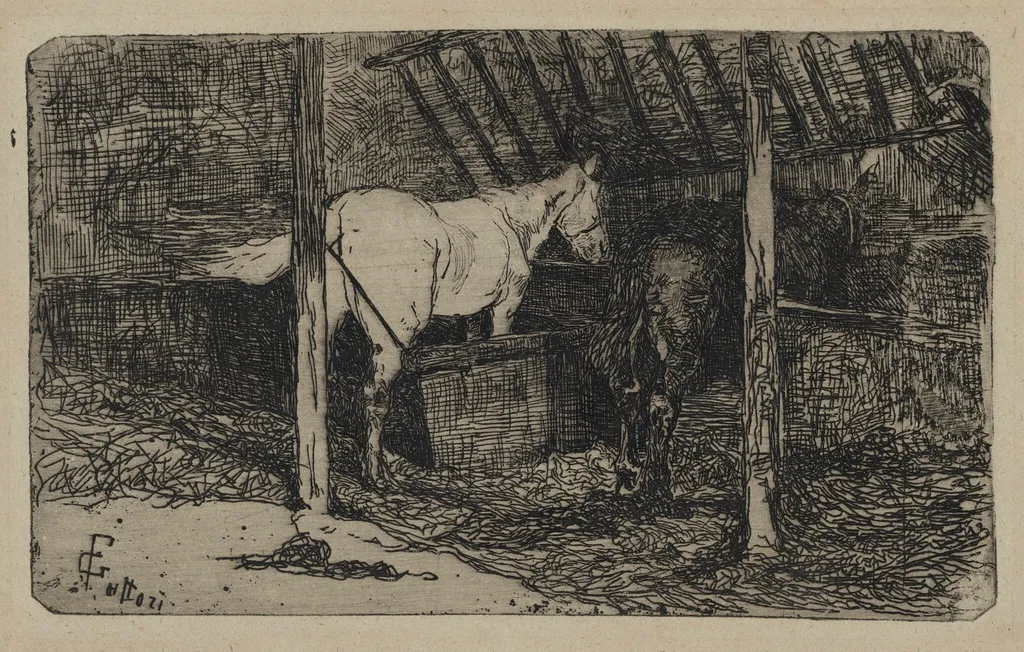
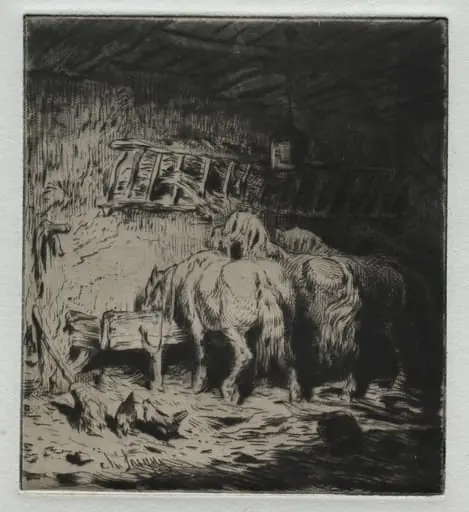
Interior of a Stable with Horses (Interno di stalla con cavalli) is an ink print by the Impressionist artist Giovanni Fattori. It dates from 1885 and is held in the collection of the National Gallery of Art.
About this work
Overview
Created in 1885, this etching by Giovanni Fattori captures the quiet interior of a stable, rendered in ink on wove paper.
Created in 1885, this etching by Giovanni Fattori captures the quiet interior of a stable, rendered in ink on wove paper. It is an artist’s proof, made before the plate was beveled, indicating it was pulled early in the printing process. The work is part of the National Gallery of Art’s collection in Washington, D.C., and reflects Fattori’s sustained interest in rural life and animal subjects during his later years.
Subject & Meaning
Two horses stand side by side, tethered to a horizontal beam in a dimly lit stable. Their stillness and calm posture suggest a moment of rest, free from labor or movement. The absence of human figures and the muted environment emphasize solitude and quiet endurance. The scene conveys dignity in ordinary rural existence, a recurring theme in Fattori’s work that avoids sentimentality in favor of restrained observation.
Technique & Style
Fattori employed bold, incised lines and controlled chiaroscuro to model the horses’ forms and the rough wooden surfaces of the stable. The etching’s contrast between dark shadows and lighter planes gives volume to the animals and depth to the architecture. The wove paper’s texture enhances the tactile quality of the scene, while the lack of fine detail reinforces a sense of immediacy and atmospheric weight.
History & Provenance
This print is an artist’s proof, likely retained by Fattori before the final edition was produced. It was acquired by the National Gallery of Art in Washington, D.C., where it remains in the print collection. Its early state suggests it was valued by the artist for its expressive clarity, possibly used to assess the plate’s potential before wider circulation.
Context
Fattori, a central figure in the Macchiaioli movement, turned increasingly to rural and equestrian subjects after the 1870s. This etching aligns with his broader shift from battlefield scenes to intimate depictions of agricultural life. The work reflects a post-unification Italian interest in the dignity of labor and the natural world, filtered through a quiet, observational aesthetic rather than narrative drama.
Legacy
Though less known than his oil paintings, Fattori’s prints, including this one, demonstrate his mastery of tonal contrast and compositional restraint. The etching influenced later Italian printmakers who sought to convey emotional depth through minimal means. Its preservation in a major public collection underscores its role as a quiet but significant contribution to 19th-century printmaking.
Artist & collection


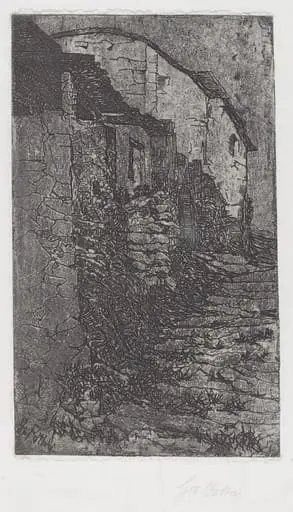 Bauco near Rome (Bauco presso Roma)
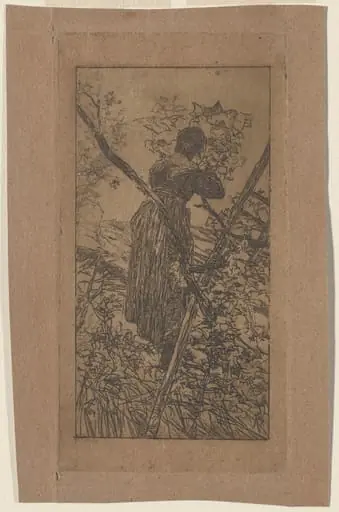 Gathering Leaves (Raccoglitrice di foglie)
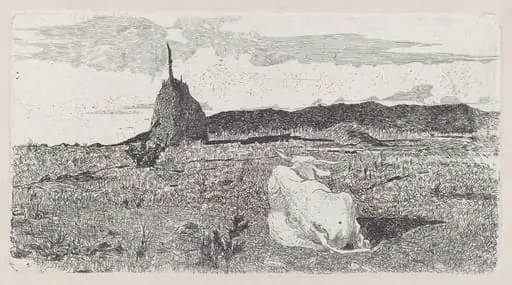 Holy Cow (Pio bove)
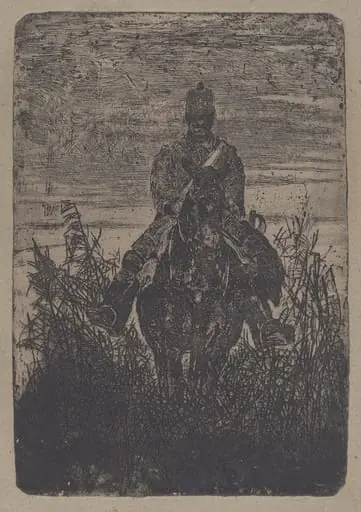 Patrol (Esplorazione)
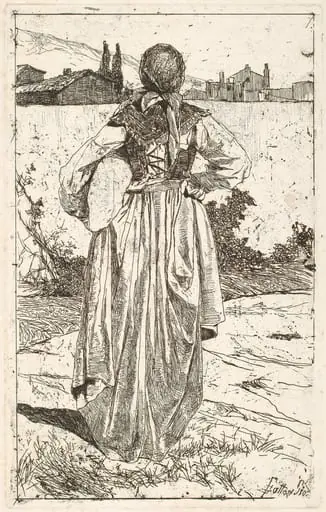 Woman of the Gabbro (Donna al gabbro)
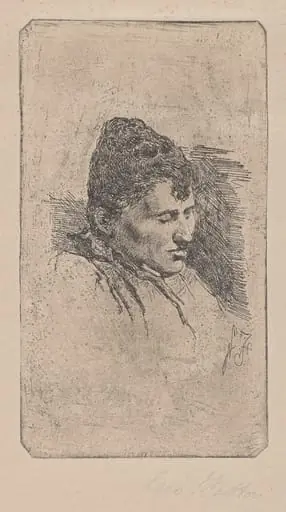 Portrait of the Artist's Second Wife (Ritratto della seconda moglie)
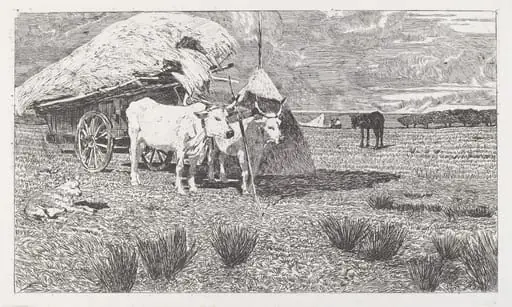 Oxen Yoked to a Cart (Maremma) (Bovi al carro (Maremma))
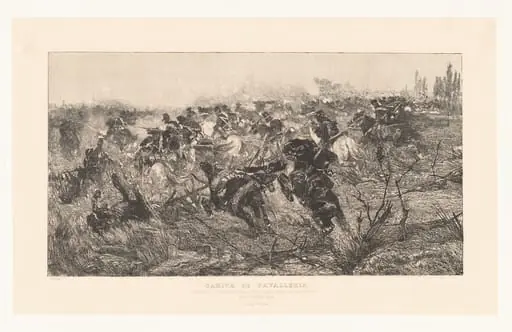 Carica di cavalleria (Calvary Charge)