Artwork
Bloomsbury
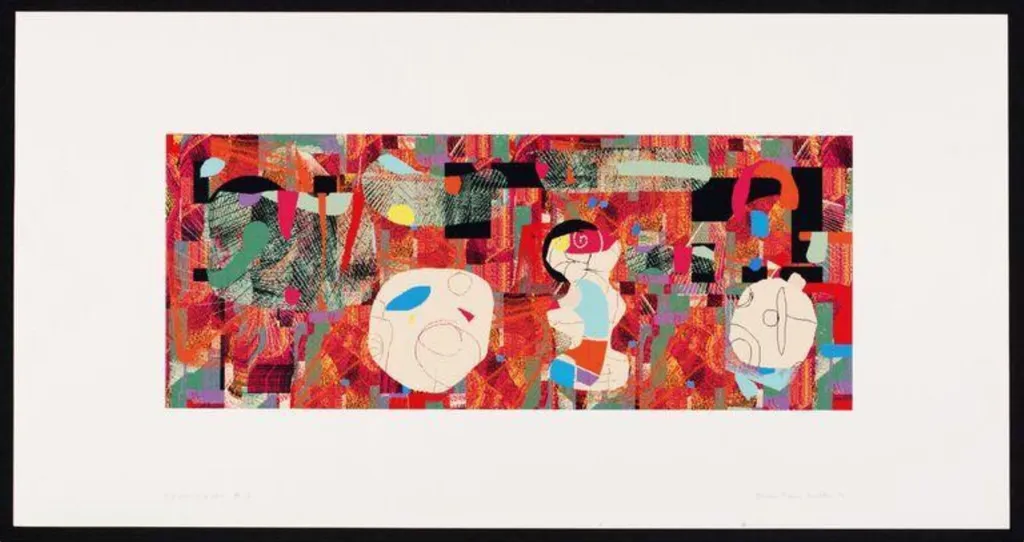
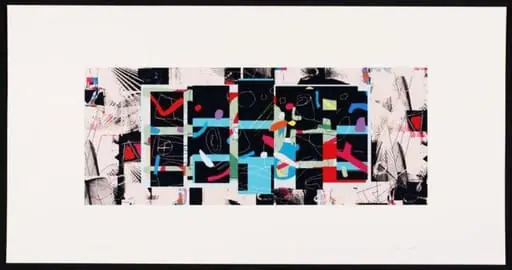
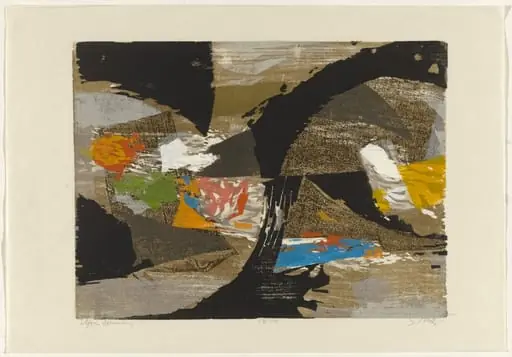
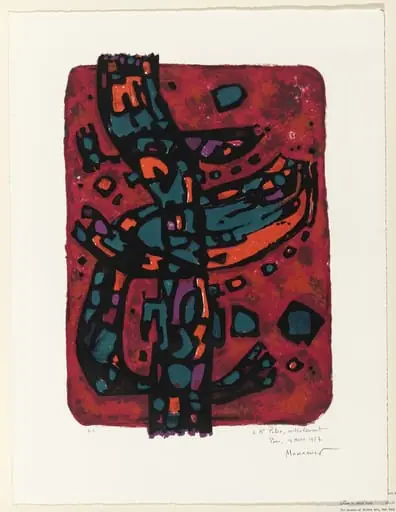
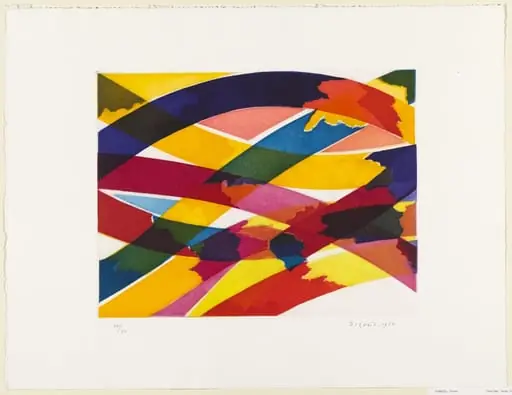
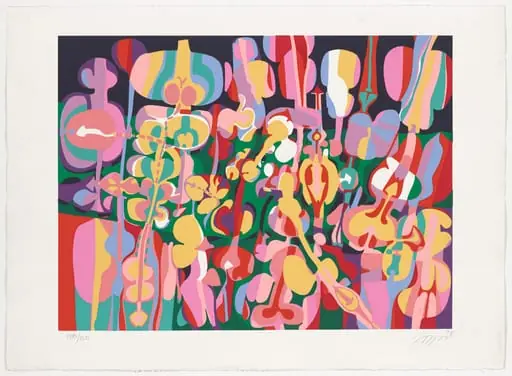
Bloomsbury is a print by James Faure Walker. It dates from 1990 and is held in the collection of the Victoria and Albert Museum.
About this work
Overview
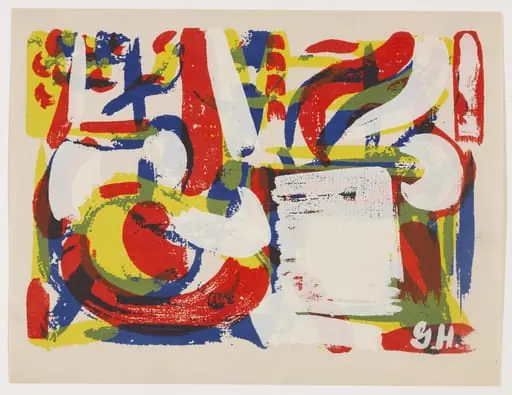
James Faure Walker created *Bloomsbury* in 1990 using a Xerox 4020 inkjet printer, employing digital tools to generate a complex visual field.
James Faure Walker created *Bloomsbury* in 1990 using a Xerox 4020 inkjet printer, employing digital tools to generate a complex visual field. The work belongs to a series exploring the intersection of technology and manual mark-making, where the limitations of early digital printing became part of its aesthetic. Its composition resists clear narrative, instead presenting a dense accumulation of form and color.
Subject & Meaning
The print does not depict a recognizable scene but suggests fragmented figures and abstracted faces within two large white ovals. These central forms may imply eyes, masks, or voids, inviting interpretation without anchoring meaning. Surrounding elements—limbs, jagged lines, and overlapping shapes—convey a sense of dislocated presence, reflecting themes of identity and perception in a mediated age.
Technique & Style
Walker combined digital output with tactile interventions, layering inkjet prints with scraped textures and abrupt linear marks. Bold, saturated hues—red, blue, green—contrast with areas of raw paper and eroded edges. The surface alternates between flat planes and rough, scratched zones, creating a tension between machine precision and hand-altered chaos, characteristic of his early digital experiments.
History & Provenance
Produced during a period of rapid technological change in art, *Bloomsbury* emerged from Faure Walker’s engagement with accessible digital printers in the late 1980s and early 1990s. It was part of his broader investigation into how emerging tools could extend, rather than replace, traditional printmaking. The work entered public collections shortly after its creation, noted for its innovative use of commercial hardware.
Context
In the early 1990s, artists began experimenting with office-grade printers as artistic tools, challenging notions of originality and authorship. Faure Walker’s work aligned with this movement, positioning digital output within a lineage of collage and expressionist abstraction. *Bloomsbury* reflects a moment when technology was seen not as a neutral medium, but as a site of creative friction and material unpredictability.
Legacy
Though not widely exhibited, *Bloomsbury* remains a significant example of early digital printmaking that embraced imperfection. It influenced later artists exploring the materiality of digital processes, demonstrating how limitations in technology could generate unique visual languages. Faure Walker’s approach helped legitimize non-traditional tools in fine art contexts, expanding the boundaries of print practice.
Artist & collection
Artist
James Faure Walker’s prints catch the pulse of modern London. In *Bloomsbury* and *Soho* he folds city lights into layered prints that feel both precise and alive, while *Forest Sounds* turns foliage into rhythmic…