Artwork
Untitled
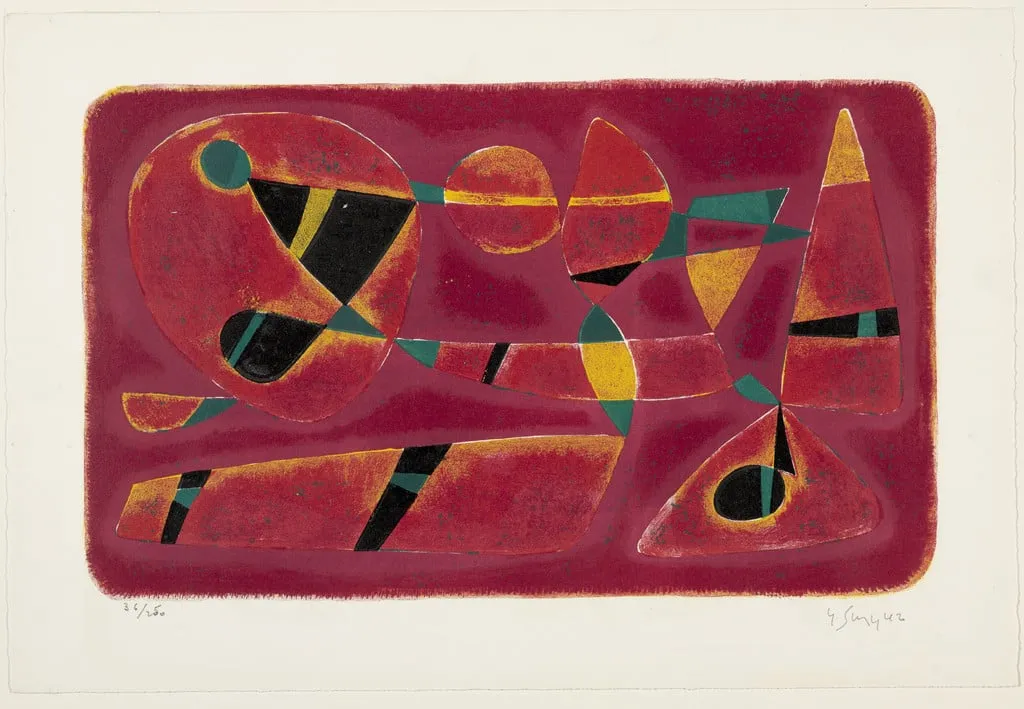
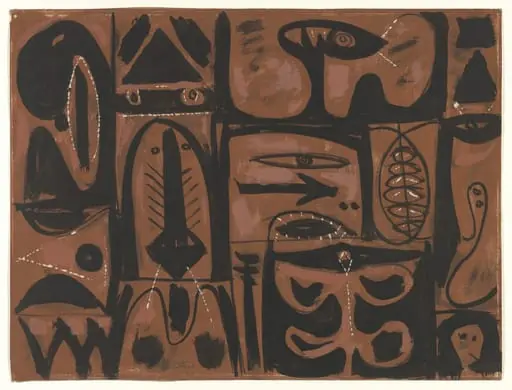
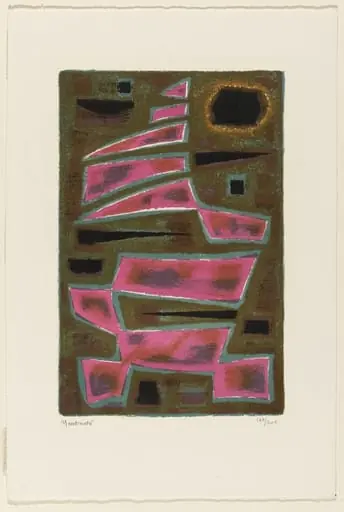
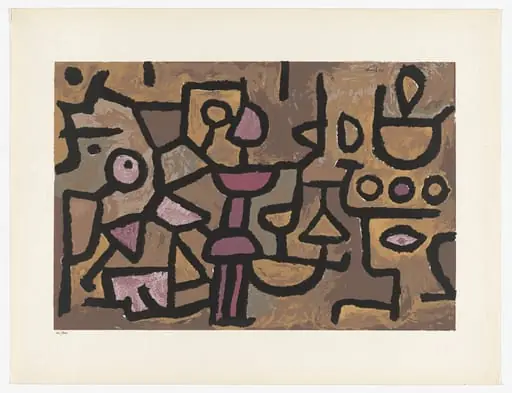
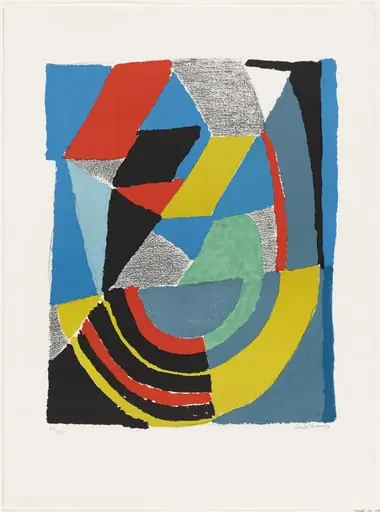
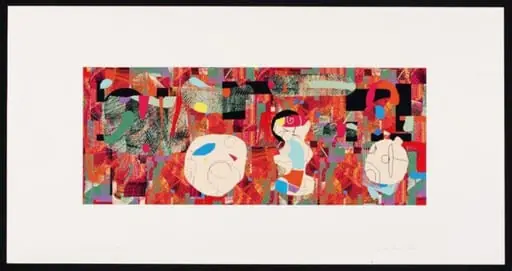
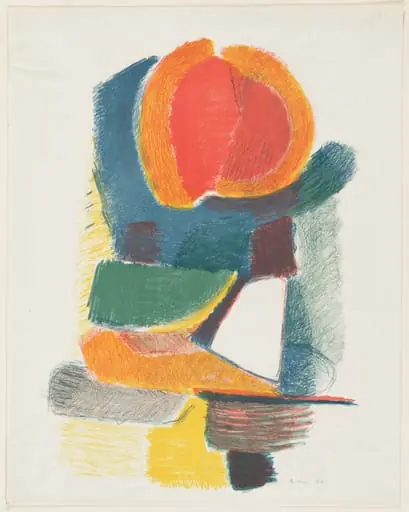
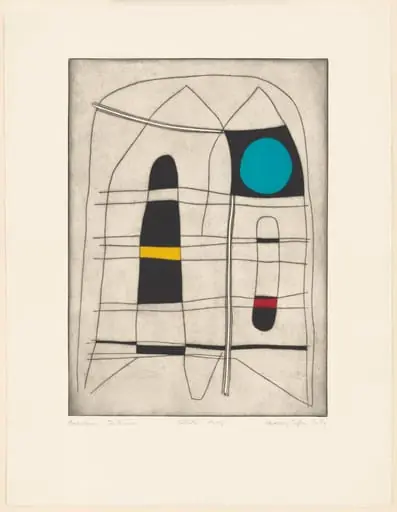
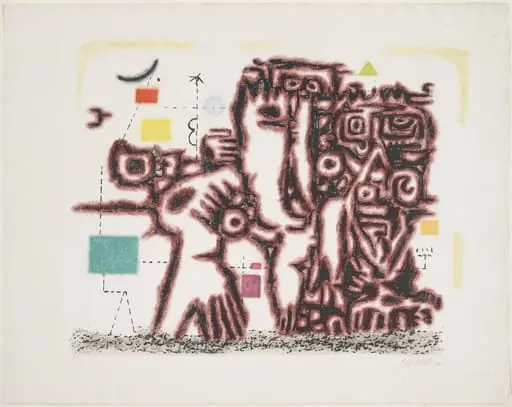
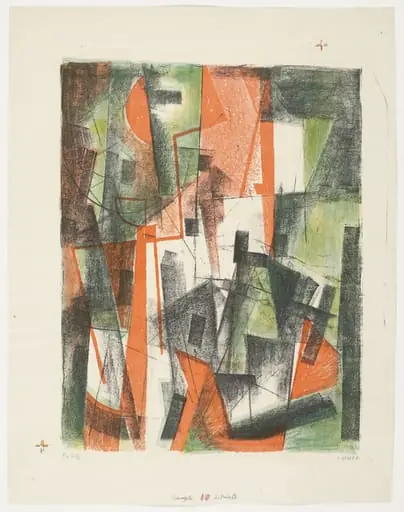
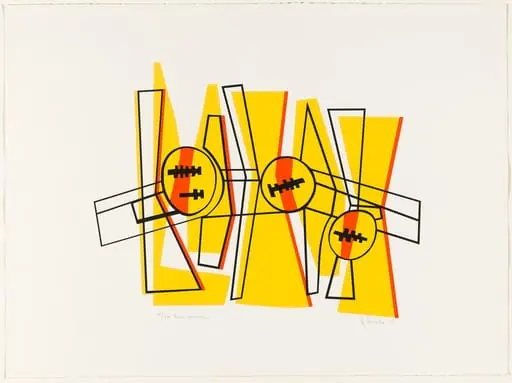
Untitled is an ink print by Gustave Singier. It dates from 1926 and is held in the collection of the Museum of Modern Art.
About this work
Overview
It presents a non-representational composition using abstract geometric forms—circles, triangles, and irregular lines—arranged in dynamic, overlapping layers.
Created in 1926, this lithograph by Gustave Singier is part of The Museum of Modern Art’s collection. It presents a non-representational composition using abstract geometric forms—circles, triangles, and irregular lines—arranged in dynamic, overlapping layers. The work is defined by its limited palette of red, black, and yellow, applied with a tactile, slightly blurred quality that suggests manual manipulation during printing.
Subject & Meaning
The image avoids recognizable imagery, instead focusing on the interplay of form and color. The arrangement of shapes conveys movement and tension without narrative or symbolic reference. This abstraction reflects a broader early 20th-century interest in visual language divorced from representation, emphasizing emotional resonance over depiction.
Technique & Style
Executed in lithography, the work exploits the medium’s capacity for soft, organic lines. Ink was drawn directly onto a smooth limestone surface, then transferred to paper under pressure. The uneven edges and subtle smudging result from the artist’s handwork on the stone, giving the forms a tactile, almost gestural presence that contrasts with the precision often associated with printmaking.
History & Provenance
The print entered The Museum of Modern Art’s collection in the mid-20th century as part of its early commitment to European modernist prints. While Singier’s work was less widely exhibited than some of his contemporaries, this piece represents his engagement with abstraction during the 1920s, a period when lithography was being reimagined as a vehicle for experimental expression.
Context
Made during a time when European artists were exploring non-objective art, Singier’s lithograph aligns with movements like Abstraction-Création and early Constructivism. Though not tied to a specific group, the work shares affinities with contemporaries who sought to convey structure and rhythm through pure form, responding to the era’s broader cultural shift away from figurative traditions.
Legacy
This lithograph contributes to the recognition of printmaking as a legitimate medium for abstract experimentation in the interwar period. While Singier did not achieve widespread fame, his work remains a quiet example of how lithography’s unique qualities could be harnessed to produce evocative, non-representational compositions that expanded the boundaries of the medium.
Artist & collection

Artist
Gustave Singier was a Belgian non-figurative painter active in France as part of the new Paris School of Lyrical Abstraction and the Salon de Mai.