Artwork
The Painter Carlos Luis de Ribera
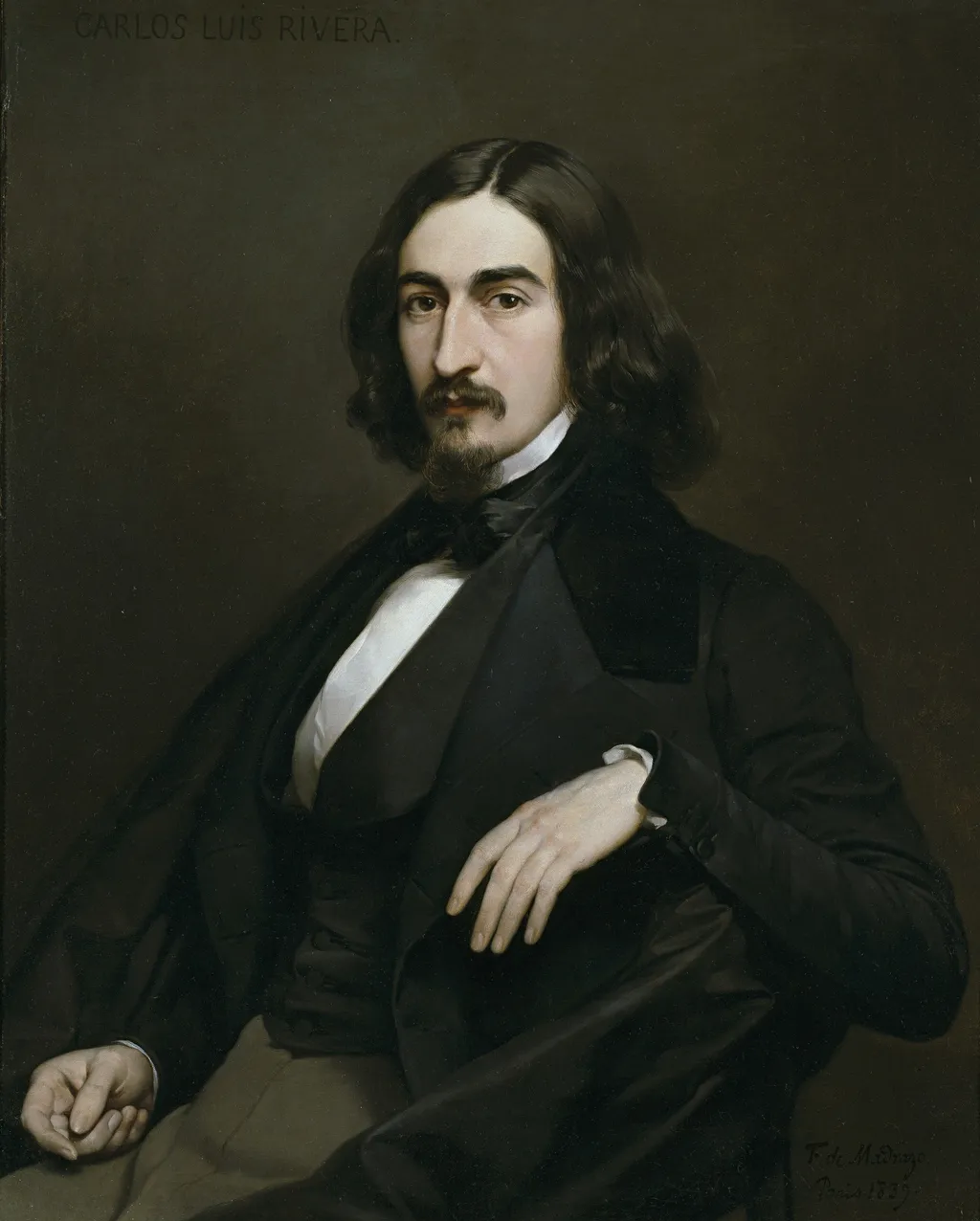
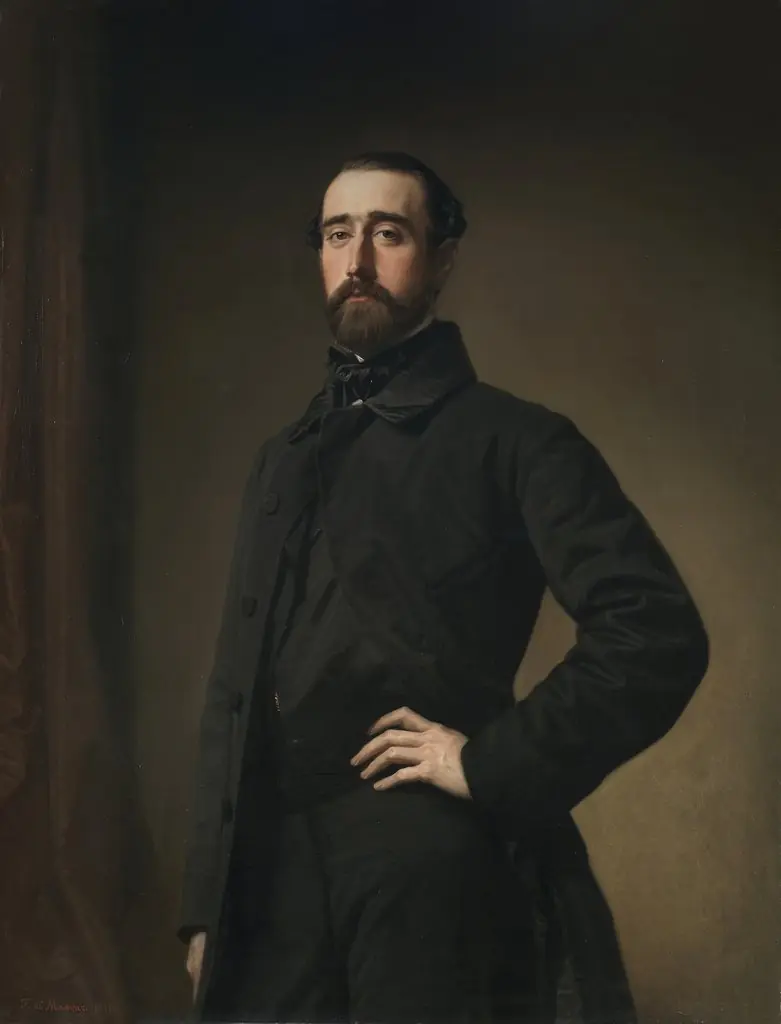
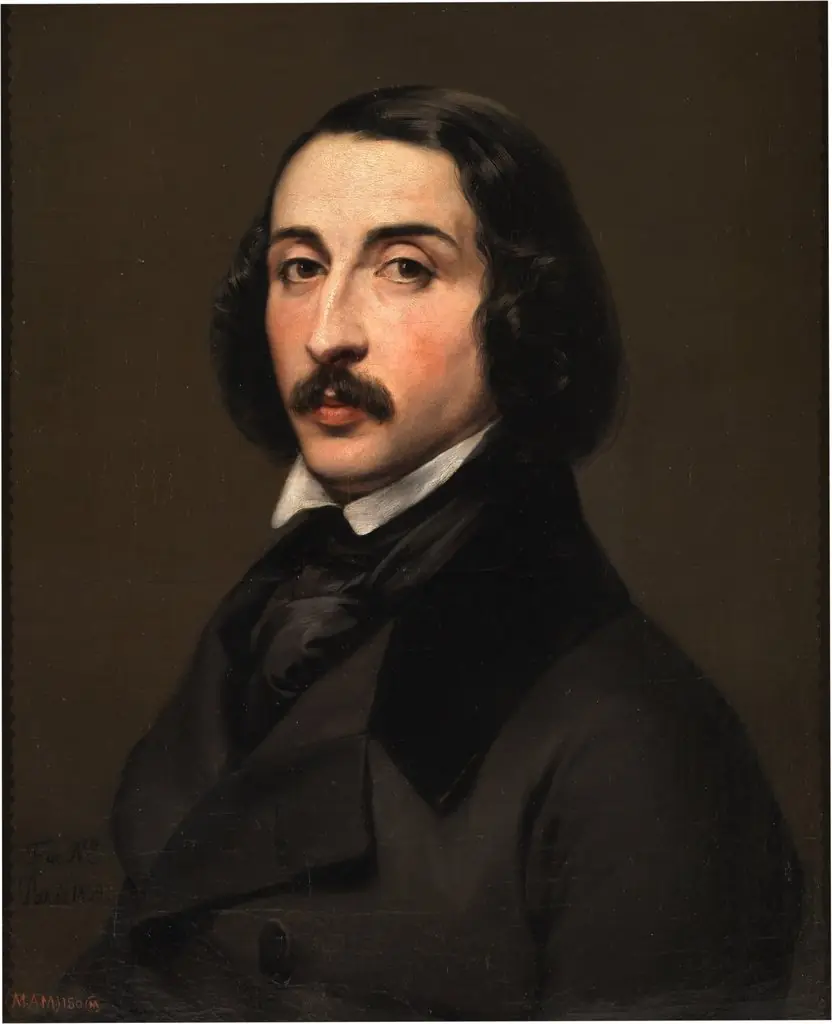
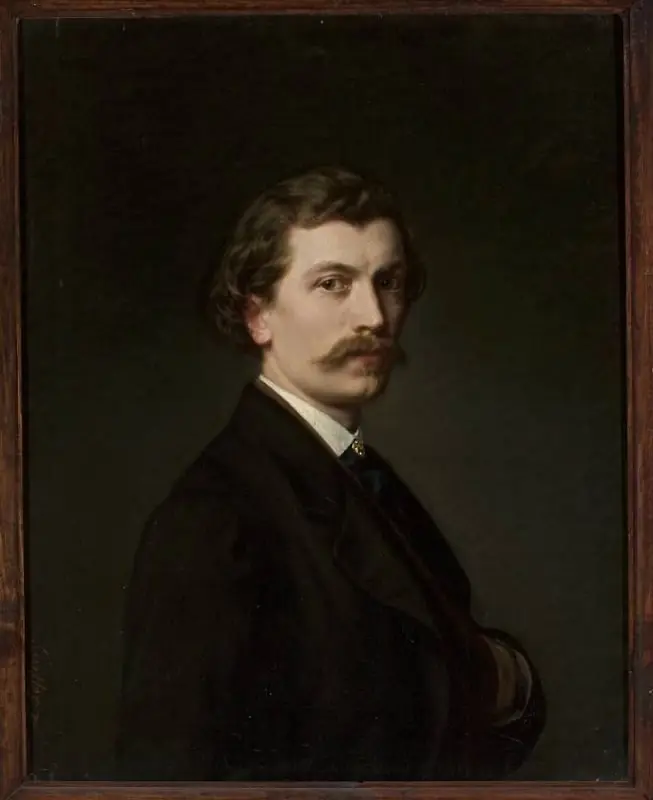
The Painter Carlos Luis de Ribera is an oil painting by Federico de Madrazo y Kuntz. It dates from 1838 and is held in the collection of the Museo del Prado.
About this work
Overview
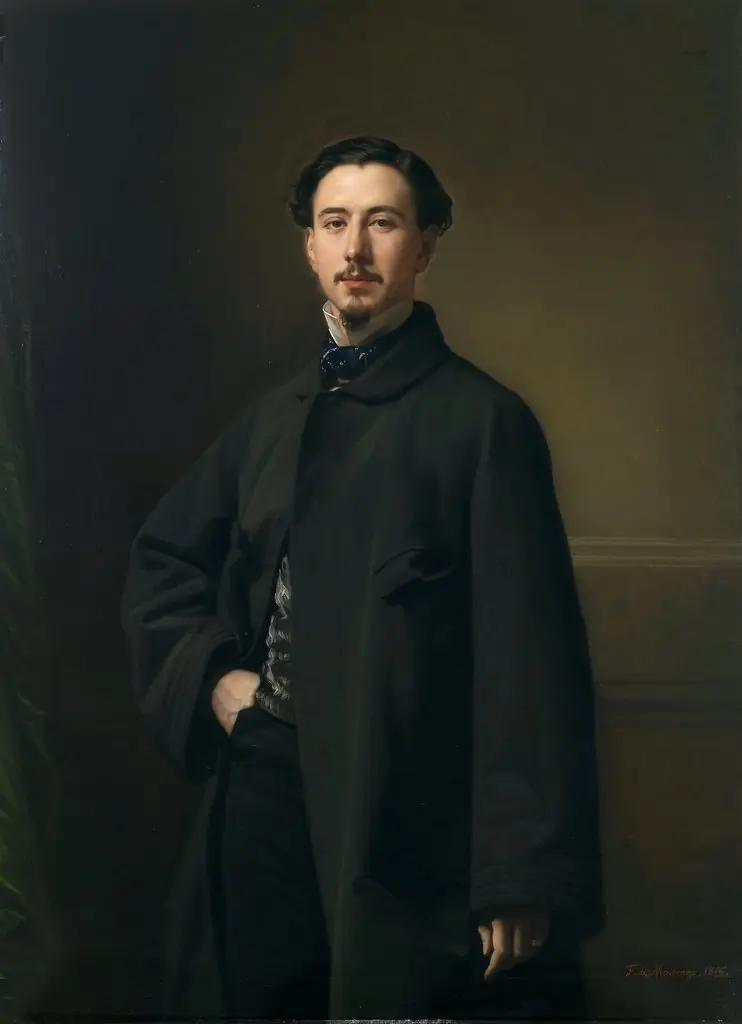
Painted in 1838 by Federico de Madrazo y Kuntz, this oil portrait depicts Carlos Luis de Ribera, a Spanish artist and academic.
Painted in 1838 by Federico de Madrazo y Kuntz, this oil portrait depicts Carlos Luis de Ribera, a Spanish artist and academic. The work resides in the Museo del Prado in Madrid. Rendered with careful attention to detail, the portrait captures Ribera in formal attire against a dark, unbroken background, emphasizing his presence without distraction. The medium allows for subtle gradations of light and shadow, enhancing the three-dimensionality of the figure.
Subject & Meaning
Carlos Luis de Ribera is portrayed as a man of professional stature, his dark clothing and composed posture conveying dignity and restraint. His long hair and mustache reflect contemporary male fashion among artists and intellectuals of the period. The gesture of one hand resting on the hip suggests quiet confidence rather than theatricality. The portrait functions as a record of identity, aligning Ribera with the cultural elite of 19th-century Spain.
Technique & Style
Madrazo employed oil paint to achieve refined textures in fabric and skin, using soft transitions between light and shadow to model the form. The background is uniformly dark, isolating the figure and focusing attention on his facial expression and attire. Brushwork is controlled yet expressive, particularly in the rendering of hair and the sheen of the jacket. The composition follows classical portraiture conventions, with the subject centered and slightly turned toward the viewer.
History & Provenance
The painting was completed in 1838 and entered the collection of the Museo del Prado in the 19th century. It remained within Spanish institutional holdings, likely transferred from the Royal Academy of San Fernando, where both artist and subject were affiliated. No significant changes in ownership are documented, and the work has been consistently attributed to Madrazo since its creation.
Context
In the 1830s, Spanish portraiture was shaped by academic traditions and a growing interest in individual identity among cultural figures. Madrazo, trained in Paris and Rome, brought neoclassical precision to his depictions of Spanish intellectuals. Ribera, as a painter and professor, represented the institutional art world Madrazo himself inhabited. This portrait reflects a broader trend of documenting Spain’s artistic community during a period of cultural consolidation.
Legacy
The portrait endures as a representative example of Madrazo’s skill in capturing character through restrained elegance. It contributes to the historical record of Spanish art academies and their key figures. While not widely exhibited outside Spain, it remains a reference point for studies of 19th-century Spanish portraiture and the visual culture of artistic professionalism during the era.
Own this work as a print
Artist & collection
Artist
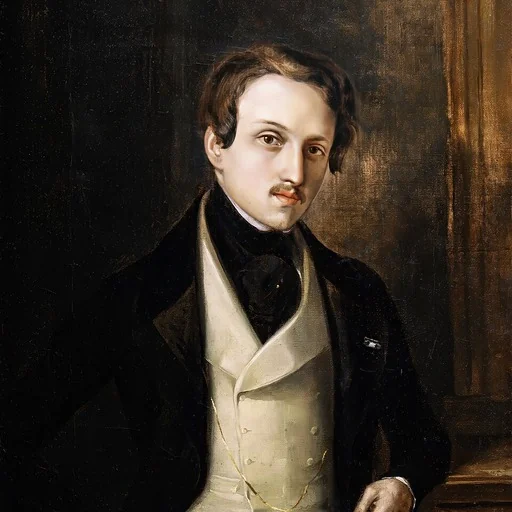
Federico de Madrazo y Kuntz (1815–1894) was an artist, born in Spain.