Artwork
Gloucester Cathedral, the Tomb and Effigy of King Edward II in North Ambulatory
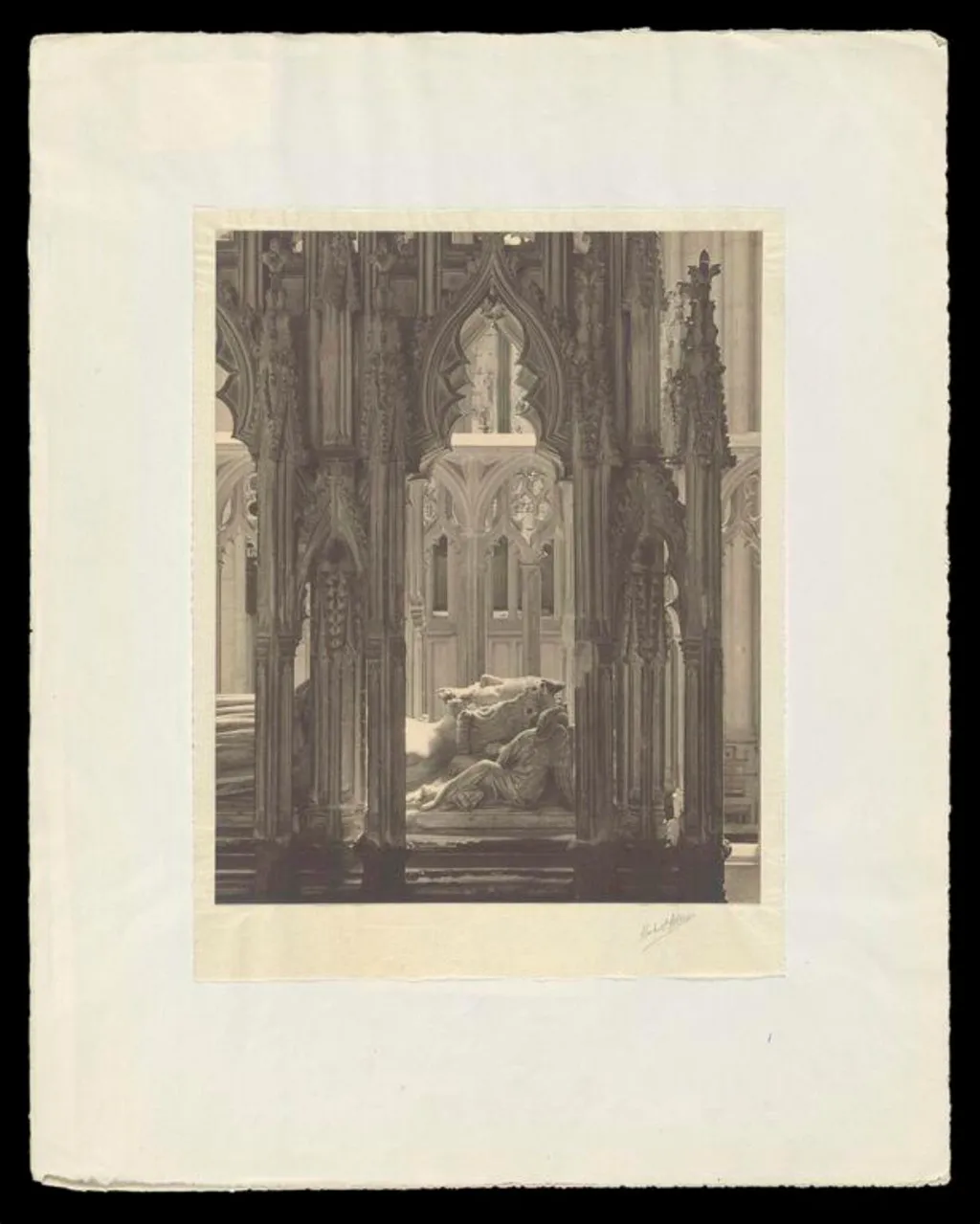
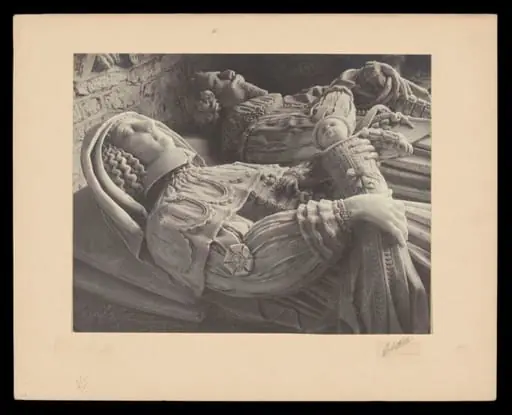
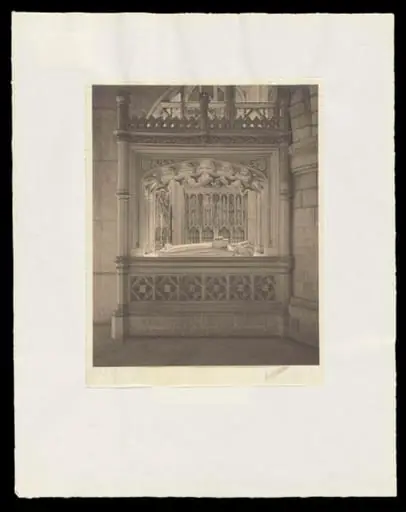
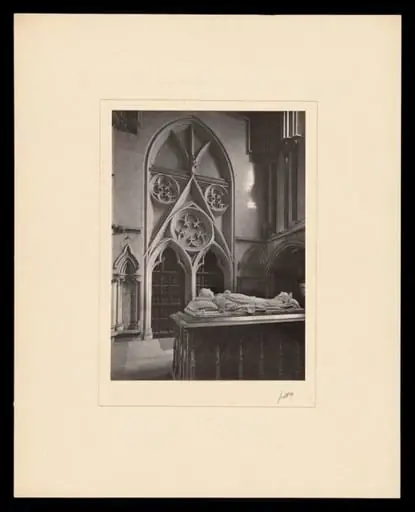
Gloucester Cathedral, the Tomb and Effigy of King Edward II in North Ambulatory is a photographic photography by Herbert Felton. It dates from 1949 and is held in the collection of the Victoria and Albert Museum. A 1949 black-and-white photograph captures the effigy of King Edward II within Gloucester Cathedral’s north ambulatory.
About this work
Notice how the folds in the draped cloth look almost like real fabric—this kind of careful detail was key in old church carvings.
This black-and-white photo shows a carved stone tomb inside a church. The tomb has a draped figure lying down, surrounded by tall, pointed arches and detailed carvings. Light streams through a window behind the tomb, casting shadows on the walls.
The artist took this photo in 1949, focusing on the tomb’s quiet drama. Notice how the folds in the draped cloth look almost like real fabric—this kind of careful detail was key in old church carvings.
If you like this style, look up chiaroscuro next to see how light and shadow create depth in art.
Overview
A 1949 black-and-white photograph captures the effigy of King Edward II within Gloucester Cathedral’s north ambulatory. The image focuses on the recumbent marble figure, its form framed by Gothic stonework and illuminated by natural light filtering through a nearby window. Shadows enhance the depth of the carving, emphasizing texture and volume without color, aligning with photographic practices of the mid-20th century that favored tonal contrast over chromatic detail.
Subject & Meaning
The effigy depicts Edward II, king of England from 1307 to 1327, portrayed in royal regalia with a crown and draped in ceremonial robes. Positioned in a church space reserved for contemplation, the tomb serves as both memorial and devotional object. The stillness of the figure and the architectural enclosure suggest themes of mortality, royal legacy, and the enduring presence of the monarchy within sacred space.
Technique & Style
The stone carving exhibits meticulous attention to textile drapery, with deep, flowing folds rendered to mimic fabric’s weight and movement. This realism, characteristic of late medieval English sculpture, reflects a shift toward naturalism in funerary art. The photograph’s lighting accentuates these details, revealing how sculptors used shadow and relief to animate static forms, a technique rooted in the tradition of ecclesiastical stone carving.
History & Provenance
Edward II was buried in Gloucester Cathedral in 1327 following his death under disputed circumstances. His tomb, commissioned by his son Edward III, was completed by 1335 and became a site of pilgrimage, especially after his posthumous cult gained local traction. The photograph, taken in 1949, documents the tomb’s condition after centuries of use, restoration, and the disruptions of war and religious reform.
Context
The north ambulatory of Gloucester Cathedral, part of a larger monastic complex, was designed to facilitate processions and private prayer. Tombs like Edward II’s were placed here to invite reflection and connect royal authority with divine order. The interplay of architecture and sculpture in this space reflects the medieval integration of politics, religion, and art, where monumental tombs functioned as both memorials and instruments of political legitimacy.
Legacy
The photograph preserves a moment in the tomb’s long history, capturing its enduring presence amid changing religious and cultural landscapes. As a record of medieval craftsmanship and its reception in modern times, it underscores how such monuments continue to shape perceptions of history, authority, and sacred space, even when stripped of their original chromatic and ritual context.
Artist & collection
Artist
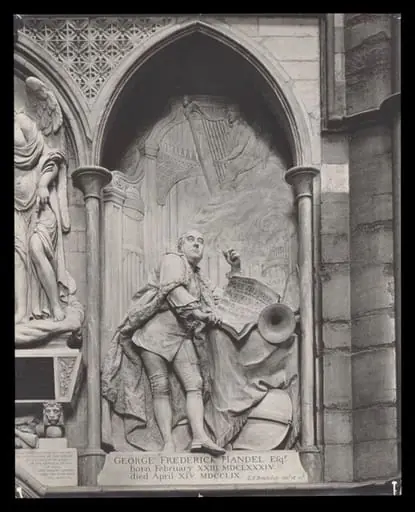
Herbert Felton photographed quiet corners of British history in the mid-1900s. His lens captured the carved Handel statue in Westminster Abbey’s Poets’ Corner, the shadowed church pews at Gloucester Cathedral, and the…

 The East End of Edward the Confessor's Chapel and Tomb, As They Now Stand
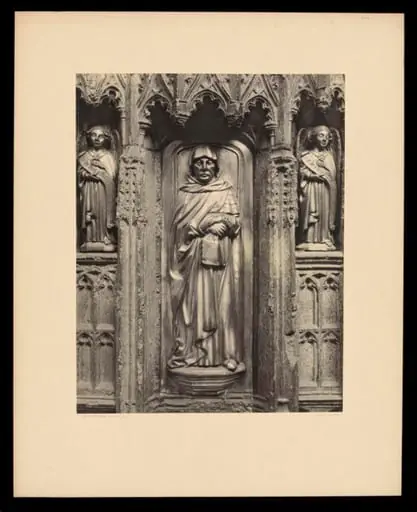 Weepers, Warwick
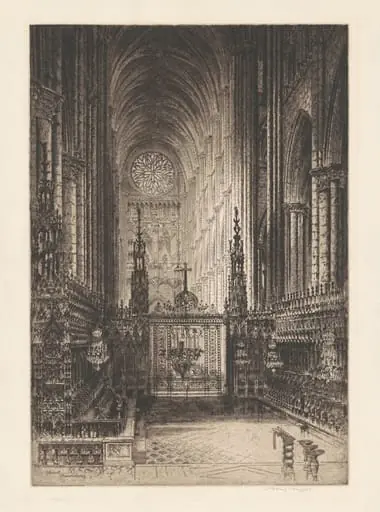 Interior of Amiens Cathedral
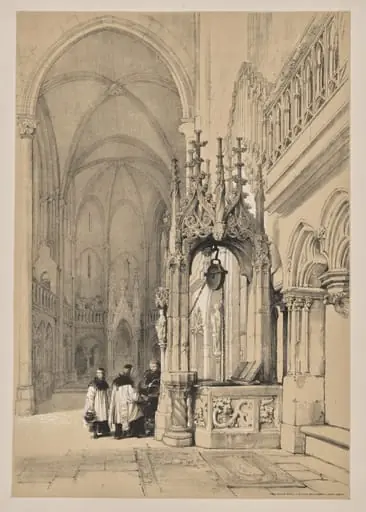 Sketches in Belgium and Germany, First Series, The Holy Well in the Cathedral of Ratisbon
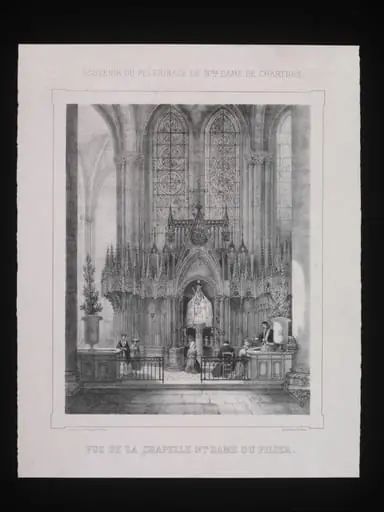 Souvenir du Pélerinage de Notre Dame de Chartres. Vue de la Chapelle Notre Dame du Pilier.
 Untitled
 Untitled
 National Photographic Record and Survey