Artwork
Am Ufer der Maggia am Abend
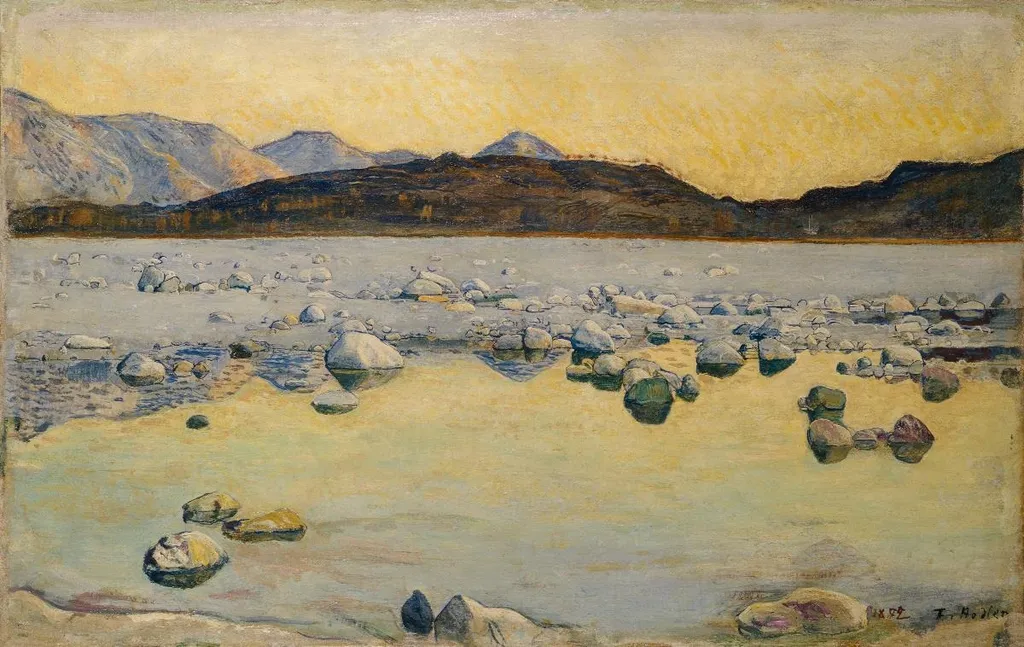
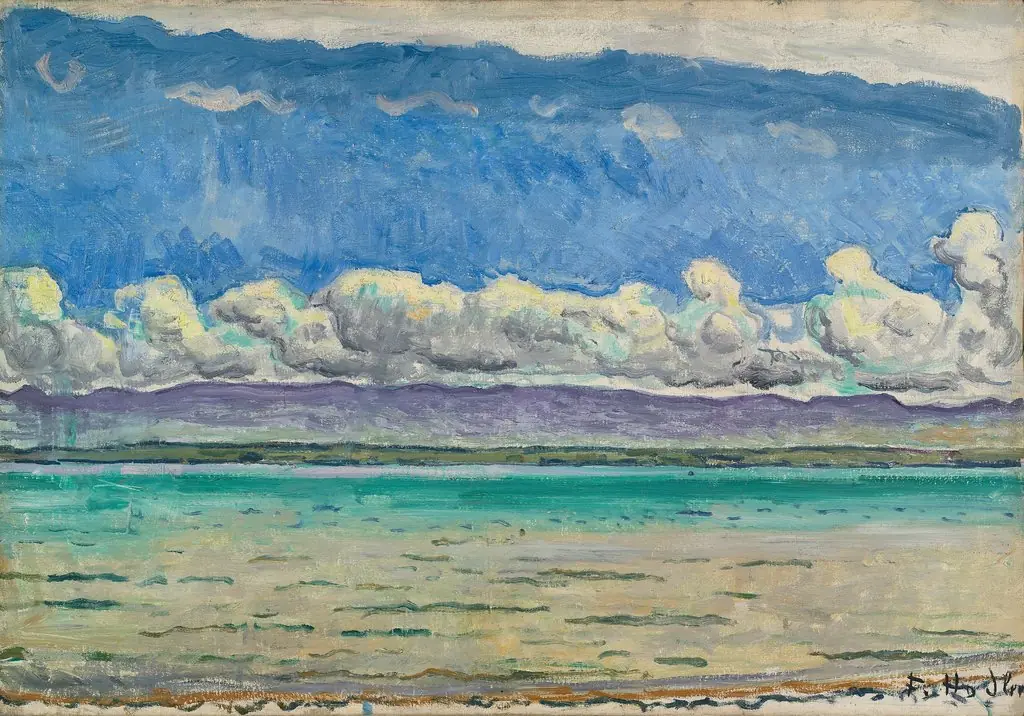
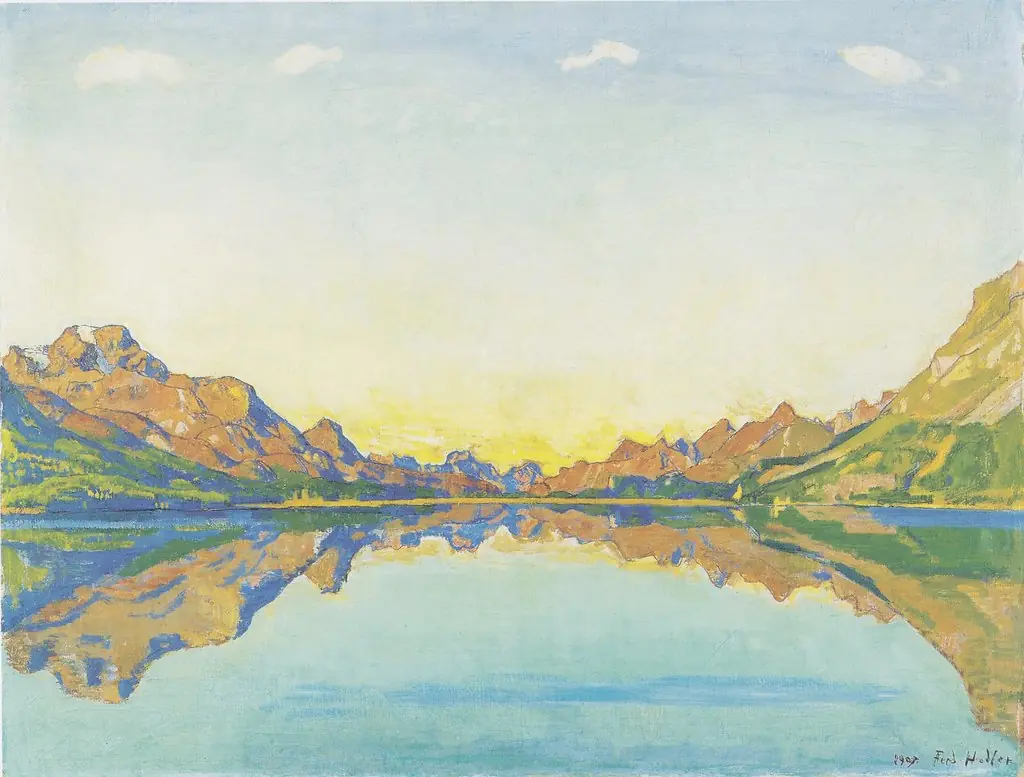
Am Ufer der Maggia am Abend is an oil painting by the Post-Impressionist artist Ferdinand Hodler. It dates from 1897 and is held in the collection of the Kunsthaus Zürich.
About this work
Overview
The work reflects Hodler’s mature phase, where natural forms are arranged with deliberate rhythm, merging observed landscape with internalized harmony.
Ferdinand Hodler painted *Am Ufer der Maggia am Abend* in 1897, during a period when his style evolved beyond early realism toward a more structured, symbolic approach. This oil on canvas captures a quiet evening along the Maggia River in southern Switzerland. The work reflects Hodler’s mature phase, where natural forms are arranged with deliberate rhythm, merging observed landscape with internalized harmony.
Subject & Meaning
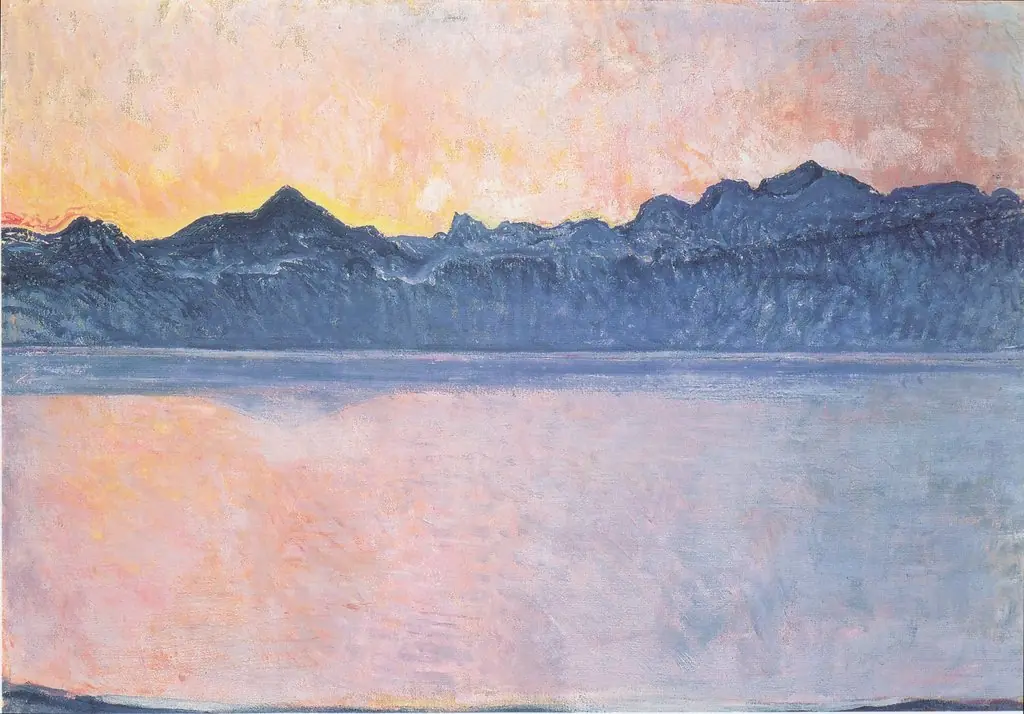
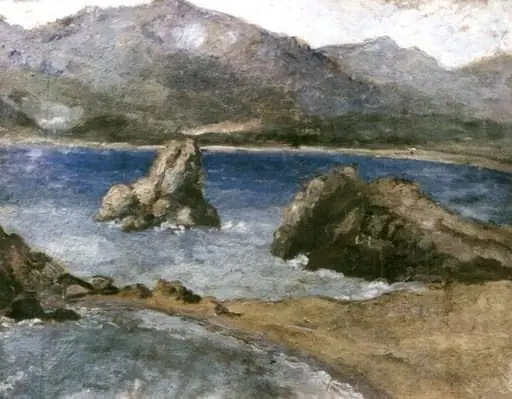
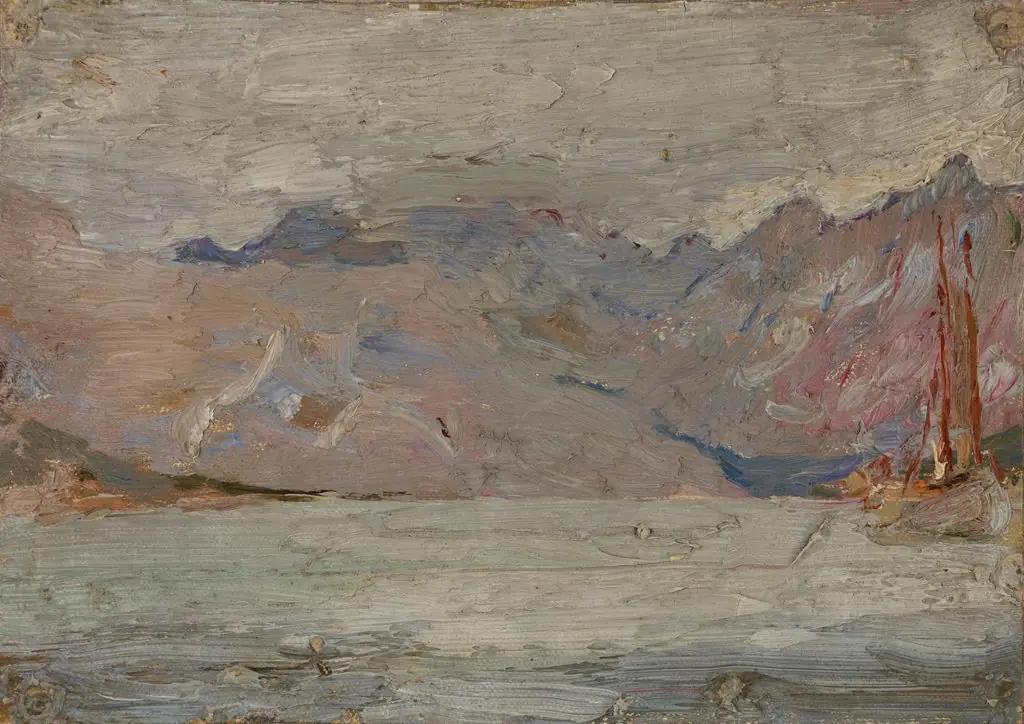
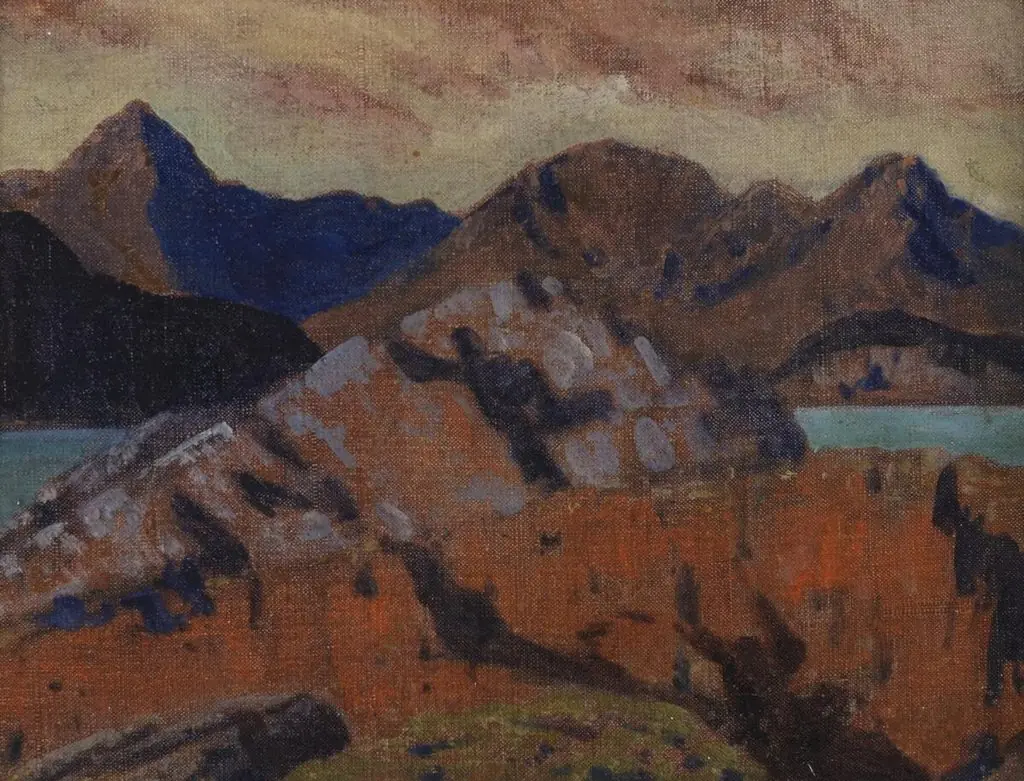
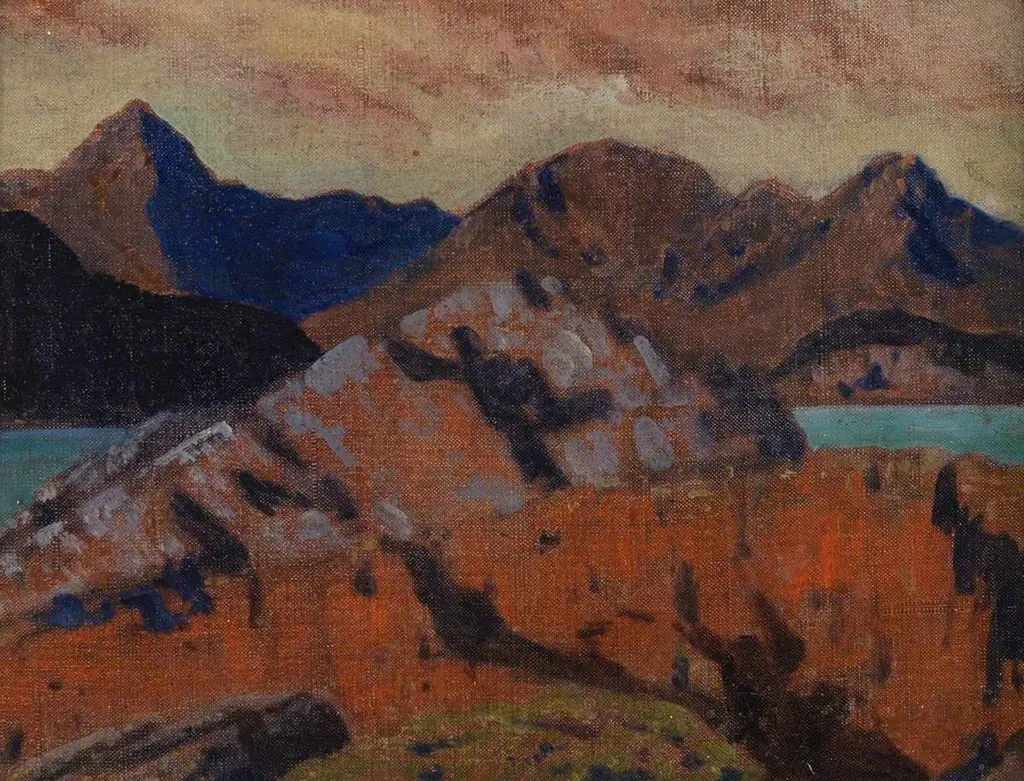
The scene depicts the Maggia River at dusk, with large boulders emerging from the water and distant mountains receding into a warm, golden sky. There is no human presence, emphasizing solitude and the quiet persistence of nature. Hodler’s arrangement suggests a meditative stillness, where the land and sky exist in balanced stillness, evoking a sense of timeless calm rather than narrative action.
Technique & Style
Hodler employs a controlled palette of earth tones and muted golds, with sharp detail in the foreground rocks contrasting against softly blended mountain forms. The composition uses horizontal bands to create depth, while the sky’s uniform hue unifies the scene. His method, sometimes called 'parallelism,' repeats shapes and rhythms—rocks, ridges, cloud edges—to impose order on natural irregularity, aligning with Symbolist ideals of inner resonance over literal representation.
History & Provenance
Created in 1897, the painting remained in Hodler’s possession until it entered the collection of Kunsthaus Zürich, where it has been held since. Its acquisition reflects the institution’s early commitment to Swiss modernism. The work was not exhibited widely during Hodler’s lifetime, but its quiet intensity later attracted scholarly attention as part of his broader exploration of landscape as spiritual expression.
Context
In the late 19th century, Swiss artists like Hodler sought to define a national artistic identity distinct from German or French trends. While Impressionism influenced his early work, Hodler moved toward formal abstraction and symbolic structure, responding to broader European Symbolist currents. This painting reflects a Swiss preoccupation with alpine solitude and the moral weight of nature, resonating with contemporary philosophical and literary themes of introspection.
Legacy
Though less known internationally than his contemporaries, Hodler’s later landscapes, including this one, influenced Swiss modernism’s turn toward structured composition and emotional restraint. *Am Ufer der Maggia am Abend* exemplifies his ability to transform natural observation into a quiet, rhythmic meditation. It remains a key reference in Swiss art history for its synthesis of realism and symbolic form.
Artist & collection
Artist
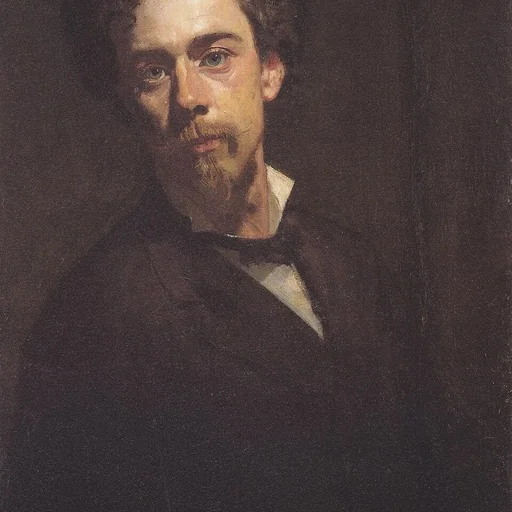
Ferdinand Hodler (March 14, 1853 – May 19, 1918) was a Swiss painter. He is one of the best-known Swiss painters of the nineteenth century. His early works were portraits, landscapes, and genre paintings in a realistic…