Artwork
Hector Posing Nude
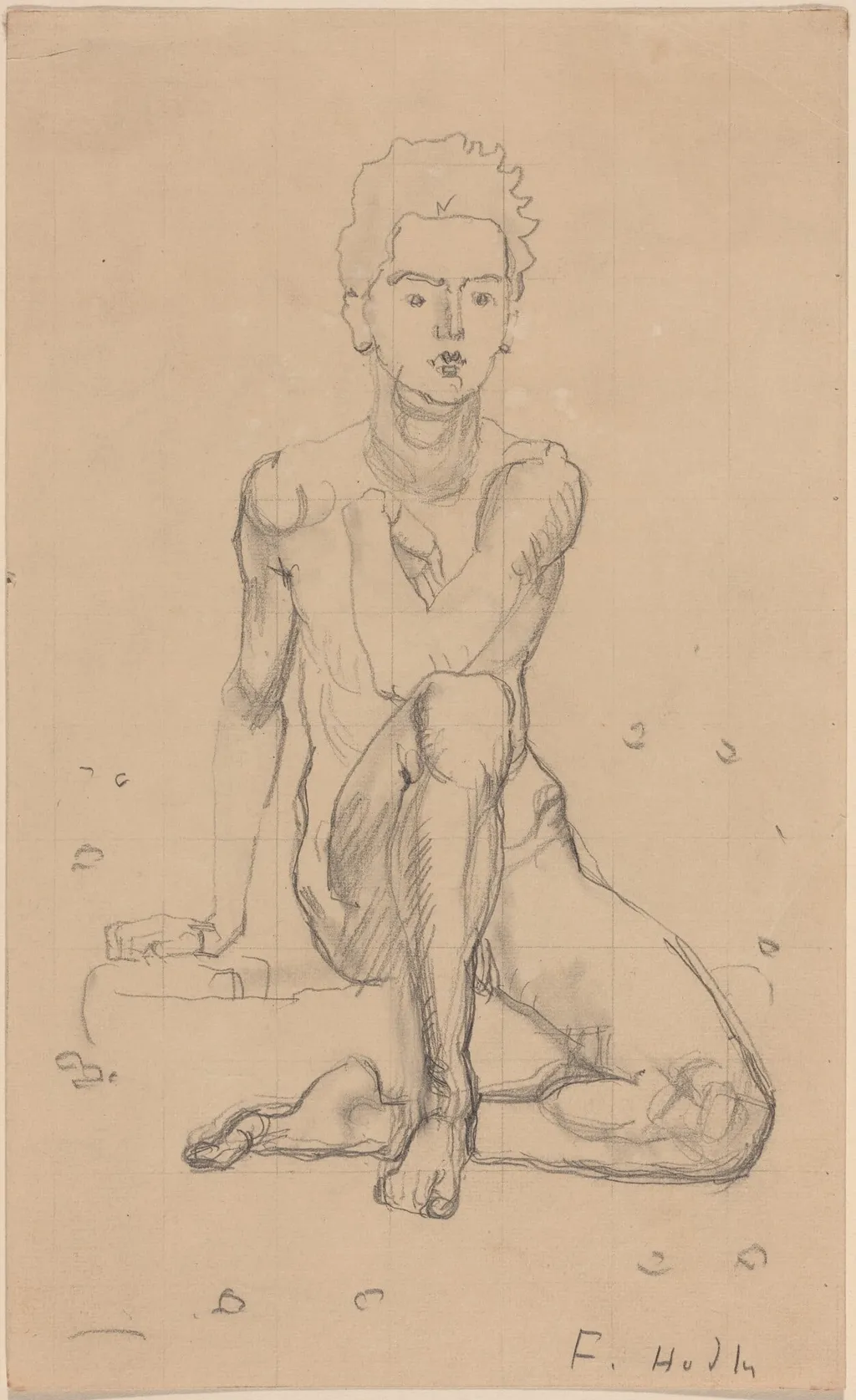
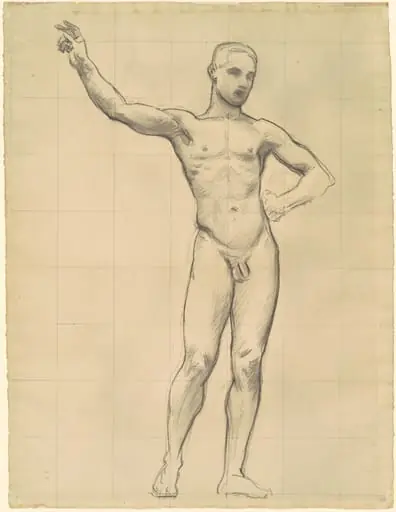
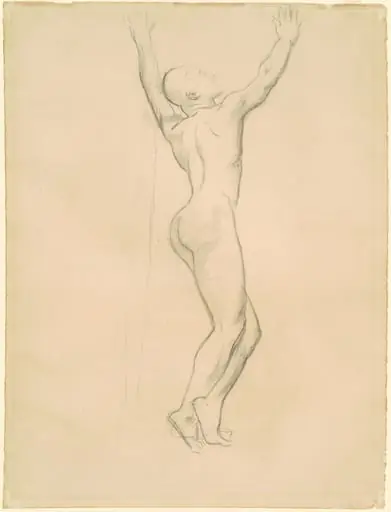
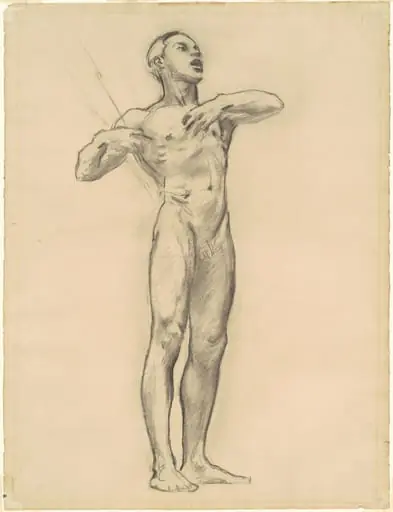
Hector Posing Nude is a graphite drawing by Ferdinand Hodler. It dates from 1901 and is held in the collection of the National Gallery of Art.
About this work
The painting is called Hector Posing Nude by Ferdinand Hodler.
It was created in 1901.
The artist used graphite on wove paper, and the work is squared, which means it was prepared for transfer to another surface.
This suggests the artist planned to create a larger or more detailed version of the work.
Check out the National Gallery of Art, Washington to learn more about this piece.
Overview
Ferdinand Hodler’s *Hector Posing Nude* is a 1901 graphite drawing on wove paper. Executed in a squared format, the work served as a preparatory study, likely intended for transfer to a larger composition. Hodler, a Swiss artist, bridged late 19th-century realism with Symbolist tendencies, developing a stylistic framework he termed 'parallelism' to explore harmony and repetition in form.
Subject & Meaning
The drawing presents a male nude in a posed stance, identified by the title as Hector, the Trojan warrior from classical mythology. Hodler’s choice of subject reflects his engagement with heroic and allegorical themes, though the work’s primary function as a study suggests a focus on anatomical precision and compositional structure rather than narrative elaboration.
Technique & Style
Rendered in graphite, the drawing employs fine, controlled lines to define the figure’s musculature and contours. The squared grid overlay indicates a methodical approach to scaling, allowing for potential enlargement or replication. Hodler’s draftsmanship here balances realism with an emerging Symbolist sensibility, emphasizing clarity of form and rhythmic arrangement.
History & Provenance
Created in 1901, *Hector Posing Nude* exemplifies Hodler’s preparatory practices during a period of stylistic transition. The work’s squared format suggests it was intended as a study for a painting or mural, though the final composition, if executed, remains unconfirmed. Its current ownership and exhibition history are tied to institutional collections, including the National Gallery of Art.
Context
Hodler’s output in the early 20th century reflected broader European trends, merging academic rigor with Symbolist ideals. This drawing emerges from a phase where he explored human anatomy as both a technical exercise and a vehicle for expressive abstraction. The squared study aligns with his interest in seriality and formal repetition, precursors to his mature parallelism.
Artist & collection
Artist
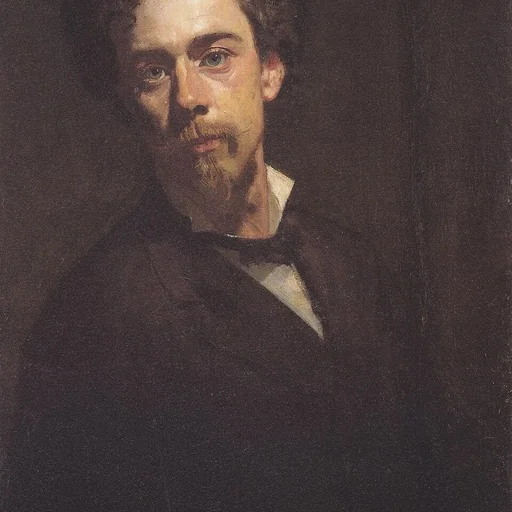
Ferdinand Hodler (March 14, 1853 – May 19, 1918) was a Swiss painter. He is one of the best-known Swiss painters of the nineteenth century. His early works were portraits, landscapes, and genre paintings in a realistic…

![The Belvedere Torso [verso], by William Blake](https://artifactworldgallery.com/img/william-blake--the-belvedere-torso-verso--3124534f87673a3a-w320.webp)