Artwork
Das Jungfraumassiv von Mürren aus
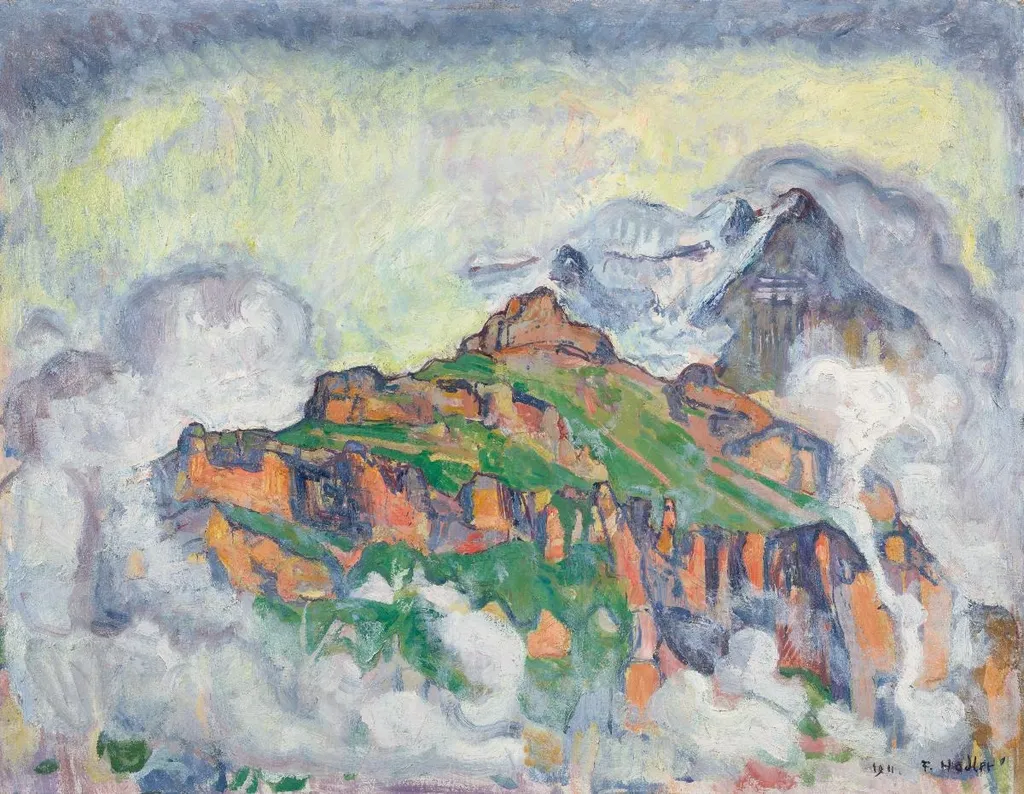
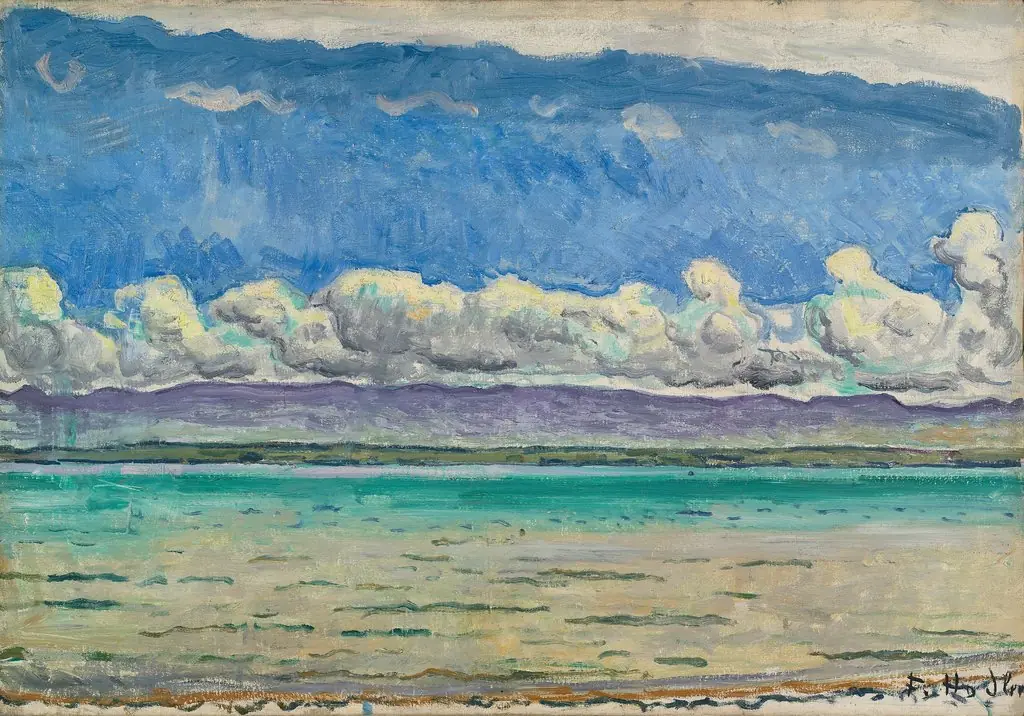
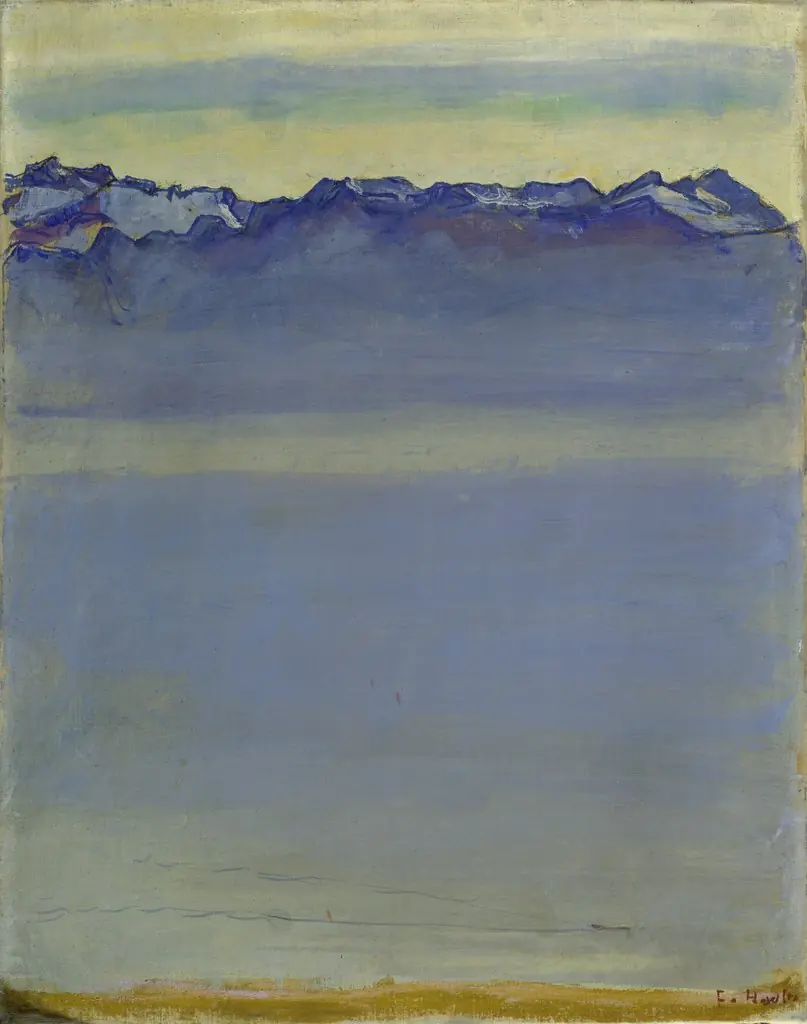
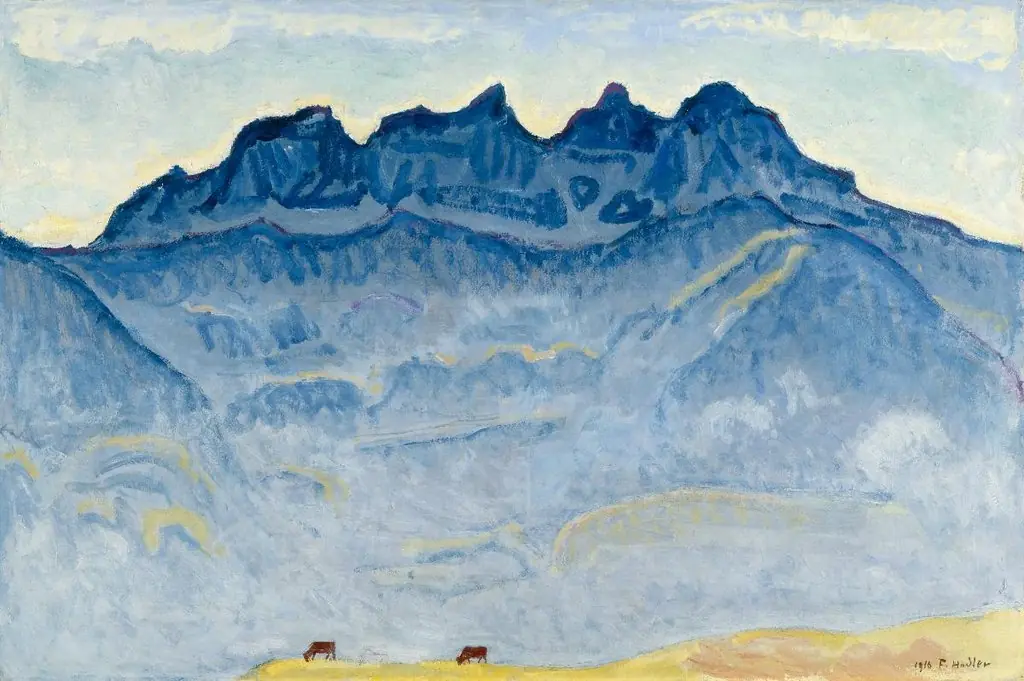
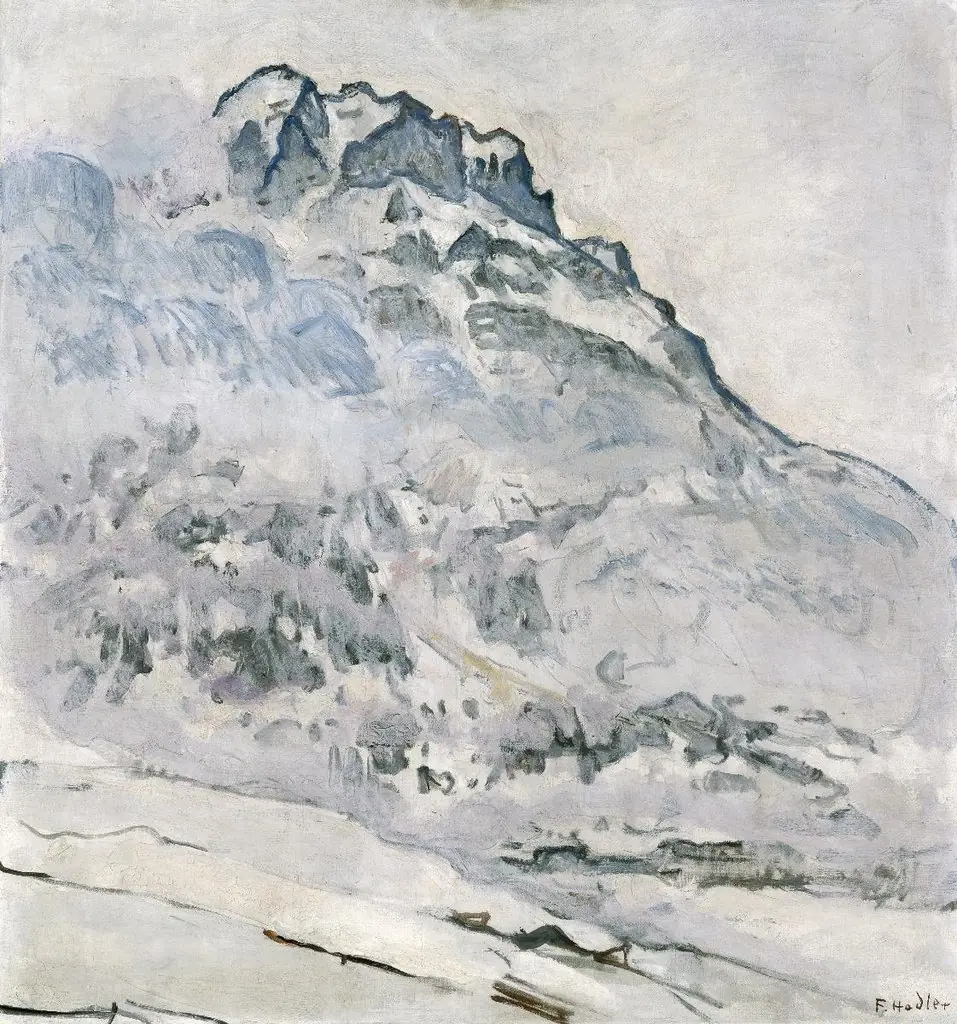
Das Jungfraumassiv von Mürren aus is an oil painting by the Symbolist artist Ferdinand Hodler. It dates from 1911 and is held in the collection of the Kunsthaus Zürich.
About this work
Overview
Painted in 1911, *Das Jungfraumassiv von Mürren aus* is a landscape by Swiss artist Ferdinand Hodler, executed in oil on canvas.
Painted in 1911, *Das Jungfraumassiv von Mürren aus* is a landscape by Swiss artist Ferdinand Hodler, executed in oil on canvas. It captures the Jungfrau massif as seen from the village of Mürren, reflecting Hodler’s mature style that moved beyond strict realism toward a structured, rhythmic approach he called 'parallelism.' The work is part of the permanent collection at Kunsthaus Zürich, where it represents a key phase in his artistic evolution.
Subject & Meaning
The painting centers on the Jungfrau peak, rendered with quiet monumentality. Hodler avoids dramatic narrative, instead presenting the mountain as a timeless, almost sacred form. The composition emphasizes stillness and harmony, suggesting a spiritual connection between nature and the observer. Subtle repetitions in the mountain’s contours and cloud formations reinforce his belief in universal order and balance.
Technique & Style
Hodler employed soft, blended brushwork to create a luminous atmosphere, with gradients from pale yellow to deep blue in the sky and muted browns and greens in the terrain. The foreground’s textured surface suggests geological depth without detailed realism. Parallel lines in the ridges and clouds echo one another, a hallmark of his 'parallelism'—a method that organizes natural forms into rhythmic, symbolic patterns rather than literal depictions.
History & Provenance
Created during the final decade of Hodler’s career, the painting reflects his sustained interest in Swiss alpine landscapes. It entered the Kunsthaus Zürich collection shortly after its completion, likely through direct acquisition or donation. The work remained relatively private until the mid-20th century, when Hodler’s symbolic landscapes gained renewed scholarly attention as part of broader European Symbolist movements.
Context
In early 20th-century Europe, many artists turned to abstraction and symbolism in response to industrialization and scientific change. Hodler’s alpine scenes, though rooted in observation, offered a counterpoint: nature as a realm of enduring harmony. His work resonated with contemporaries like Klimt and Schiele, though he remained distinct in his focus on Swiss identity and geometric natural forms.
Legacy
Hodler’s *Jungfraumassiv* exemplifies his contribution to modern Swiss art—bridging observation and abstraction without abandoning representational form. While less known internationally than his French or German peers, his structured landscapes influenced later generations of Swiss painters and reinforced the cultural significance of the Alps in national identity. The painting remains a touchstone for studies of Symbolism outside mainstream European centers.
Artist & collection
Artist
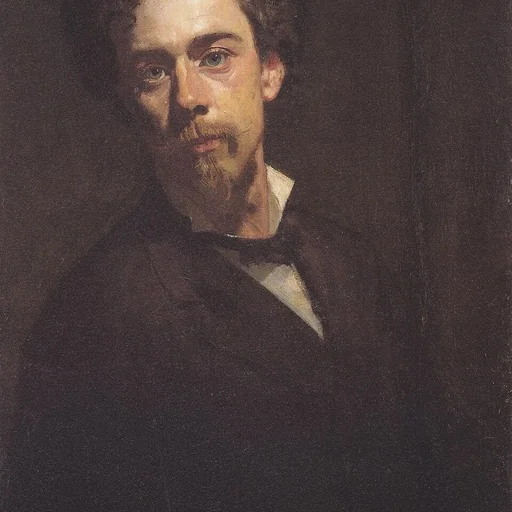
Ferdinand Hodler (March 14, 1853 – May 19, 1918) was a Swiss painter. He is one of the best-known Swiss painters of the nineteenth century. His early works were portraits, landscapes, and genre paintings in a realistic…