Artwork
Saturday. Gottesacker to Sct. Peter in Salzburg
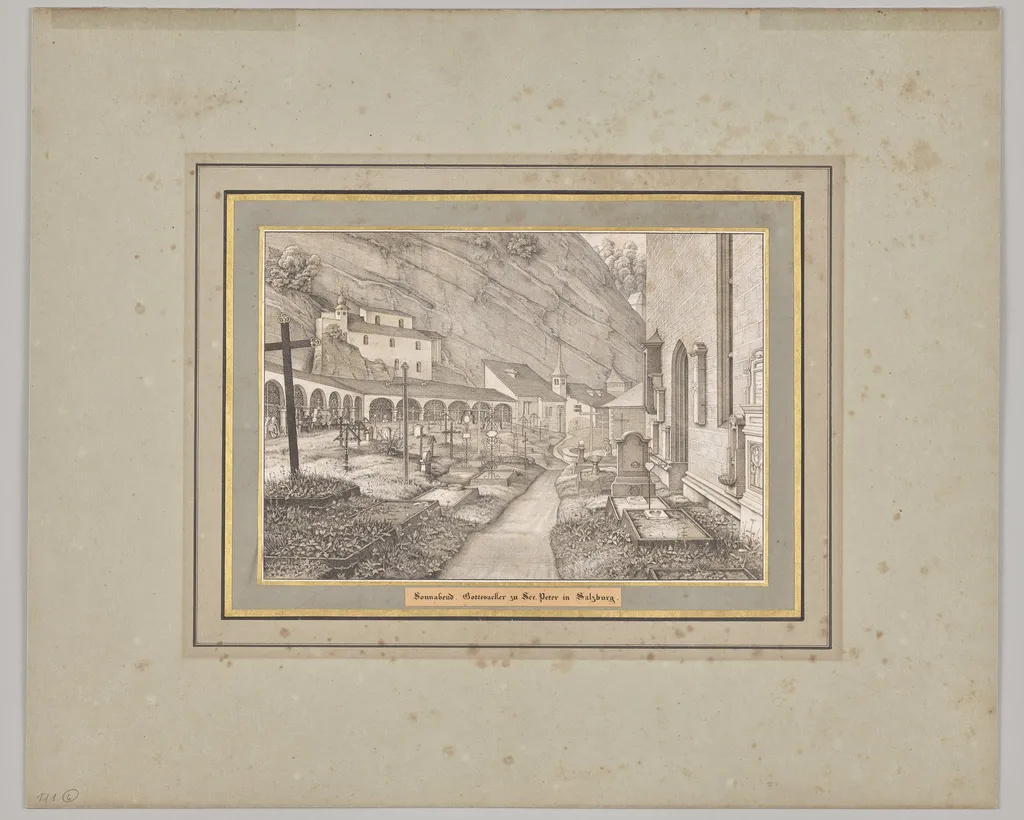
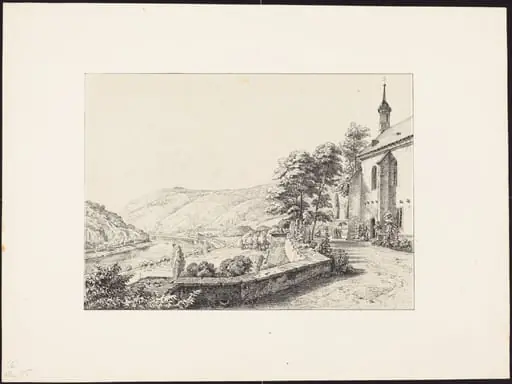
Saturday. Gottesacker to Sct. Peter in Salzburg is a print by the Romanticist artist Ferdinand Olivier. It dates from 1820 and is held in the collection of the Cleveland Museum of Art.
About this work
Overview
Created in 1820 by Ferdinand Olivier, this print depicts a quiet hillside cemetery in Salzburg, linking the Gottesacker to St. Peter’s Church. Executed in a restrained tonal style, the work captures a moment of stillness rather than ceremonial grandeur. It resides in The Cleveland Museum of Art’s collection, where it is valued for its intimate observation of place and atmosphere.
Subject & Meaning
The scene portrays a modest burial ground with simple crosses and modest stone markers lining a narrow path.
The scene portrays a modest burial ground with simple crosses and modest stone markers lining a narrow path. Behind them, St. Peter’s Church rises subtly against a rocky cliff, its arched windows hinting at spiritual continuity. The absence of figures and dramatic action emphasizes contemplation, reflecting a Romantic sensibility that finds significance in solitude and the quiet rhythms of daily life.
Technique & Style
Olivier employs delicate linear work and subtle gradations of tone to suggest depth and texture. Shadows fall naturally across the graves and path, enhancing the sense of spatial recession without heavy contrast. The rendering of foliage and stone is precise yet unembellished, aligning with a documentary approach that prioritizes observed reality over idealized composition.
History & Provenance
The print was made during Olivier’s travels in Austria, a period when he documented regional landscapes and religious sites. It entered The Cleveland Museum of Art’s collection in the 20th century, likely through a broader acquisition of 19th-century European graphic works. Its provenance reflects a growing interest in Romantic-era sketches as records of cultural and topographical memory.
Context
In early 19th-century Europe, artists increasingly turned to humble, everyday scenes as subjects worthy of artistic attention. Olivier’s depiction of a provincial cemetery aligns with Romantic ideals that valued nature, memory, and quiet reverence over historical or mythological grandeur. Such works responded to a cultural shift toward introspection and the emotional resonance of place.
Legacy
Though not widely exhibited, the print contributes to understanding how Romantic artists redefined the boundaries of subject matter. Its quiet dignity and technical restraint influenced later generations interested in landscape as a vessel for mood and memory. It remains a quiet testament to the aesthetic power of unadorned observation.
Artist & collection

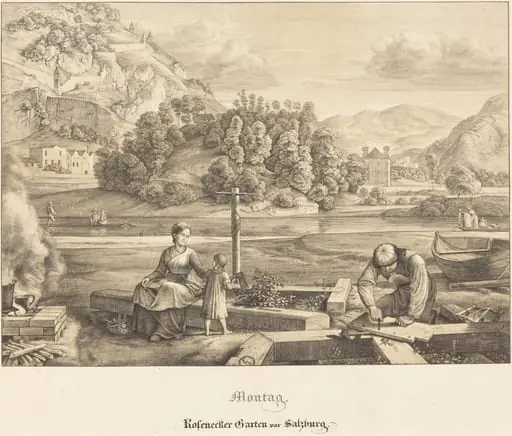 Montag - Rosenecker Garten vor Salzburg (Monday - Rosenecker Garden near Salzburg)
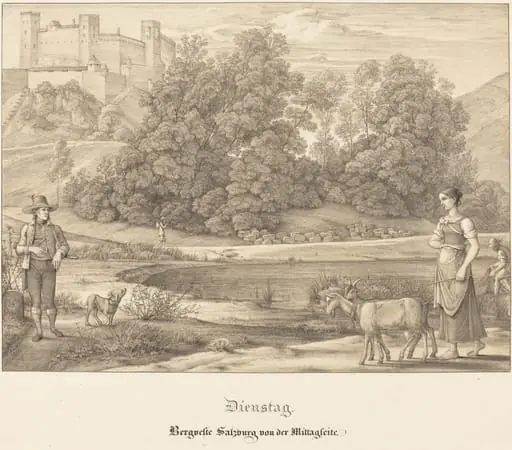 Dienstag - Bergveste Salzburg vor der Mittagseit (Tuesday - The Castle of Salzburg from the Noontime Side)
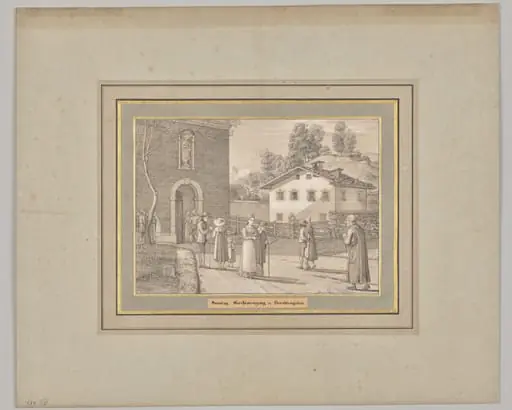
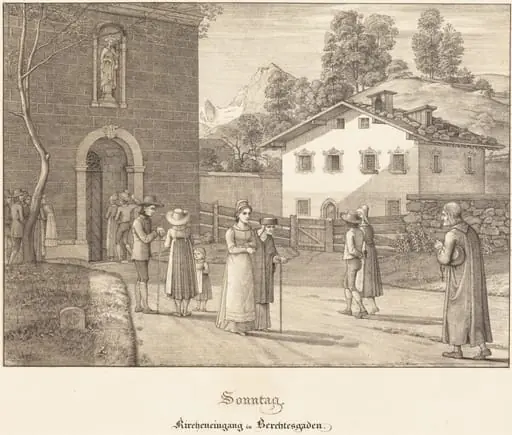 Sonntag - Kircheneingang in Berchtesgaden (Sunday - Going to Church near Berchtesgaden)
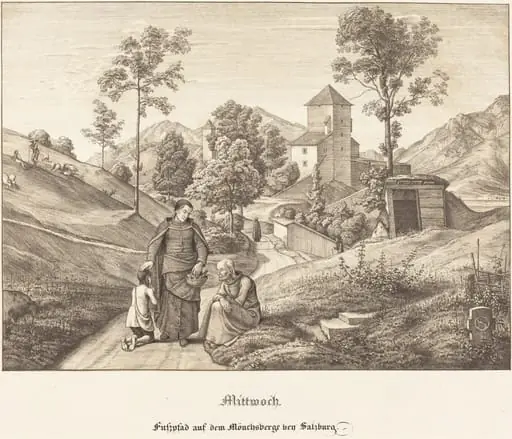 Mittwoch - Fusspfad auf dem Mönchsberge bey Salzburg (Wednesday - Footpath on the Mönchsberge near Salzburg)
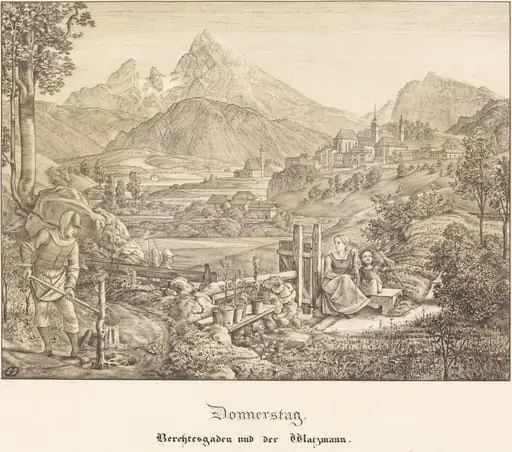 Donnerstag - Berchtesgaden und der Watzmann (Thursday - Berchtesgaden and the Watzmann Mountain)
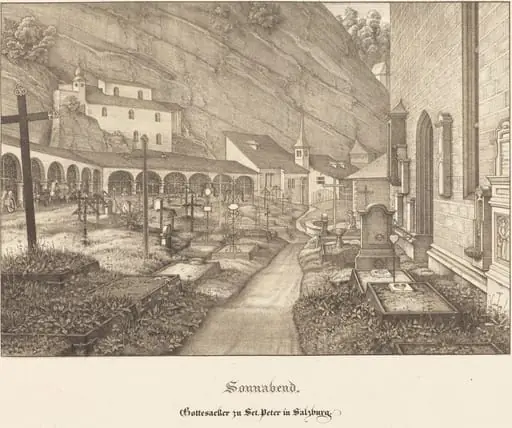 Sonnabend - Gottesacker zu St. Peter in Salzburg (Saturday - Graveyard of St. Peter's in Salzburg)
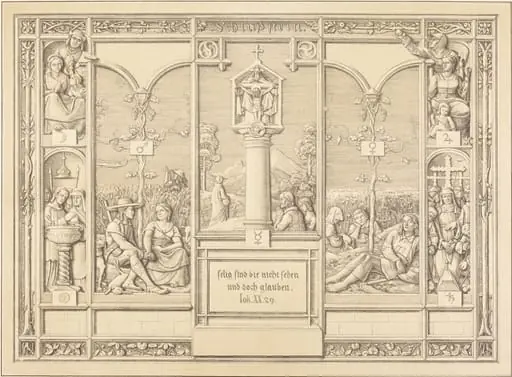 Tailpiece: Selig sind die nicht sehen und doch glauben (Blessed are those who do not
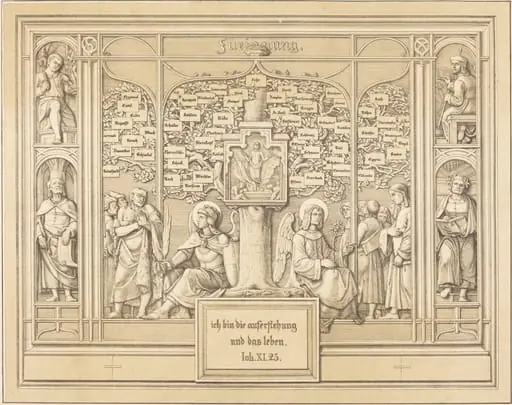 Dedication: Ich bin die Auferstehung und das Leben (I am the resurrection and the life)