Artwork
Ansichten aus den vier Weltteilen mit Szenen von Tieren: Lissabon
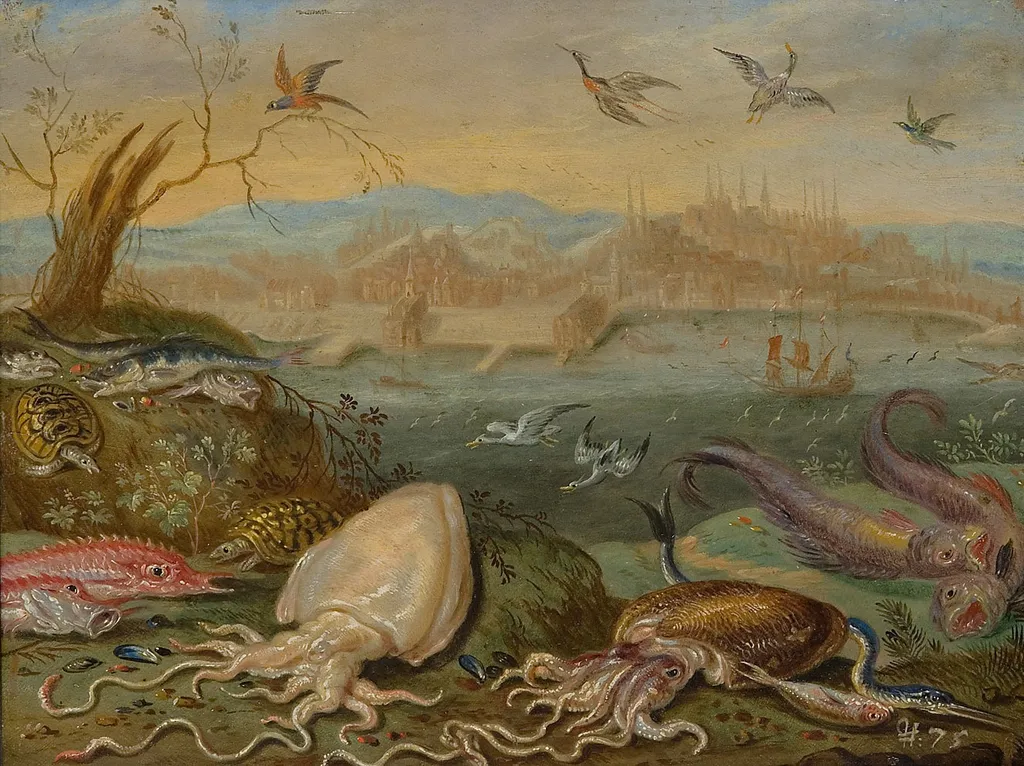
Ansichten aus den vier Weltteilen mit Szenen von Tieren: Lissabon is an unspecified painting by Ferdinand van Kessel the Elder. It dates from 1682 and is held in the collection of the Kunsthistorisches Museum.
About this work
Overview
The work reflects the period’s fascination with global exploration and natural history.
Ferdinand van Kessel the Elder painted *Ansichten aus den vier Weltteilen mit Szenen von Tieren: Lissabon* circa 1682, part of a series depicting scenes from the four continents. A Flemish artist known for meticulous naturalism, he combined topographical elements with zoological detail, rendering Lisbon as a backdrop to an array of marine life along the shore. The work reflects the period’s fascination with global exploration and natural history.
Subject & Meaning
The painting presents Lisbon’s harbor and skyline as a stage for marine fauna—fish, squid, and a turtle—arranged along the shoreline. Birds wheel above, linking land, sea, and sky. Rather than a literal record, the scene synthesizes observation and imagination, suggesting a symbolic convergence of distant lands and their creatures, typical of Baroque curiosity cabinets translated into pictorial form.
Technique & Style
Van Kessel employed fine brushwork to capture textures: the glossy sheen of fish scales, the sinuous tentacles of squid, and the rough stone of buildings. The composition layers foreground wildlife with a distant urban vista, using atmospheric perspective to recede the city into hazy mountains. Color is rich but restrained, emphasizing realism over theatricality, aligning with Flemish traditions of detailed observation.
History & Provenance
Created during van Kessel’s mature period, the painting entered the Kunsthistorisches Museum’s collection in Vienna, where it remains today. It was likely acquired as part of the Habsburgs’ broader interest in naturalia and global representation. Its survival in good condition reflects its status as a carefully preserved cabinet piece, valued for its encyclopedic detail rather than grand narrative.
Context
In late 17th-century Europe, interest in global flora and fauna surged alongside colonial expansion. Artists like van Kessel responded by creating hybrid scenes that merged real locations with exotic wildlife, often drawn from prints, traveler accounts, or preserved specimens. This painting fits within a genre that blurred science and spectacle, serving both aesthetic and intellectual curiosity.
Legacy
Van Kessel’s series influenced later naturalistic painting and illustrated natural history works. While not widely known today, his integration of animals into landscape settings prefigured the rise of ecological observation in art. His attention to biological accuracy, though filtered through contemporary understanding, contributed to a visual language that valued detail as a form of knowledge.
Artist & collection
Artist
Ferdinand van Kessel the Elder
Ferdinand van Kessel (1648 – 1696), was a Flemish Baroque painter known for his landscapes, still lifes and genre pieces with monkeys.

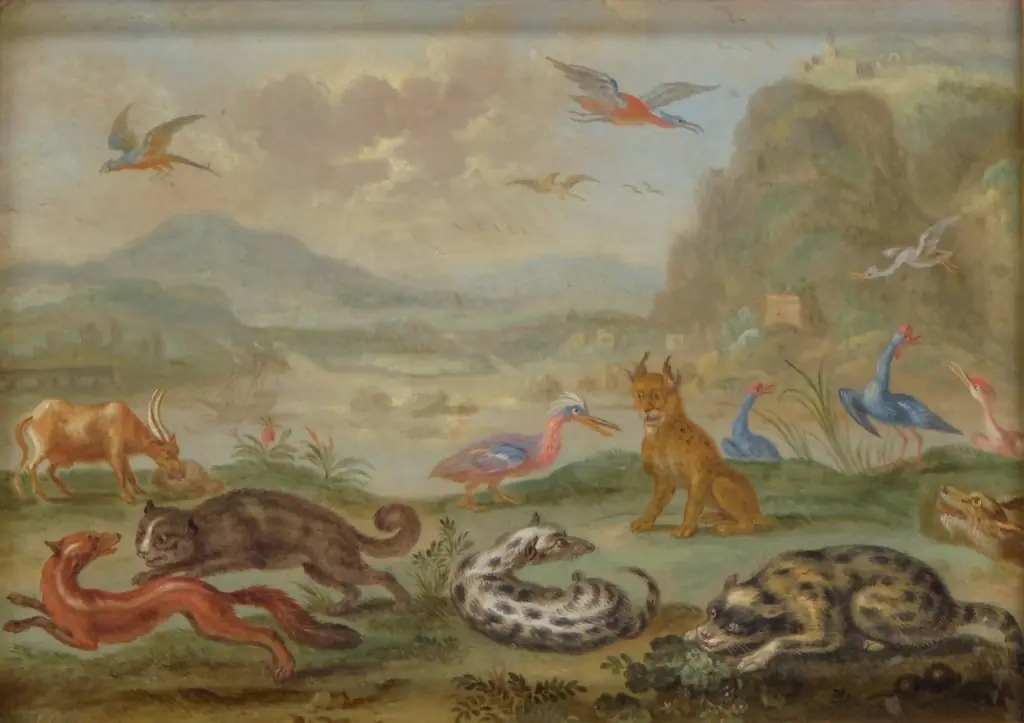
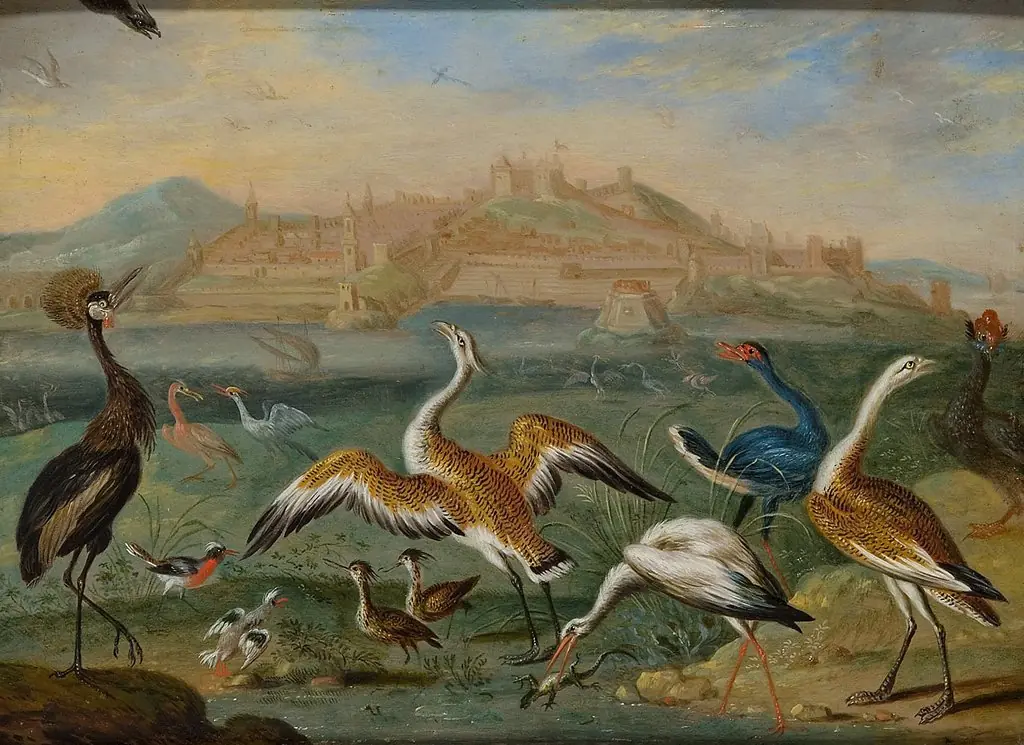
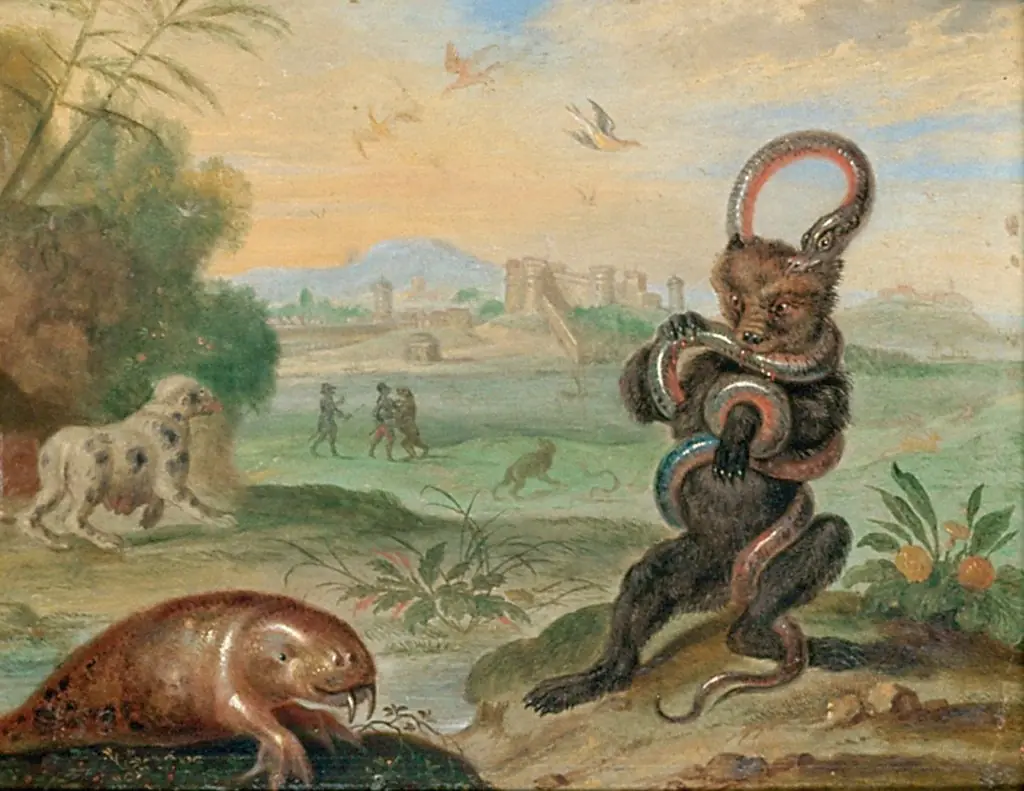
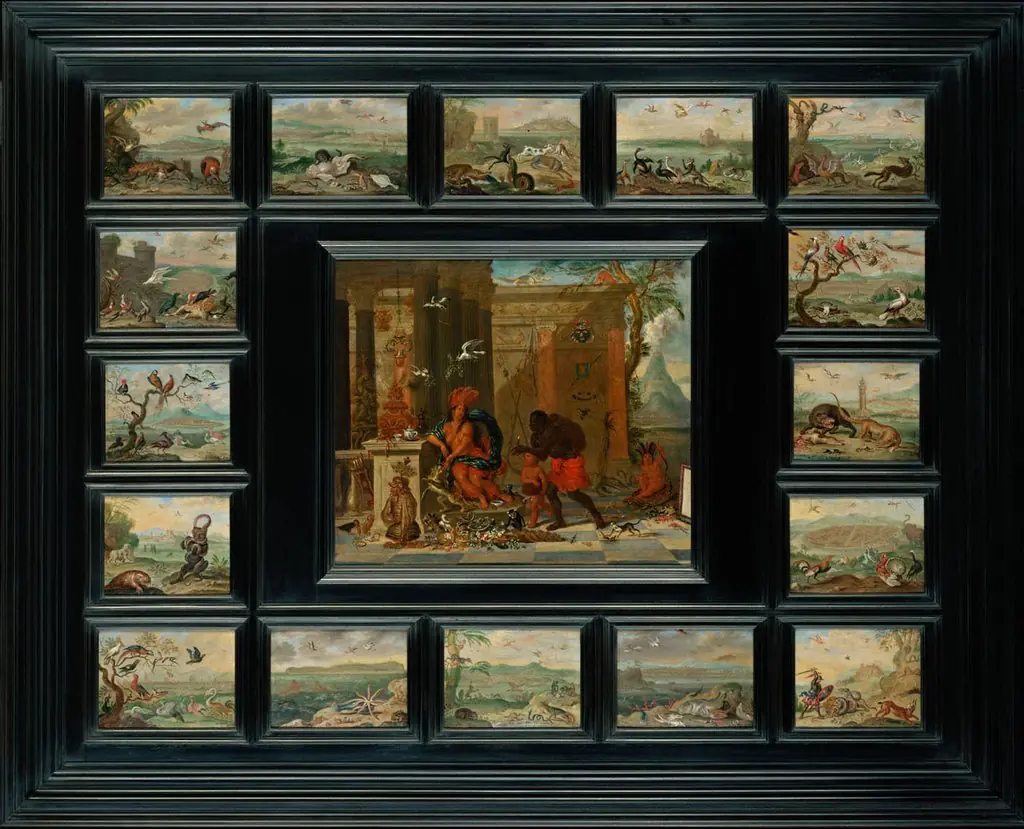
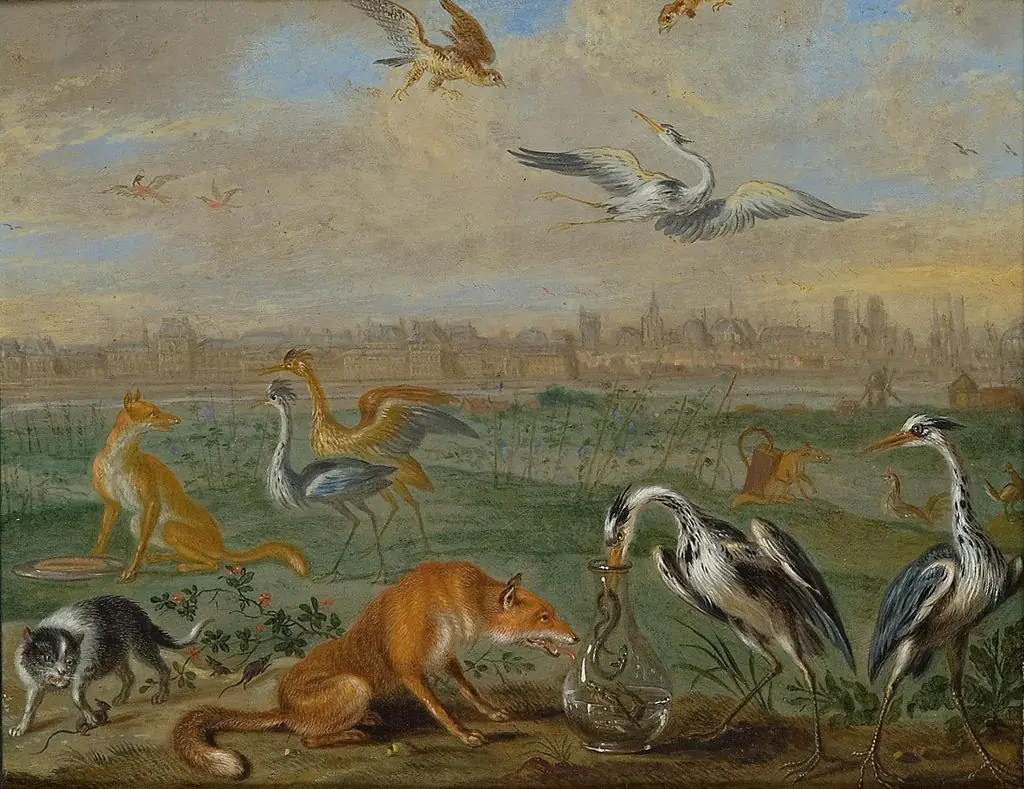
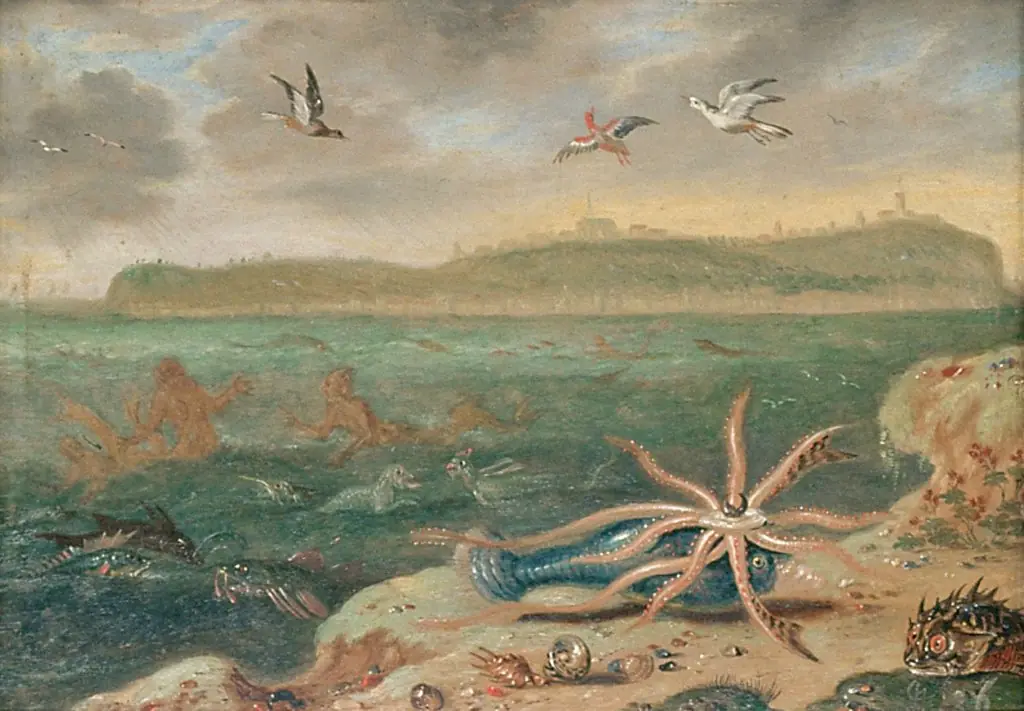 Ansichten aus den vier Weltteilen mit Szenen von Tieren: Luanda (Angola)
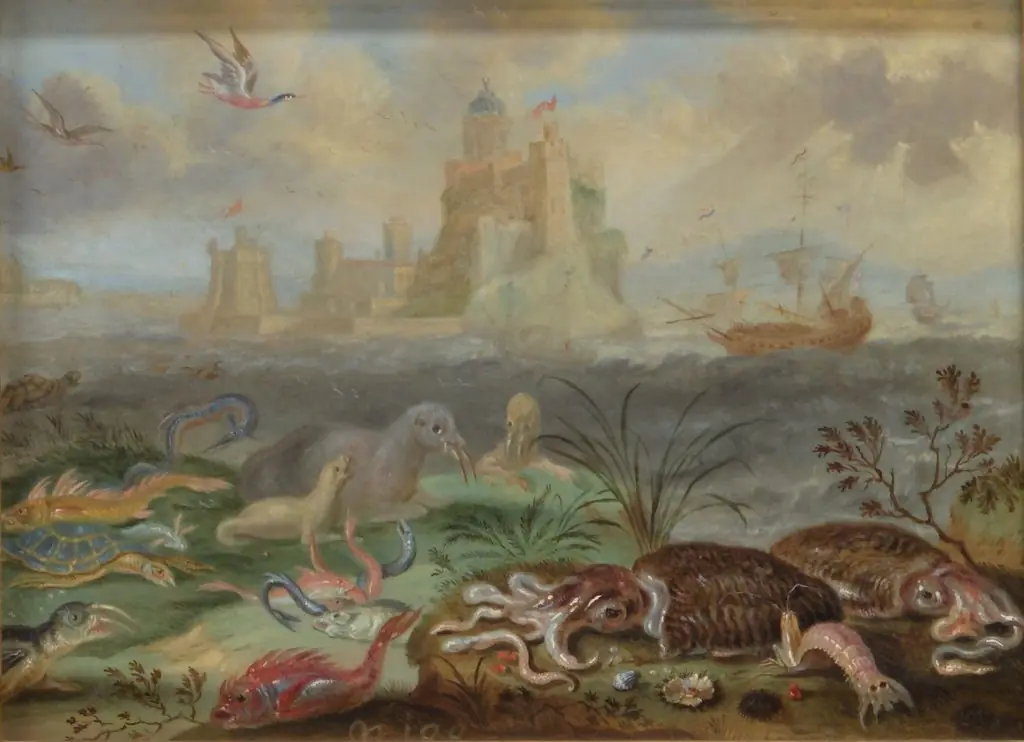 Ansichten aus den vier Weltteilen mit Szenen von Tieren: Bartanico oder Battanico
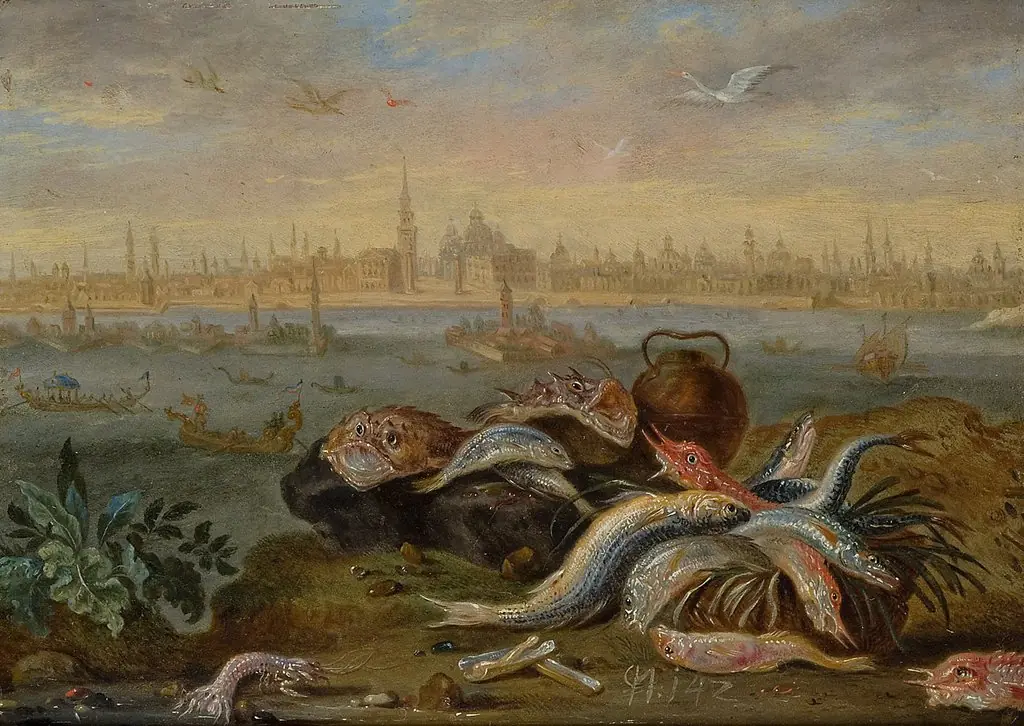 Ansichten aus den vier Weltteilen mit Szenen von Tieren: Venedig
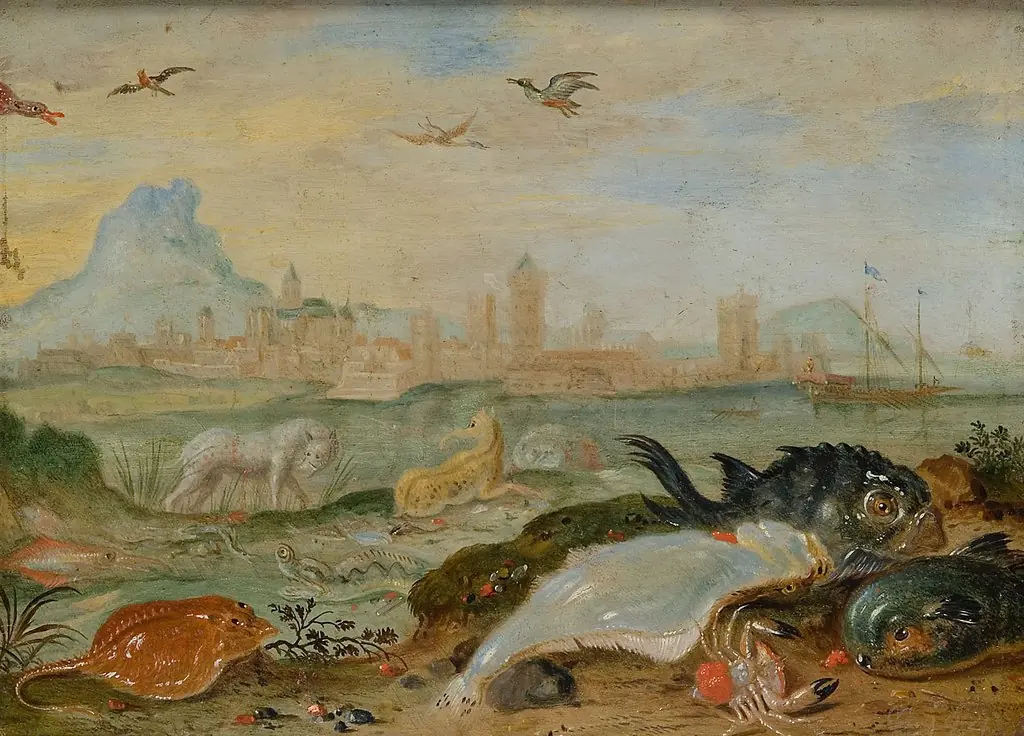 Ansichten aus den vier Weltteilen mit Szenen von Tieren: Candia (Iraklion, Kreta)
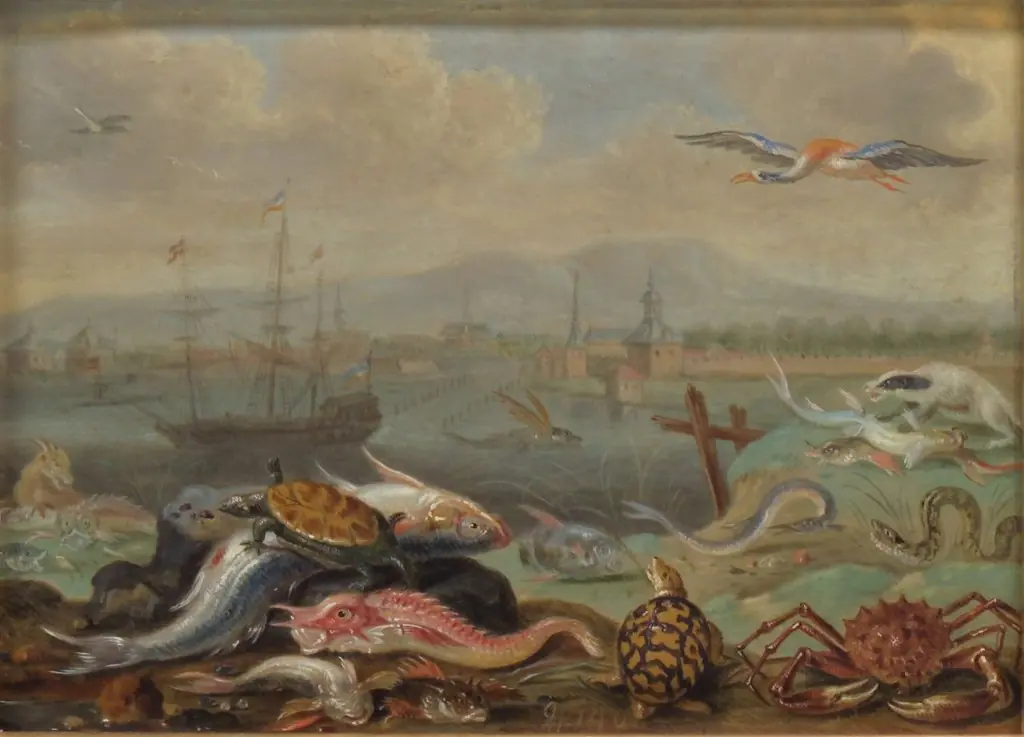 Ansichten aus den vier Weltteilen mit Szenen von Tieren: Alexandria
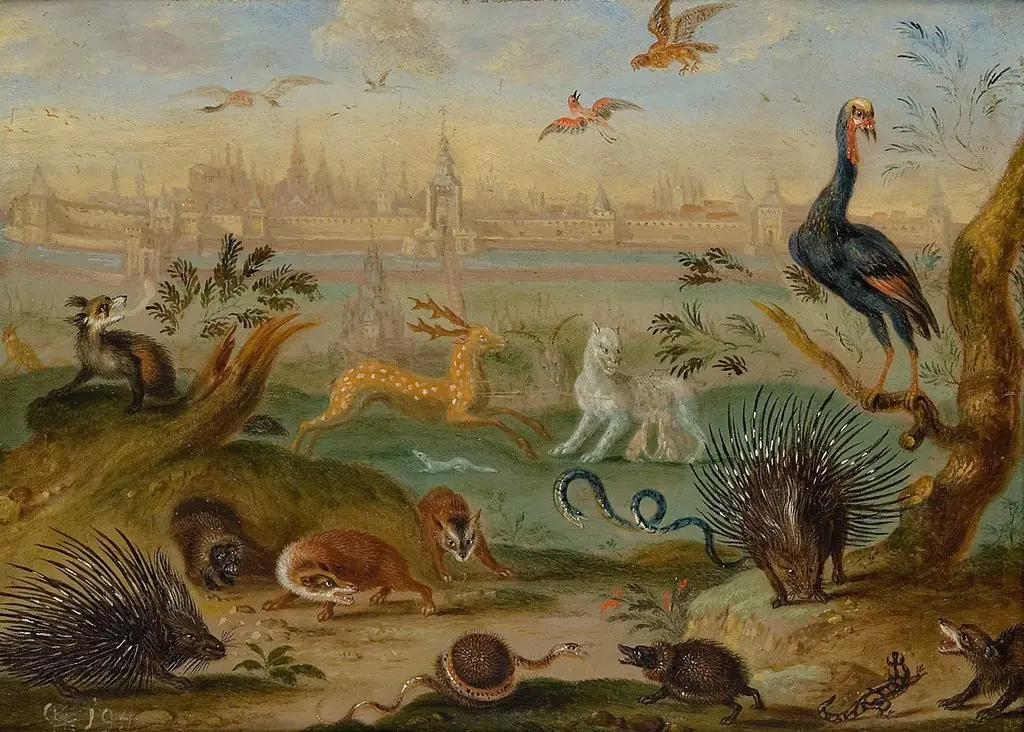 Ansichten aus den vier Weltteilen mit Szenen von Tieren: Moskau
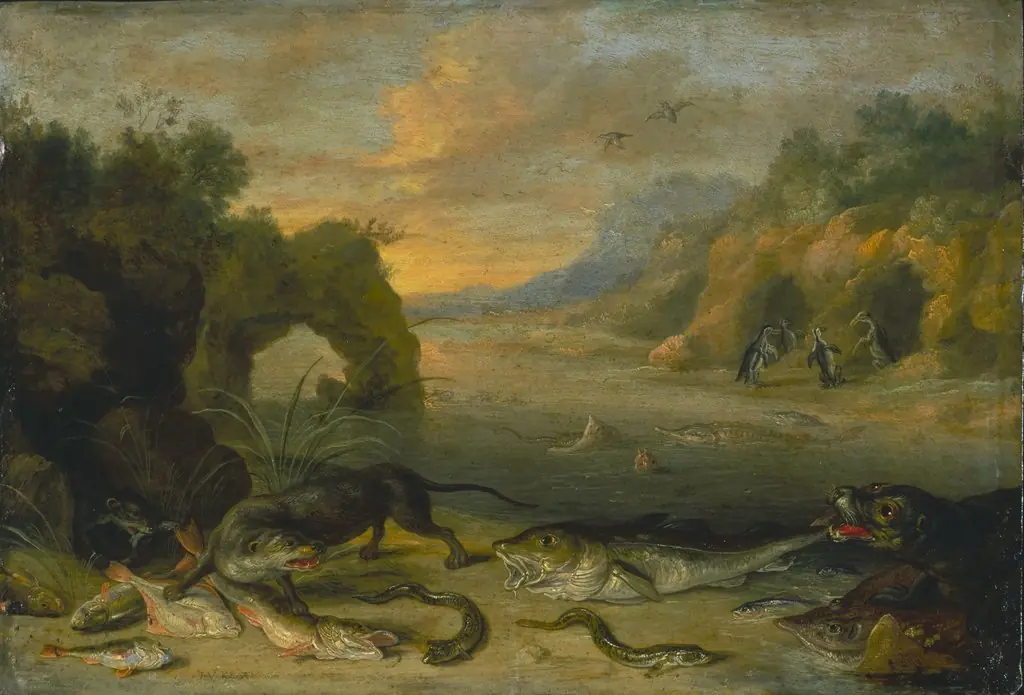 Water
Water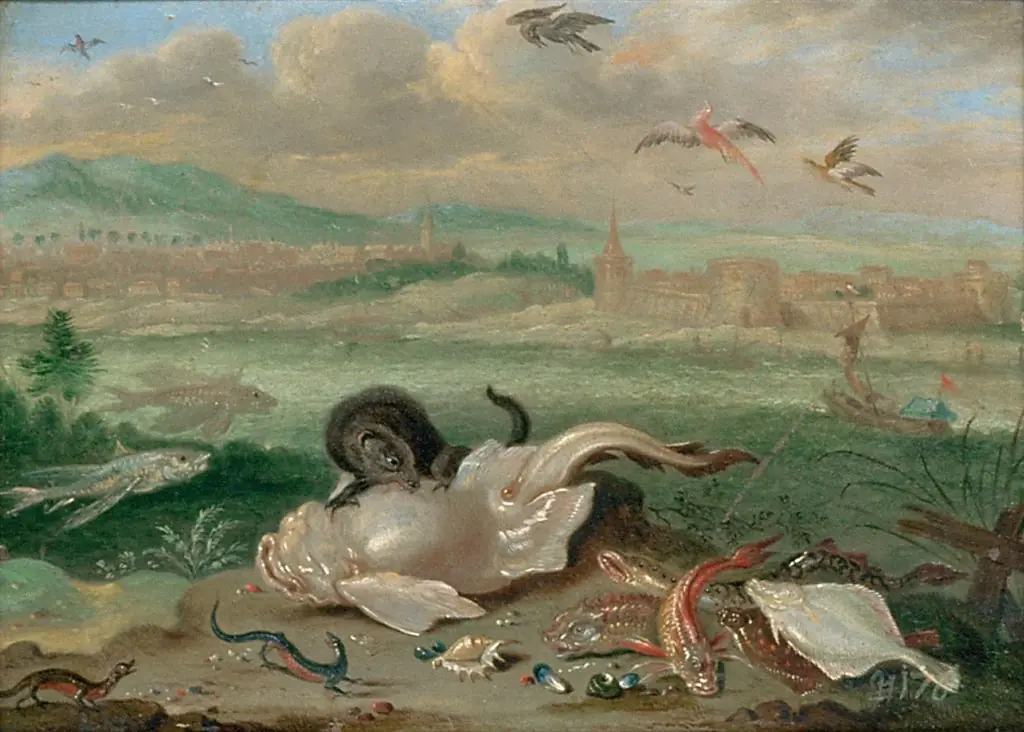 Ansichten aus den vier Weltteilen mit Szenen von Tieren: Florida
 Pescados y paisaje