Artwork
Pescados y paisaje
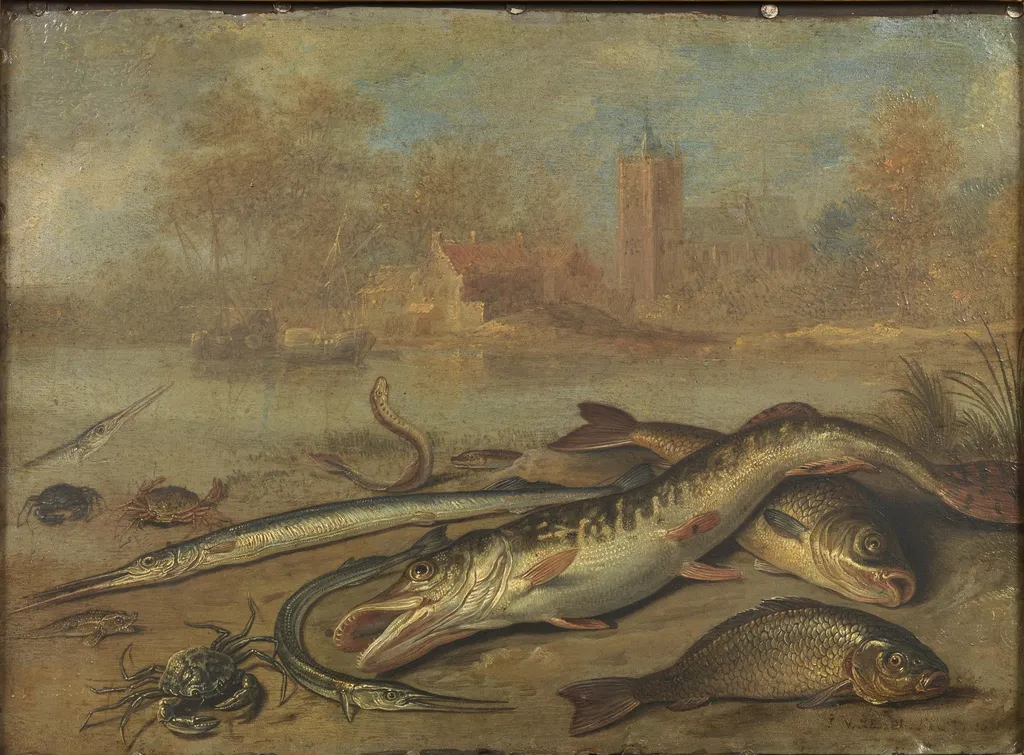
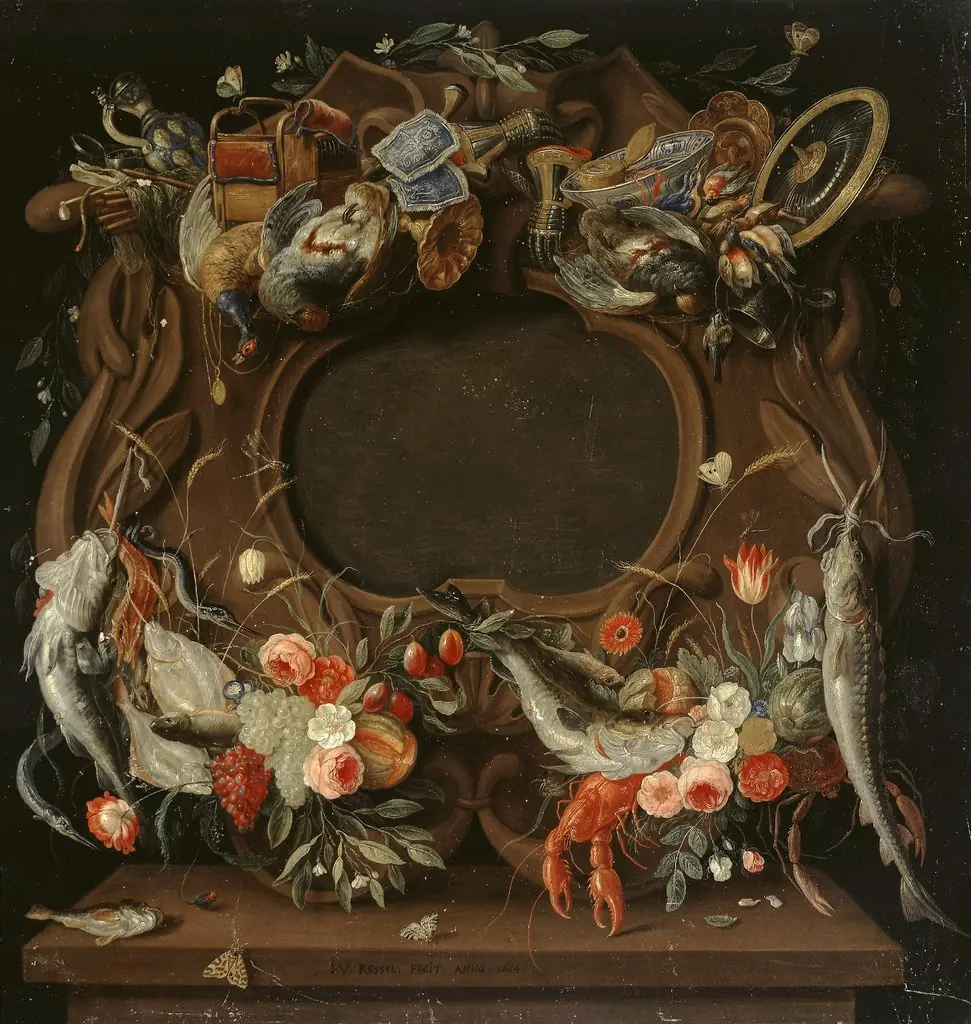
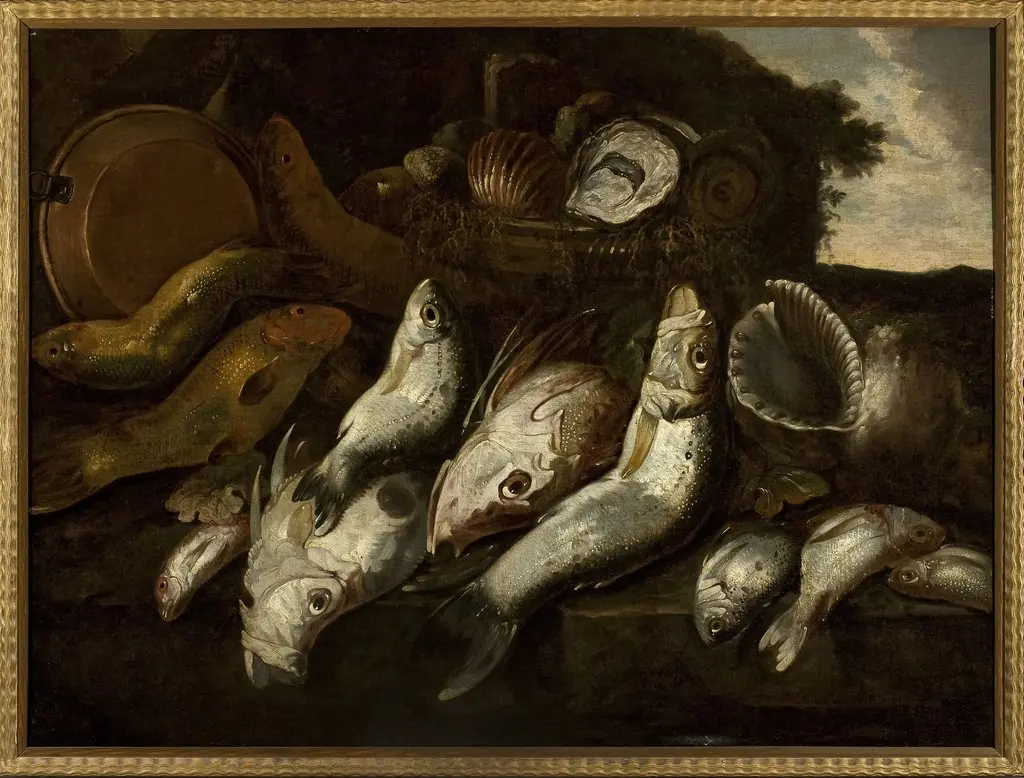
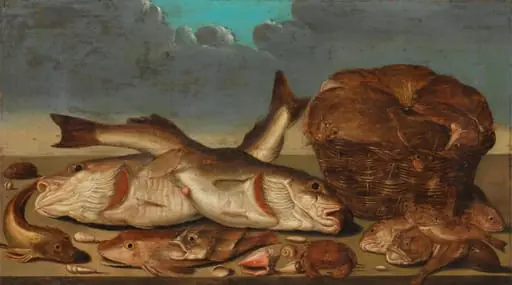
Pescados y paisaje is an oil painting by the Flemish Baroque painting artist Jan van Kessel the Elder. It dates from 1656 and is held in the collection of the Museo del Prado.
About this work
Overview
Its subdued palette and quiet composition distinguish it from more ornate still lifes of the era, reflecting a restrained yet precise observational approach.
Painted in 1656 by Jan van Kessel the Elder, *Pescados y paisaje* is an oil-on-canvas still life that merges marine fauna with a tranquil landscape. Created in Antwerp during the Flemish Baroque period, the work exemplifies van Kessel’s ability to blend genres, combining meticulous naturalism with atmospheric depth. Its subdued palette and quiet composition distinguish it from more ornate still lifes of the era, reflecting a restrained yet precise observational approach.
Subject & Meaning
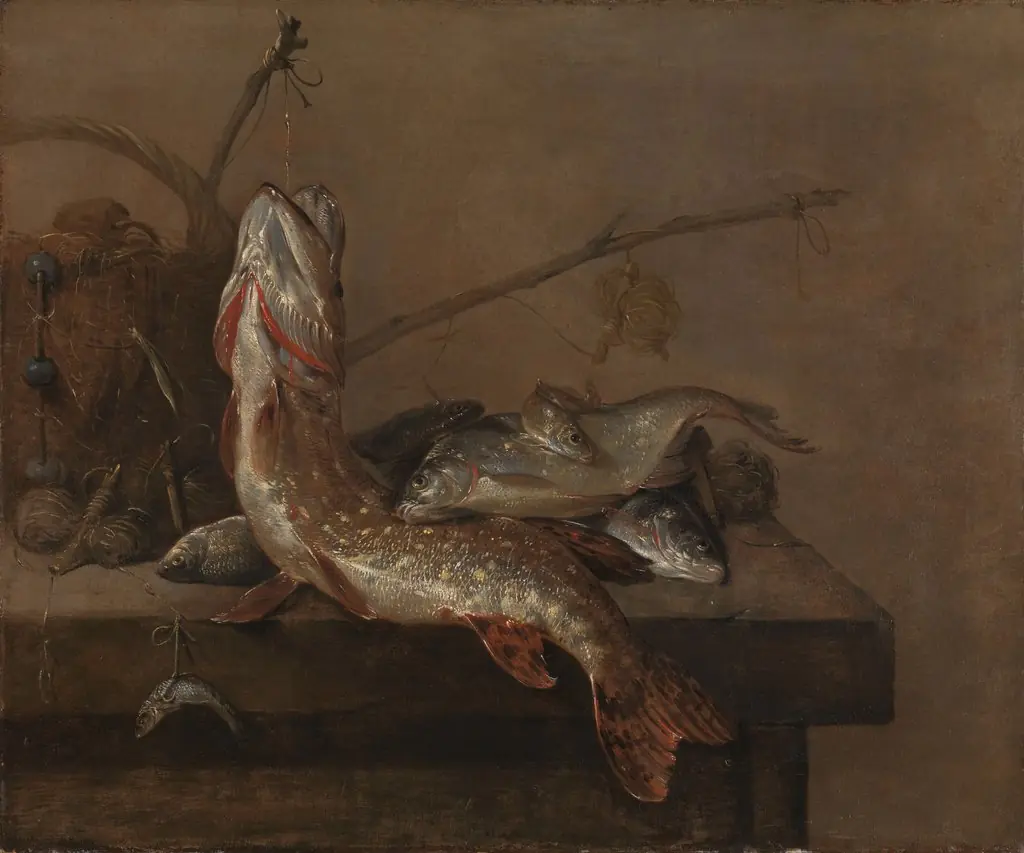
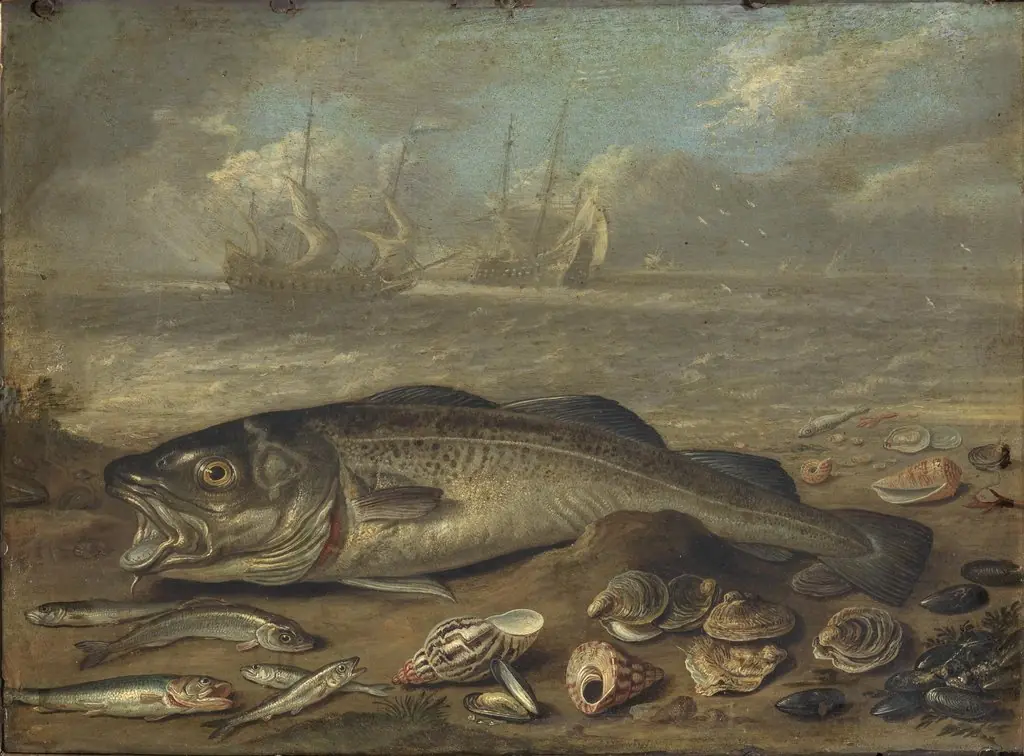
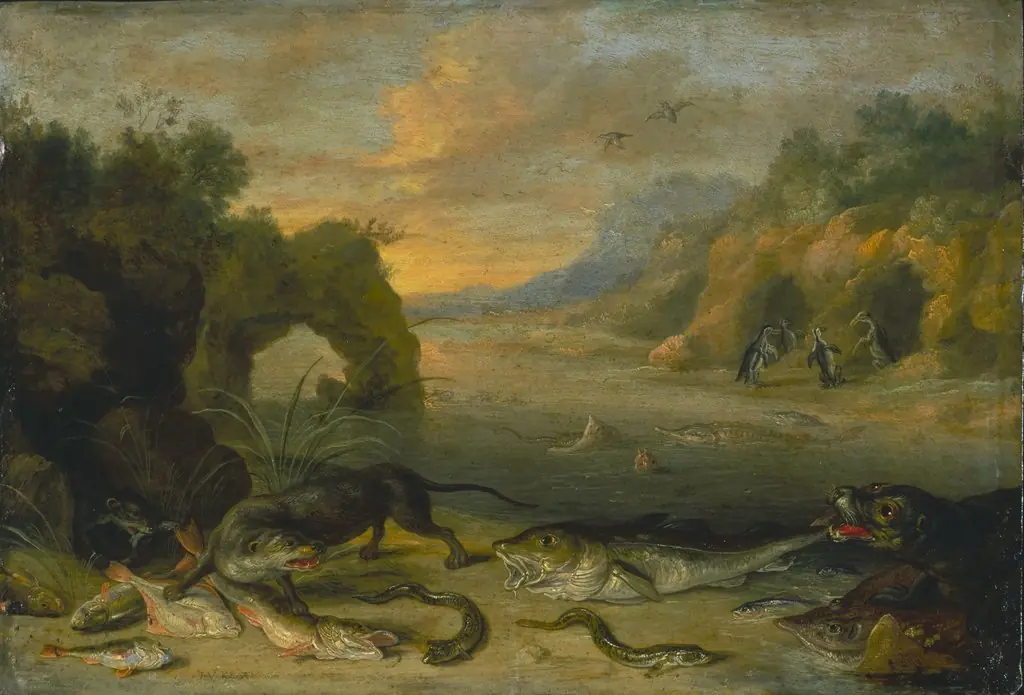
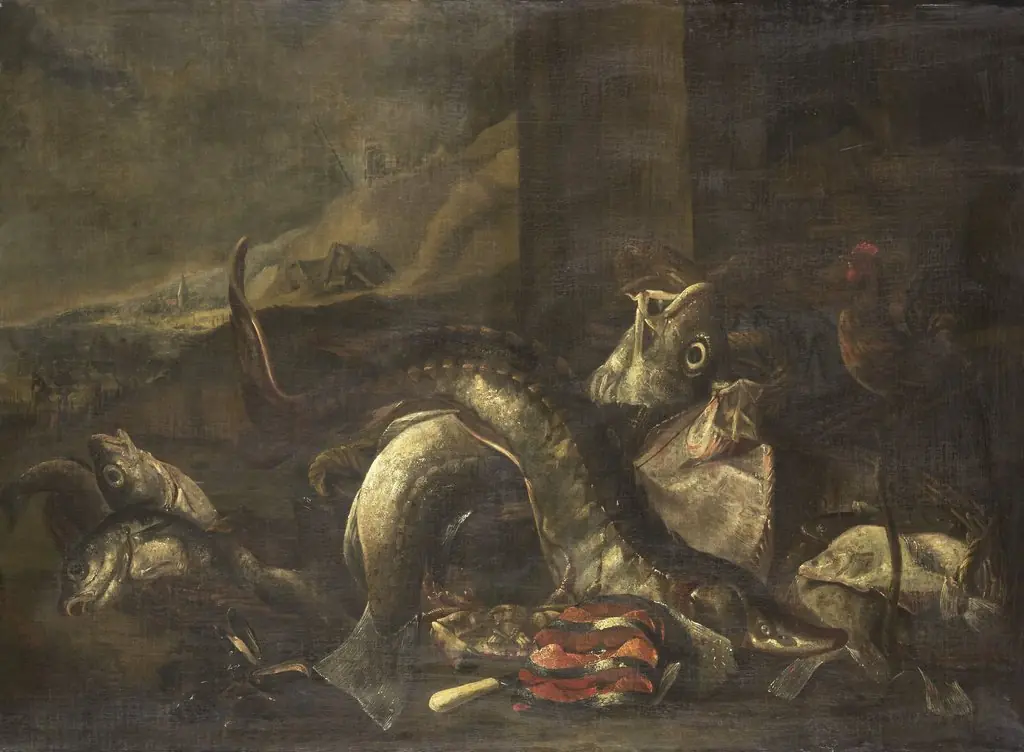
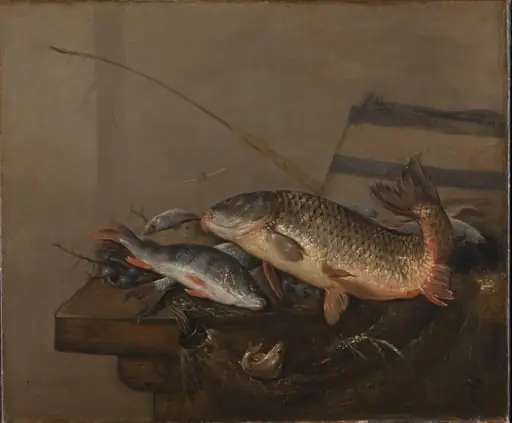
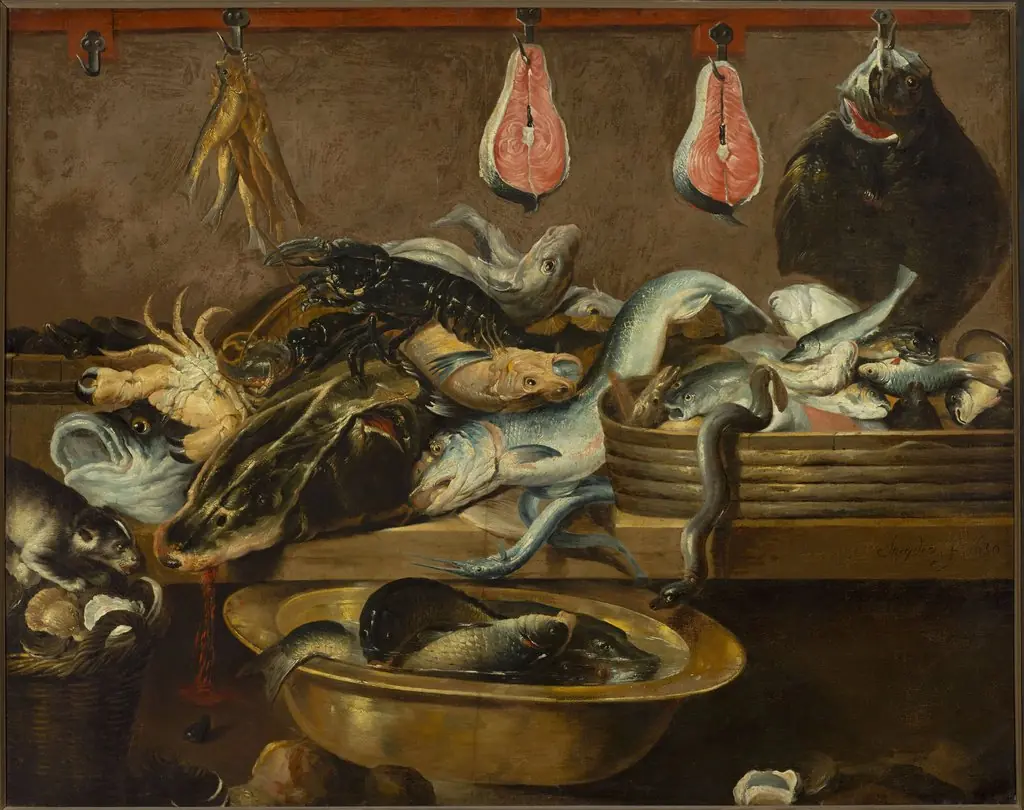
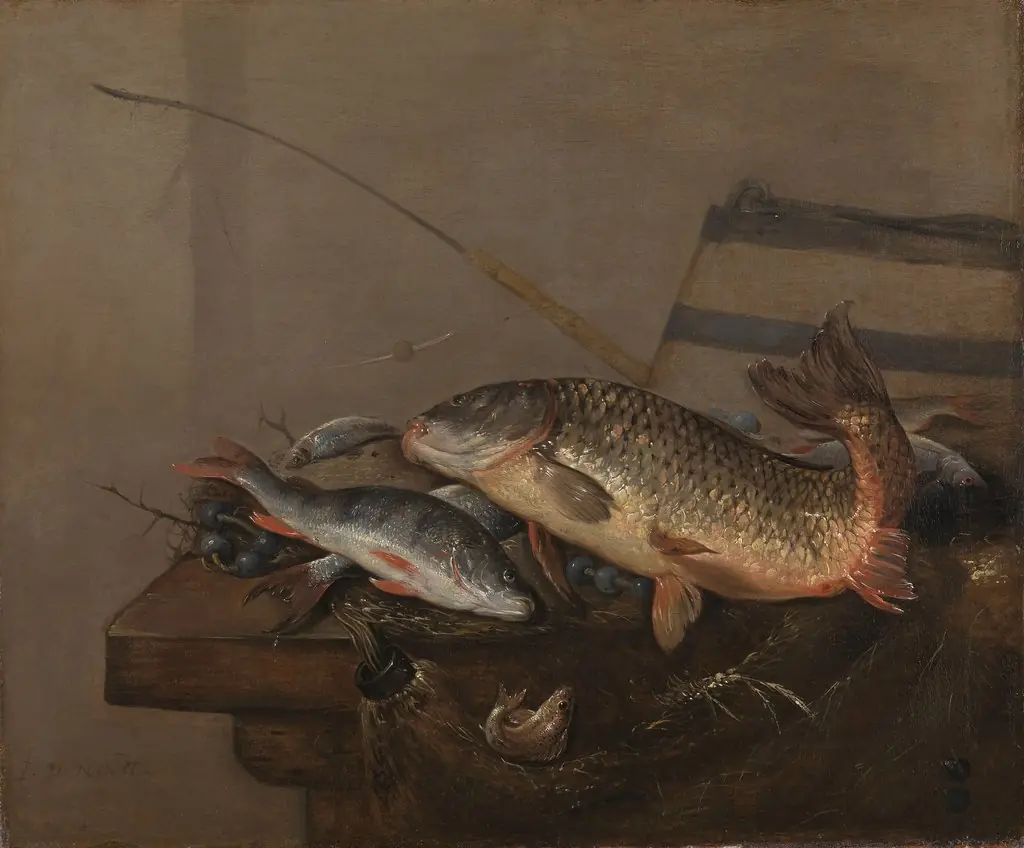
The painting presents a heap of fish and crustaceans arranged on a weathered surface, set against a distant riverscape with modest buildings and a slender tower. Rather than emphasizing abundance or luxury, the scene evokes quietude and transience. The inclusion of a landscape suggests a connection between the sea’s bounty and the land, possibly hinting at local livelihoods or the passage of time, without overt symbolism or moralizing.
Technique & Style
Van Kessel employed fine brushwork and layered glazing to achieve subtle tonal transitions and lifelike texture in the fish and shells. Light falls gently across the forms, modeling them with soft shadows that enhance their three-dimensionality. The background is rendered with looser, more atmospheric strokes, creating spatial depth. The muted earth tones—browns, greens, and pale blues—contribute to a sense of aged stillness, reinforcing the painting’s quiet realism.
History & Provenance
The painting has been part of the Museo del Prado’s collection since at least the 19th century, likely acquired through Spanish royal or aristocratic channels during the Habsburg era. Its presence in Madrid reflects the broader circulation of Flemish art within Spanish collections. While its early ownership is undocumented, its preservation in a major institution underscores its enduring recognition among European art traditions.
Context
Van Kessel worked within a tradition of Flemish still life painting shaped by his grandfather Jan Brueghel the Elder and contemporaries like Daniel Seghers. Unlike the opulent displays common in Dutch markets, his work often favored subdued, naturalistic settings. *Pescados y paisaje* aligns with a regional tendency to integrate everyday nature into contemplative compositions, reflecting both local observation and the broader Baroque interest in the material world.
Legacy
The painting remains a quiet example of van Kessel’s skill in merging still life with landscape, a hybrid form that influenced later naturalist painters. While not widely reproduced, its presence in the Prado ensures continued scholarly attention. Its restrained aesthetic and technical precision offer insight into the diversity of Flemish Baroque practice beyond grandeur and spectacle.
Artist & collection
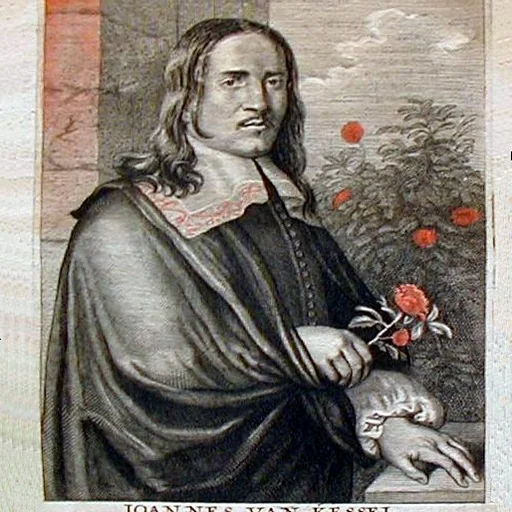
Artist
Jan van Kessel the Elder or Jan van Kessel (I) (baptized 5 April 1626, Antwerp – 17 April 1679, Antwerp) was a Flemish painter active in Antwerp in the mid-17th century.