Artwork
Ansichten aus den vier Weltteilen mit Szenen von Tieren: Marokko
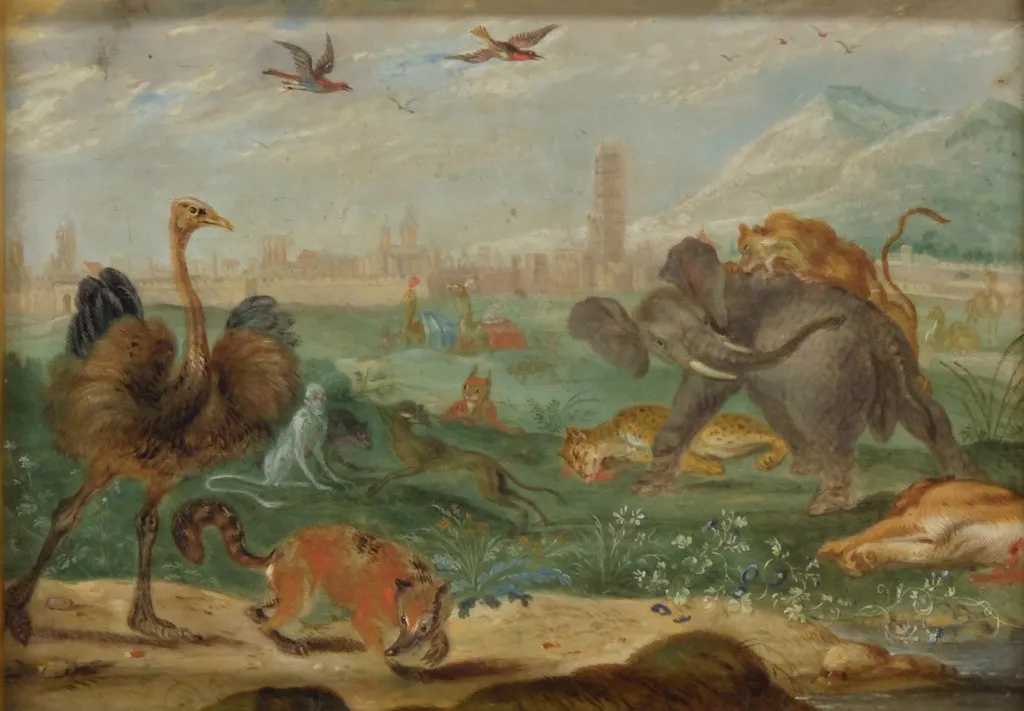
Ansichten aus den vier Weltteilen mit Szenen von Tieren: Marokko is an unspecified painting by Ferdinand van Kessel the Elder. It dates from 1682 and is held in the collection of the Kunsthistorisches Museum.
About this work
Overview
The work is held in the Kunsthistorisches Museum in Vienna, where it remains one of the more elaborate examples of van Kessel’s animal-centric genre paintings.
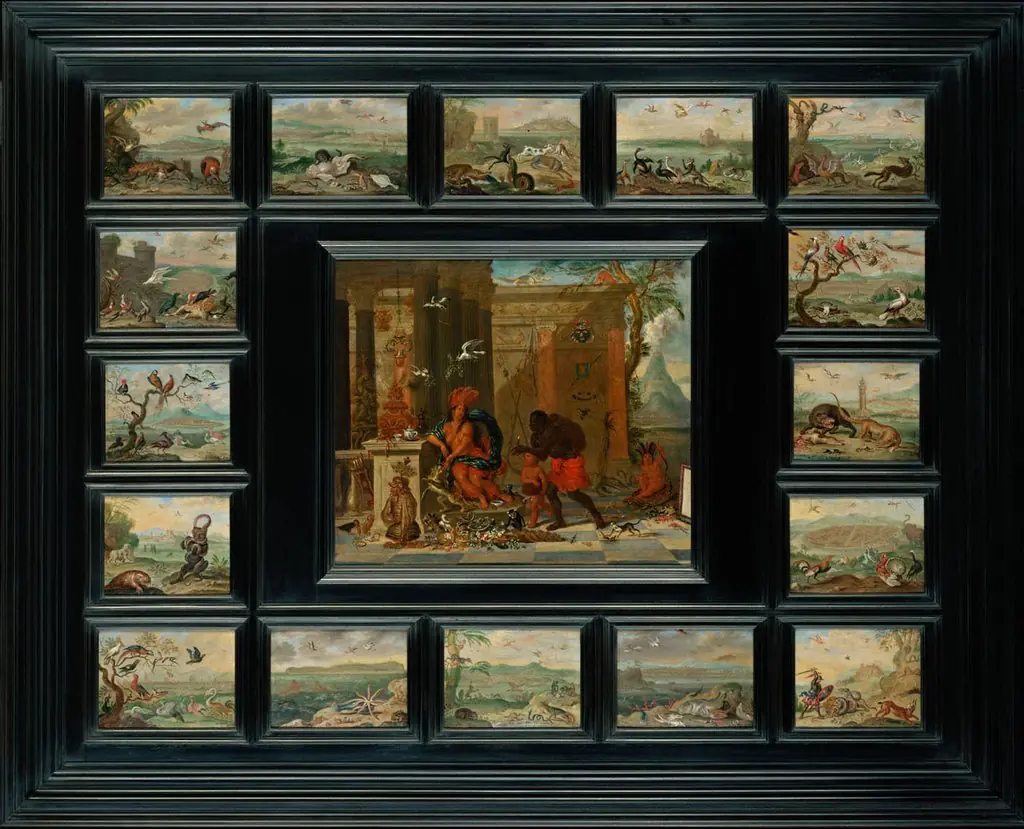
Ferdinand van Kessel the Elder painted *Ansichten aus den vier Weltteilen mit Szenen von Tieren: Marokko* circa 1682 as part of a four-part series representing animals in imagined scenes from each continent. This panel focuses on North Africa, specifically Morocco, and presents a dense composition teeming with wildlife. The work is held in the Kunsthistorisches Museum in Vienna, where it remains one of the more elaborate examples of van Kessel’s animal-centric genre paintings.
Subject & Meaning
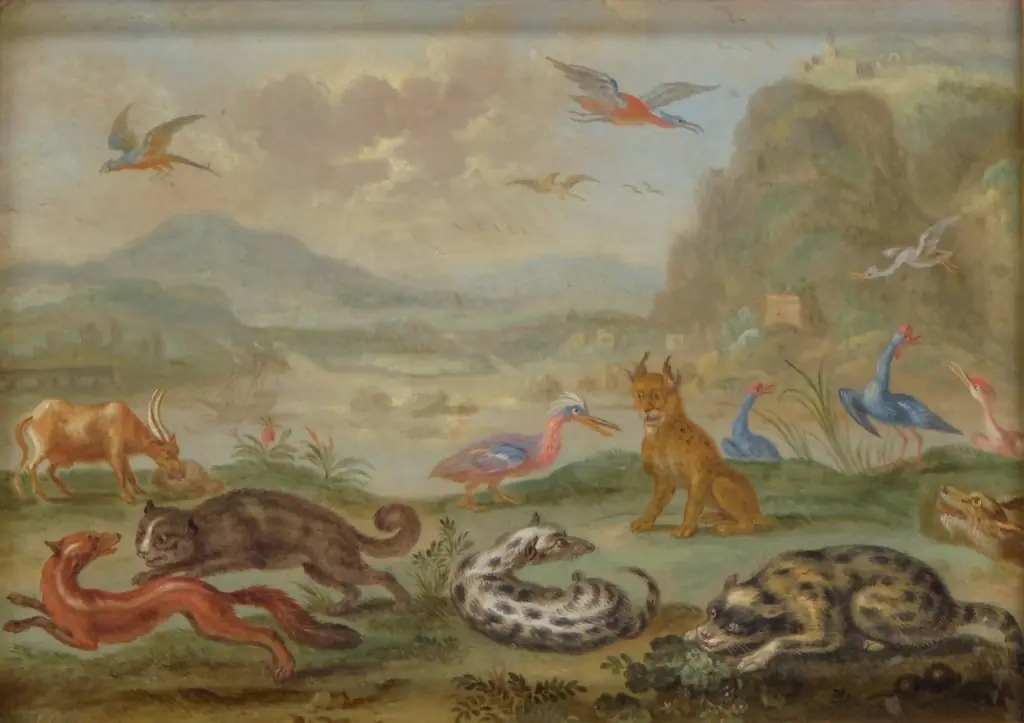
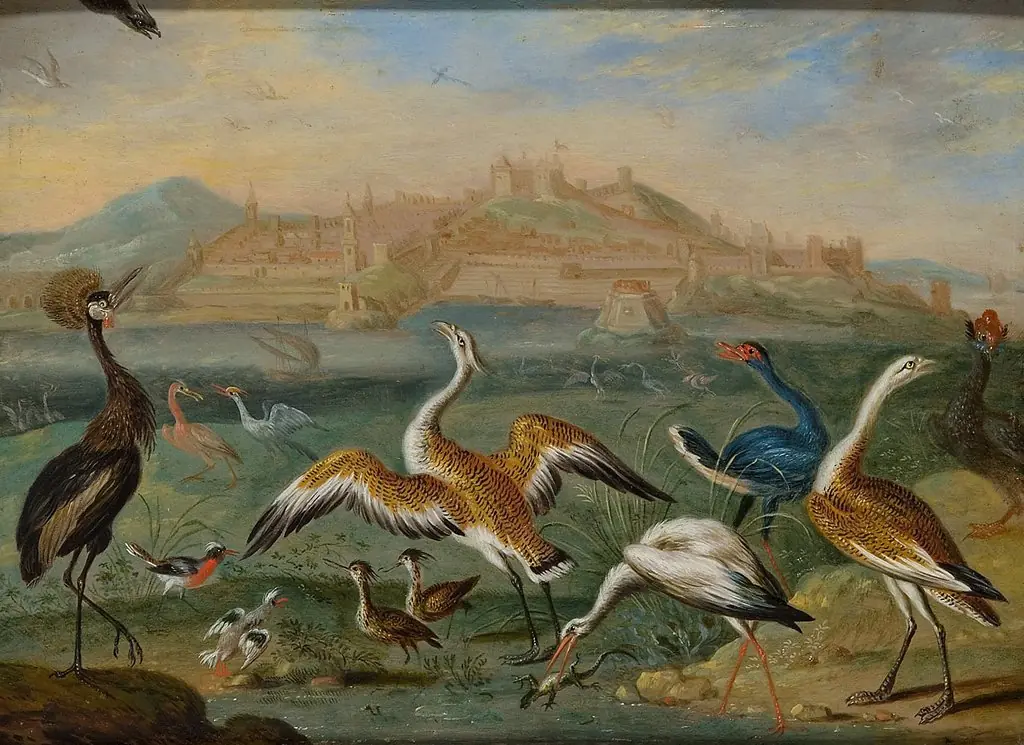
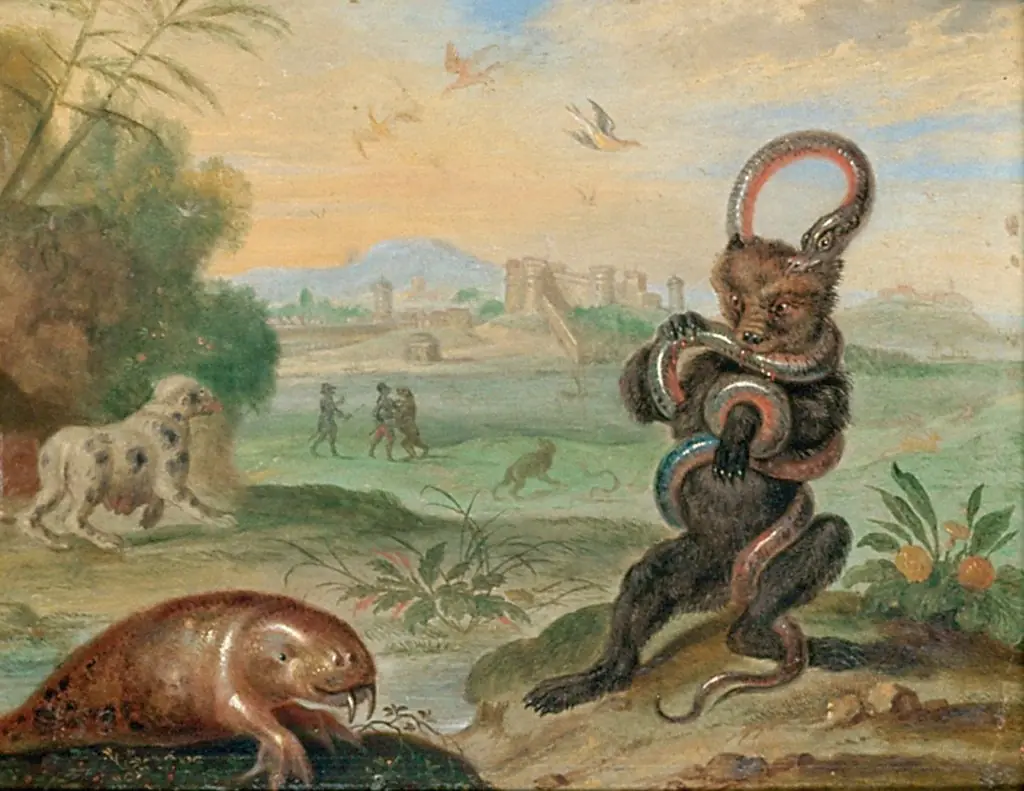
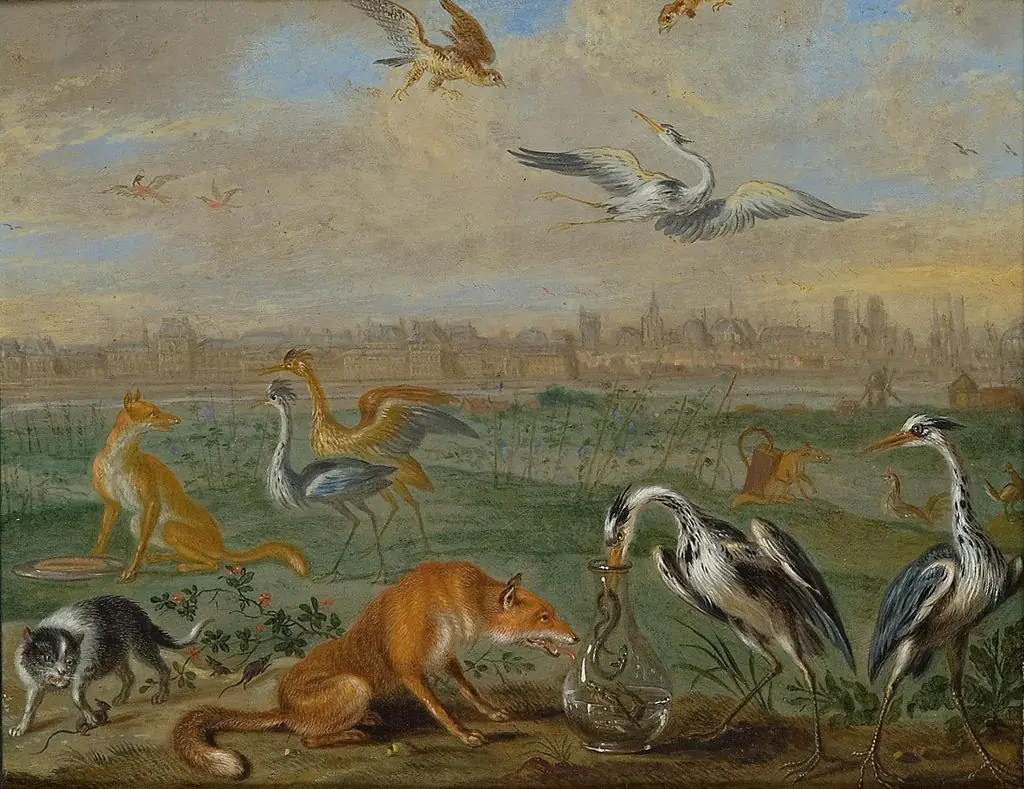
The painting assembles a fictional gathering of animals native to or associated with Morocco, including an ostrich, elephant, lion, leopard, fox, and dogs. These creatures are arranged in dynamic, often confrontational poses, suggesting tension or interaction rather than natural coexistence. The scene does not document real behavior but constructs an exoticized vision of the region, reflecting 17th-century European fascination with distant lands and their perceived wildness.
Technique & Style
Van Kessel employed fine brushwork to render fur, feathers, and foliage with meticulous detail, characteristic of Flemish Baroque precision. The animals are rendered with anatomical accuracy, though their placement is deliberately theatrical. The background blends a stylized cityscape with distant mountains, creating depth without perspective realism. Bright, varied colors in the flora contrast with the muted earth tones of the terrain, enhancing the scene’s visual complexity.
History & Provenance
The painting was likely commissioned as part of a decorative cycle, common among aristocratic collectors who sought exotic-themed art. It entered the Kunsthistorisches Museum’s collection in the 19th century, having passed through private Austrian and possibly Habsburg holdings. Its survival in good condition suggests it was valued as a cabinet piece rather than a public display work, preserved for its novelty and craftsmanship.
Context
In late 17th-century Europe, interest in global fauna surged due to expanding trade and colonial exploration. Artists like van Kessel responded by creating composite visions of foreign lands, blending observed specimens with myth and imagination. Morocco, as a gateway to Africa and the Islamic world, became a symbolic setting for exoticism. These works served more as curiosities than ethnographic records, reflecting European perceptions rather than factual accuracy.
Legacy
Van Kessel’s series contributed to a broader tradition of animal paintings that blended naturalism with fantasy. While not widely influential in the evolution of scientific illustration, his works remain valuable as cultural artifacts revealing how Europeans visualized distant continents. Today, they are studied for their role in shaping early modern ideas about nature, empire, and the Other, rather than for artistic innovation alone.
Artist & collection
Artist
Ferdinand van Kessel the Elder
Ferdinand van Kessel (1648 – 1696), was a Flemish Baroque painter known for his landscapes, still lifes and genre pieces with monkeys.

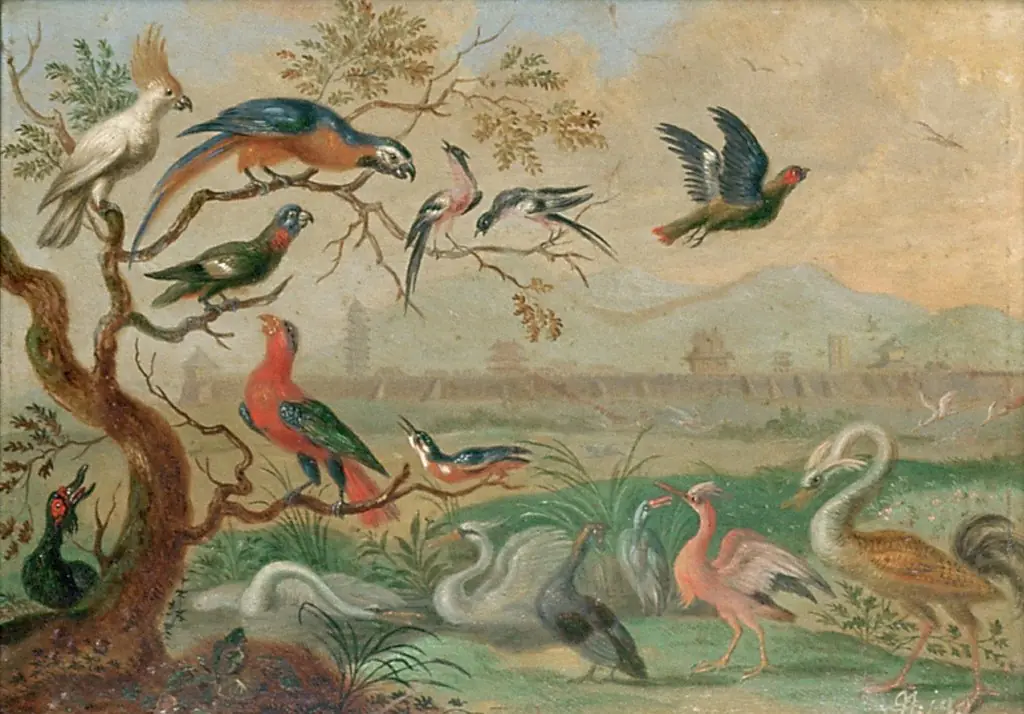
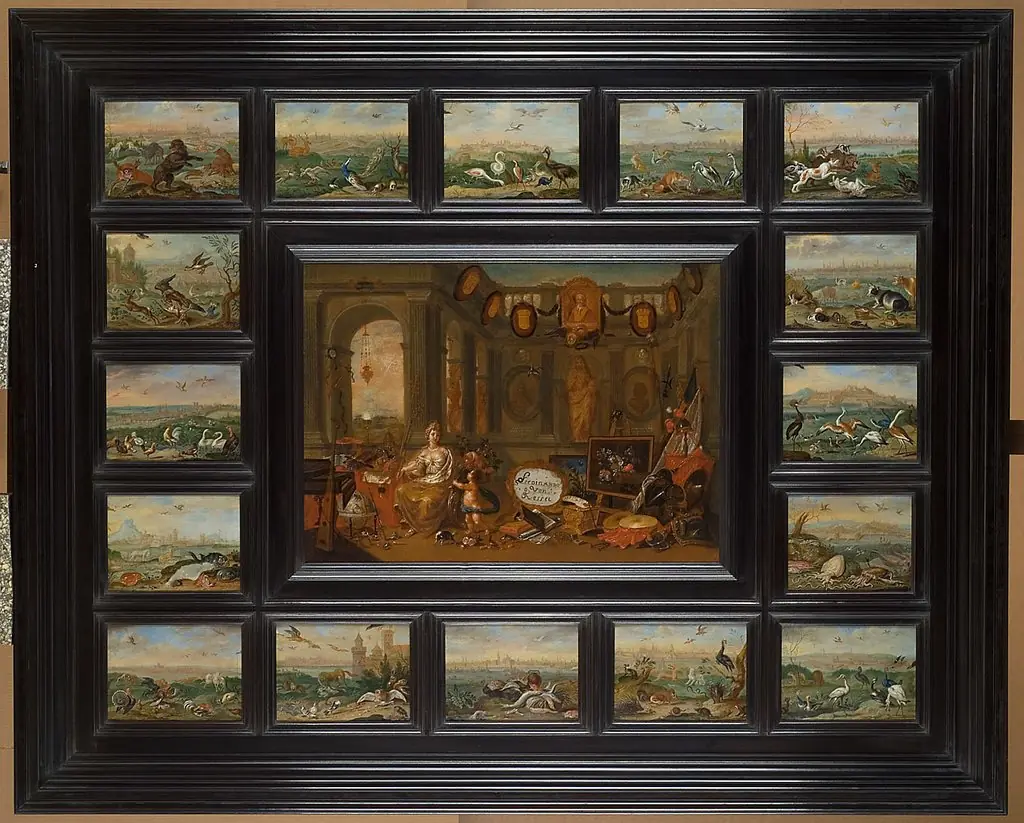
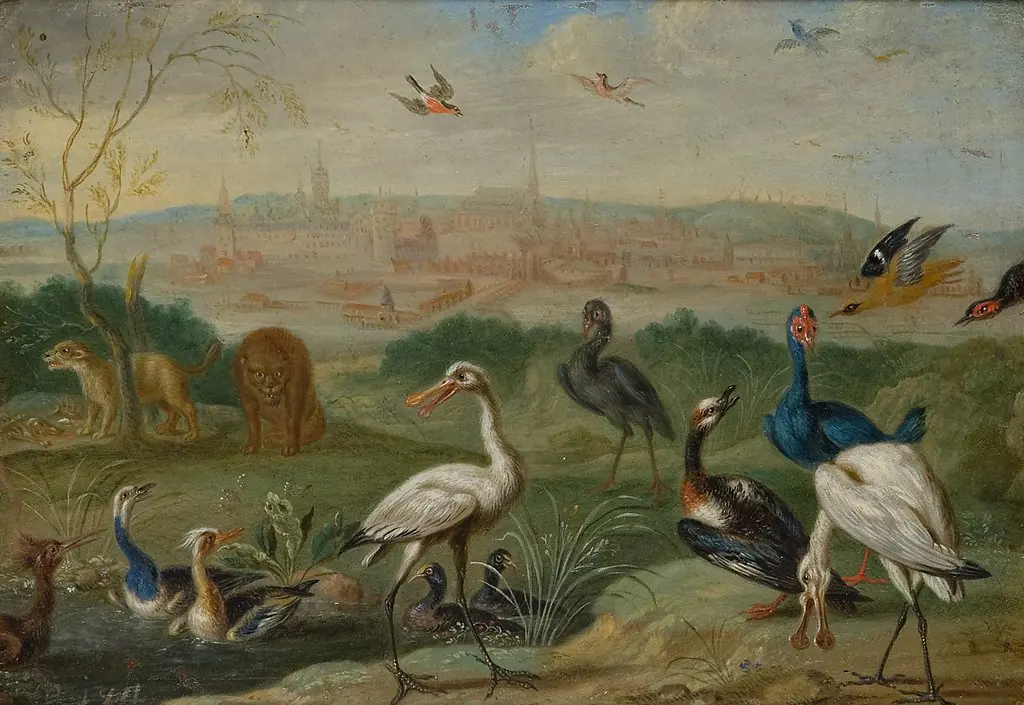
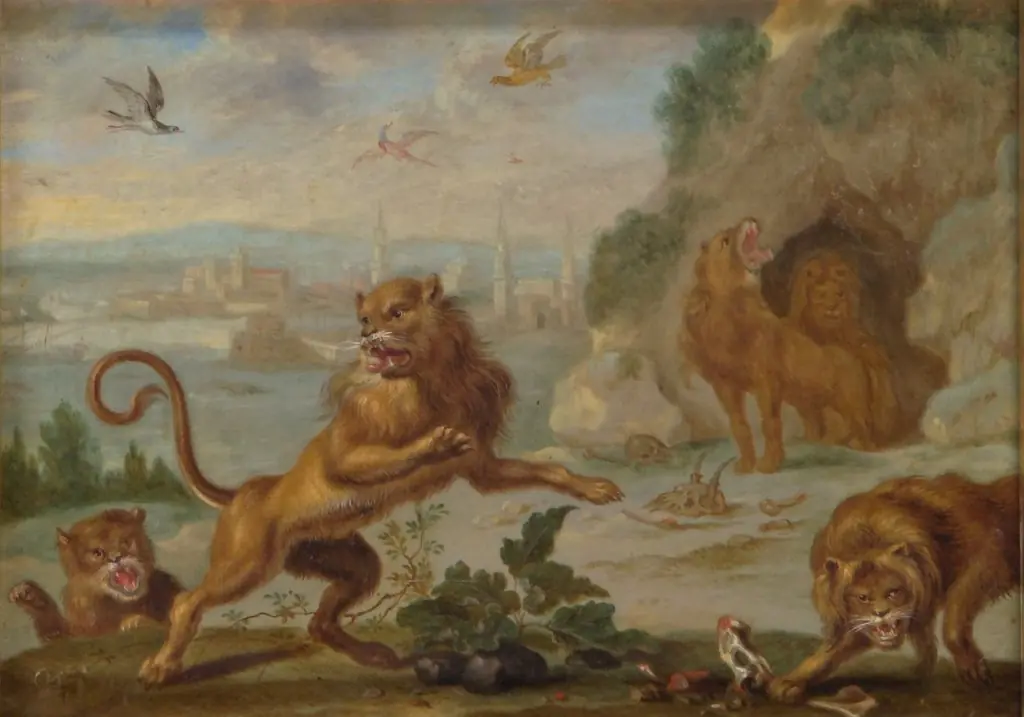 Ansichten aus den vier Weltteilen mit Szenen von Tieren: Tripolis
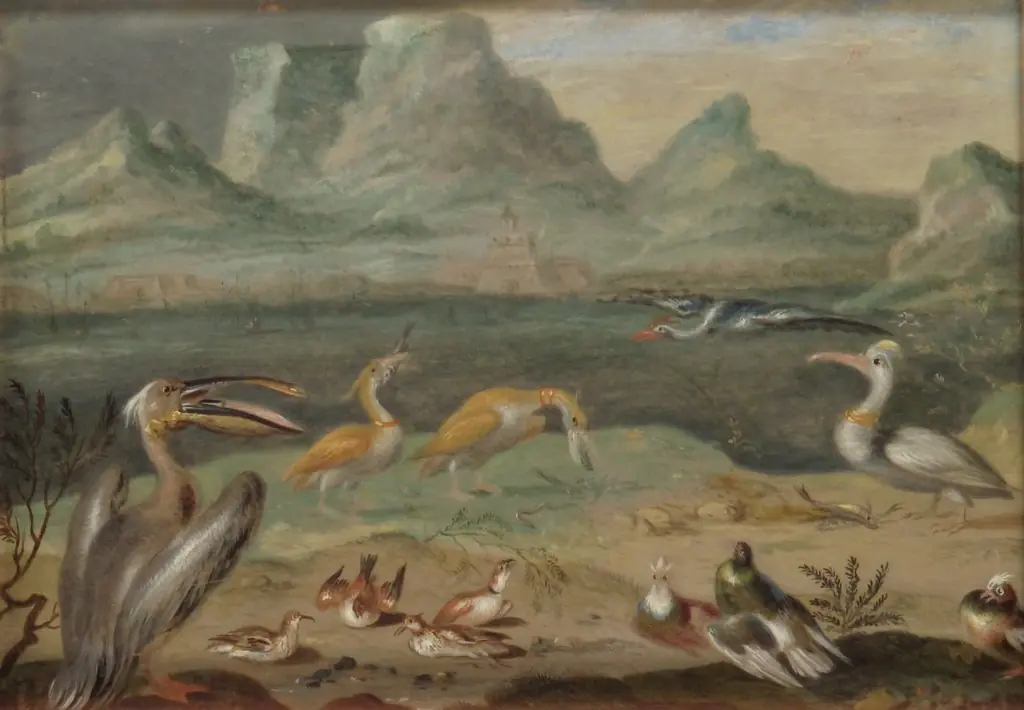 Ansichten aus den vier Weltteilen mit Szenen von Tieren: Kap der Guten Hoffnung
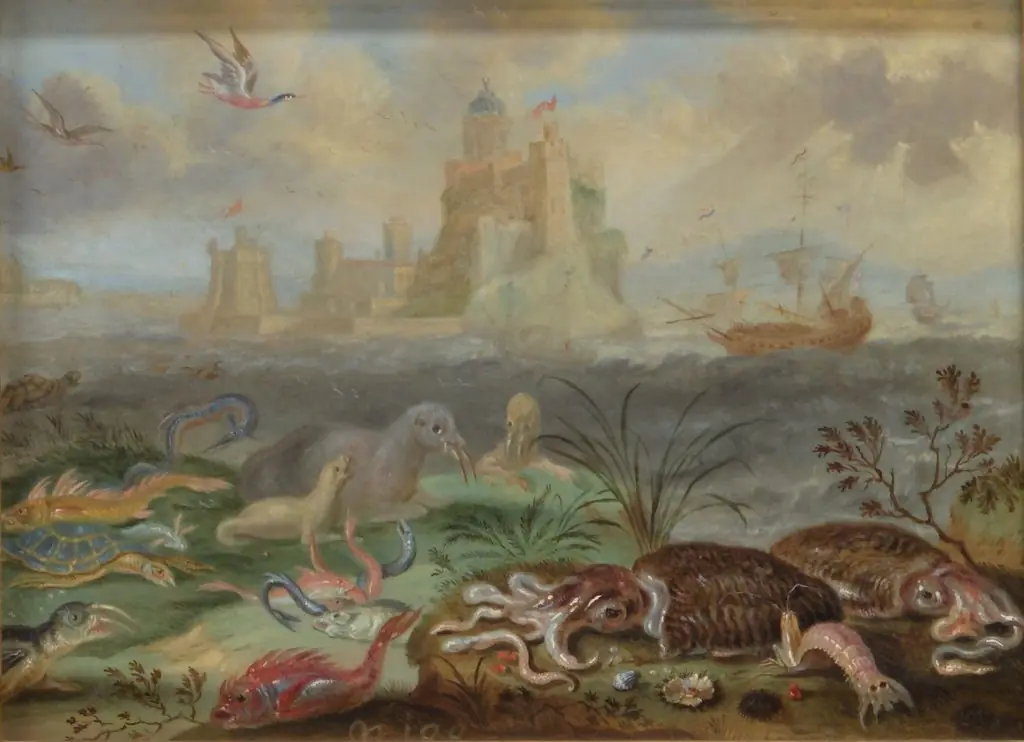 Ansichten aus den vier Weltteilen mit Szenen von Tieren: Bartanico oder Battanico
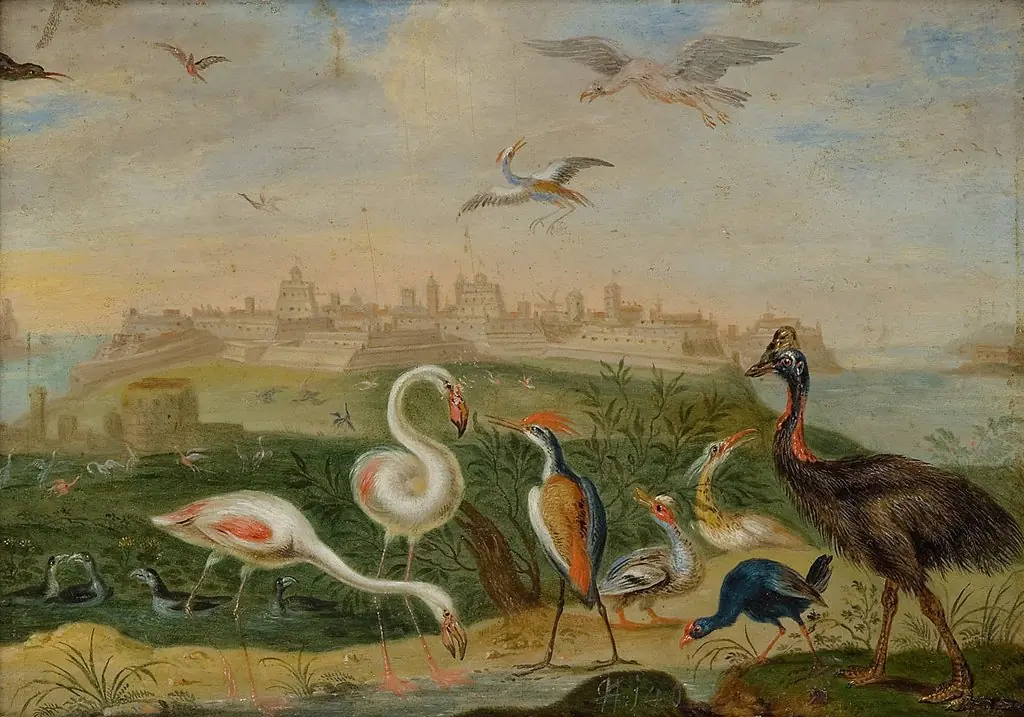 Ansichten aus den vier Weltteilen mit Szenen von Tieren: Malta
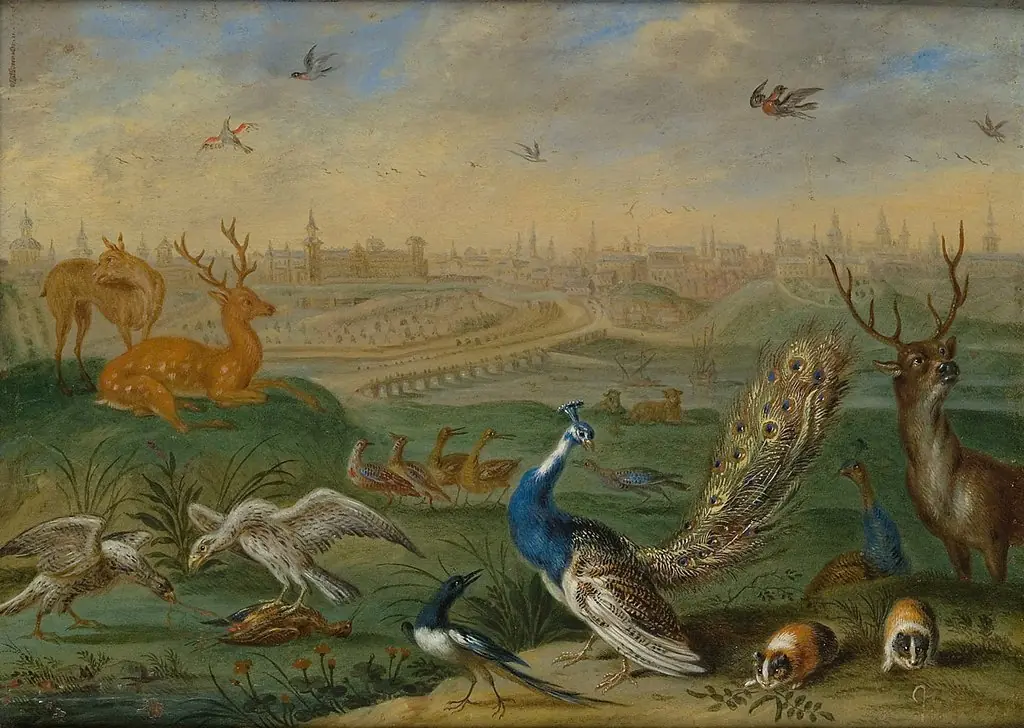 Ansichten aus den vier Weltteilen mit Szenen von Tieren: Madrid
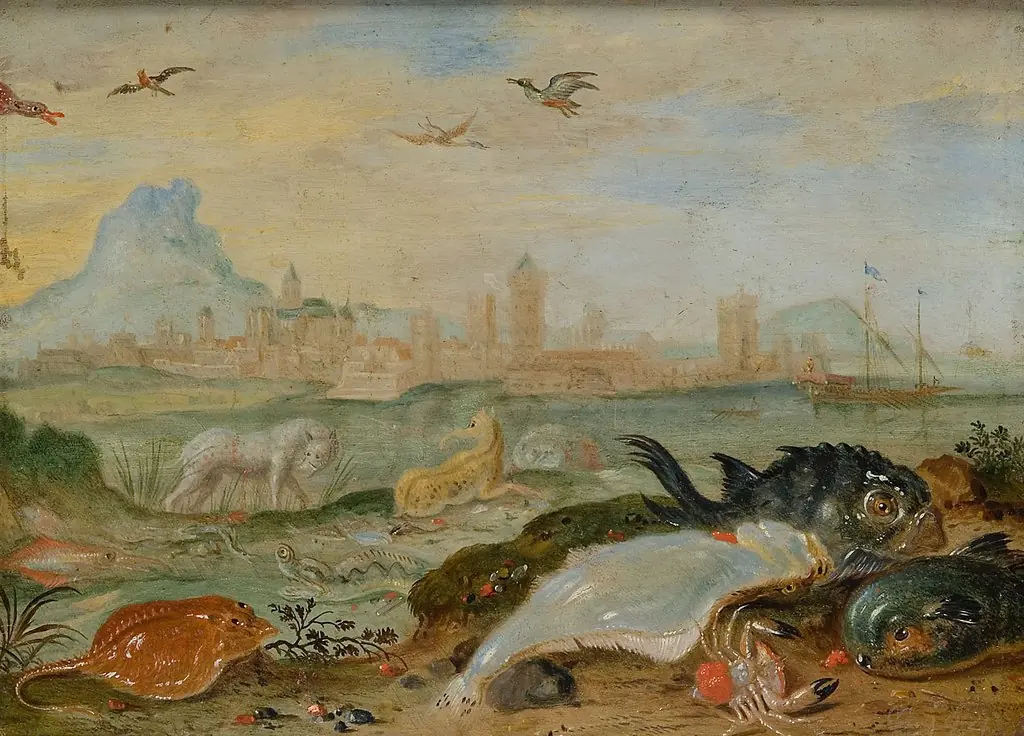 Ansichten aus den vier Weltteilen mit Szenen von Tieren: Candia (Iraklion, Kreta)
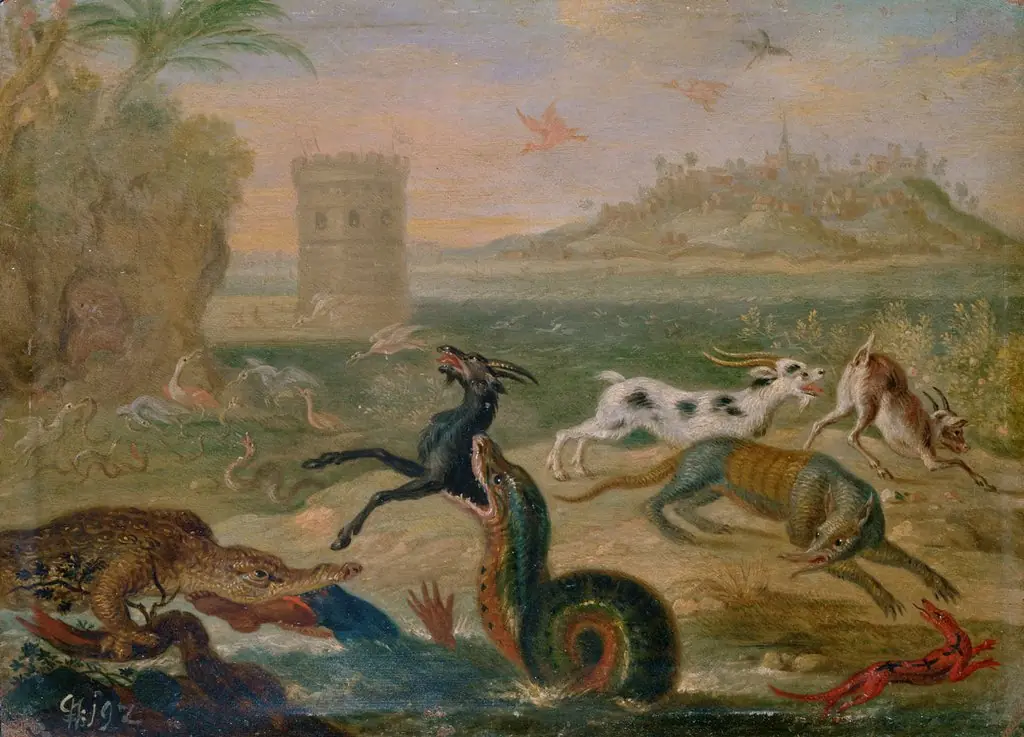 Ansichten aus den vier Weltteilen mit Szenen von Tieren: Olinda (Pernambuco, Brasilien)