Artwork
Ansichten aus den vier Weltteilen mit Szenen von Tieren: Olinda (Pernambuco, Brasilien)
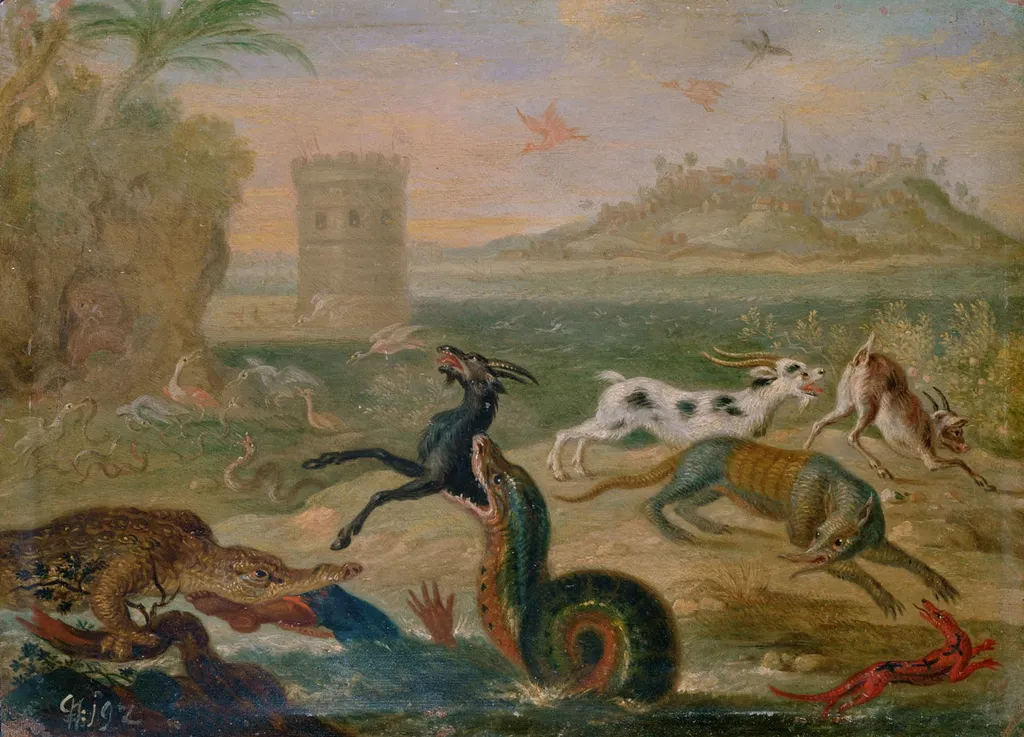
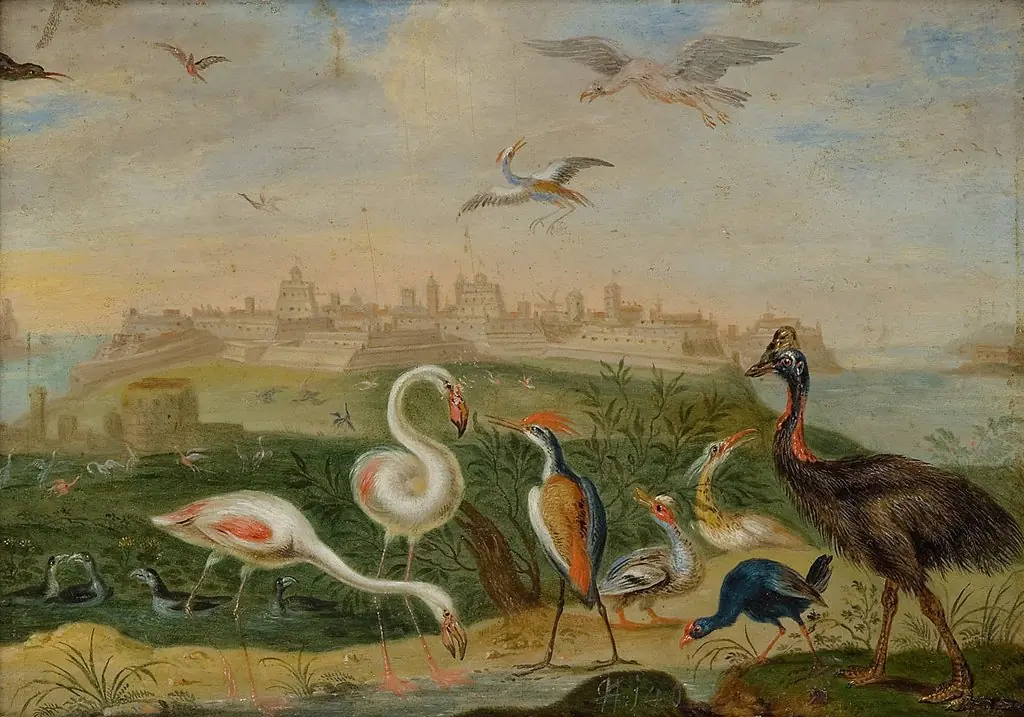
Ansichten aus den vier Weltteilen mit Szenen von Tieren: Olinda (Pernambuco, Brasilien) is an unspecified painting by Ferdinand van Kessel the Elder. It dates from 1682 and is held in the collection of the Kunsthistorisches Museum.
About this work
Overview
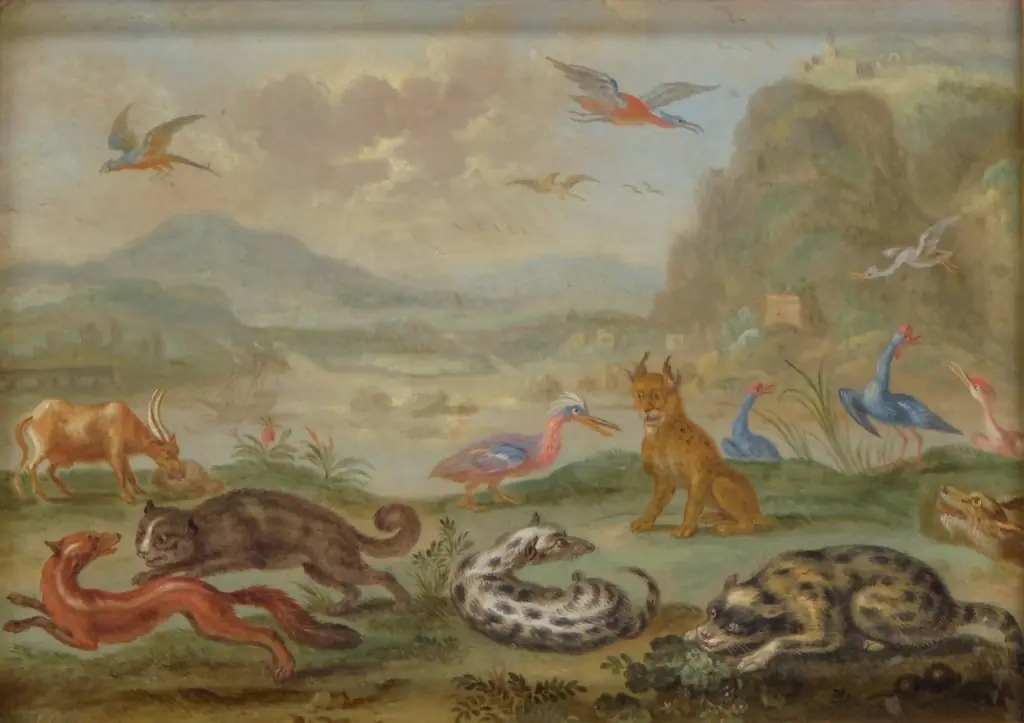
Ferdinand van Kessel the Elder, a Flemish painter active in the late 17th century, produced a landscape titled *Ansichten aus den vier Weltteilen mit Szenen von Tieren: Olida (Pernambuco, Brasilien)* around 1682. The canvas, now held by the Kunsthistorisches Museum, presents a panoramic view of the Brazilian town of Olinda, populated by a diverse assembly of animals that represent the four continents.
Subject & Meaning
The work juxtaposes a tropical urban scene with a menagerie that includes a crocodile, snake, lizard, goats, a bird and distant architectural elements such as a castle. By arranging fauna from different regions within a single vista, van Kessel suggests the global reach of European exploration and the exotic allure of the New World, while also creating a lively, almost chaotic tableau.
Technique & Style
Executed in muted greens, browns and blues, the painting relies on strong chiaroscuro to model forms and convey spatial depth.
Executed in muted greens, browns and blues, the painting relies on strong chiaroscuro to model forms and convey spatial depth. Light falls on the foreground creatures, casting darker shadows behind them, which heightens the sense of volume and dramatizes the encounter between land, water and architecture. The brushwork remains tight in the animal details, while the background recedes with softer strokes.
History & Provenance
Created circa 1682, the canvas entered the collection of the Kunsthistorisches Museum in Vienna, where it remains part of the museum’s Baroque holdings. Its acquisition reflects the 19th‑century interest in assembling works that document European artistic responses to overseas territories and the natural world.
Context
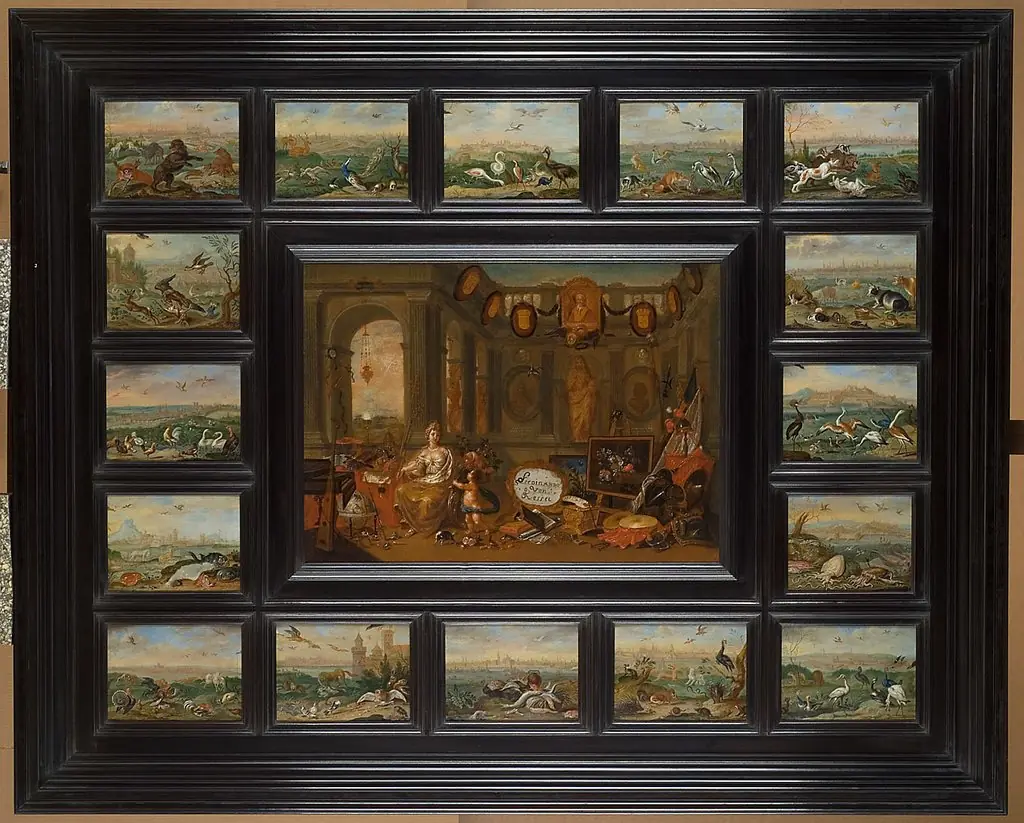
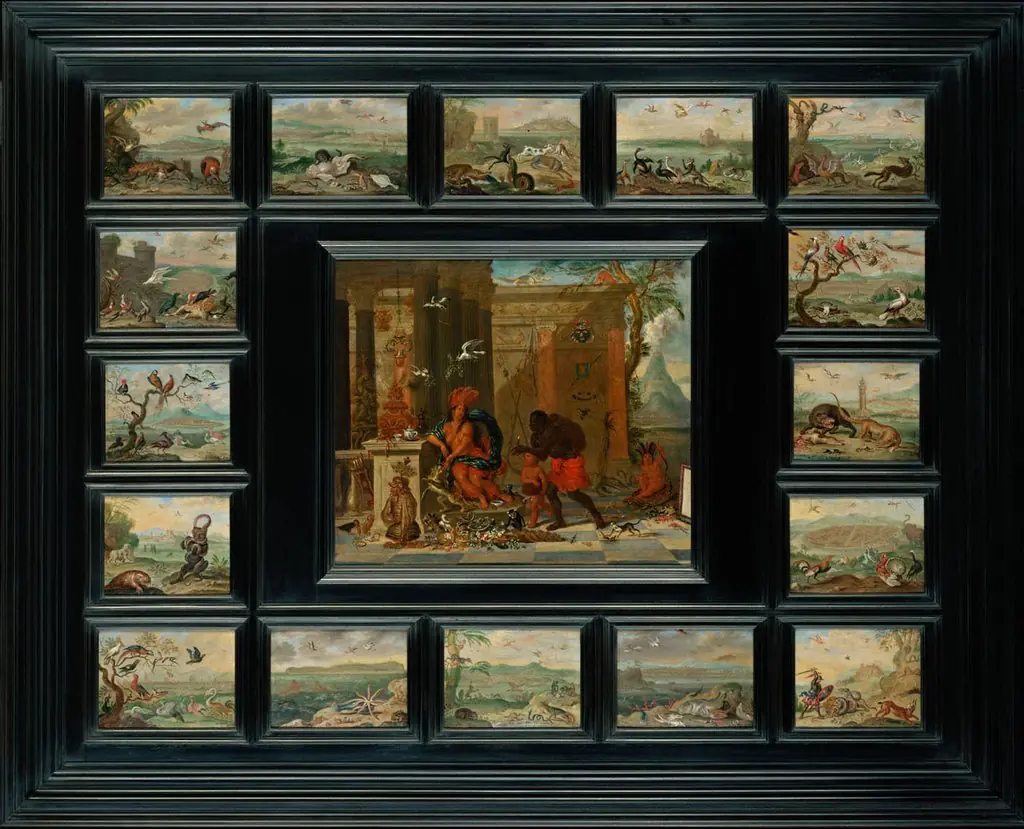
Van Kessel’s oeuvre is noted for lively genre scenes that often feature monkeys and other animals; this painting extends that interest to a broader, cosmopolitan scope. The series to which it belongs illustrated animals from the four continents, a popular motif in the Baroque period that combined scientific curiosity with decorative ambition, aligning with contemporary cabinets of curiosities.
Artist & collection
Artist
Ferdinand van Kessel the Elder
Ferdinand van Kessel (1648 – 1696), was a Flemish Baroque painter known for his landscapes, still lifes and genre pieces with monkeys.

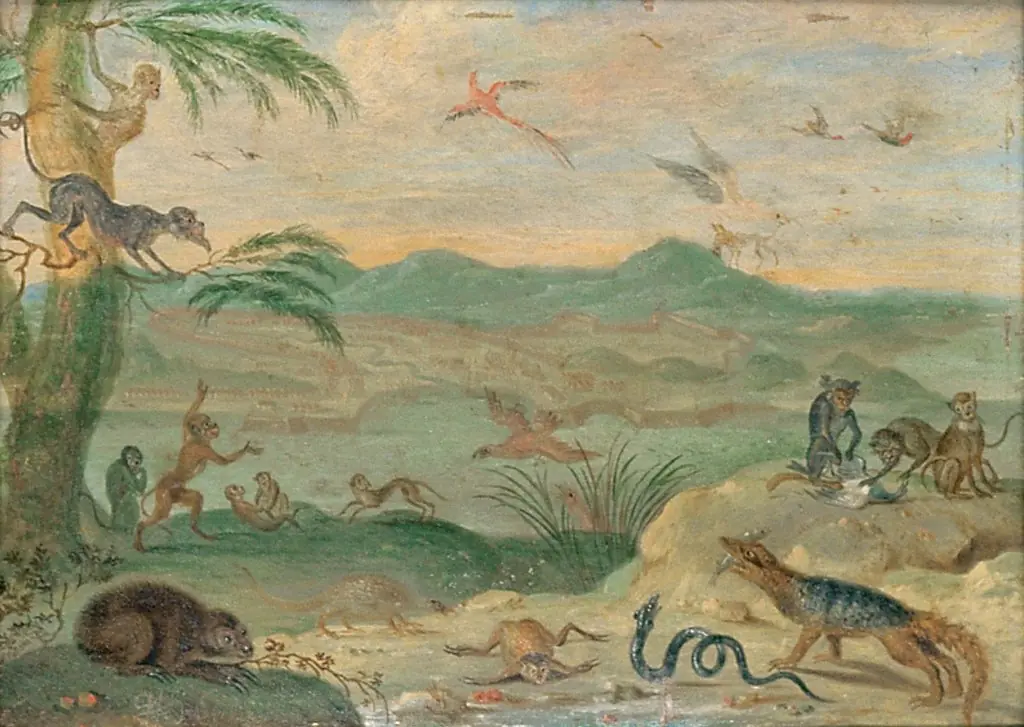 Ansichten aus den vier Weltteilen mit Szenen von Tieren: Santiago
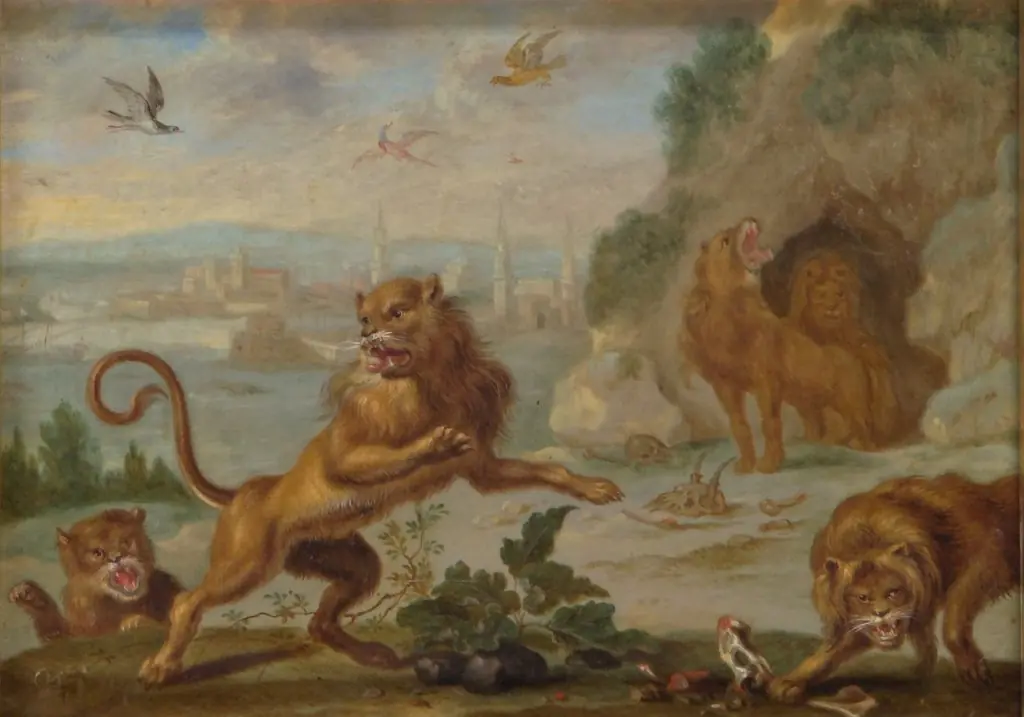 Ansichten aus den vier Weltteilen mit Szenen von Tieren: Tripolis
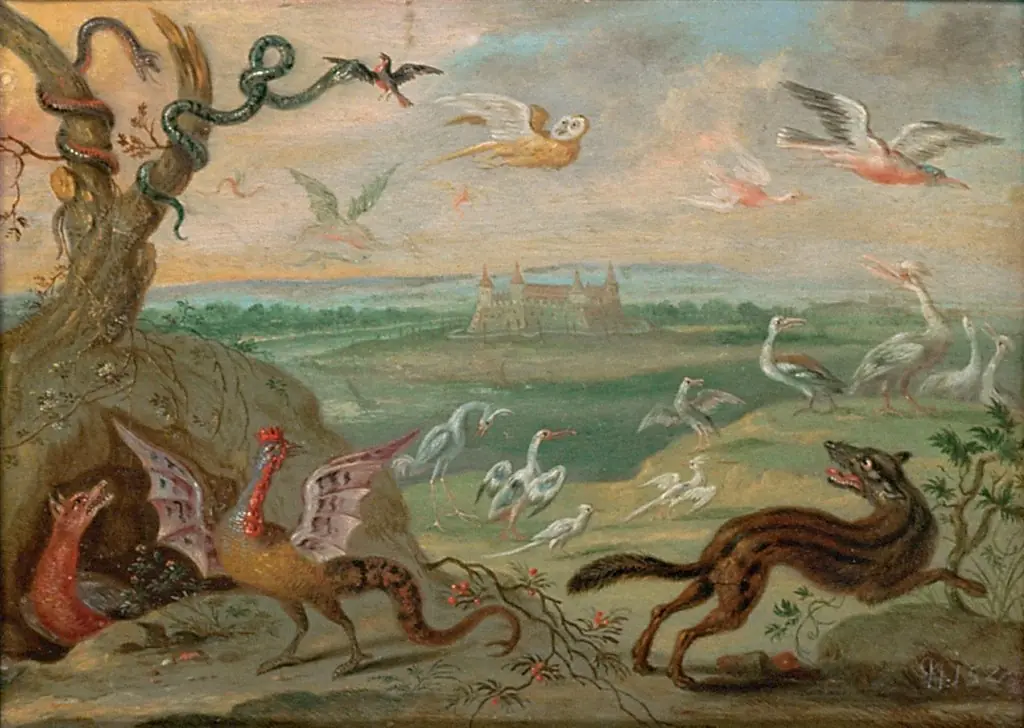 Ansichten aus den vier Weltteilen mit Szenen von Tieren: Salvador (Brasilien)
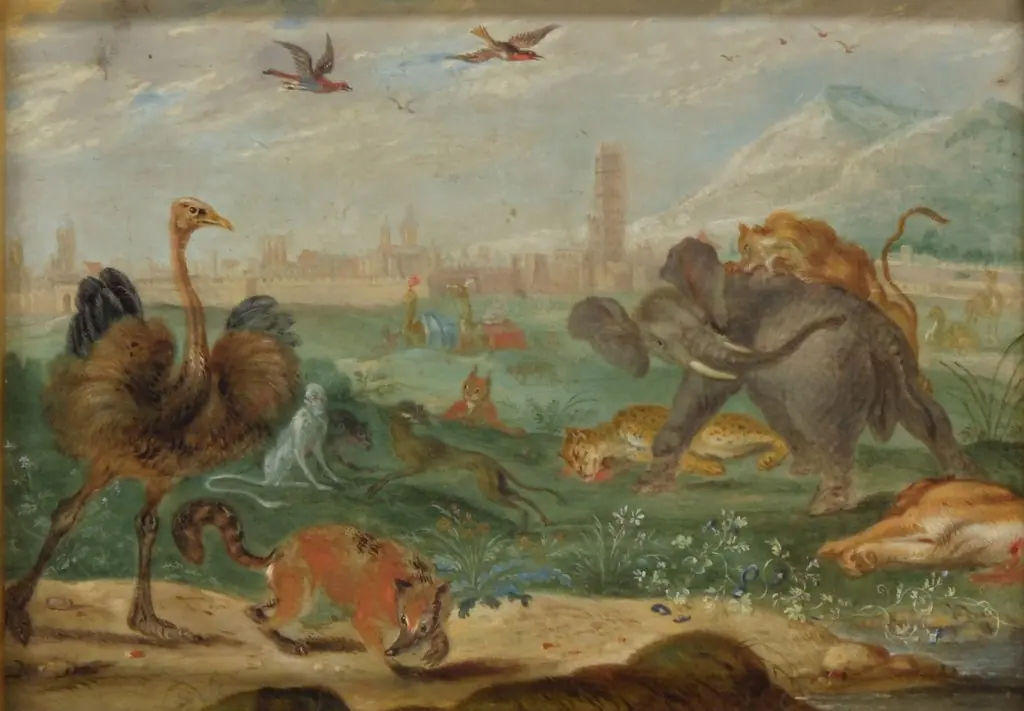 Ansichten aus den vier Weltteilen mit Szenen von Tieren: Marokko
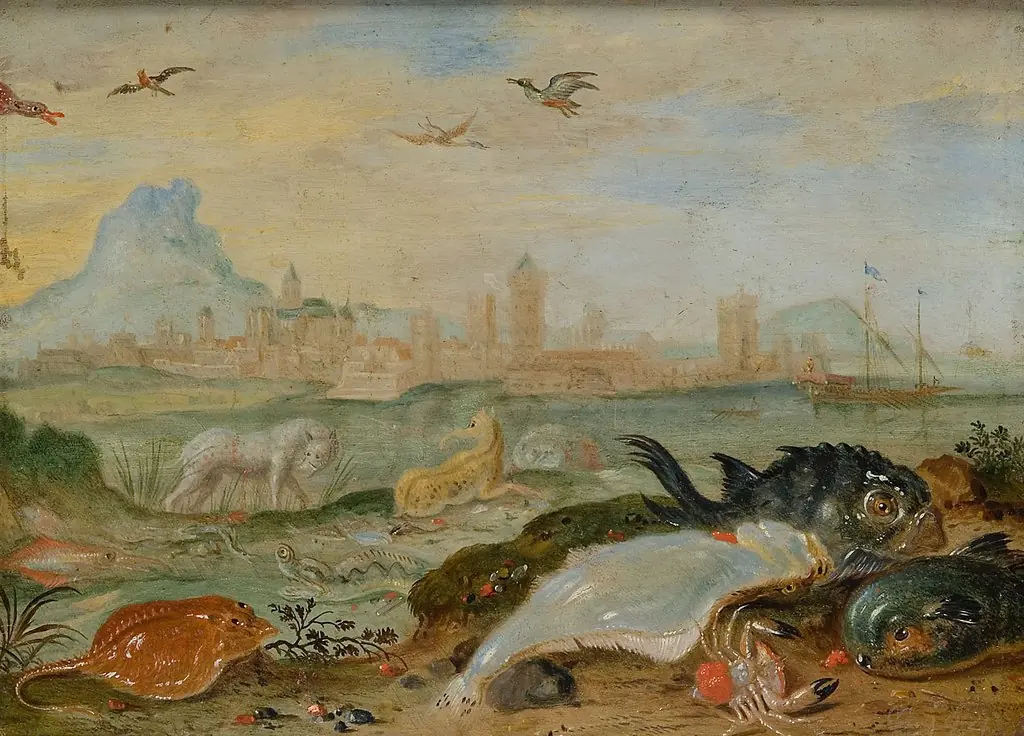 Ansichten aus den vier Weltteilen mit Szenen von Tieren: Candia (Iraklion, Kreta)
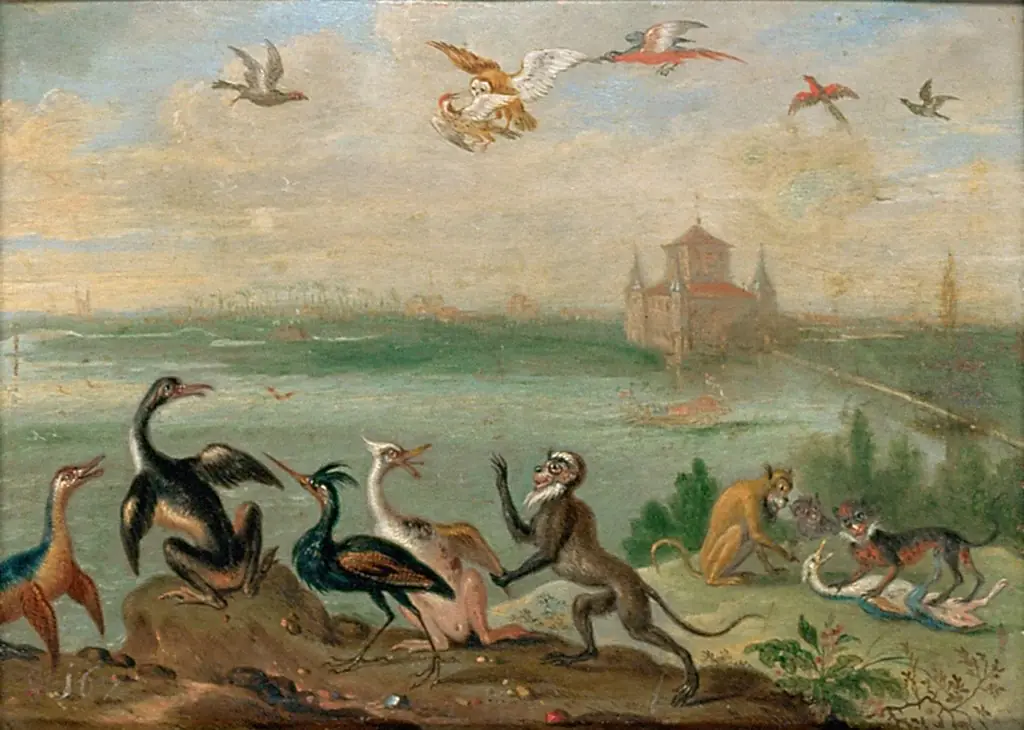 Ansichten aus den vier Weltteilen mit Szenen von Tieren: Boa Vista
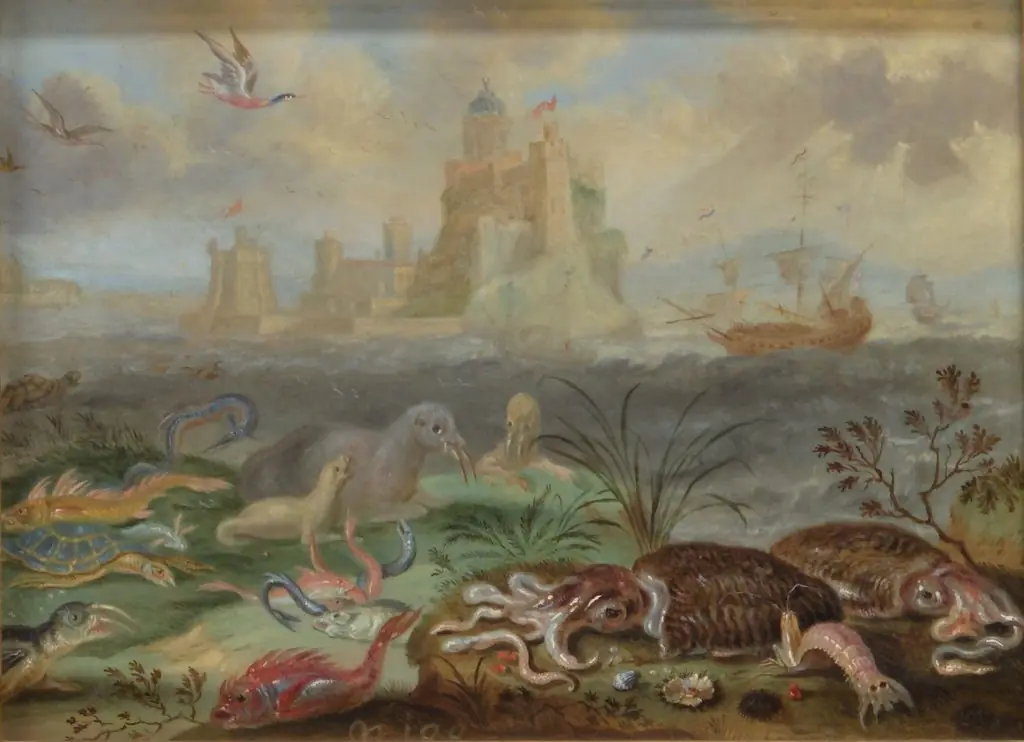 Ansichten aus den vier Weltteilen mit Szenen von Tieren: Bartanico oder Battanico
 Ansichten aus den vier Weltteilen mit Szenen von Tieren: Malta