Artwork
Landscape – stream
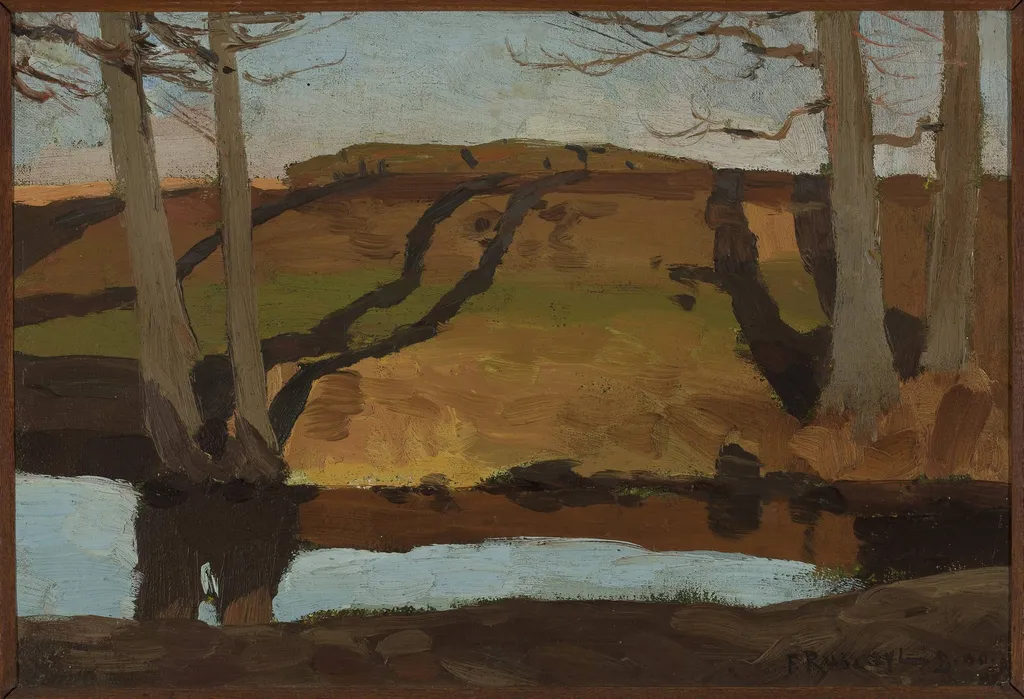
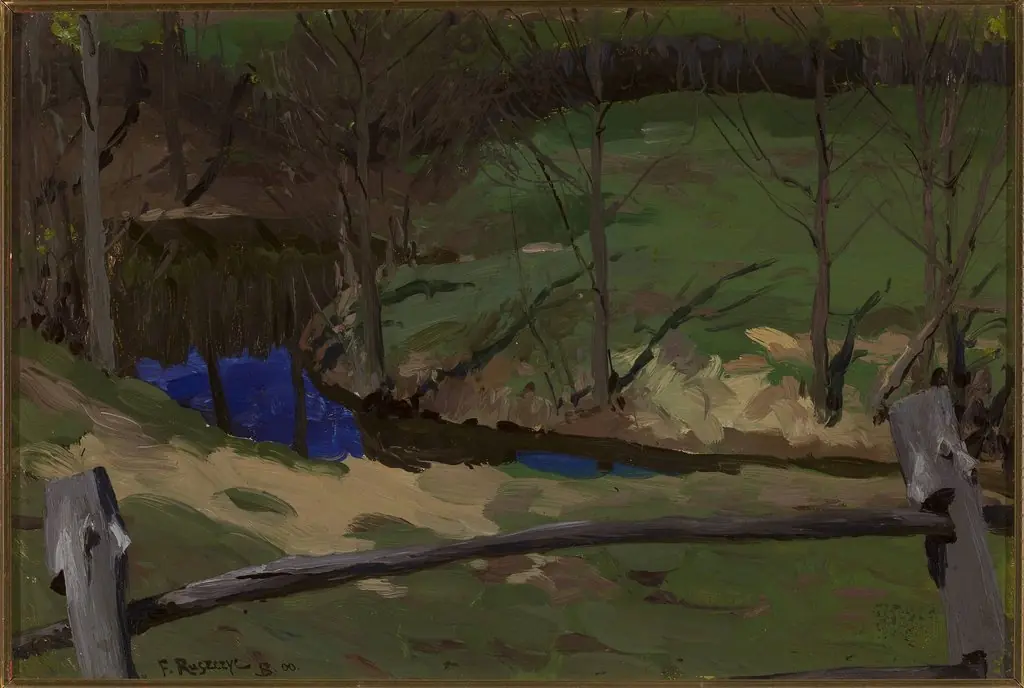
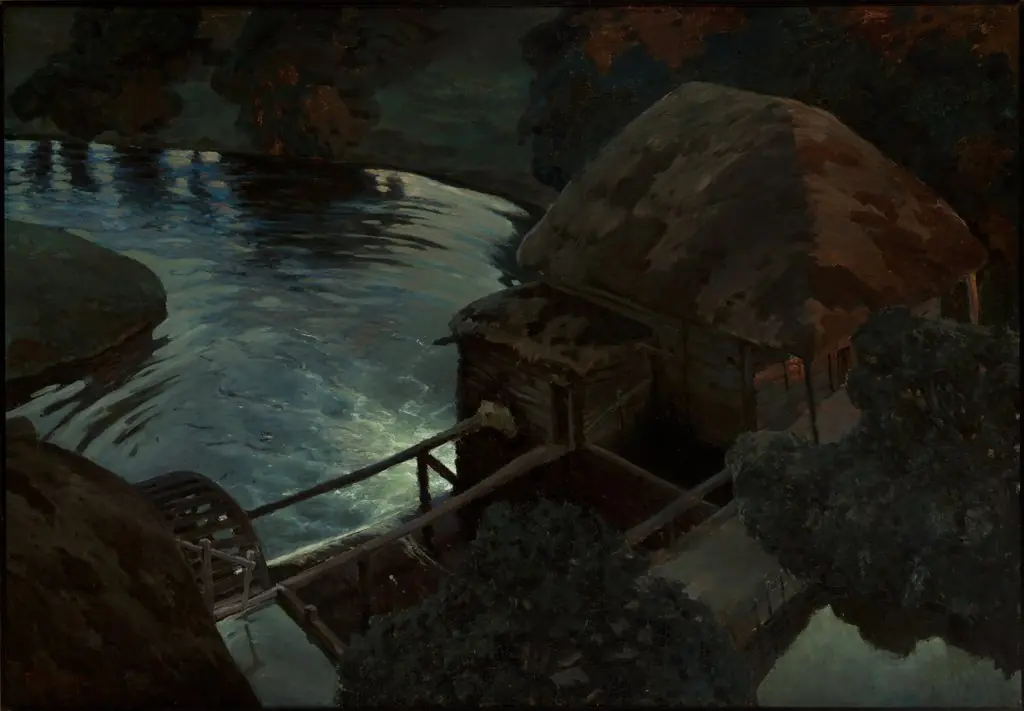
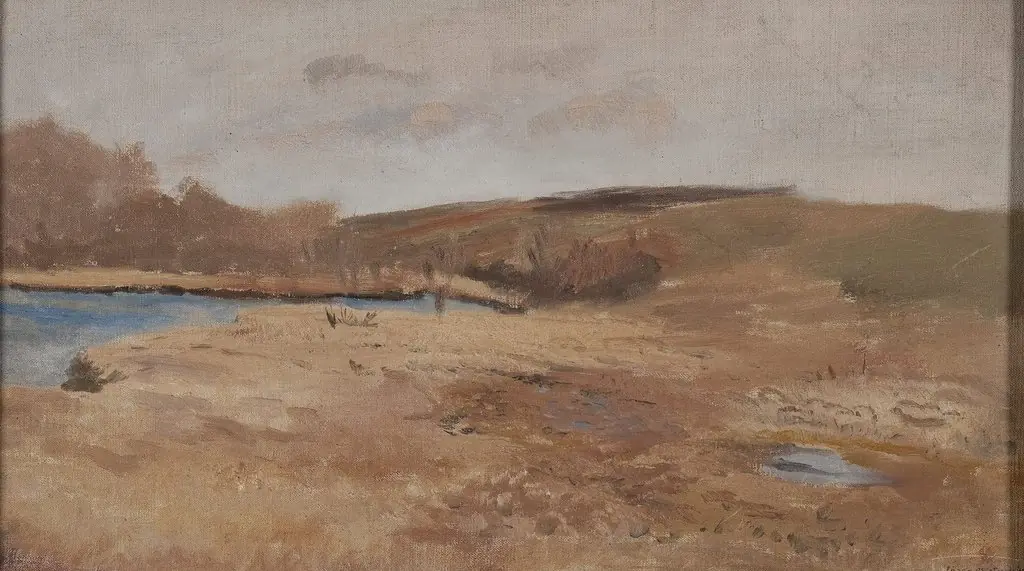
Landscape – stream is an unspecified painting by the Post-Impressionist artist Ferdynand Ruszczyc. It dates from 1900 and is held in the collection of the National Museum in Warsaw.
About this work
Overview
The work is part of the National Museum in Warsaw’s permanent collection, representing early 20th-century Polish landscape traditions.
Ferdynand Ruszczyc painted *Landscape – stream* in 1900, capturing a quiet rural scene in Poland. A member of the aristocratic Ruszczyc de Lis family, he worked across painting, printmaking, and stage design. This piece reflects his engagement with post-impressionist approaches, emphasizing mood and structure over strict realism. The work is part of the National Museum in Warsaw’s permanent collection, representing early 20th-century Polish landscape traditions.
Subject & Meaning
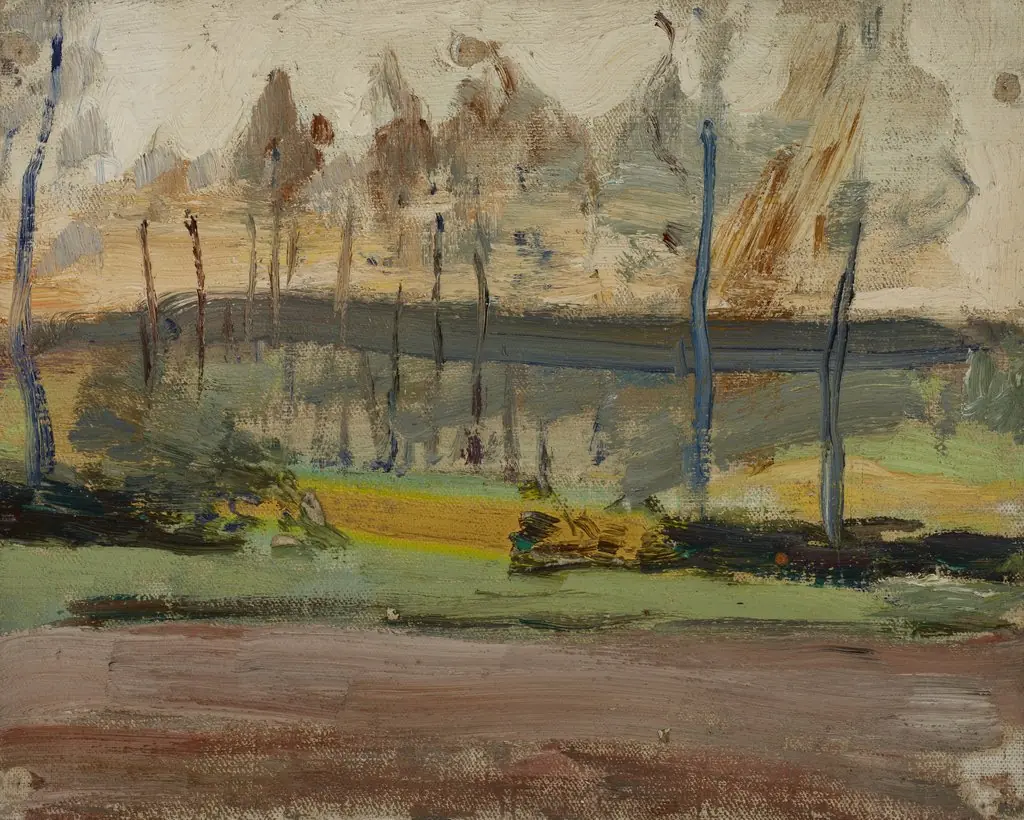
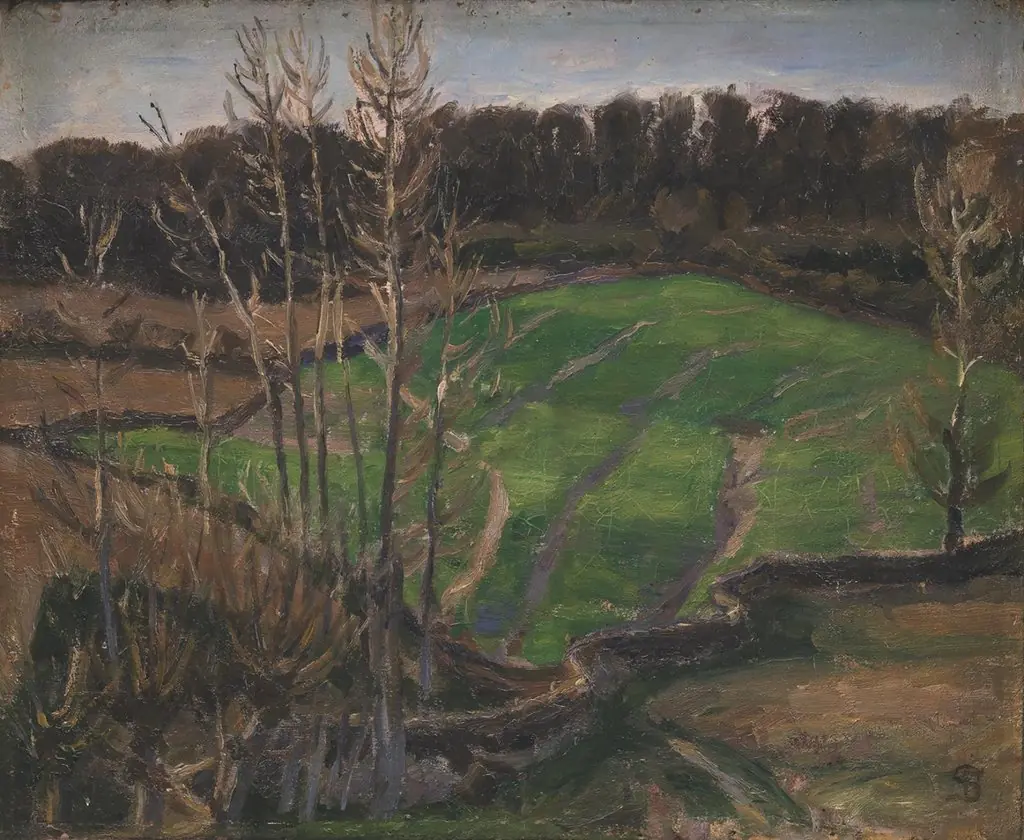
The painting presents a tranquil stream winding through a wooded area, framed by bare trees and soft earth tones. There is no human presence, and the scene avoids dramatic tension, instead offering a contemplative view of nature’s quiet rhythm. The stillness of the water and the muted palette suggest introspection, aligning with broader European tendencies to find spiritual resonance in unspoiled landscapes during a time of rapid industrial change.
Technique & Style
Ruszczyc employed loose, textured brushwork to suggest the movement of water and the texture of bark and soil. Colors are subdued—earthy browns, muted greens, and pale sky tones—creating harmony without sharp contrasts. The composition directs the eye along the stream’s path, using the trees as natural frames. His style moves beyond impressionist light studies, favoring structural clarity and emotional restraint characteristic of post-impressionism.
History & Provenance
Created in 1900, the painting remained within Polish artistic circles after its completion. It entered the National Museum in Warsaw’s collection in the early 20th century, likely through acquisition or donation. Its preservation reflects the museum’s commitment to documenting national artistic development during the period of partition, when cultural identity was actively sustained through art.
Context
At the turn of the century, Polish artists like Ruszczyc sought to define a national visual language amid foreign rule. Landscape painting became a subtle form of cultural assertion, focusing on native terrain rather than foreign motifs. While influenced by French post-impressionism, Ruszczyc’s work retains a distinctly Central European sensibility, rooted in local topography and seasonal quietude.
Legacy
Though not widely known outside Poland, Ruszczyc’s landscapes contributed to a generation of artists who prioritized emotional depth over spectacle. *Landscape – stream* exemplifies a quiet, enduring strand of Polish modernism—one that valued stillness and observation. The painting continues to be studied for its restrained aesthetic and its role in shaping national artistic identity during a politically fragmented era.
Artist & collection
Artist
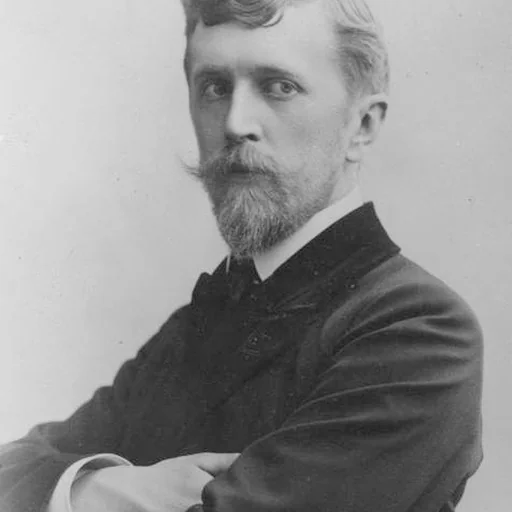
Ferdynand Ruszczyc (1870–1936) was a Polish painter, printmaker, and stage designer. He was a member of the aristocratic Ruszczyc de Lis family.