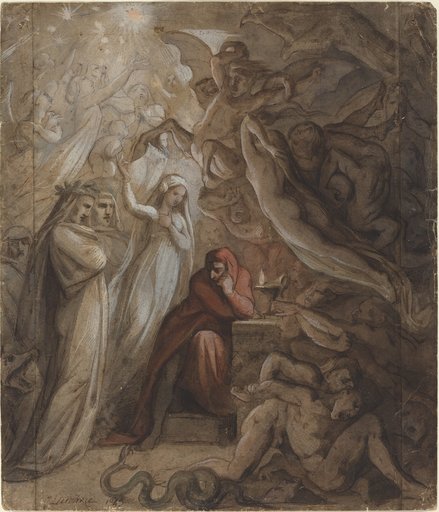
Dante Meditating on the "Divine Comedy"
1843
ink
paper
From the collection of National Gallery of Art
1843
ink
paper
From the collection of National Gallery of Art
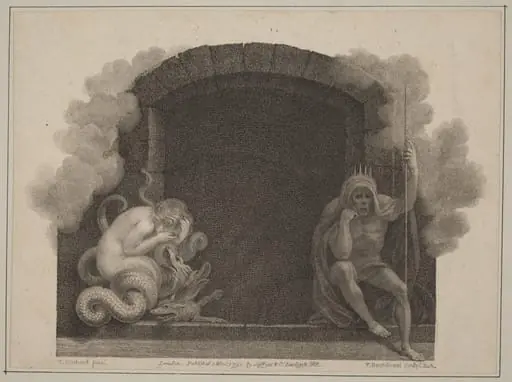
Dante Meditating on the "Divine Comedy" is a 1843 ink by Jean-Jacques Feuchère, a Romanticism work, held at National Gallery of Art.
The painting depicts a man sitting at a desk, surrounded by various figures and objects. The man is dressed in a long robe and has his head in his hand, as if deep in thought. To his left, a woman in a white dress holds up a glowing orb, while to his right, a group of people are gathered around a table. In the background, there are several other figures, including a man with wings and a woman with a snake wrapped around her. The overall atmosphere of the painting is one of contemplation and creativity. This painting is reminiscent of the work of Romanticism artists, who often explored themes of emotion and imagination in their art.
Created in 1843, the drawing titled *Dante Meditating on the “Divine Comedy*” presents the poet Dante Alighieri seated at a desk, his head cradled in his hand as he ponders his epic. The composition surrounds him with a variety of figures—a luminous woman with an orb, a gathering of onlookers, and symbolic characters in the distance—evoking a contemplative atmosphere.
The work visualizes Dante’s moment of introspection, suggesting the inner dialogue that produced the *Divine Comedy*. The attendant figures function as allegorical references: the radiant woman may represent divine illumination, while the winged man and the serpent‑bound woman hint at celestial and earthly forces that shape the poet’s imagination.
Feuchère employed pen and brown ink over a graphite underdrawing, adding brown wash and watercolor to model volume, then accentuating highlights with white gouache. Executed on three joined sheets of laid paper, the drawing demonstrates a nuanced handling of line and tonal contrast, characteristic of Romantic drawing practices that emphasize mood and expressive detail.
Although best known as a sculptor trained under Jean‑Pierre Cortot, Jean‑Jacques Feuchère produced a modest body of drawings, of which this piece is a notable example. The drawing has remained in private collections since the mid‑19th century, with documented ownership passing through several European art dealers before entering its current museum setting.
The piece aligns with Romantic era interests in literary heroism and the power of imagination. By portraying Dante in a moment of creative concentration, Feuchère joins contemporaries who sought to dramatize the inner lives of historic figures, using a blend of drawing and watercolor to convey both intellectual depth and emotional intensity.
Read the full account in the museum source.
Jean-Jacques Feuchère (French pronunciation: ; 24 August 1807 – 26 July 1852) was a French sculptor. He was a student of Jean-Pierre Cortot, and among his students was Jacques-Léonard Maillet.
See the richer artist page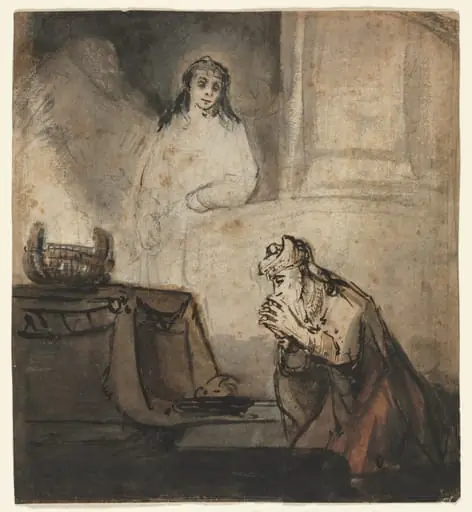
Angel Appearing to Zacharias
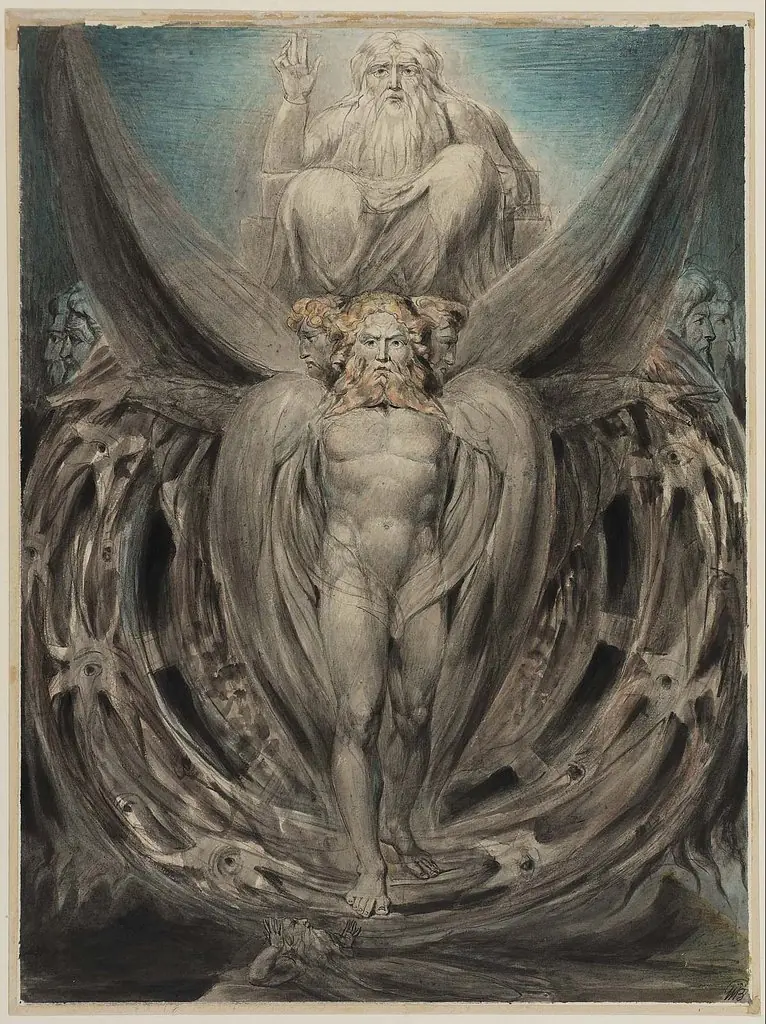
Ezekiel's Wheels
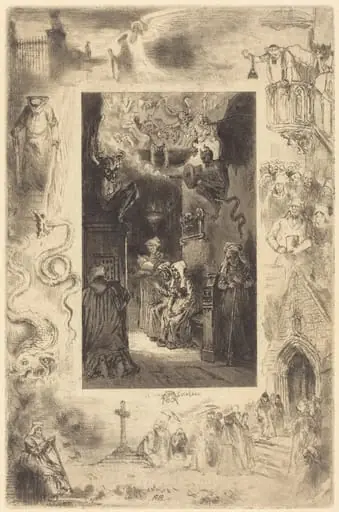
Le Curé de Cucugnan (The Vicar of Cucugnan)
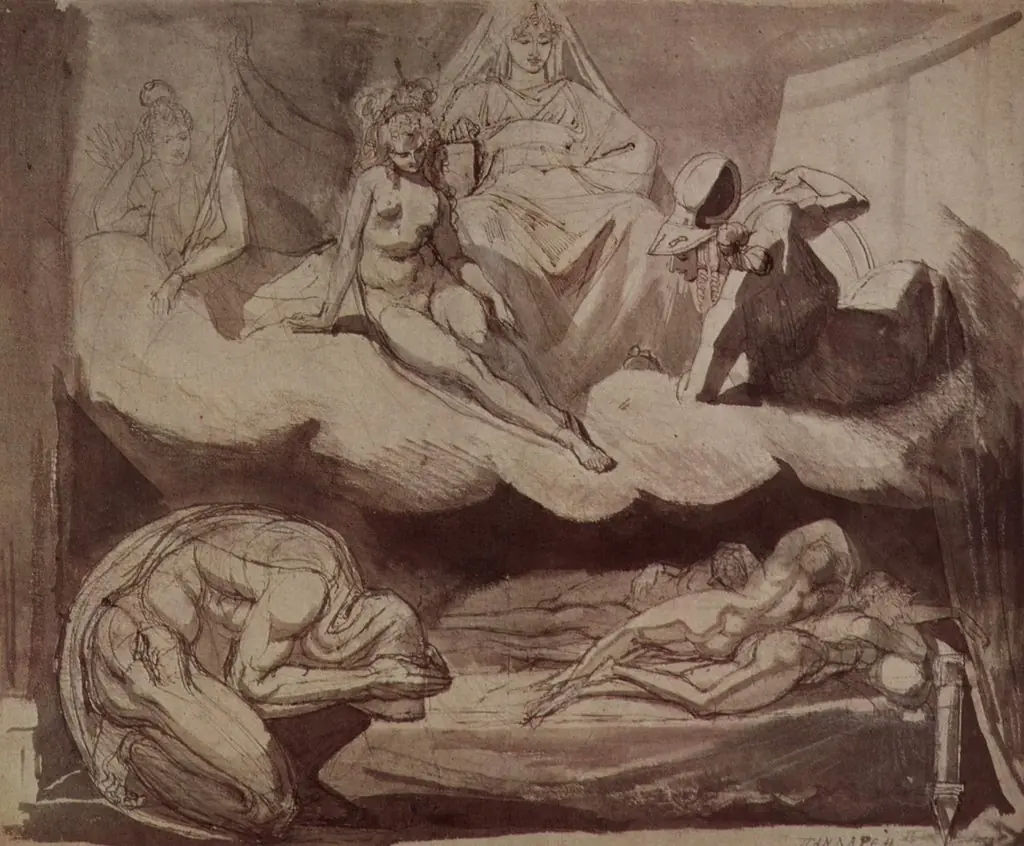
The Daughters of Pandareos
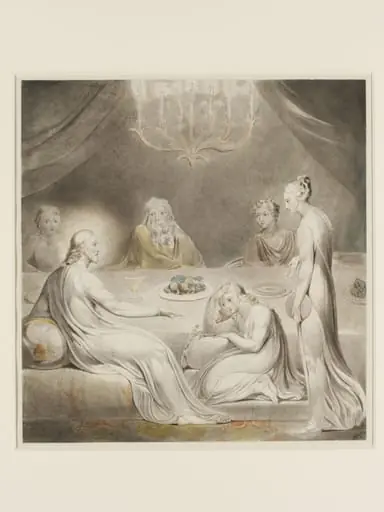
Christ in the house of Martha and Mary
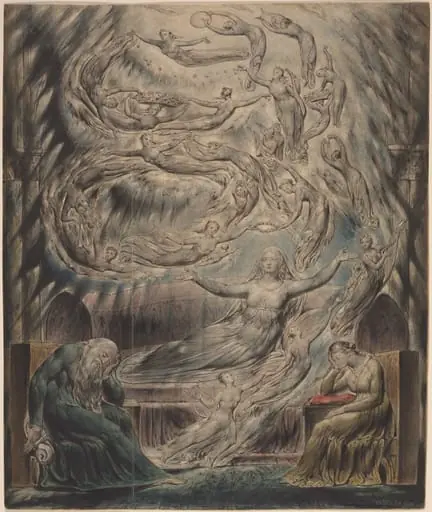
Queen Katherine's Dream
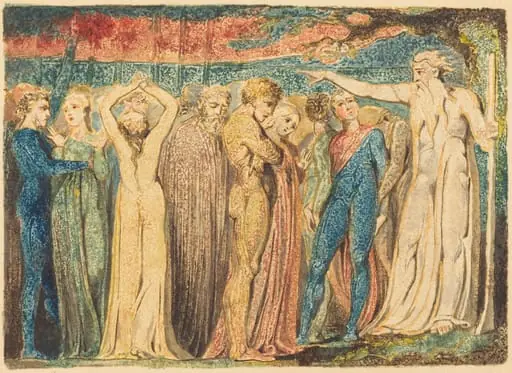
Joseph of Arimathea Preaching to the Britons
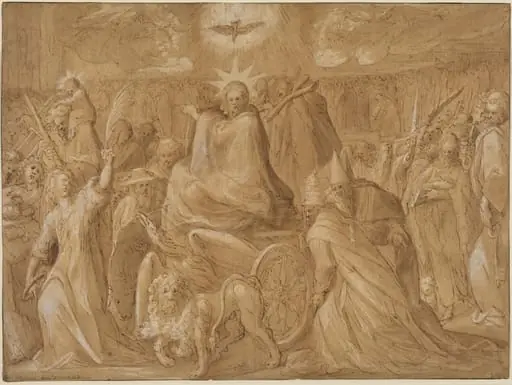
The Triumph of Christ
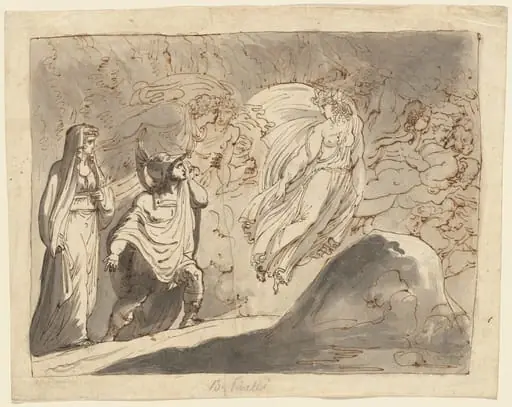
Aeneas in the Underworld
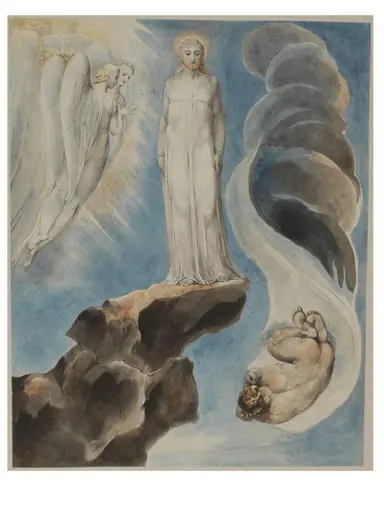
The Third Temptation
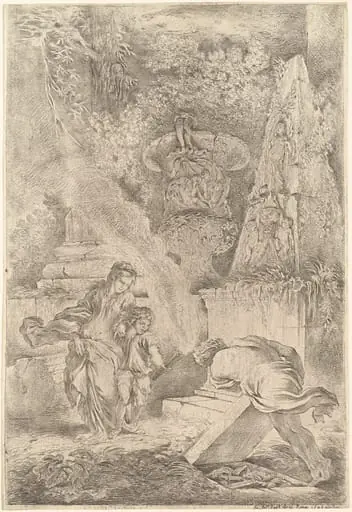
Theseus Finding Aegeus' Arms
The Tomb of Death
Your cart is empty
Explore artworks →