Artwork
The Daughters of Pandareos
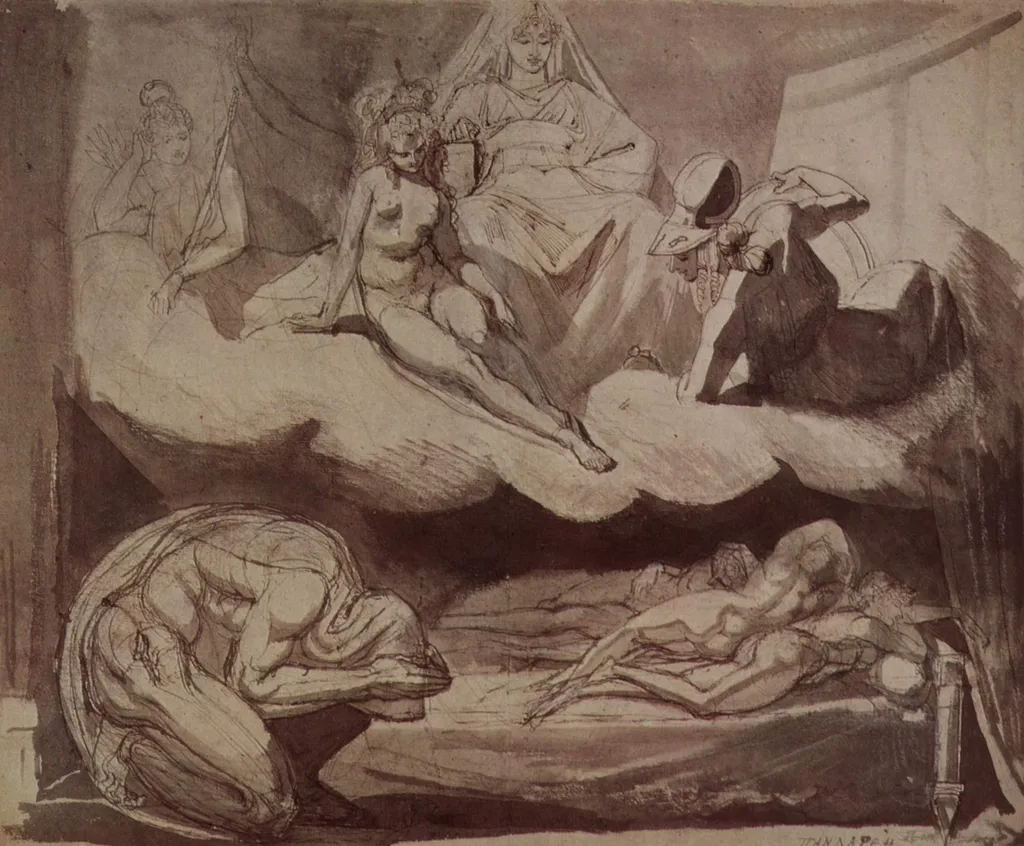
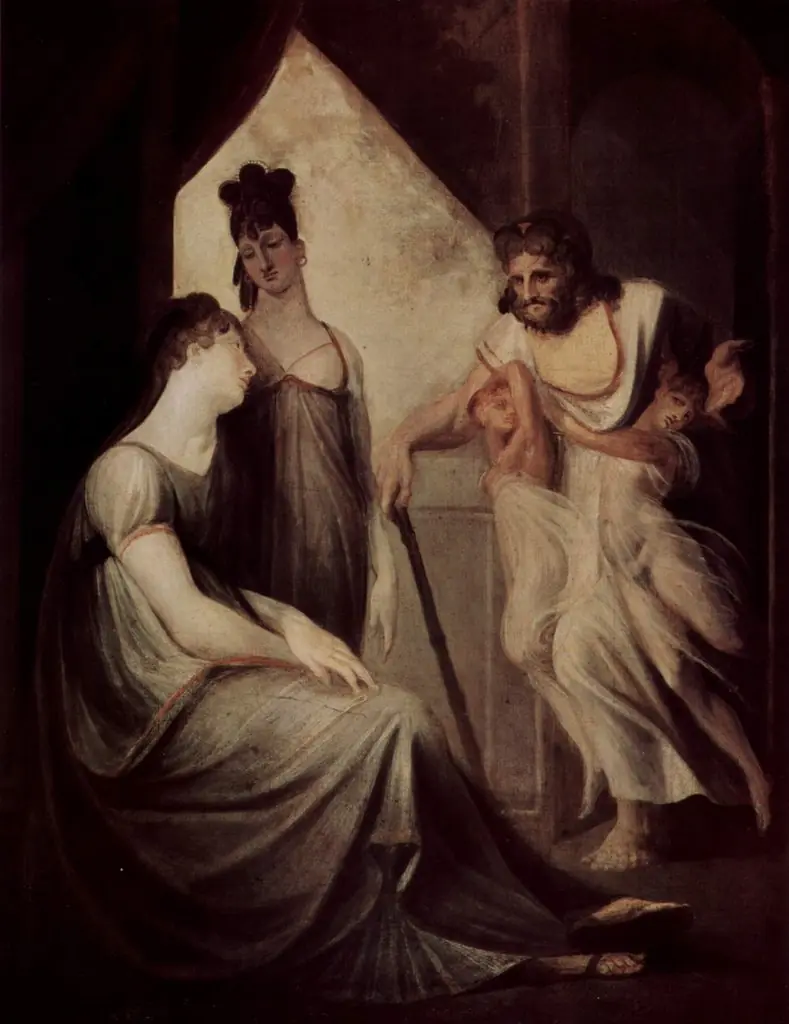
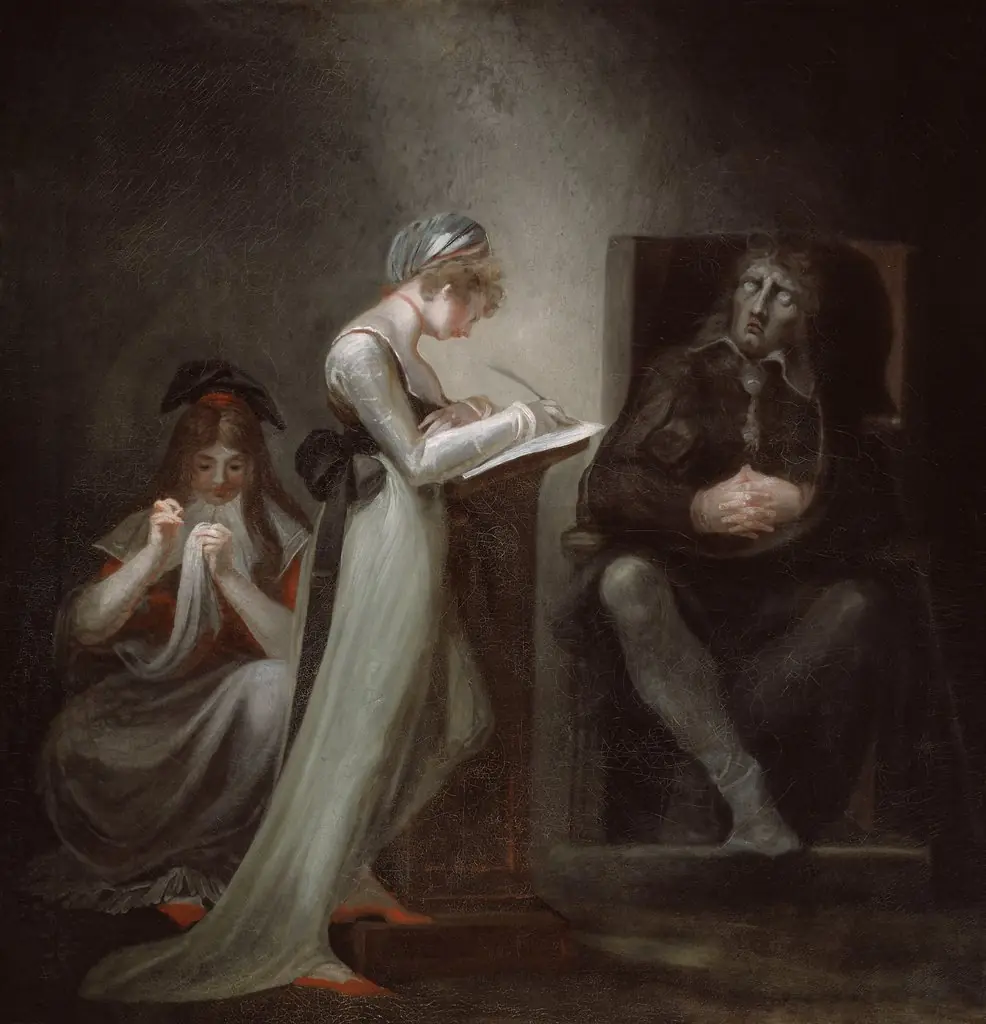
The Daughters of Pandareos is an unspecified painting by the British Romanticist artist Henry Fuseli. It dates from 1798 and is held in the collection of the Kunsthaus Zürich.
About this work
Overview
Painted in 1798 by Henry Fuseli, The Daughters of Pandareos is a mythological subject rendered in oil on canvas. The work resides in the collection of the Kunsthaus Zürich. It portrays a moment from Greek legend involving the tragic fate of three sisters, captured in a somber, introspective composition that emphasizes emotional weight over narrative clarity.
Subject & Meaning
Fuseli depicts the aftermath: one daughter seated in despair, two others standing in anguish, and two fallen figures—possibly slain or overcome.
The painting illustrates the myth of Pandareos’s daughters, who, after losing their parents, were taken in by the gods but later punished by being seized by the Furies. Fuseli depicts the aftermath: one daughter seated in despair, two others standing in anguish, and two fallen figures—possibly slain or overcome. The scene conveys divine retribution and the fragility of mortal hope under supernatural forces.
Technique & Style
Fuseli employs chiaroscuro to sculpt forms and heighten emotional tension. Deep shadows envelop the figures, while selective light isolates faces and draped fabrics, enhancing their vulnerability. The drapery is rendered with fluid, almost spectral lines, suggesting movement and inner turmoil. The composition avoids theatricality, favoring stillness and psychological intensity over action.
History & Provenance
Completed in 1798, the painting entered the Kunsthaus Zürich’s collection in the early 20th century. Its provenance traces back to Fuseli’s personal holdings, likely acquired by a Swiss collector after his death in 1825. The work remained relatively obscure until scholarly interest in Romantic-era mythological painting revived attention to Fuseli’s lesser-known pieces.
Context
Fuseli painted this during a period when European artists revisited classical myths to explore psychological and moral themes. Influenced by Gothic literature and Enlightenment debates on fate, his work diverged from neoclassical idealism. The Daughters of Pandareos reflects a fascination with suffering, divine injustice, and the limits of human agency—common motifs in late 18th-century Romanticism.
Legacy
Though not widely exhibited, the painting exemplifies Fuseli’s distinctive approach to myth: emotionally charged, visually restrained, and psychologically dense. It influenced later Symbolist painters drawn to myth as a vehicle for inner states. Scholars recognize it as a quiet but potent statement on the vulnerability of women in mythic narratives, distinct from more sensationalized treatments of the same subject.
Own this work as a print
Artist & collection

Artist
Henry Fuseli was a Swiss painter, draughtsman, and writer on art who spent much of his career in Britain.