Artwork
Landscape with cottage and two figures
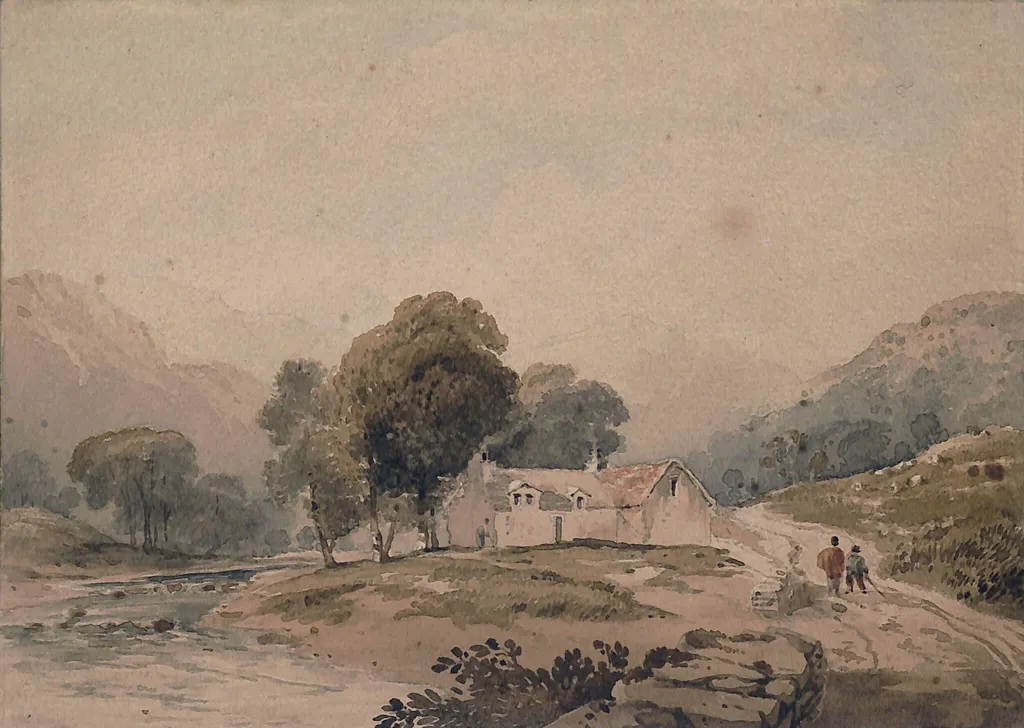
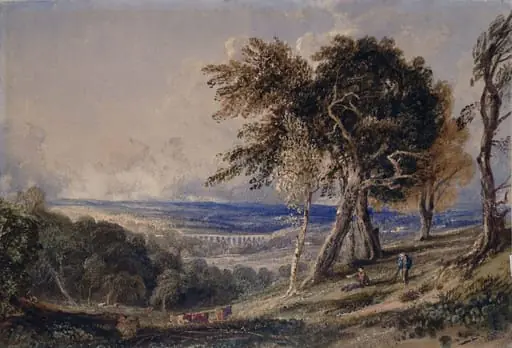
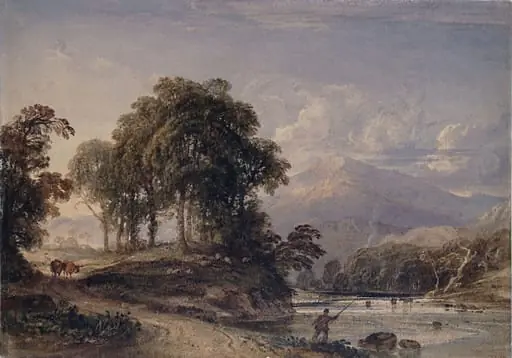
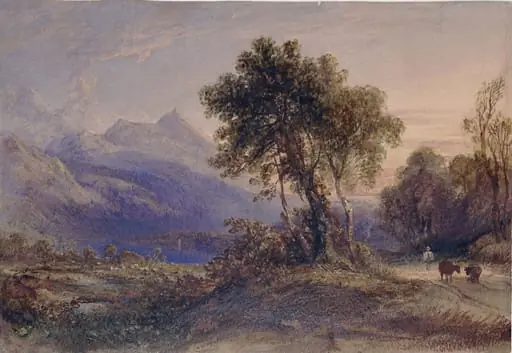
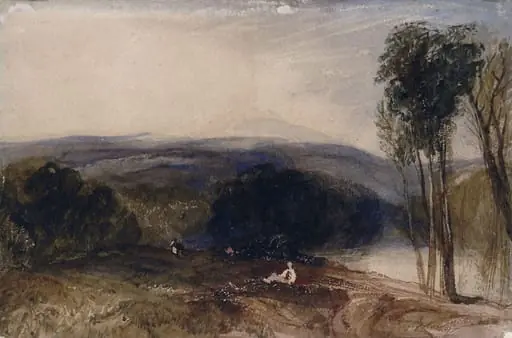
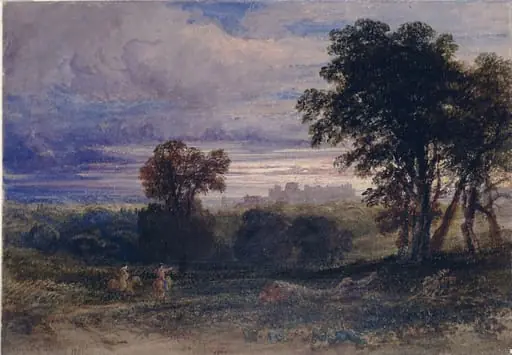
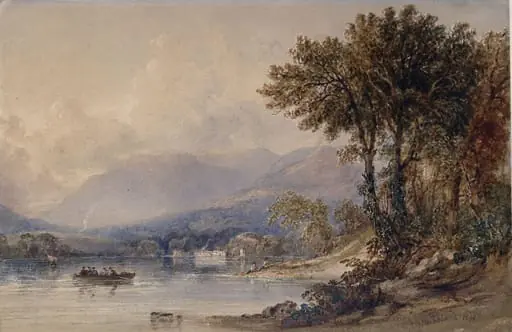
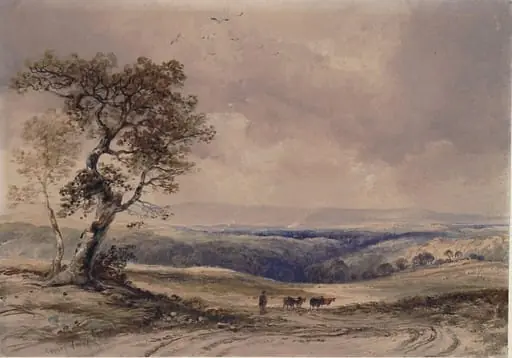
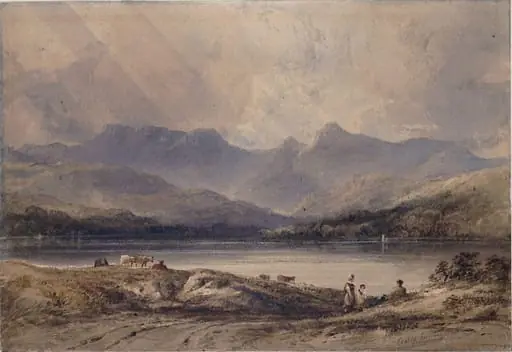
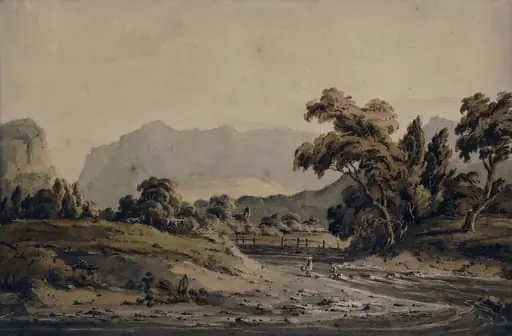
Landscape with cottage and two figures is a watercolor work on paper by Anthony Vandyke Copley Fielding. It dates from 1850 and is held in the collection of the Victoria and Albert Museum.
About this work
Overview
This watercolour landscape by Anthony Vandyke Copley Fielding presents a tranquil rural scene, rendered in delicate washes of pigment.
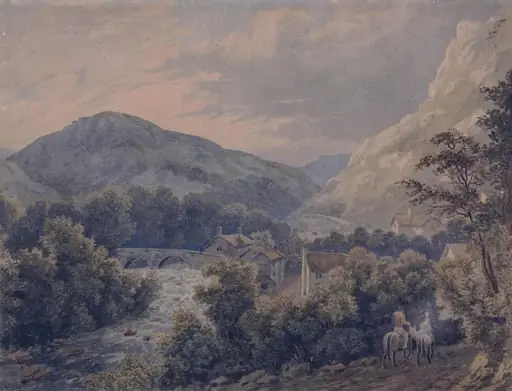
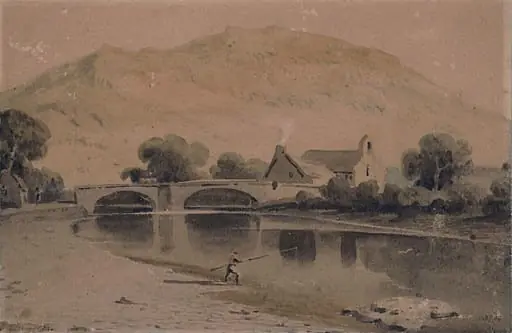
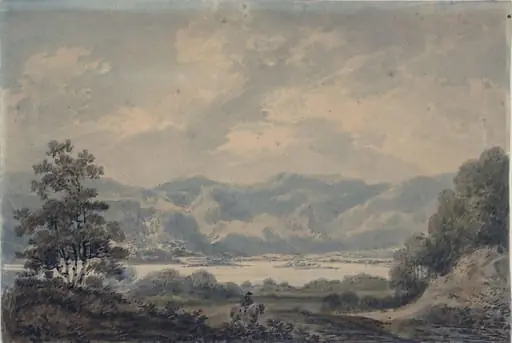
This watercolour landscape by Anthony Vandyke Copley Fielding presents a tranquil rural scene, rendered in delicate washes of pigment. A modest white cottage sits near a winding river, flanked by soft hills and scattered trees. Two figures stroll along a path in the foreground, while a few others linger near the dwelling. The composition emphasizes stillness and quiet observation, typical of Fielding’s approach to natural settings.
Subject & Meaning
The painting captures ordinary moments in a rural environment—figures moving along a path, others near a home—without narrative drama. There is no indication of labor or celebration; instead, the scene conveys a sense of daily rhythm and solitude. The absence of grandeur suggests an appreciation for the unremarkable, reflecting 19th-century British tastes for modest, contemplative landscapes.
Technique & Style
Fielding employed transparent watercolour to achieve a light, airy quality, allowing the paper’s white to suggest highlights and atmosphere. Gentle, blended brushstrokes unify the hills, trees, and water, avoiding sharp definition. The muted palette—soft greens, greys, and pale blues—enhances the calm mood. His technique prioritizes tonal harmony over detail, characteristic of his mature watercolour style.
History & Provenance
The work was once part of the collection of Decimus Burton, an architect and relative of the testatrix. Its presence in his holdings suggests it was valued as a personal possession rather than a public exhibit. No record of public exhibition or critical reception during Fielding’s lifetime is known, indicating its likely private, domestic context.
Context
Fielding was a prominent figure in the British watercolour movement of the early 1800s, associated with the Society of Painters in Water Colours. His landscapes often depicted unidealized countryside, aligning with a broader cultural shift toward valuing everyday rural life. This piece reflects the period’s growing interest in quiet, intimate views over dramatic or picturesque subjects.
Legacy
Though not among Fielding’s most widely reproduced works, this watercolour exemplifies his consistent focus on serene, unembellished nature. His influence lies in elevating watercolour as a medium for subtle observation rather than spectacle. The piece remains a quiet testament to his dedication to capturing the understated beauty of the English landscape.
Own this work as a print
Artist & collection
Artist
Anthony Vandyke Copley Fielding
Anthony Vandyke Copley Fielding painted British landscapes in watercolour during the early 1800s.