Artwork
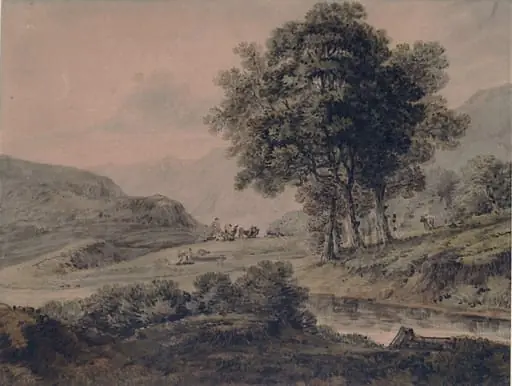
Rydal Head, Ambleside, Westmorland
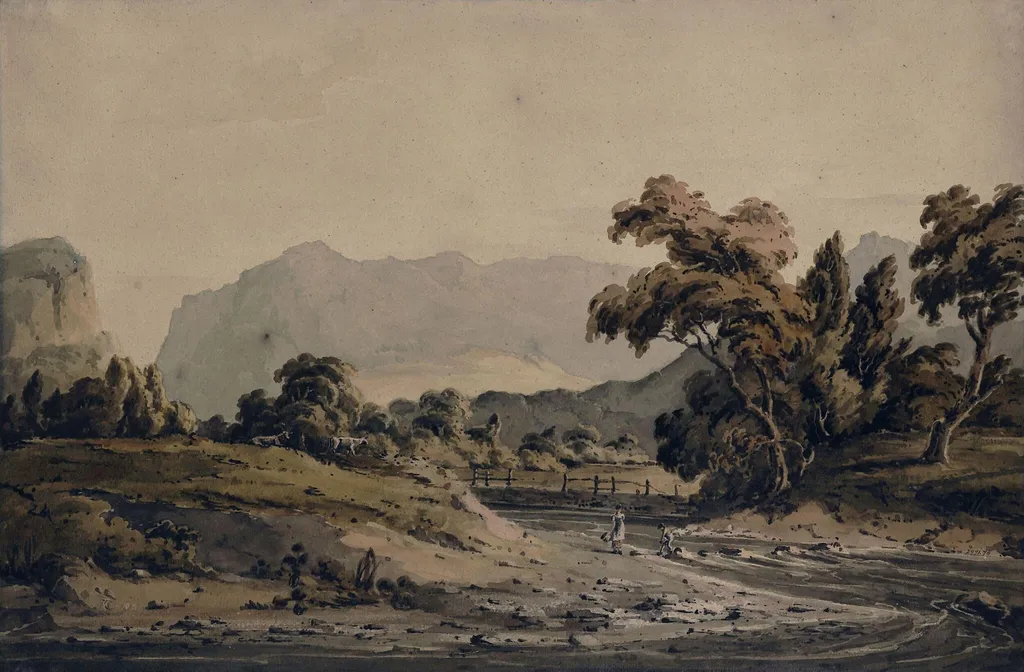
Rydal Head, Ambleside, Westmorland is a watercolor work on paper by the British Romanticist artist Copley Fielding. It dates from 1808 and is held in the collection of the Victoria and Albert Museum.
About this work
Overview
Copley Fielding created this watercolour in 1808, signing and dating it plainly. It portrays the rural landscape surrounding Rydal Head near Ambleside in Westmorland, capturing a quiet, unembellished stretch of countryside. The work is executed entirely in watercolour, a medium Fielding favored for its ability to convey subtle atmospheric effects and delicate tonal shifts.
Subject & Meaning
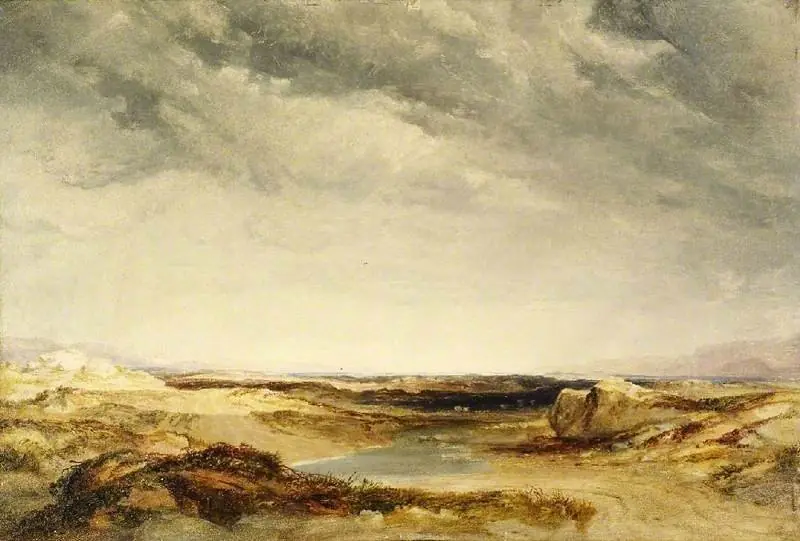
The scene presents a tranquil, unpopulated valley with a narrow path winding through rocky terrain. Trees are scattered across the slopes, and a low stone fence traces the right edge of the composition. Distant hills dissolve into a pale, even sky, suggesting stillness and solitude. There is no human activity, reinforcing a mood of quiet contemplation rather than narrative.
Technique & Style
Fielding employed transparent washes to build soft gradations of light and shadow, avoiding sharp outlines. The watercolour technique allows the paper’s white to suggest highlights, while muted earth tones and pale blues unify the landscape. Brushwork is restrained, emphasizing atmosphere over detail, characteristic of early 19th-century British watercolour practice.
History & Provenance
Painted in 1808, the work reflects Fielding’s early focus on topographical scenes in the Lake District. It was likely made during a period of personal travel, as he frequently sketched in northern England. No documented ownership history is widely recorded, but it remains within the tradition of amateur and professional watercolourists documenting the British countryside.
Context
This piece aligns with the broader British watercolour movement of the early 1800s, which valued precise observation and lyrical tone over dramatic expression. While often associated with Romanticism, Fielding’s approach is more restrained, reflecting a preference for quiet realism over emotional intensity, distinguishing his work from contemporaries like Turner.
Legacy
This work exemplifies the quiet, observational tradition that underpinned British landscape art before the rise of more expressive styles.
Fielding’s watercolours, including this one, contributed to the institutional recognition of watercolour as a serious medium in Britain. His precise, calm renderings of landscape influenced later societies such as the Watercolour Society, where he served as president. This work exemplifies the quiet, observational tradition that underpinned British landscape art before the rise of more expressive styles.
Artist & collection
Artist
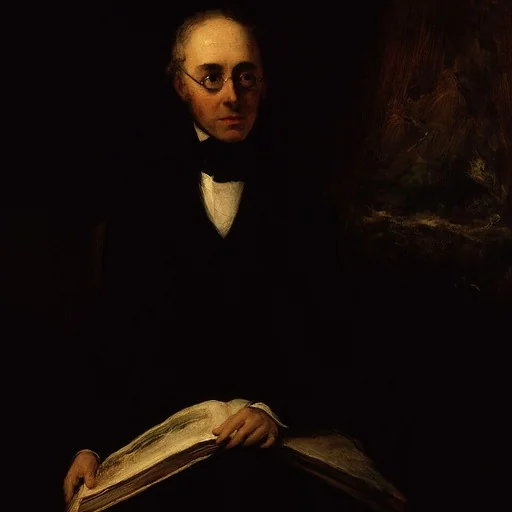
Anthony Vandyke Copley Fielding (22 November 1787 – 3 March 1855), commonly called Copley Fielding, was an English painter born in Sowerby, near Halifax, and famous for his watercolour landscapes.

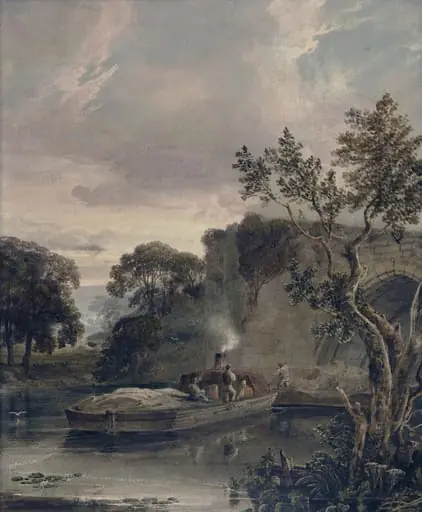
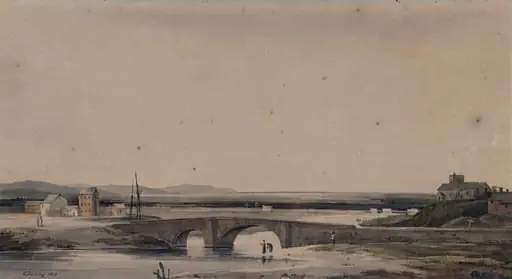
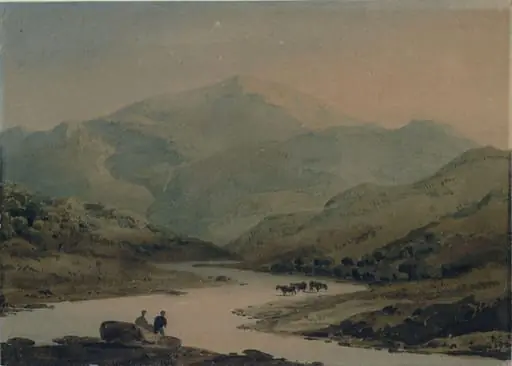 River scene: cattle in shallows
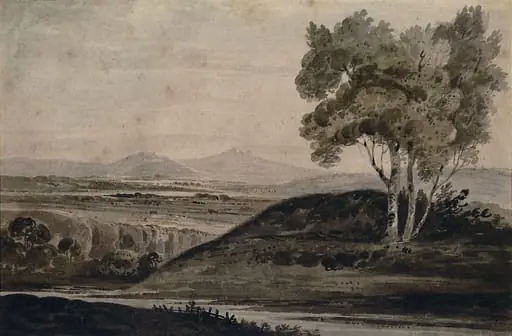 Landscape, evening effect
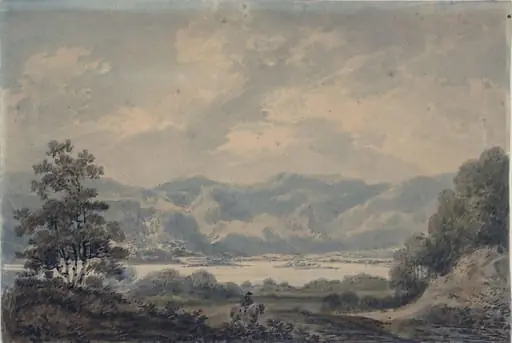 Windermere
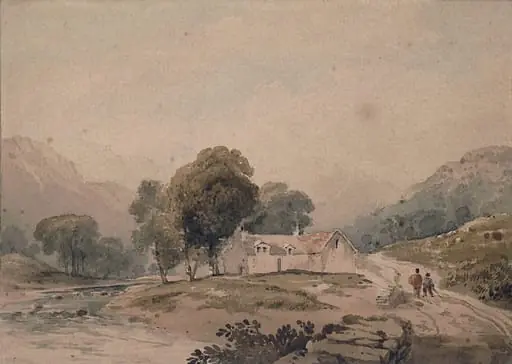 Landscape with cottage and two figures
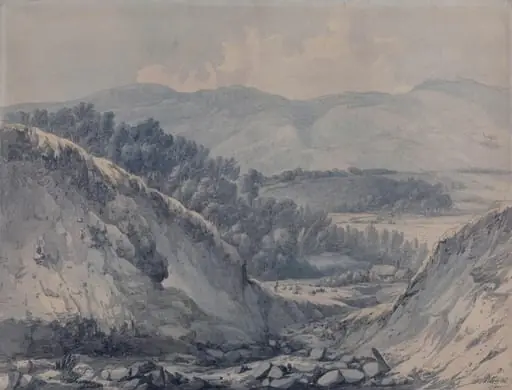 Near Dolgelly
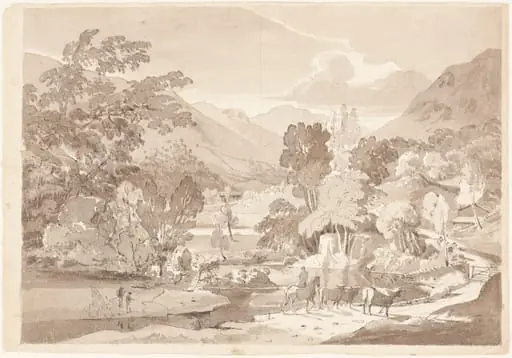 A Mountainous Landscape
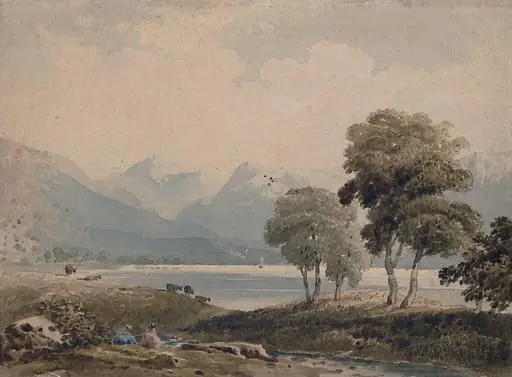 Landscape with lake and mountains
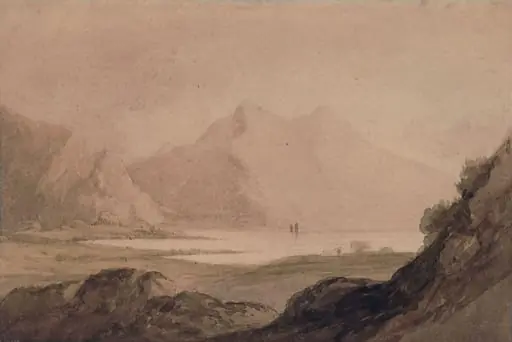 Snowdon with Llanberis Lake
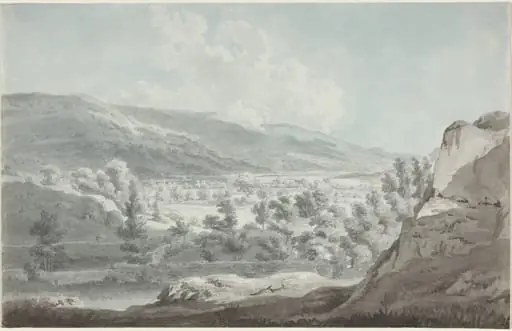 The Head of Ullswater
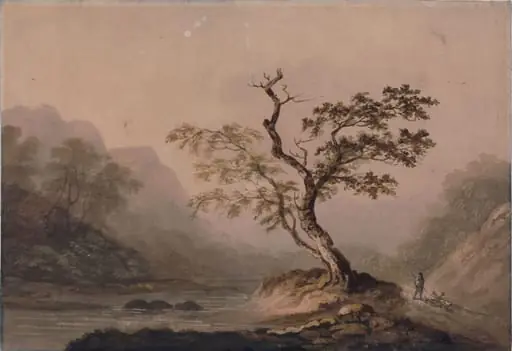 Landscape with river and mountains
 Landscape with stream, cattle and figures
 Windsor Castle