Artwork
Lynmouth, Devon
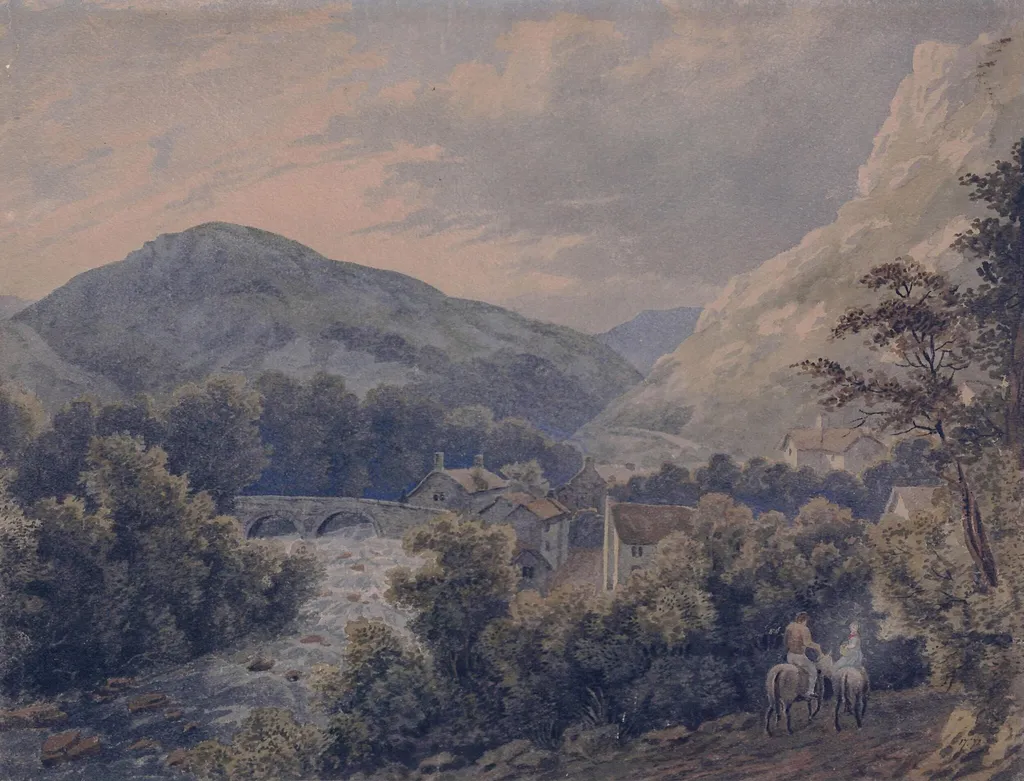
Lynmouth, Devon is a watercolor work on paper by the Romanticist artist Charles Vincent Barber. It dates from 1805 and is held in the collection of the Victoria and Albert Museum.
About this work
Overview
Charles Vincent Barber’s watercolour presents a tranquil view of Lynmouth, a coastal village in Devon. The composition opens onto a gently curving valley where rolling hills frame a modest river, crossed by a stone arch bridge. Small dwellings cluster near the bridge, while two figures on horseback traverse a path that leads toward the right edge of the picture.
Subject & Meaning
The scene captures a moment of everyday rural life, emphasizing the harmony between human activity and the surrounding landscape. The presence of the bridge and the riders suggests connectivity and movement within an otherwise serene environment, highlighting the modest scale of the settlement against the expansive natural setting.
Technique & Style
Executed in transparent watercolour, the work relies on delicate washes of muted tones to convey atmospheric light and subtle shadow. Barber avoids sharp outlines, instead building form through layered pigment and tonal gradations, which impart depth to the hills and river while preserving a soft, almost lyrical quality.
Context
Barber, active in the early nineteenth century, often depicted English countryside scenes, reflecting the period’s growing interest in picturesque rural vistas. This piece aligns with contemporary tastes for tranquil, idealised representations of provincial life, offering viewers a calm visual respite.
Own this work as a print
Artist & collection
Artist
Charles Vincent Barber was an English landscape painter and art teacher.

![Landscape View [?in North Wales], by John Glover](https://artifactworldgallery.com/img/john-glover--landscape-view-in-north-wales--a6780e3d0b73ec67-w320.webp) Landscape View [?in North Wales]
Landscape View [?in North Wales]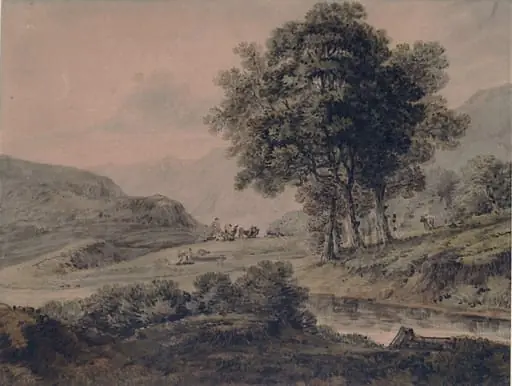 Landscape with stream, cattle and figures
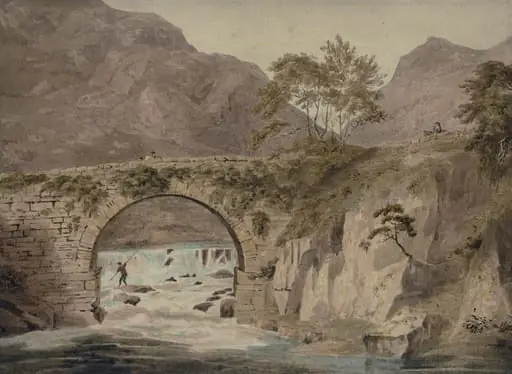 Pont Aberglaslyn
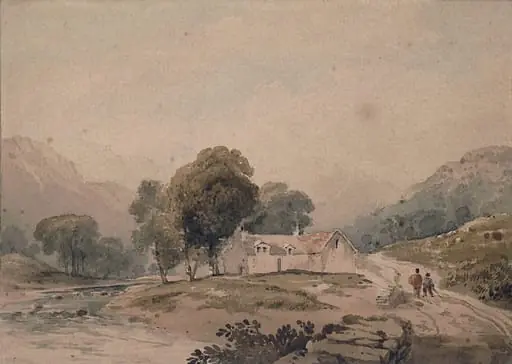 Landscape with cottage and two figures
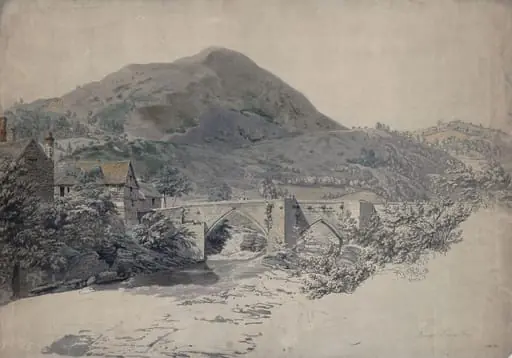 Llangollen Bridge
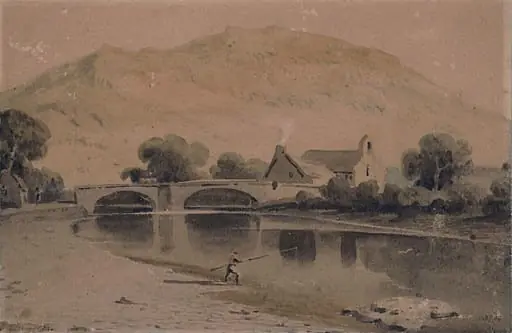 Bridge and Stream
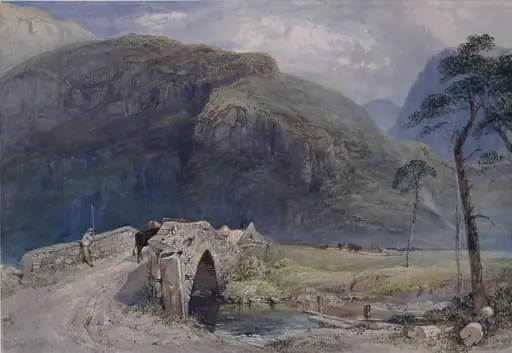 Landscape with bridge and cattle
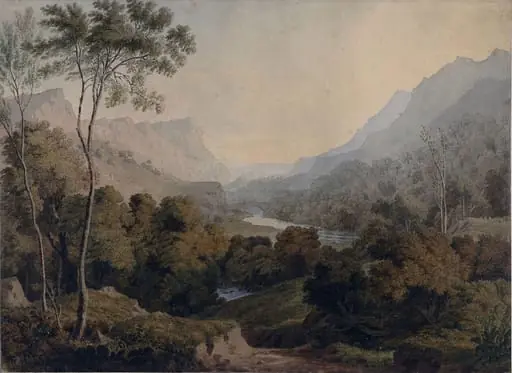 View on the Conwy, near Llanwrstm, Carnarvonshire
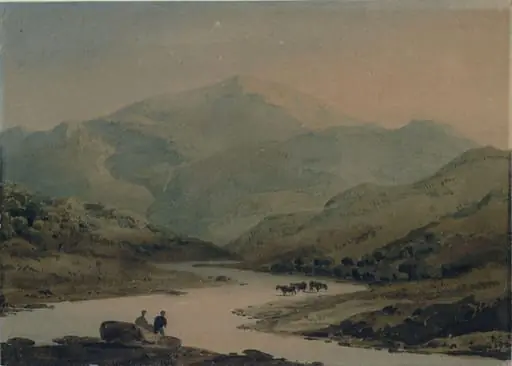 River scene: cattle in shallows
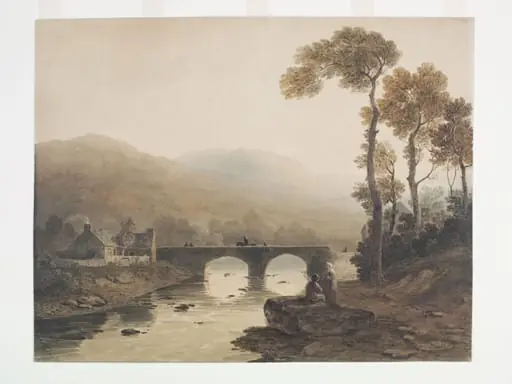 Beddgelert Bridge
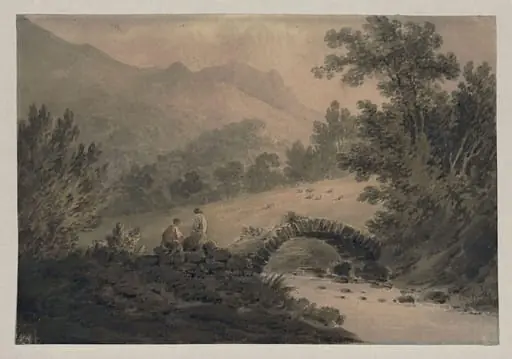 View near Halifax
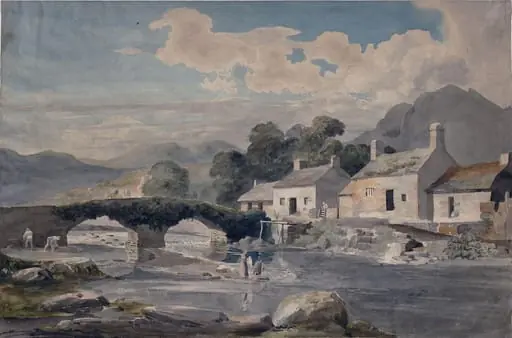 Beddgelert Bridge