Artwork
The Yew at Clifton
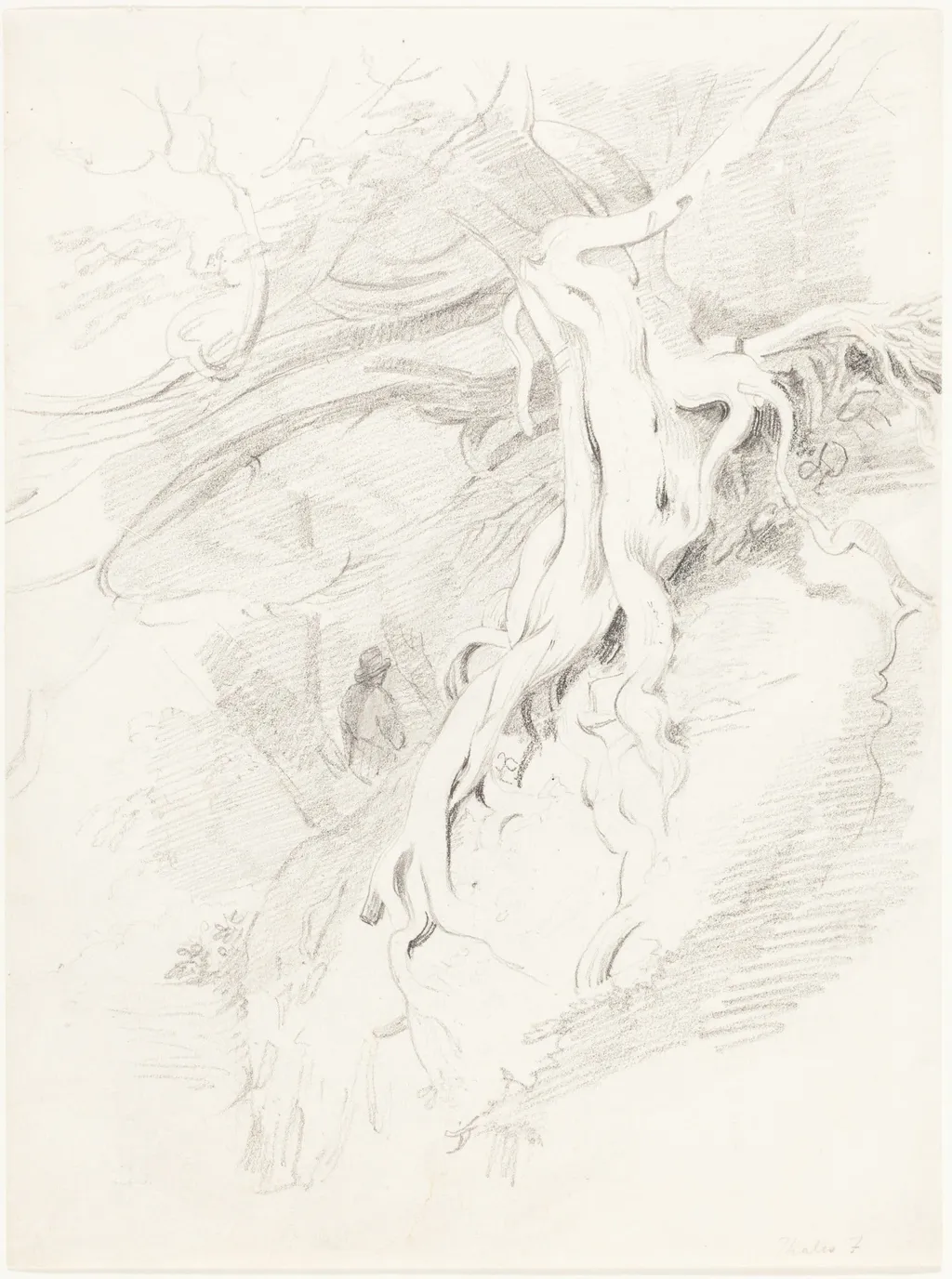
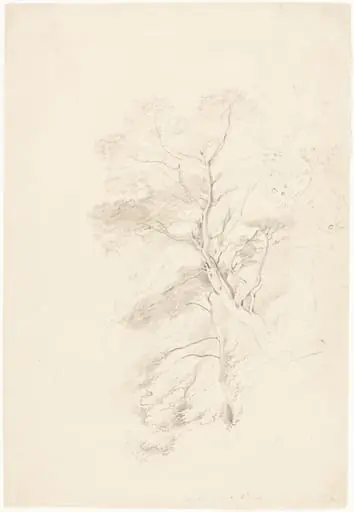
The Yew at Clifton is a graphite drawing by the Romanticist artist Thales Fielding. It dates from 1815 and is held in the collection of the National Gallery of Art.
About this work
Overview
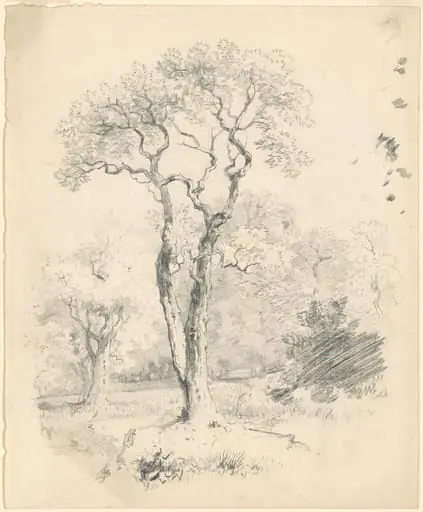
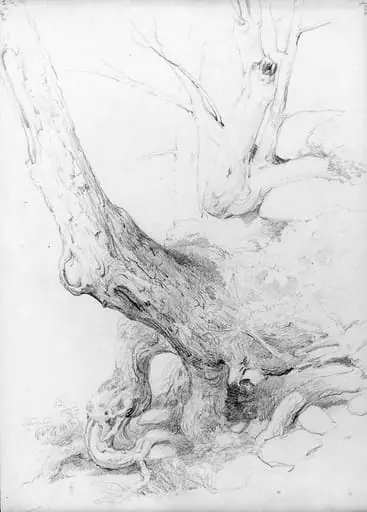
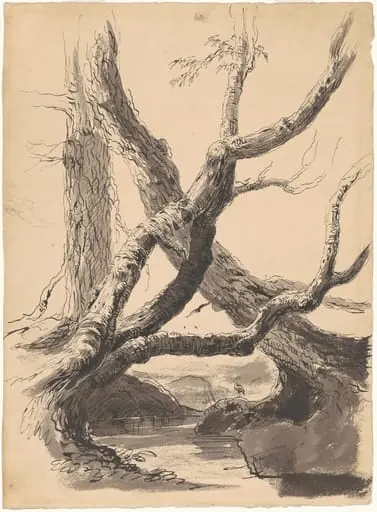
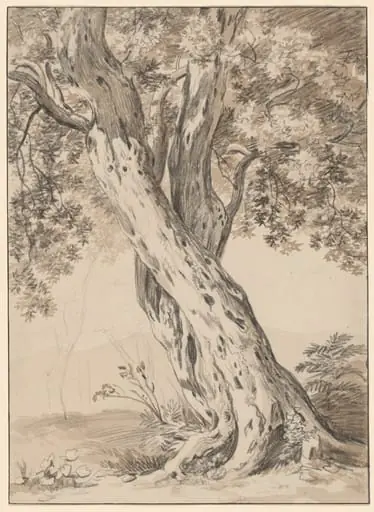
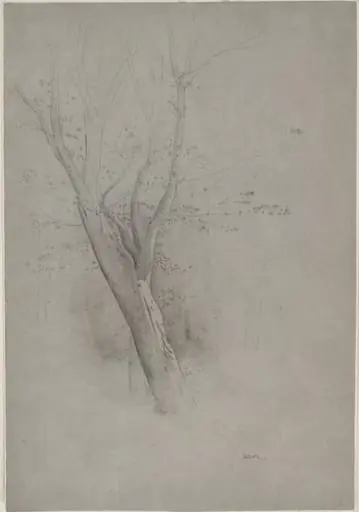
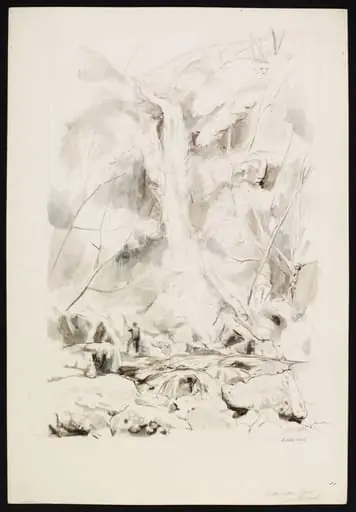
The Yew at Clifton is a graphite drawing executed on wove paper by Thales Fielding in 1815. The work presents a solitary, heavily twisted yew tree dominating the composition, its massive trunk and sprawling branches rendered with a range of tonal values that convey both solidity and age.
Subject & Meaning
The central focus is the ancient yew, its gnarled bark and thick limbs suggesting endurance and the passage of time. The faint, indistinct hills in the background provide a minimal landscape context, emphasizing the tree’s isolation and its role as a natural monument within the scene.
Technique & Style
Fielding employed graphite to achieve a nuanced gradation of light and shadow, using bold, expressive lines for the main branches and softer, feathery strokes to imply foliage. The texture of the bark is suggested through deep grooves and ridges, while the overall handling reflects a careful balance between detailed observation and atmospheric suggestion.
History & Provenance
Created in the early nineteenth century, the drawing reflects Fielding’s interest in topographical subjects during a period when British artists frequently documented the countryside. The work’s provenance traces back to private collections before entering a public institution, where it has been displayed as an example of early British landscape drawing.
Artist & collection