Artwork
A Beech Wood
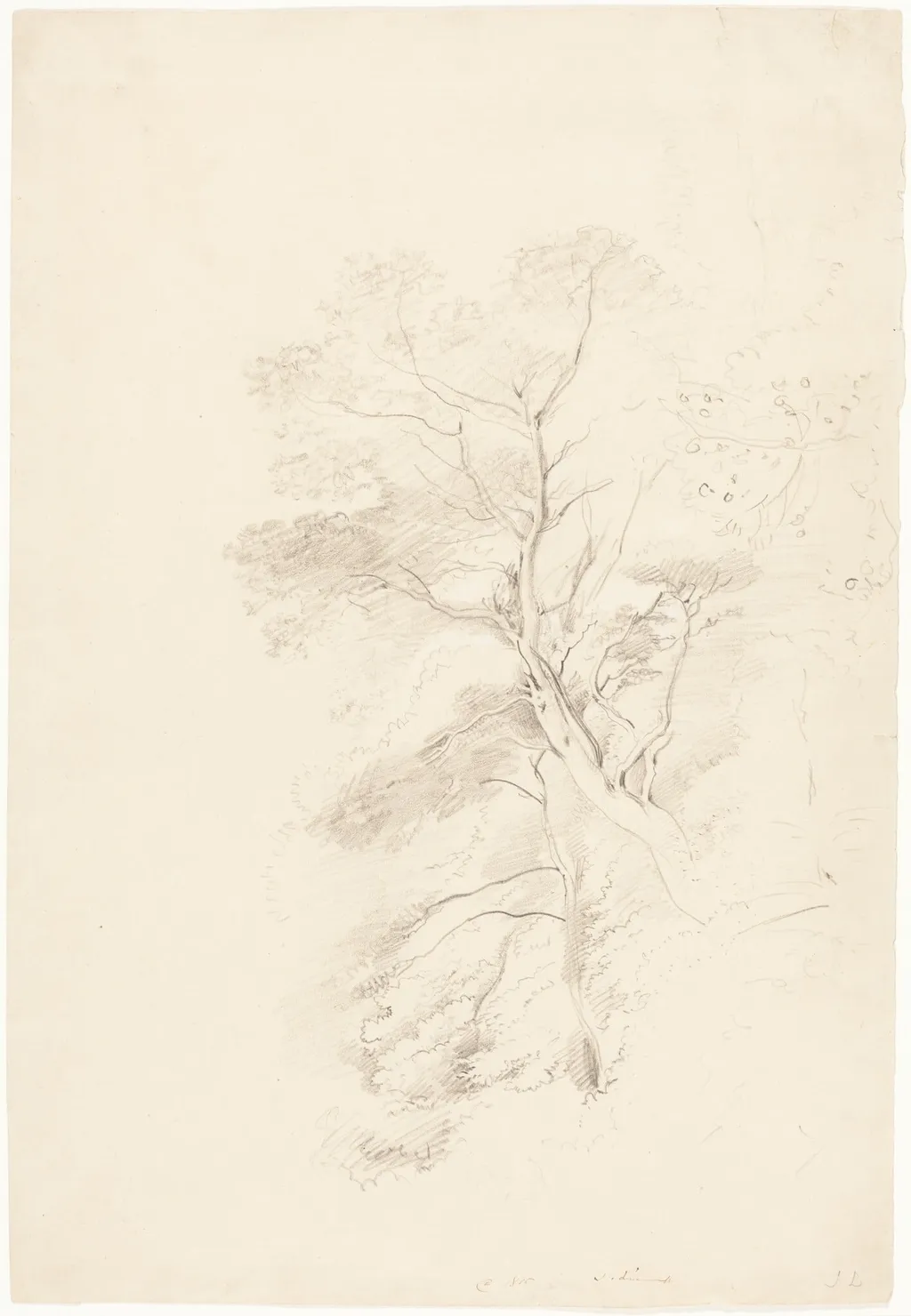
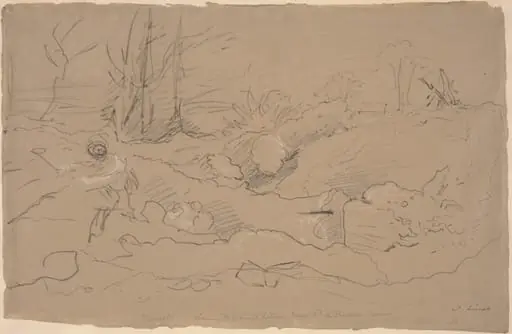
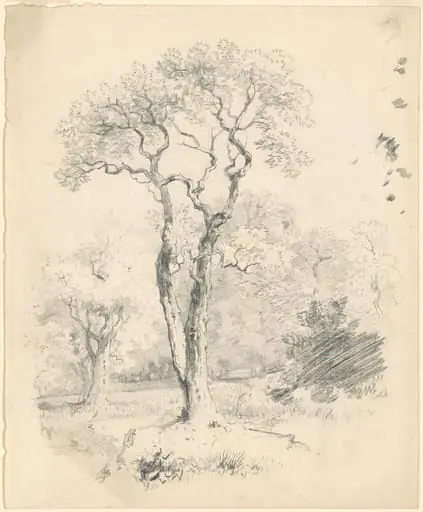
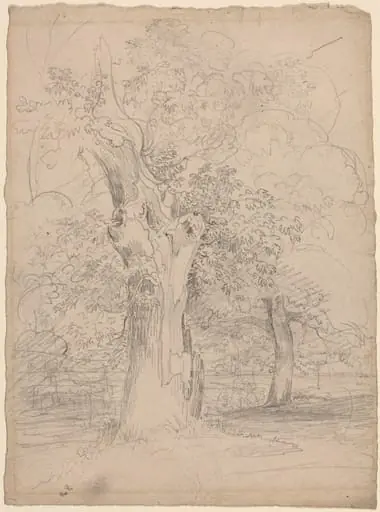
A Beech Wood is a graphite drawing by the Romanticist artist John Linnell. It dates from 1815 and is held in the collection of the National Gallery of Art.
About this work
See more like it at the National Gallery of Art, Washington.
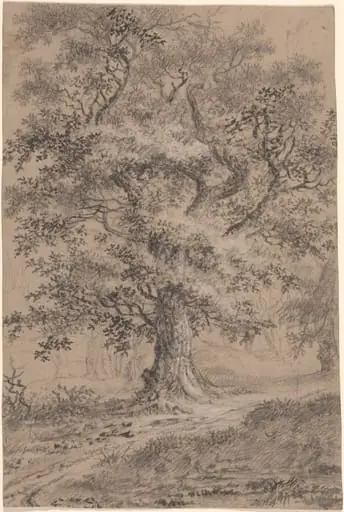
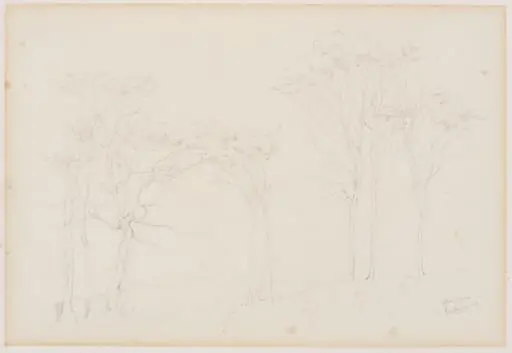
A quiet wood shows beech trees with smooth, silver bark. Their trunks stand tall under a pale sky. Thick undergrowth fills the gaps between them.
John Linnell drew this in 1815. He used graphite mixed with white chalk. The white brings out details in the bark and leaves. It feels almost three-dimensional.
Check out how he built texture with simple lines. See more like it at the National Gallery of Art, Washington.
Overview
John Linnell’s drawing titled A Beech Wood dates from 1815. Executed on wove paper, the work combines graphite with white chalk to render a tranquil woodland scene. The composition centers on a stand of beech trees, their smooth, silvery trunks reaching upward beneath a muted sky, while dense undergrowth fills the spaces between them.
Subject & Meaning
The drawing presents a quiet forest interior, emphasizing the characteristic bark of beech trees and the interplay of light and shadow among the foliage. By focusing on the natural forms rather than narrative elements, Linnell invites contemplation of the wood’s serene atmosphere and the subtle variations of texture within a single species.
Technique & Style
Linnell employed graphite as a base medium, augmenting it with white chalk to highlight the bark’s sheen and the delicate leaves. The contrast between the dark graphite and the luminous chalk creates a sense of depth, while the restrained line work builds texture without relying on heavy shading, producing an almost tactile quality.
History & Provenance
Created in the early nineteenth century, A Beech Wood reflects Linnell’s interest in landscape drawing during a period when British artists were increasingly documenting native scenery. The piece is part of the collection of the National Gallery of Art in Washington, where it is displayed alongside other works that illustrate the era’s approach to naturalistic representation.
Artist & collection