Artwork
Landscape with Tower at Seashore
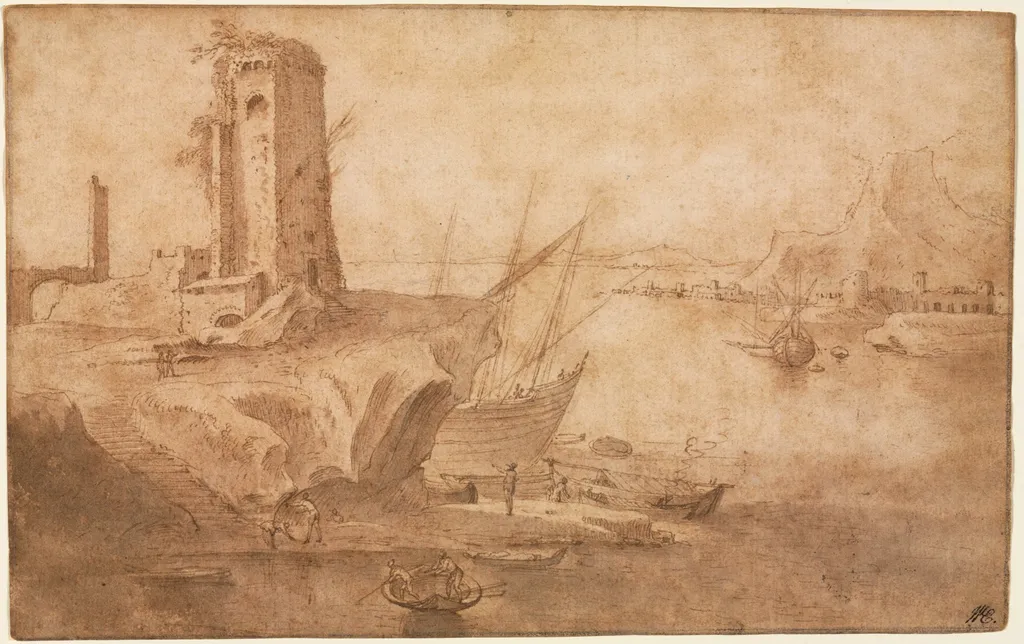
Landscape with Tower at Seashore is a drawing by the Baroque artist Filippo Napoletano. It dates from 1607 and is held in the collection of the Cleveland Museum of Art.
About this work
Overview
Created in 1607, this ink and wash drawing by Filippo Napoletano depicts a coastal scene with a decaying tower rising from rocky cliffs.
Created in 1607, this ink and wash drawing by Filippo Napoletano depicts a coastal scene with a decaying tower rising from rocky cliffs. Executed in muted earth tones, the work captures a quiet moment by the sea, with small boats and scattered figures suggesting human presence without narrative focus. It resides in the collection of the Cleveland Museum of Art as a representative example of early 17th-century Italian draftsmanship.
Subject & Meaning
The composition centers on a weathered, ruin-like tower near the shoreline, its instability contrasting with the calm sea. Figures on the coast gaze outward, their posture implying contemplation rather than action. The distant town and rolling hills frame the scene, emphasizing isolation and the passage of time. The tower, likely symbolic of fallen power or forgotten structures, anchors the work in a mood of quiet decay.
Technique & Style
Napoletano employed rapid, fluid ink strokes to suggest texture—rough rocks, rippling water, and crumbling masonry—with minimal detail. Washes of diluted ink create atmospheric depth, softening the horizon and unifying the landscape. The loose, sketch-like quality reflects observational immediacy, typical of preparatory studies, yet the composition holds a deliberate balance between detail and suggestion.
History & Provenance
The drawing entered the Cleveland Museum of Art’s collection through documented acquisition, though its earlier ownership remains unrecorded. Its survival as a standalone sheet, rather than part of a larger album, is uncommon. Dating to 1607, it aligns with Napoletano’s active period in Rome, where he documented urban and coastal scenes with a focus on topography and decay.
Context
Made during the early Baroque era, the work diverges from grand religious or mythological themes common in the period. Instead, it reflects a growing interest in naturalistic observation and the aesthetic of ruin, influenced by antiquarianism and the Italian countryside’s layered history. Napoletano’s approach aligns with contemporaries who valued the expressive potential of landscape over narrative.
Legacy
Though not widely exhibited, the drawing contributes to understanding how Italian draftsmen of the period engaged with landscape as a subject worthy of independent study. Its emphasis on texture, light, and erosion anticipates later developments in topographical drawing and the Romantic fascination with ruins, positioning Napoletano as a quiet innovator in observational art.
Artist & collection

Artist
Filippo Napoletano, whose real name was Filippo Teodoro di Liagno was an Italian artist, with a varied output, mainly landscape and genre scenes and also drawings or etchings of diverse, often particular, items such as…



 Marine
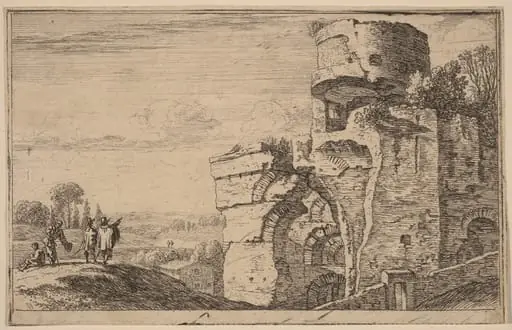 Ruins on the Palatine Hill
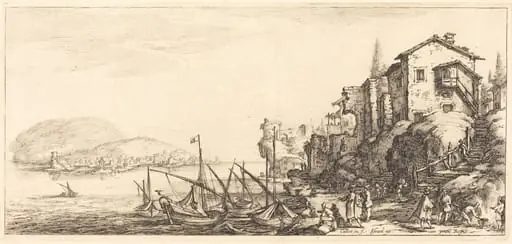 The Small Port
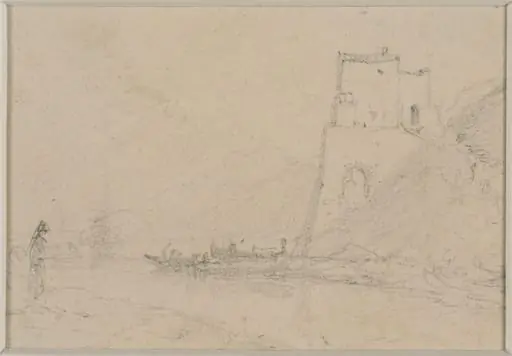 River Scene
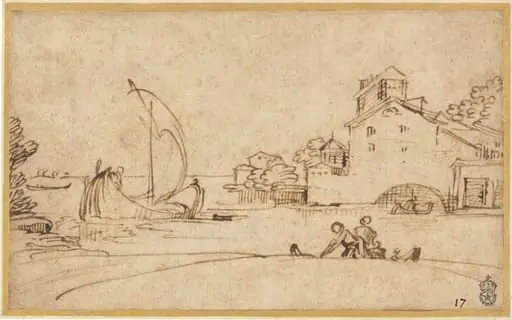 Landscape with Figures by an Estuary with Sailing Boats
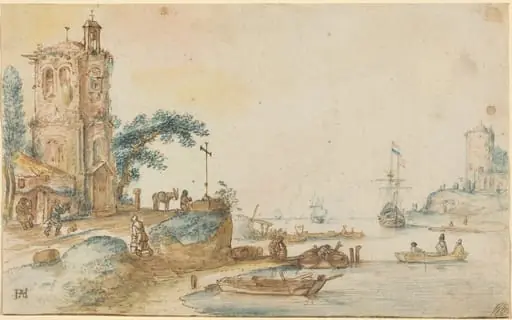 Scene with a Tower to the Left
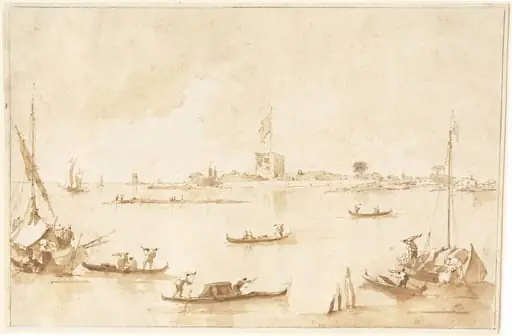 The Fortress of San Andrea from the Lagoon
![Landscape with a Lake [top plate], by Augustin Hirschvogel](https://artifactworldgallery.com/img/augustin-hirschvogel--landscape-with-a-lake-top-plate--e7bf3d066d3912a6-w320.webp) Landscape with a Lake [top plate]
Landscape with a Lake [top plate]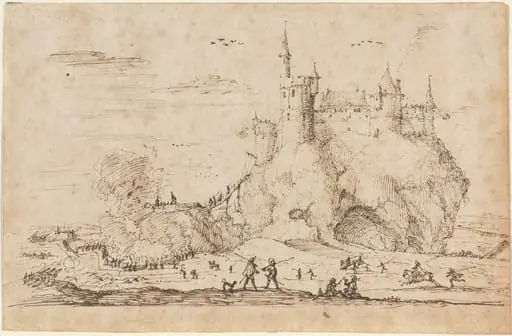 Castle under Siege
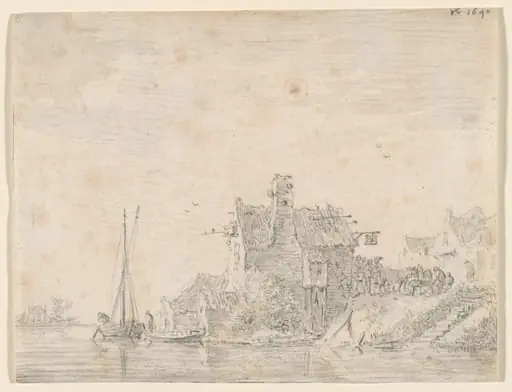 A Tavern by a River
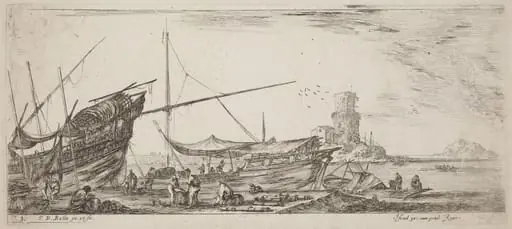 Harbor View
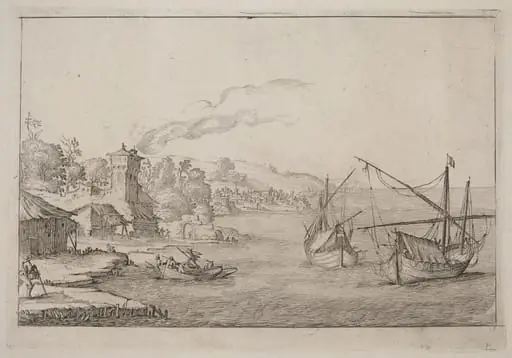 Coastal Landscape with Anchored Vessels