Artwork
Ruins on the Palatine Hill
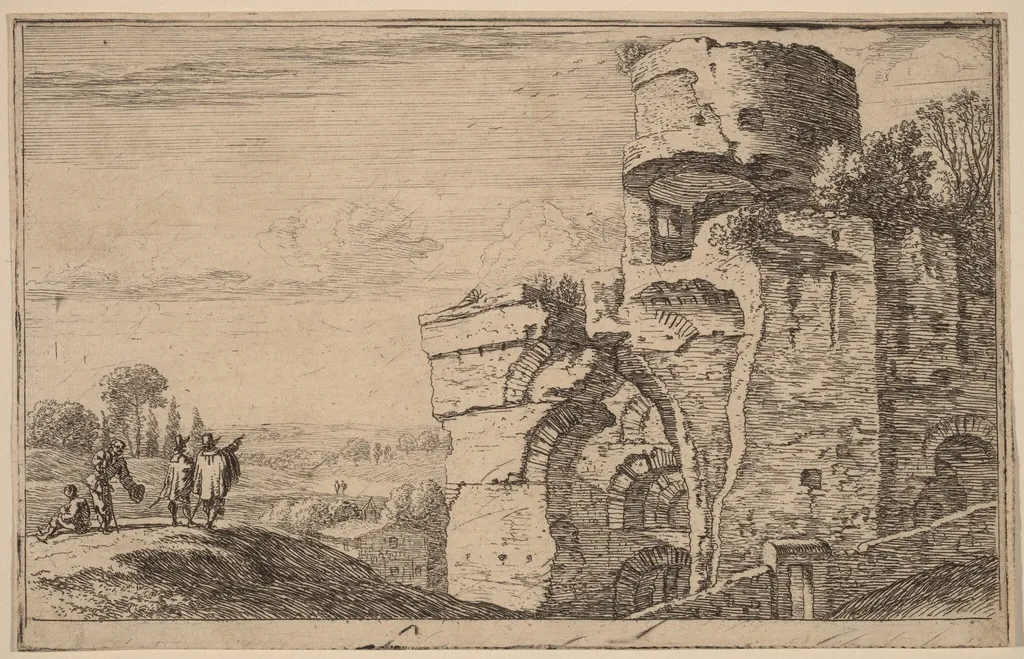
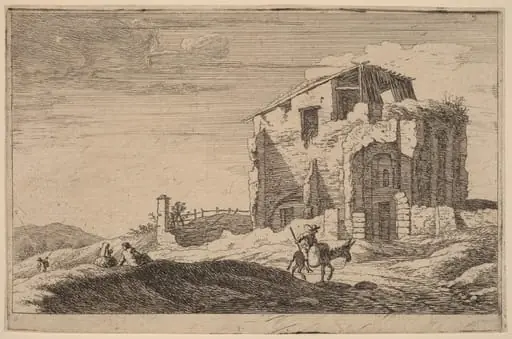
Ruins on the Palatine Hill is an ink print by the Baroque artist Herman van Swanevelt. It dates from 1628 and is held in the collection of the National Gallery of Art.
About this work
Overview
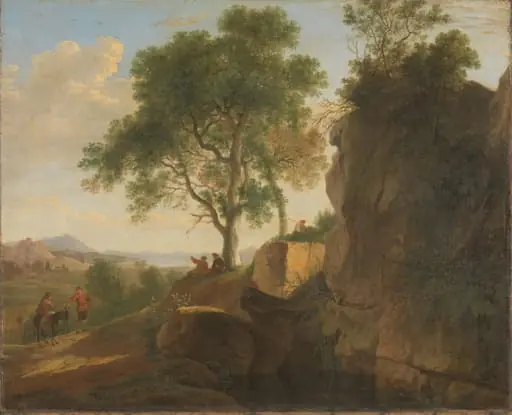
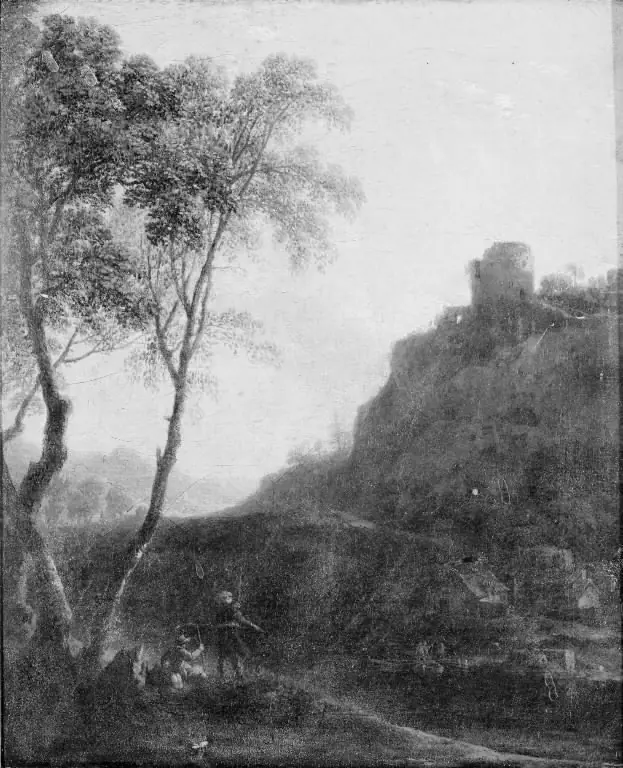
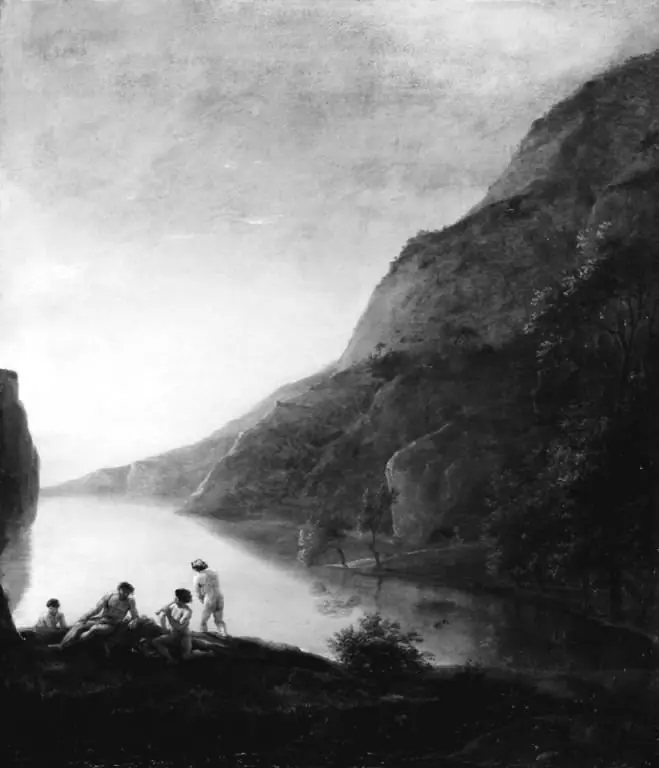
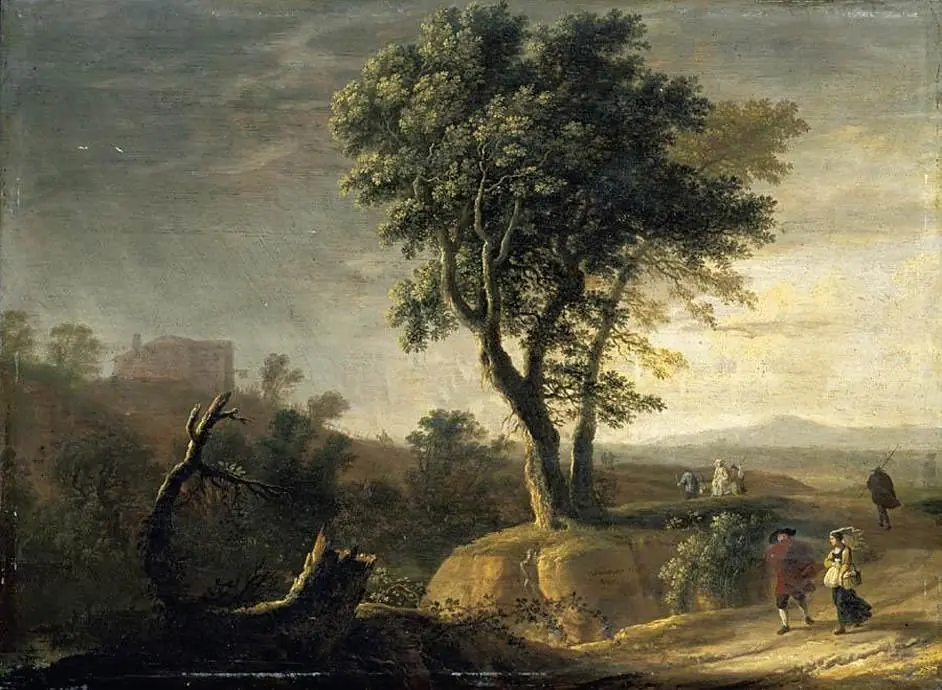
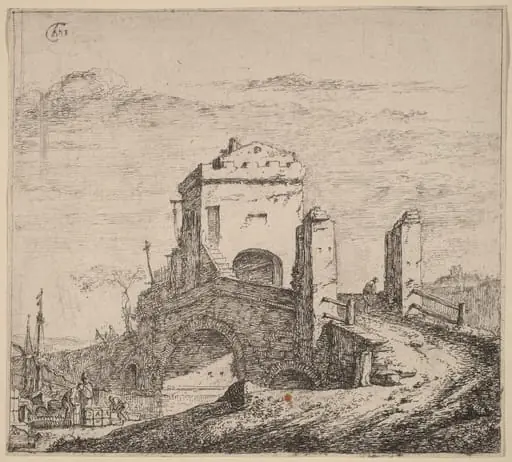
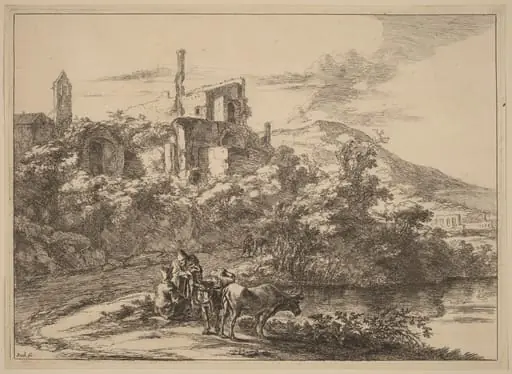
Created in 1628, this etching by Herman van Swanevelt depicts the ancient ruins on Rome’s Palatine Hill. Rendered in fine linear detail, the scene captures weathered stone structures, fragmented staircases, and sparse vegetation. The composition emphasizes decay and stillness, with a muted sky overhead and distant figures suggesting quiet human presence amid the remnants of antiquity.
Subject & Meaning
The image focuses on the enduring presence of Roman ruins, stripped of grandeur and reclaimed by time. The scattered architecture and isolated figures evoke a sense of quiet contemplation rather than historical narrative. The absence of dramatic action or clear symbolism invites reflection on impermanence and the quiet passage of centuries.
Technique & Style
Van Swanevelt employed precise etching lines to articulate texture—cracks in stone, uneven surfaces, and subtle shadows. The tonal gradations, achieved through controlled ink density and line weight, enhance the tactile realism of the ruins. The composition avoids embellishment, favoring a restrained, almost topographical approach that underscores the weight of age.
History & Provenance
The print was made during van Swanevelt’s time in Rome, where he studied classical architecture and landscape. Likely produced for collectors interested in antiquities, it reflects the 17th-century European fascination with Roman ruins as subjects of artistic and intellectual inquiry. Its survival in museum collections attests to its early recognition among connoisseurs.
Context
In the early 1600s, artists and travelers increasingly visited Rome to sketch its ancient remains. Van Swanevelt’s work aligns with this trend, contributing to a visual record that blended observation with romanticized melancholy. Unlike later romanticized ruins, his rendering avoids theatricality, grounding the scene in observed reality.
Legacy
This etching remains a modest but significant example of Dutch-Italian landscape printmaking. It influenced later artists who sought to depict antiquity with fidelity rather than idealization. Its quiet precision helped shape a genre focused on the poetic dignity of decay, distinct from overtly dramatic or picturesque treatments of ruins.
Artist & collection