Artwork
Le Chateau de carte (The House of Cards)
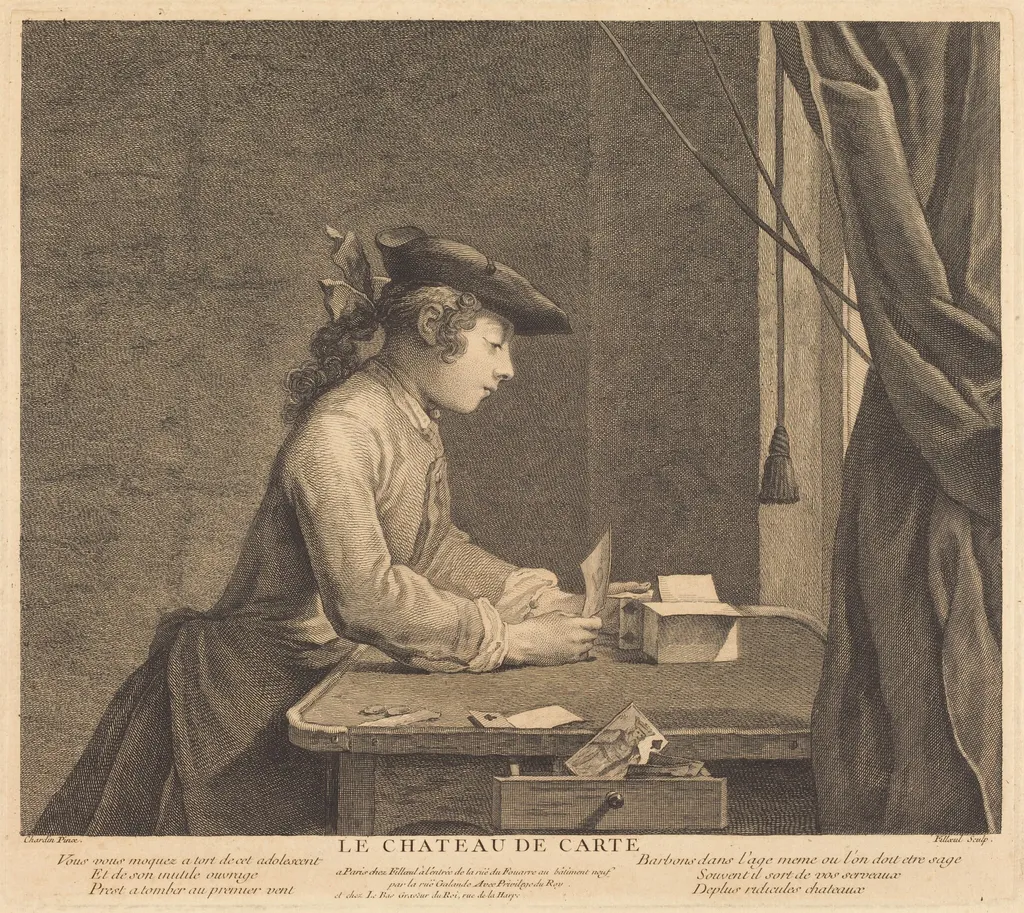
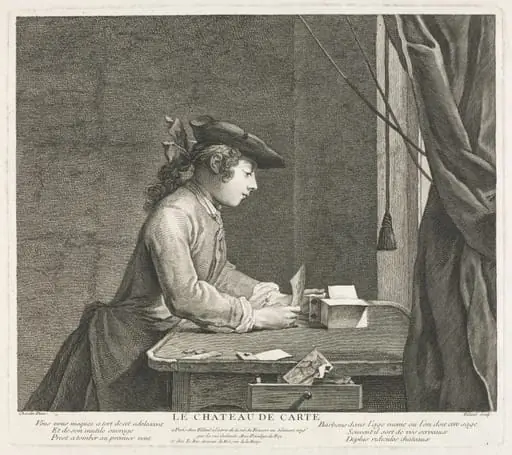
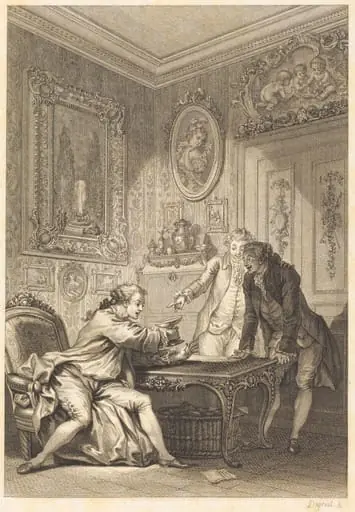
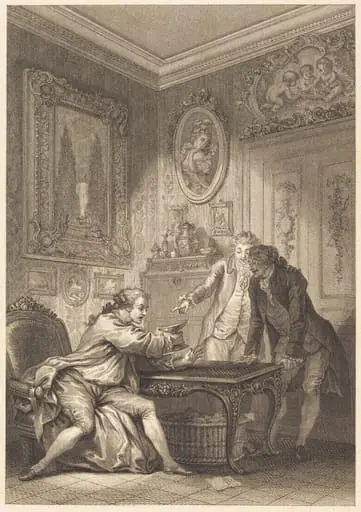
Le Chateau de carte (The House of Cards) is an ink print by the Baroque artist Pierre Filloeul. It dates from 1737 and is held in the collection of the National Gallery of Art.
About this work
Overview
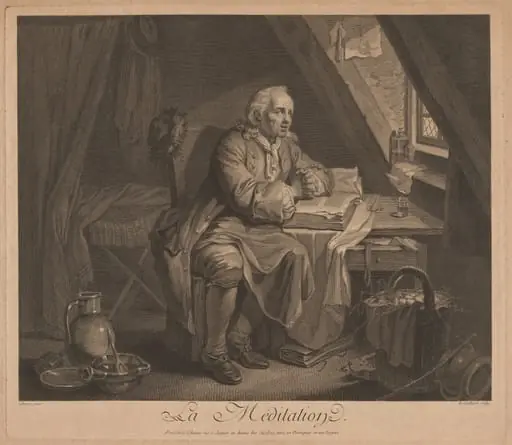
Pierre Filloeul’s print *Le Chateau de carte* (The House of Cards) is an etching and engraving executed on laid paper in 1737. The work measures a modest size typical of 18th‑century prints and presents a single figure seated at a desk, engaged with a delicate card structure. The composition combines narrative detail with a restrained tonal range characteristic of the period’s graphic art.
Subject & Meaning
The central figure, a young person in a wide‑brimmed hat, leans on a table while cradling a miniature house constructed from playing cards.
The central figure, a young person in a wide‑brimmed hat, leans on a table while cradling a miniature house constructed from playing cards. The surrounding desk is cluttered with books, loose papers, and a lamp that casts a focused glow, suggesting a study environment. The precarious card house may allude to the fragility of youthful ambitions or the transitory nature of plans, inviting contemplation of the tension between stability and collapse.
Technique & Style
Filloeul employs a combination of etching and engraving to achieve fine linear detail and varied tonal effects. Sharp, incised lines delineate the light falling from the lamp, creating pronounced chiaroscuro that enhances the three‑dimensional illusion of the objects. The texture of the laid paper contributes subtle tonal variation, while the precise hatching conveys both the smoothness of the card house and the roughness of the desk’s surface.
History & Provenance
Created in 1737, the print reflects the growing popularity of genre scenes in French printmaking during the early Enlightenment. While specific ownership records are scarce, copies of *Le Chateau de carte* have appeared in several 18th‑century collections of prints, indicating its circulation among connoisseurs of graphic art. The work remains documented in catalogues of Filloeul’s oeuvre and is held in a number of museum print departments.
Context
The image aligns with contemporary interests in everyday subjects and moralizing allegories, a trend evident in the works of artists such as Jean‑Baptiste Le Prince and Jacques Callot. By focusing on a solitary figure engaged in a seemingly trivial activity, Filloeul participates in a broader discourse on the virtues of contemplation and the impermanence of material pursuits prevalent in the Enlightenment era.
Artist & collection