Artwork
Etude du dessin (The Drawing Lesson)
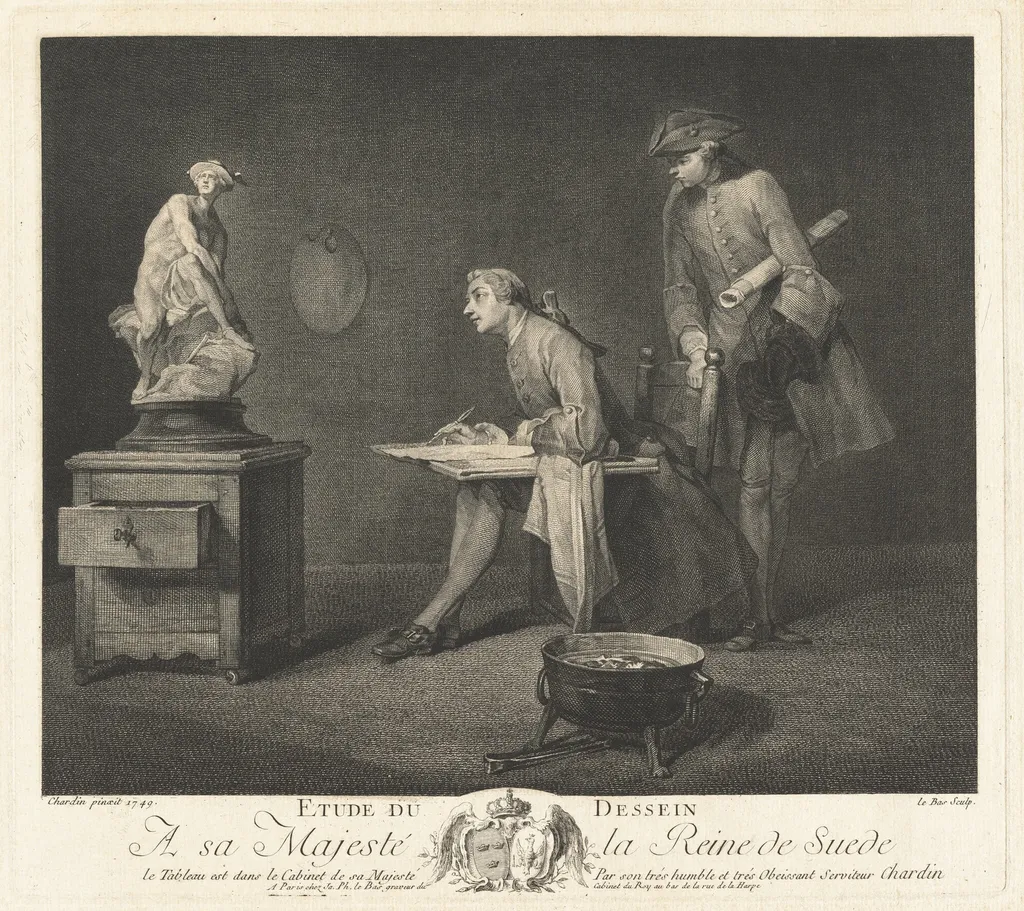
Etude du dessin (The Drawing Lesson) is an ink print by the Romanticist artist Jacques-Philippe Le Bas. It dates from 1757 and is held in the collection of the National Gallery of Art. Etude du dessin, also known as The Drawing Lesson, is a black‑and‑white print produced by French engraver Jacques‑Philippe Le Bas in 1757.
About this work
The text at the bottom mentions a king’s cabinet, so this might be a royal workshop.
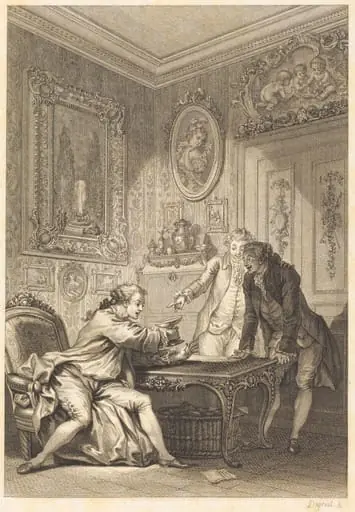
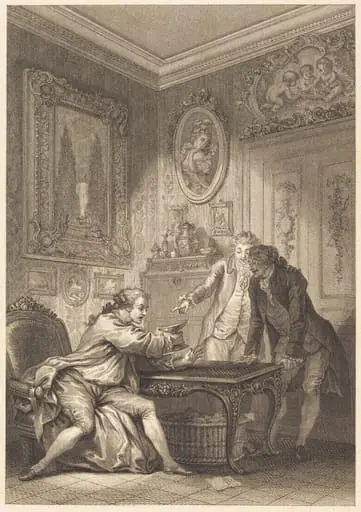
This black-and-white print shows three men in a dimly lit room. One sits at a table, sketching a draped statue. Another stands behind him, holding tools and a bag. A third man leans against a wall, watching. The statue looks like it’s missing its head, and there’s a pot on the floor.
The artist signed this print in 1757, and it’s called *The Drawing Lesson*. The text at the bottom mentions a king’s cabinet, so this might be a royal workshop.
Next, look up etching to see how artists like this made detailed prints.
Overview
Etude du dessin, also known as The Drawing Lesson, is a black‑and‑white print produced by French engraver Jacques‑Philippe Le Bas in 1757. Executed on laid paper through a combination of etching and engraving, the work measures the typical size of mid‑eighteenth‑century academic prints and bears the artist’s signature and date in the lower margin.
Subject & Meaning
The composition depicts a modest interior illuminated by subdued light, where three male figures engage in an instructional scene. One figure sits at a table, rendering a draped statue—apparently headless—while a second, holding drawing implements and a satchel, stands behind him. A third observer leans against the wall, suggesting a didactic atmosphere centered on the practice of drawing from classical models.
Technique & Style
Le Bas employed both etching, which allows for fine, spontaneous lines, and engraving, which provides crisp, controlled edges. The contrast between delicate hatching and bold incised strokes creates depth and emphasizes the chiaroscuro lighting. The use of laid paper contributes a subtle texture that enhances the tonal variations characteristic of French academic prints of the period.
History & Provenance
The print bears an inscription referencing a king’s cabinet, indicating that it may have been intended for, or produced under the auspices of, a royal workshop or collection. Signed and dated by Le Bas in 1757, the work likely circulated among artists and patrons associated with the French court, though specific ownership records remain sparse.
Context
Created during the height of the Rococo to early Neoclassical transition, the image reflects contemporary emphasis on academic training and the study of antiquity. The depiction of a drawing lesson aligns with the era’s pedagogical focus on mastering proportion and anatomy through observation of classical sculpture, a cornerstone of the French Academy’s curriculum.
Artist & collection