Artwork
Jason in search of the Golden Fleece
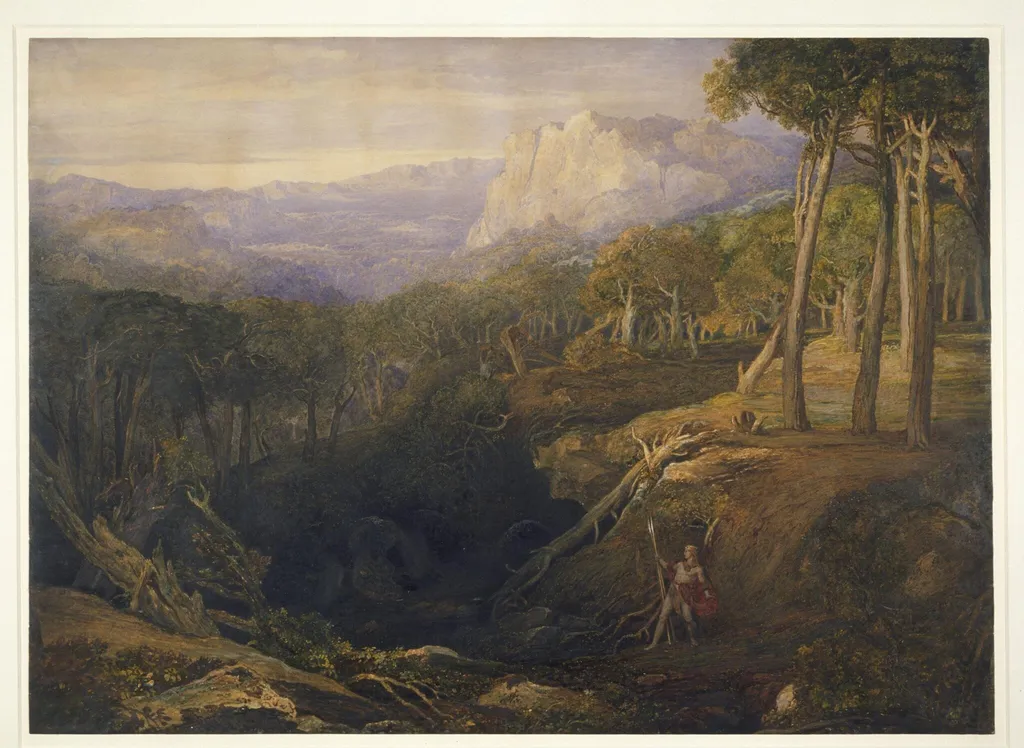
Jason in search of the Golden Fleece is a watercolor work on paper by Francis Oliver Finch. It dates from 1850 and is held in the collection of the Victoria and Albert Museum.
About this work
Overview
Jason in search of the Golden Fleece is a watercolour painting created by Francis Oliver Finch in 1850, based on the mythological narrative of Jason's quest.
Subject & Meaning
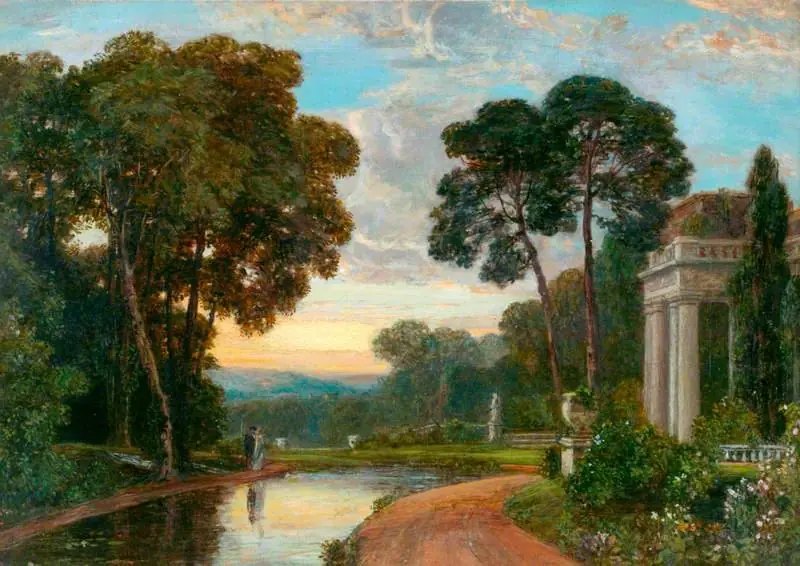
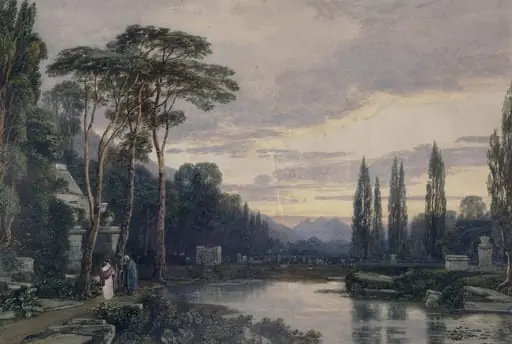
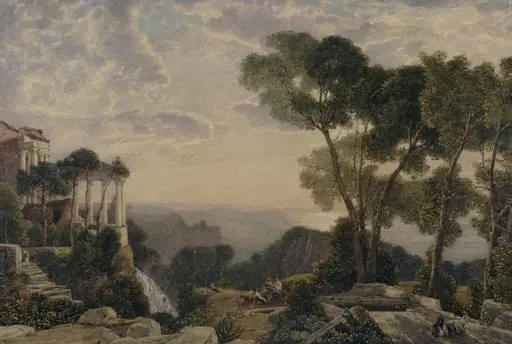
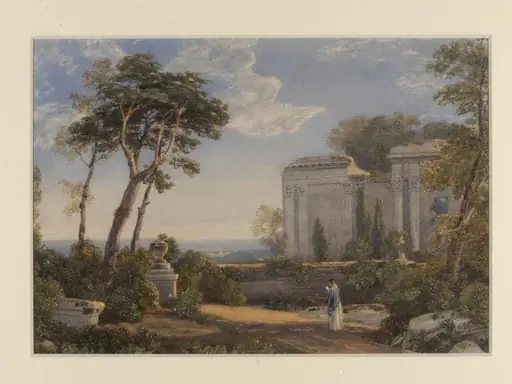
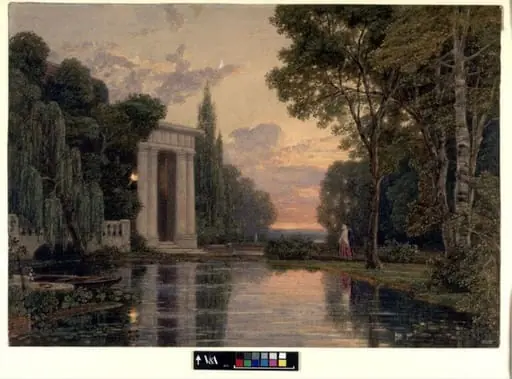
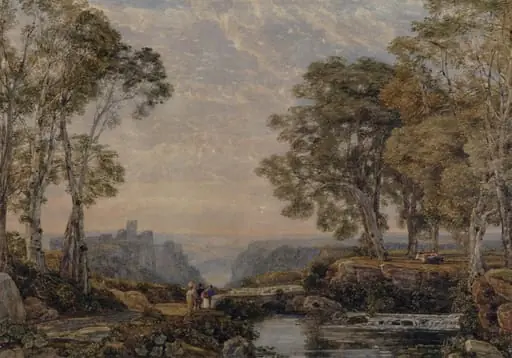
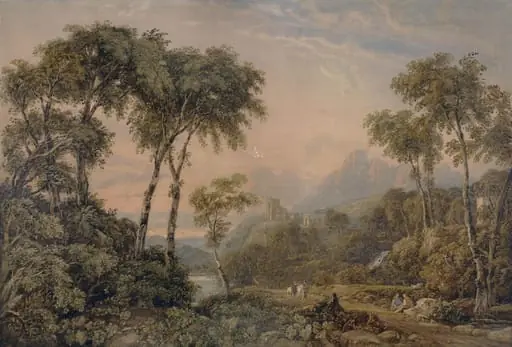
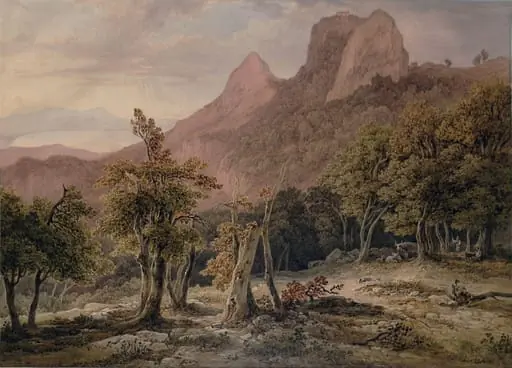
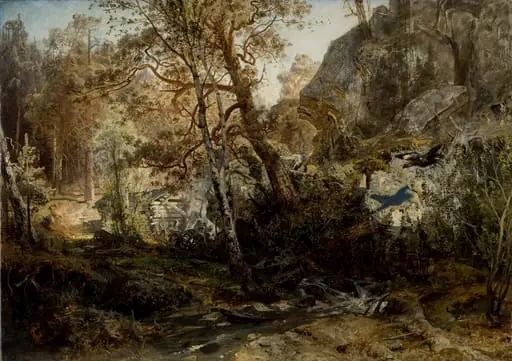
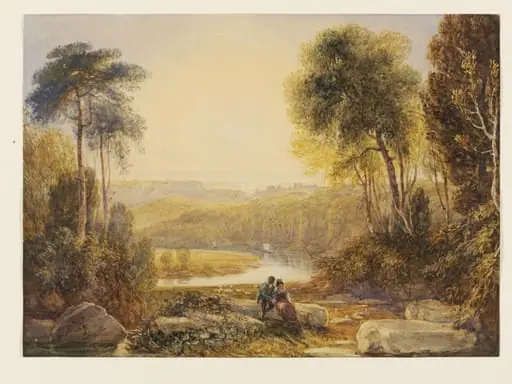
The painting depicts a solitary figure, identified as Jason, standing on a rocky hillside, staff in hand, gazing out over a vast, untamed landscape, conveying a sense of contemplation and journey.
Technique & Style
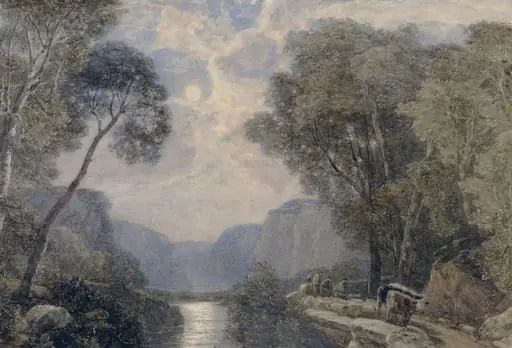
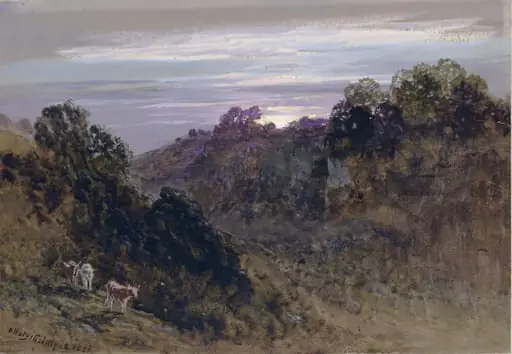
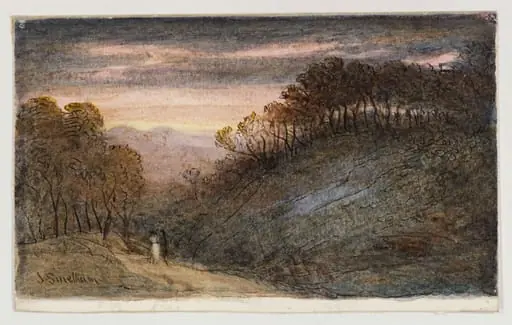
Finch employed watercolour to evoke a specific mood, blending earthy tones of brown and green in the foreground with softer blues and purples in the distant, towering mountains under a cloudy sky. A vibrant red cloak on the figure provides a striking contrast to the muted surroundings.
History & Provenance
Created in 1850 by Francis Oliver Finch, specific details regarding the painting's ownership history and exhibitions are not provided in the available information.
Context
While the subject matter is rooted in Greek mythology (the quest for the Golden Fleece), the painting's style and execution reflect the artistic sensibilities of the mid-19th century, potentially influenced by the Romantic movement's emphasis on nature and solitude.
Legacy
The painting's significance is highlighted by its comparison to works found in renowned institutions like the Victoria and Albert Museum, suggesting its value within the broader context of watercolour art from the period.
Own this work as a print
Artist & collection
Artist
Francis Oliver Finch (22 November 1802 – 27 August 1862), was an English watercolour painter, and a member of The Ancients, the group of young artists formed around Samuel Palmer and the elderly William Blake in the 1820s.