Artwork
Dawn in the Valley
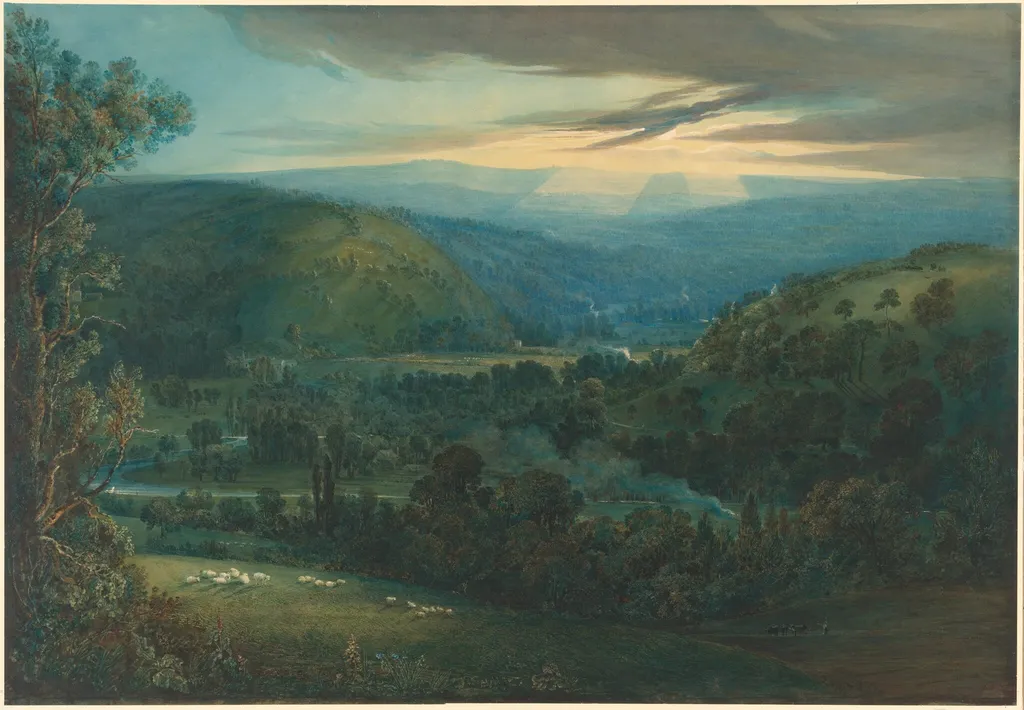
Dawn in the Valley is a watercolor drawing by the Romanticist artist William Turner of Oxford. It dates from 1832 and is held in the collection of the National Gallery of Art.
About this work
Overview
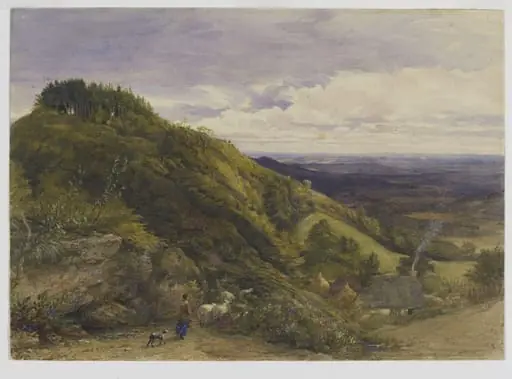
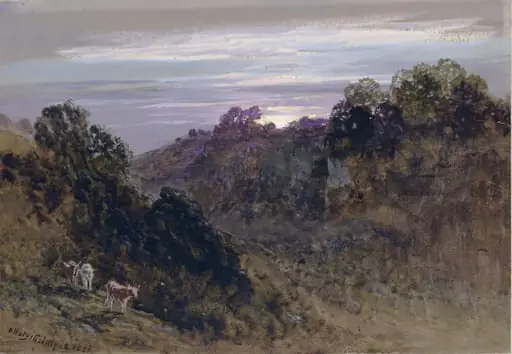
Dawn in the Valley, created in 1832 by William Turner of Oxford, is a watercolor drawing that captures a serene landscape at dawn. Executed on wove paper, the work incorporates techniques such as scratching out and the application of gum arabic.
Subject & Meaning
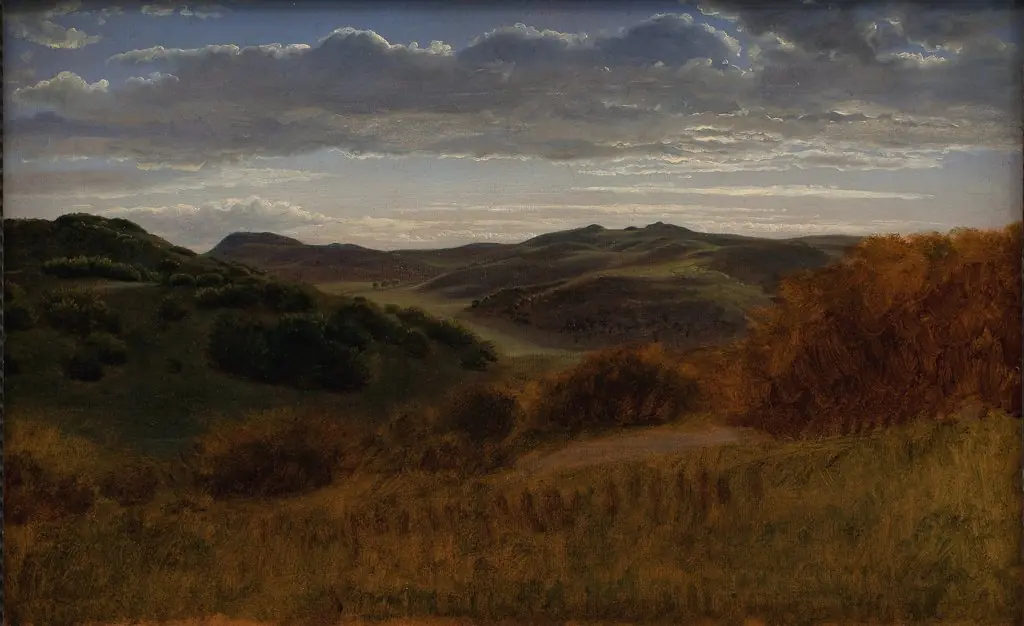
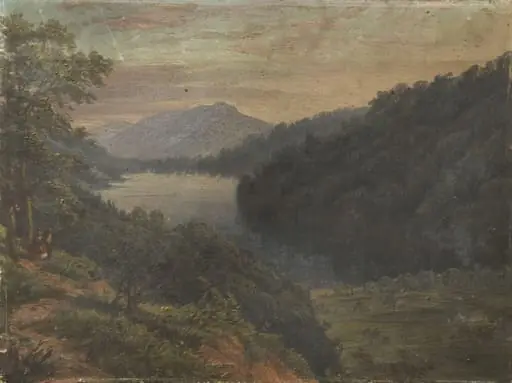
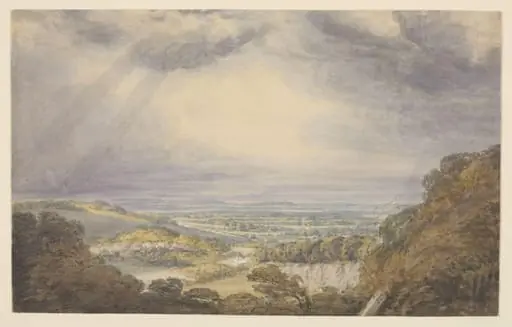
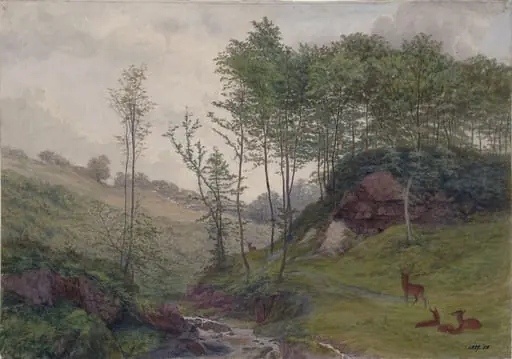
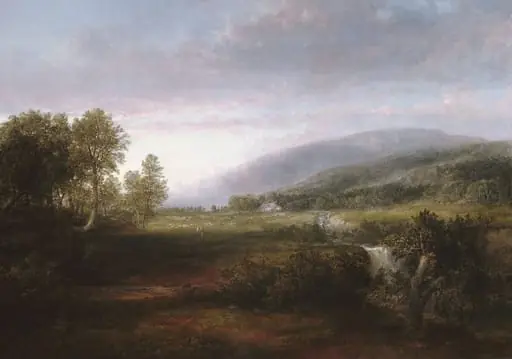
The subject is a misty valley at sunrise, characterized by rolling hills, trees, fields, a winding path, and grazing sheep. The serene composition conveys a sense of peacefulness, emphasizing the natural beauty of the landscape.
Technique & Style
The artwork features a predominantly green and blue palette, with accents of brown and yellow near the horizon. Turner employed layered watercolor techniques, including glazing, to achieve depth of light and shadow, a common approach in 19th-century landscape painting.
History & Provenance
Created in 1832, specific details regarding the artwork's provenance and historical context beyond its creation date are not provided.
Context
Dawn in the Valley reflects the 19th-century landscape tradition, where artists often explored the interplay of light and nature. Turner's use of watercolor, a popular medium for such themes, allowed for the capture of ephemeral atmospheric conditions.
Own this work as a print
Artist & collection