Artwork
Design for a Monument
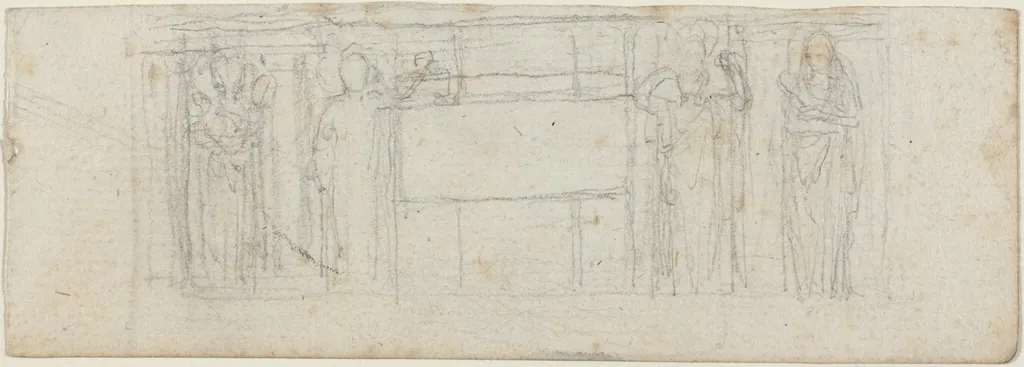
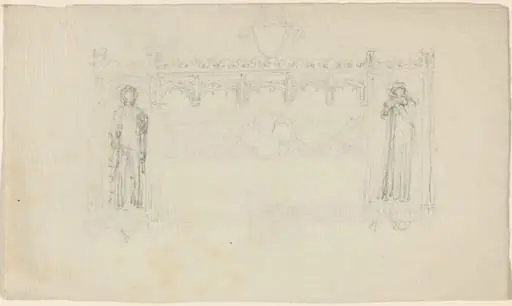
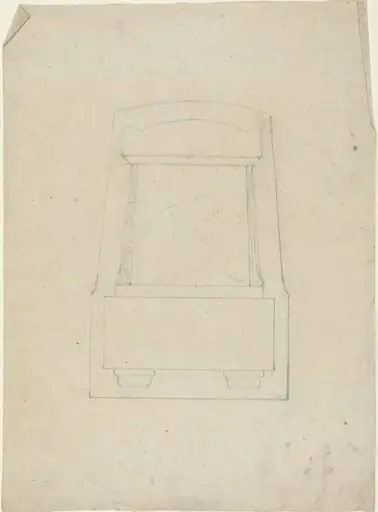
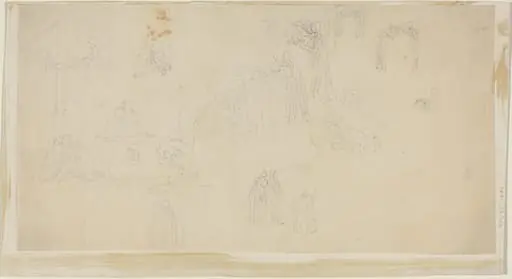
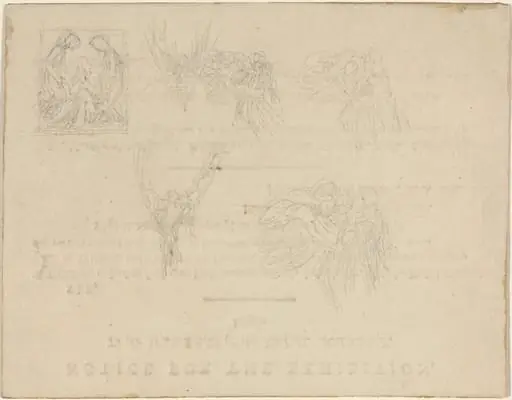
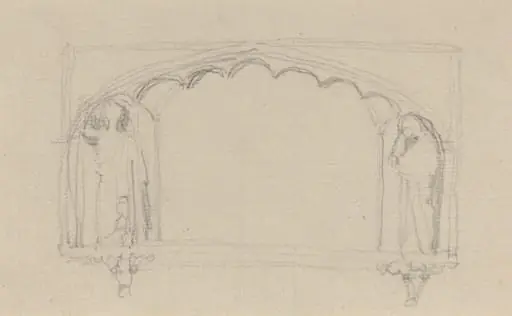
Design for a Monument is a graphite drawing by the Romanticist artist John Flaxman. It dates from 1790 and is held in the collection of the National Gallery of Art.
About this work
Overview
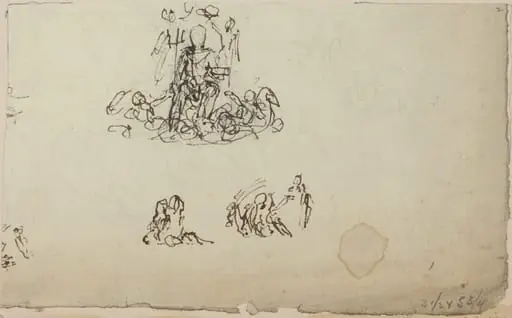
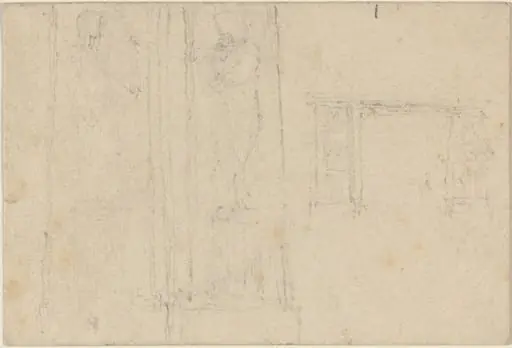
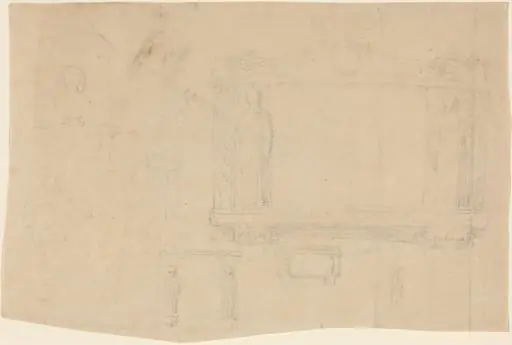
John Flaxman’s *Design for a Monument* (1790) is a graphite drawing that exemplifies his reputation as a foremost British Neoclassical sculptor and draughtsman. Executed as a preparatory study, the work belongs to a series of designs where Flaxman explored funerary architecture, a subject shaped by his classical education and earlier collaborations with Josiah Wedgwood.
Subject & Meaning
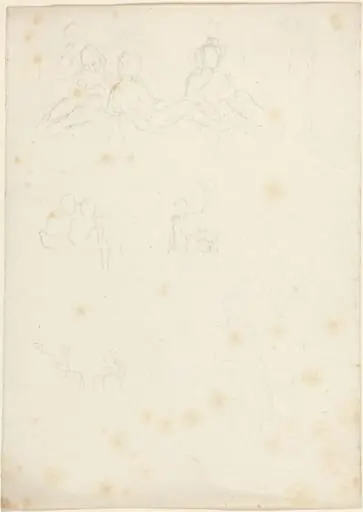
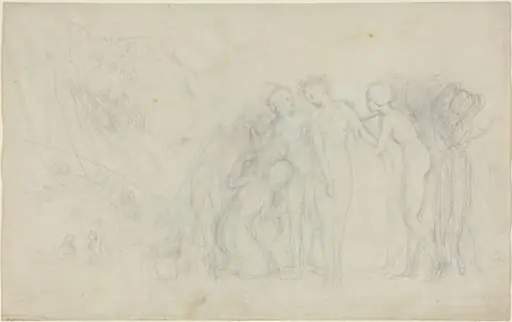
The composition presents three elongated, draped figures arranged within a modest interior defined by arched doorways. One figure appears to hold a scroll, suggesting a commemorative or narrative function. The rigid poses and solemn attire convey the gravitas typical of memorial monuments, reflecting the artist’s interest in the language of ancient funerary sculpture.
Technique & Style
Rendered entirely in graphite, the drawing relies on a restrained palette of grays, with many surfaces left blank to indicate unfinished areas. Flaxman’s characteristic linear precision is evident in the quick, light strokes that outline the figures and architectural elements, echoing the clean contours of antique statuary and contemporary archaeological illustration.
History & Provenance
Created during Flaxman’s Roman period, the sketch forms part of a larger body of work produced after his collaboration with Wedgwood, when he was refining designs for neoclassical monuments. The drawing has remained within collections that document Flaxman’s draft process, offering insight into his method of translating classical motifs into sculptural projects.
Artist & collection
Artist
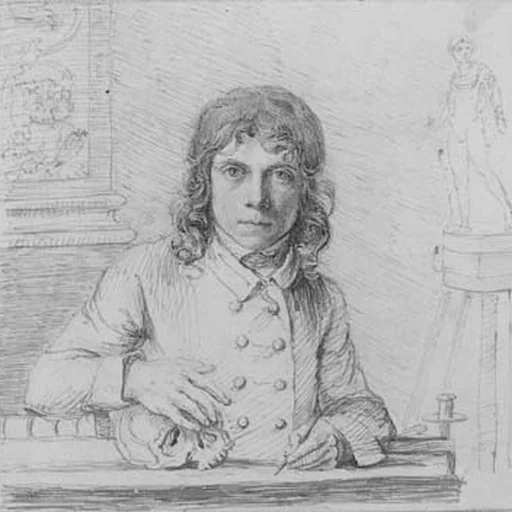
John Flaxman (6 July 1755 – 7 December 1826) was an English sculptor and draughtsman who was a leading figure in British and European Neoclassicism.

![Designs for Monuments [recto and verso], by John Flaxman](https://artifactworldgallery.com/img/john-flaxman--designs-for-monuments-recto-and-verso--d8870bd37cddf1cb-w320.webp)