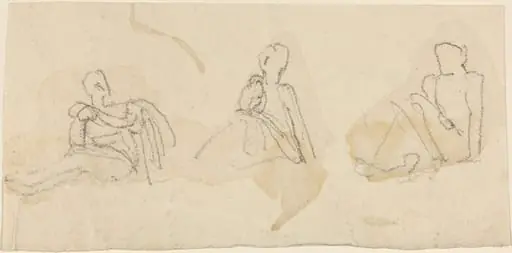
Artwork
Designs for a Monument
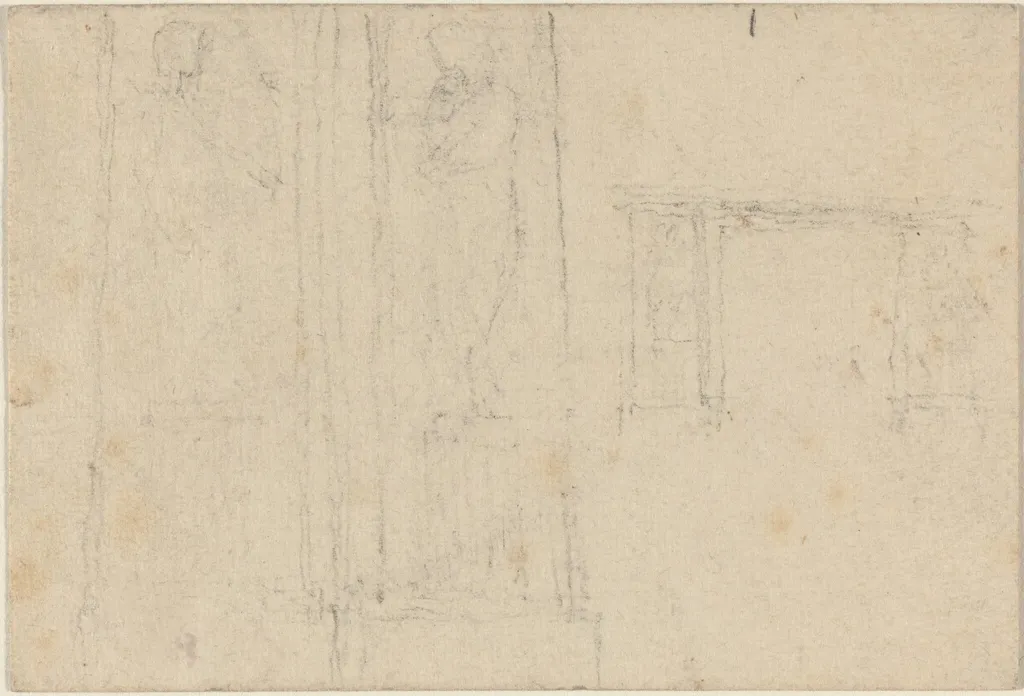
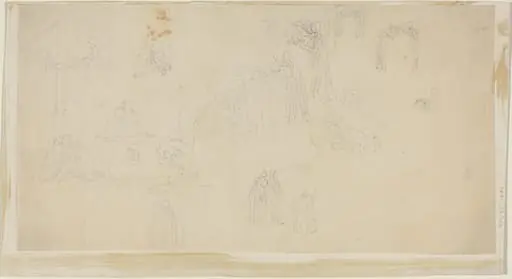
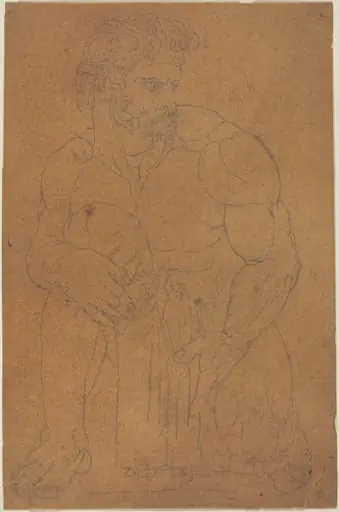
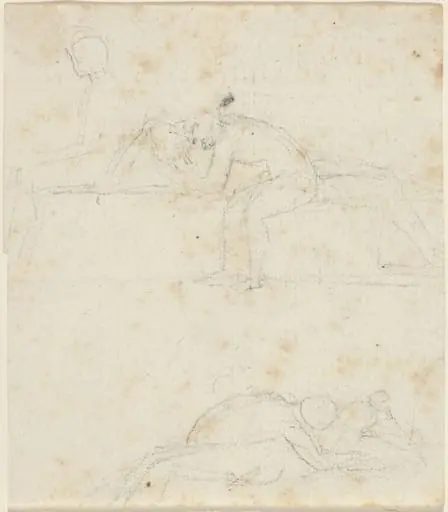
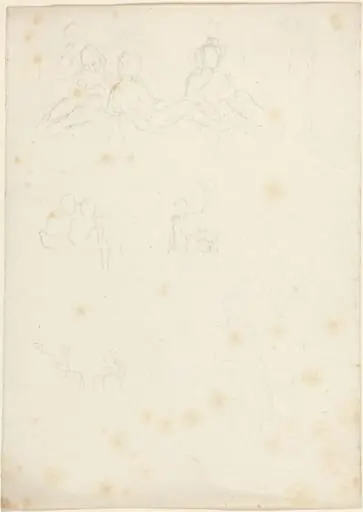
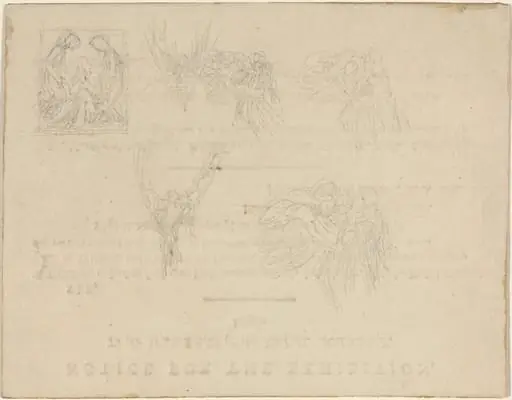
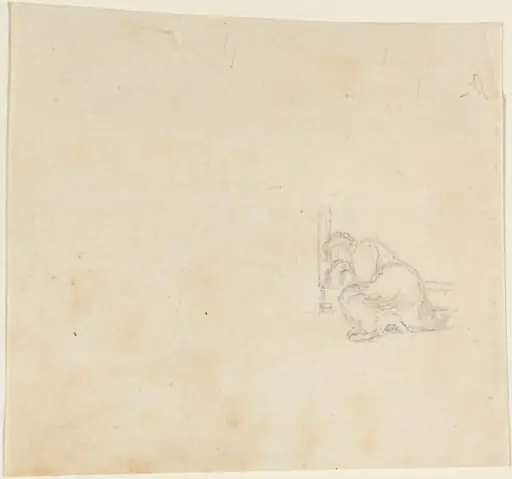
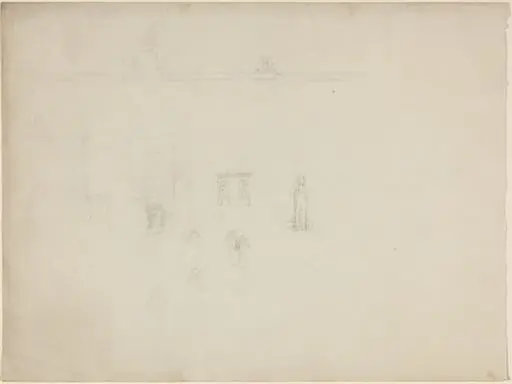
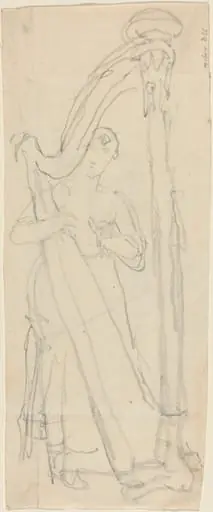
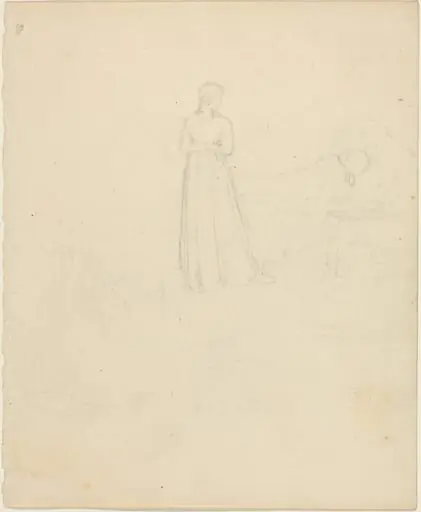
Designs for a Monument is a graphite drawing by the Romanticist artist John Flaxman. It dates from 1790 and is held in the collection of the National Gallery of Art.
About this work
Overview
The drawing’s modest scale and tentative lines reveal its function as a preliminary study rather than a finished composition.
John Flaxman’s *Designs for a Monument* (1790) is a small graphite drawing executed on the reverse side of a calling‑card. The work consists of quick, lightly rendered sketches that outline a simple interior space, suggesting walls, floor, a window or door, and a few vertical elements that may indicate furniture or figures. The drawing’s modest scale and tentative lines reveal its function as a preliminary study rather than a finished composition.
Subject & Meaning
The sketch proposes a commemorative interior, likely intended as a funerary or memorial chamber. Its sparse composition focuses on the spatial arrangement of architectural elements, hinting at how a monument might be experienced within a confined room. The minimal detail emphasizes the conceptual stage of designing a place of remembrance.
Technique & Style
Executed in graphite, the drawing employs faint, gestural strokes that convey volume and depth with minimal effort. The use of a thin paper surface and the lightness of the lines suggest a rapid, exploratory approach typical of Flaxman’s preparatory studies. The style aligns with the neoclassical emphasis on clear, orderly forms, even in sketch form.
History & Provenance
Created during Flaxman’s early career, the drawing dates to a period when he was transitioning from work as a modeller for Josiah Wedgwood to larger sculptural commissions and book illustration after his Roman sojourn. It forms part of a series of monument sketches that document his design process for funerary architecture.
Context
The drawing reflects the broader British and European neoclassical movement of the late 18th century, which prized classical architecture and restrained ornamentation in memorial design. Flaxman’s involvement in both sculpture and illustration allowed him to translate architectural ideas quickly onto paper, a practice common among neoclassical artists who produced multiple studies before final execution.
Artist & collection
Artist
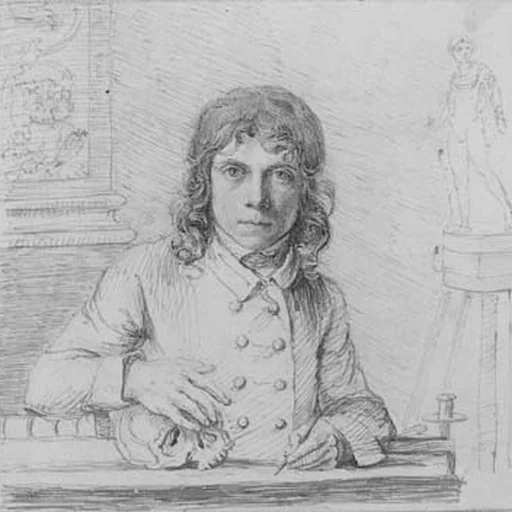
John Flaxman (6 July 1755 – 7 December 1826) was an English sculptor and draughtsman who was a leading figure in British and European Neoclassicism.