Artwork
Woman Playing a Harp (Lavinia Banks?)
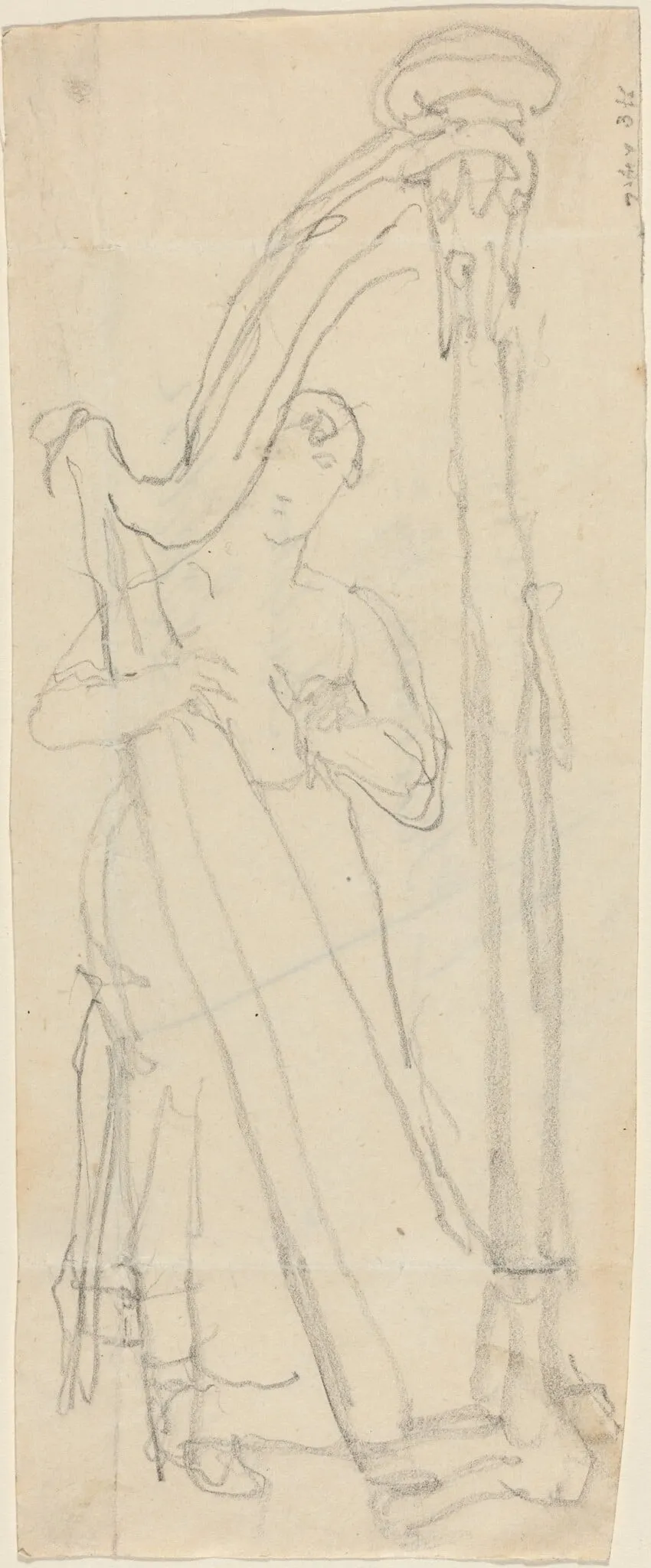
Woman Playing a Harp (Lavinia Banks?) is a graphite drawing by the Romanticist artist John Flaxman. It dates from 1790 and is held in the collection of the National Gallery of Art.
About this work
Overview
John Flaxman’s 1790 graphite drawing, titled *Woman Playing a Harp* (sometimes identified as Lavinia Banks), presents a single female figure engaged with a harp. Executed in the artist’s characteristic linear manner, the work exemplifies the restrained draughtsmanship that defined his contribution to British Neoclassicism.
Subject & Meaning
The composition shows a woman seated with a harp, her torso turned slightly away while her head is directed toward the viewer. The pose emphasizes the act of music-making, suggesting a quiet, contemplative moment rather than narrative detail, and reflects the Neoclassical interest in classical themes of harmony and poise.
Technique & Style
Rendered entirely in graphite on paper, the drawing relies on clean, controlled lines and minimal shading. The strokes are swift and economical, outlining the figure and instrument without ornamental excess. This approach highlights Flaxman’s focus on anatomical accuracy and the expressive potential of line alone, hallmarks of his mature style.
History & Provenance
Flaxman began his career modeling for Josiah Wedgwood before moving to Rome, where he refined the linear aesthetic evident in this work. The drawing is dated to 1790, situating it early in his independent practice. Its provenance traces through private collections before entering a museum holding of his graphic oeuvre.
Context
Created during the height of Neoclassicism, the piece reflects the period’s revival of classical ideals and the emphasis on disciplined drawing. Flaxman’s background in pottery design and his Roman studies informed his preference for clarity of form, aligning the work with contemporary academic standards while retaining a personal, intimate subject.
Artist & collection
Artist
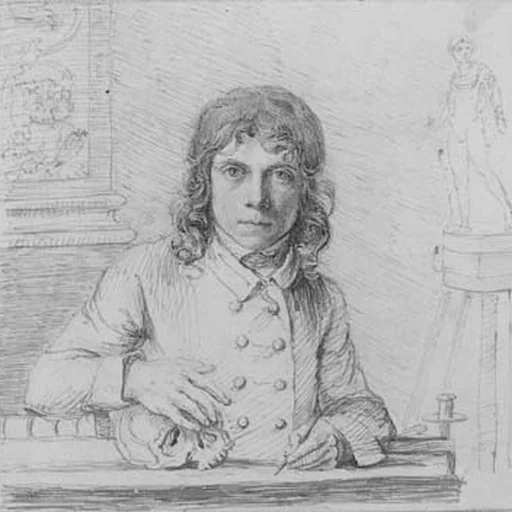
John Flaxman (6 July 1755 – 7 December 1826) was an English sculptor and draughtsman who was a leading figure in British and European Neoclassicism.

![Statue of a Roman Woman (Female Deity?) Seen from the Side [verso], by Hubert Robert](https://artifactworldgallery.com/img/hubert-robert--statue-of-a-roman-woman-female-deity-seen-from-the-side-vers--4bf9208a795411cc-w320.webp) Statue of a Roman Woman (Female Deity?) Seen from the Side [verso]
Statue of a Roman Woman (Female Deity?) Seen from the Side [verso]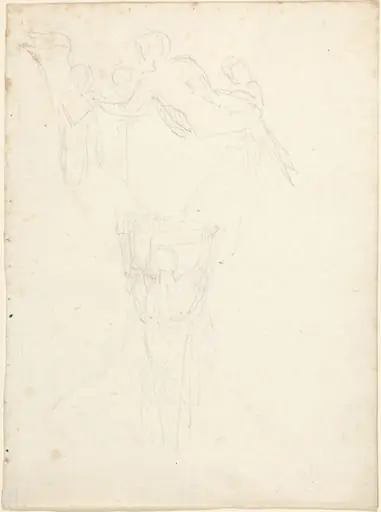 Figure Studies
![Man on a Horse [verso], by Jean Honoré Fragonard](https://artifactworldgallery.com/img/jean-honore-fragonard--man-on-a-horse-verso--7bf78fe7013dcb54-w320.webp) Man on a Horse [verso]
Man on a Horse [verso]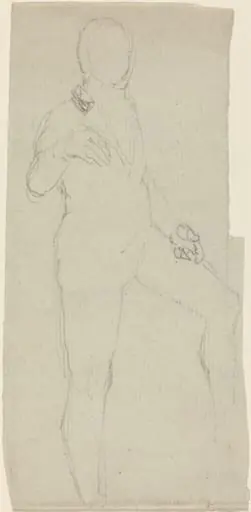 Male Figure in Contemporary Dress
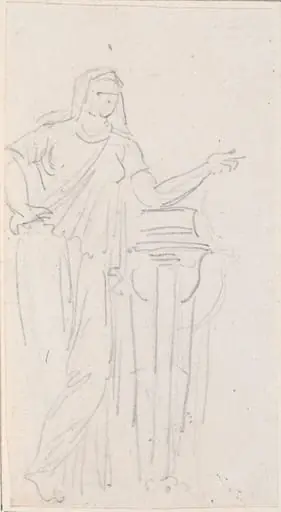 Statue of a Vestal Virgin
 Figure Study
![An Elegant Lady in Classical Dress [recto], by George Romney](https://artifactworldgallery.com/img/george-romney--an-elegant-lady-in-classical-dress-recto--c0f4e57cf0adb97c-w320.webp) An Elegant Lady in Classical Dress [recto]
An Elegant Lady in Classical Dress [recto]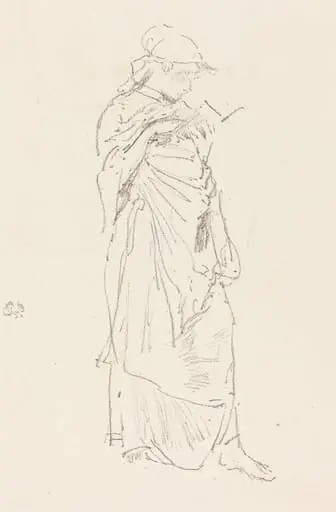 The Novel: Girl Reading
![Study of the "Ecorché" [recto], by Paul Cezanne](https://artifactworldgallery.com/img/paul-cezanne--study-of-the-ecorche-recto--1614b86d796e004d-w320.webp) Study of the "Ecorché" [recto]
Study of the "Ecorché" [recto]![Woman in Toga [verso], by Hubert Robert](https://artifactworldgallery.com/img/hubert-robert--woman-in-toga-verso--1c4b04982206f60e-w320.webp) Woman in Toga [verso]
Woman in Toga [verso]![Figure Studies [verso], by Thomas Sully](https://artifactworldgallery.com/img/thomas-sully--figure-studies-verso--951eb42592bb5e4f-w320.webp) Figure Studies [verso]
Figure Studies [verso]![Sheet of Studies [recto and verso], by John Flaxman](https://artifactworldgallery.com/img/john-flaxman--sheet-of-studies-recto-and-verso--95f5fe7f81bc2d81-w320.webp) Sheet of Studies [recto and verso]
Sheet of Studies [recto and verso]