Artwork
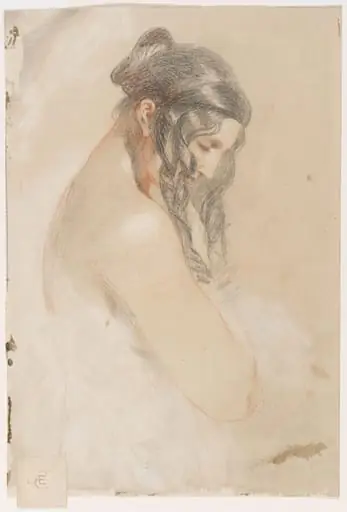
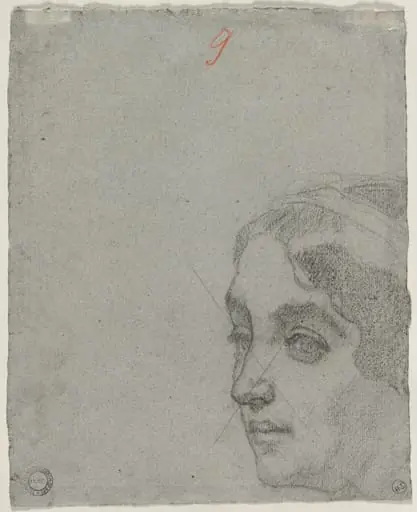
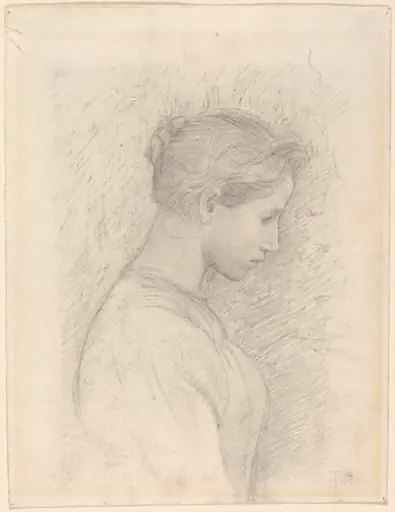
Head of a Woman in a Scarf, Looking Down
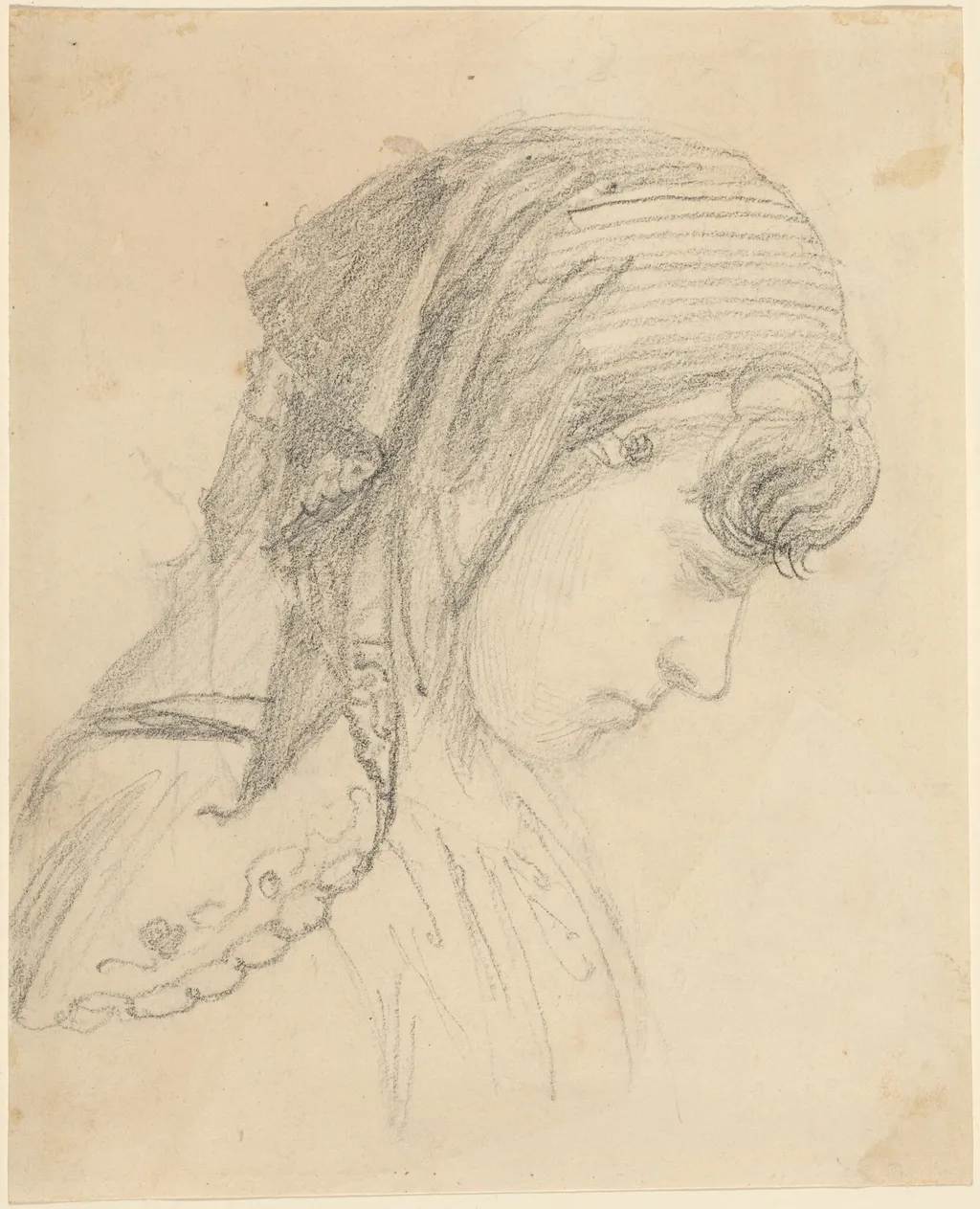
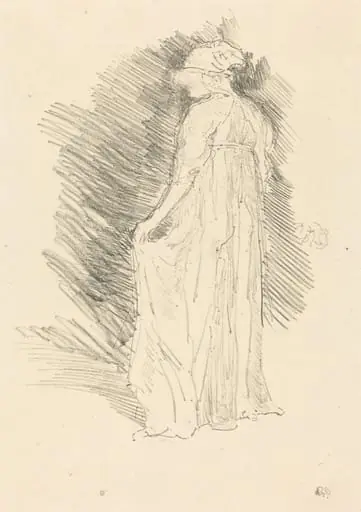
Head of a Woman in a Scarf, Looking Down is a graphite drawing by the Romanticist artist John Flaxman. It dates from 1790 and is held in the collection of the National Gallery of Art.
About this work
Overview
Though modest in scale, it exemplifies his skill in translating subtle expression into linear economy, bridging academic discipline with intimate observation.
Created in 1790, this graphite drawing by John Flaxman captures a quiet, introspective moment of a woman in profile. Executed with restrained precision, the work reflects Flaxman’s training in classical form and his role as a key figure in British Neoclassicism. Though modest in scale, it exemplifies his skill in translating subtle expression into linear economy, bridging academic discipline with intimate observation.
Subject & Meaning
The figure is a woman, her head bowed and gaze lowered, enveloped in a loosely rendered scarf that suggests modesty or contemplation. Her hands rest gently in her lap, fingers softly curled, reinforcing a sense of inward focus. No narrative context is given, but the posture evokes themes of quietude and resignation, common in Neoclassical studies that valued emotional restraint over theatricality.
Technique & Style
Flaxman employed soft graphite to build form through delicate, controlled lines, avoiding heavy shading. The scarf is suggested with fluid, sketchy strokes, contrasting with the more defined contours of the face and neck. Areas of faint tone imply light falling across the brow and chin, while negative space enhances the sense of volume. The method prioritizes clarity and rhythm over texture, aligning with his illustrative approach to classical subjects.
History & Provenance
The drawing originates from Flaxman’s active period in London, following his return from Rome, where he had studied ancient sculpture and produced illustrations for Homer and Dante. Likely a preparatory study or independent sketch, it reflects his ongoing engagement with the human form. Its survival suggests it was retained by the artist or a close associate, though its early ownership remains undocumented.
Context
In the 1790s, British artists increasingly turned to intimate figure studies as a means of exploring emotion and form beyond grand historical themes. Flaxman’s work stood apart by anchoring such studies in classical ideals, rejecting the ornamental excesses of Rococo. This drawing aligns with a broader shift toward personal, meditative imagery, even as it retained the discipline of academic draftsmanship.
Legacy
Flaxman’s linear style influenced generations of British draftsmen and illustrators, particularly those drawn to classical restraint. Though this drawing is not among his most widely reproduced works, it exemplifies his ability to convey dignity and stillness through minimal means. It remains a quiet testament to his belief that clarity of line could carry emotional weight without embellishment.
Artist & collection
Artist
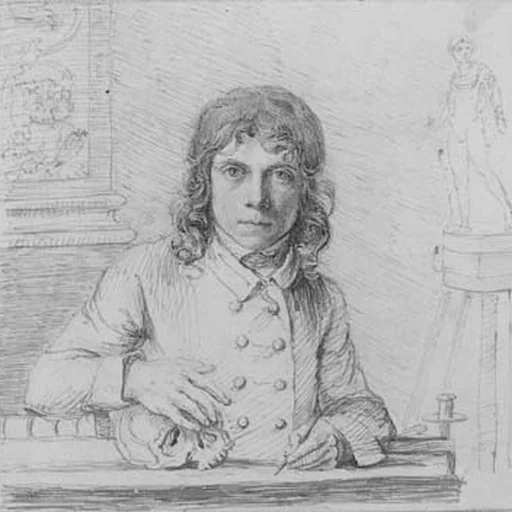
John Flaxman (6 July 1755 – 7 December 1826) was an English sculptor and draughtsman who was a leading figure in British and European Neoclassicism.

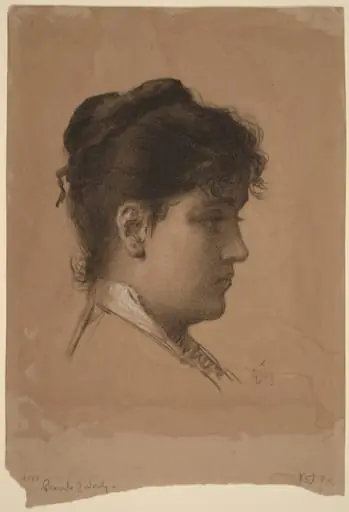
![Studies of a Female Head [recto], by Perry, Enoch Wood, Jr.](https://artifactworldgallery.com/img/perry-enoch-wood-jr--studies-of-a-female-head-recto--da87fb5fc8e6c9bf-w320.webp)