Artwork
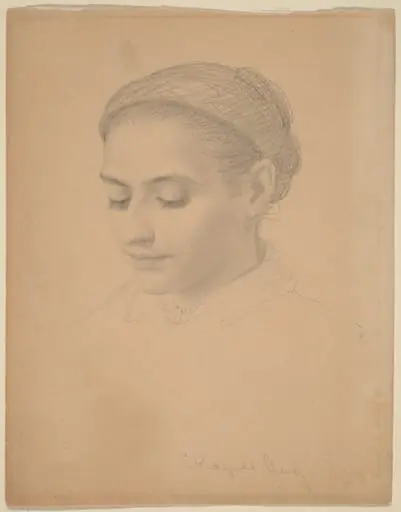
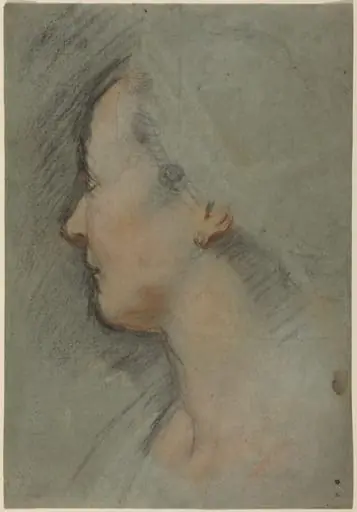
Studies of a Female Head [recto]
![Studies of a Female Head [recto], by Perry, Enoch Wood, Jr., charcoal, 1860](https://artifactworldgallery.com/img/perry-enoch-wood-jr--studies-of-a-female-head-recto--da87fb5fc8e6c9bf-w1024.webp)
Studies of a Female Head [recto] is a charcoal drawing by the Impressionist artist Perry, Enoch Wood, Jr.. It dates from 1860 and is held in the collection of the National Gallery of Art. Created around 1860 by Enoch Wood Perry, Jr.
About this work
Overview
Created around 1860 by Enoch Wood Perry, Jr., this charcoal drawing on gray wove paper captures a study of a woman’s head. The work is part of a broader tradition of academic figure studies, where artists practiced observing and rendering human form with minimal detail. The medium and paper choice reflect common studio practices of the time, favoring tonal flexibility and portability over finish.
Subject & Meaning
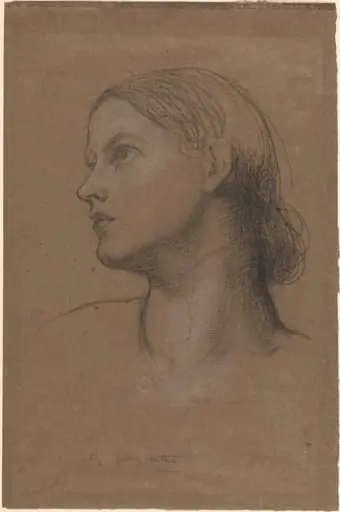
The subject is a woman with her head turned slightly, eyes closed, and mouth gently relaxed. Her hair is drawn back, suggesting a practical or informal setting. The pose conveys stillness and introspection rather than narrative. This is not a portrait of a specific individual but a study focused on form, expression, and the quiet dignity of a neutral facial state.
Technique & Style
Perry employed loose, fluid charcoal strokes to suggest volume and shadow without defining contours sharply. The shading is layered but soft, avoiding hard edges or precise cross-hatching. This approach prioritizes immediacy and observation over refinement, typical of preparatory sketches meant to capture the essence of light and form quickly during live sessions.
History & Provenance
The drawing originates from Perry’s time as a student and instructor in American art academies during the mid-nineteenth century. It likely served as an exercise in figure study, possibly used in teaching or personal practice. Its survival suggests it was retained as a pedagogical example, though its specific ownership history prior to institutional acquisition remains undocumented.
Context
In the 1860s, American art training emphasized rigorous drawing from life, often using models in neutral poses to develop observational skills. Studies like this were foundational, especially in institutions influenced by European academic traditions. The use of gray paper allowed artists to work both light and dark tones, enhancing the sense of volume with minimal materials.
Legacy
This drawing exemplifies the quiet, disciplined practice behind academic art training in 19th-century America.
This drawing exemplifies the quiet, disciplined practice behind academic art training in 19th-century America. Though not intended for public display, such studies formed the backbone of artistic education. They reveal how artists honed their ability to translate fleeting visual impressions into enduring formal understanding, influencing generations of students through their emphasis on observation over ornament.
Artist & collection


![Sail Makers [recto], by Perry, Enoch Wood, Jr.](https://artifactworldgallery.com/img/perry-enoch-wood-jr--sail-makers-recto--0553b8abee044150-w320.webp)
![Studies of Figures [verso], by Perry, Enoch Wood, Jr.](https://artifactworldgallery.com/img/perry-enoch-wood-jr--studies-of-figures-verso--08cd7fa67b50c519-w320.webp)
![Studies of Hands [recto], by Perry, Enoch Wood, Jr.](https://artifactworldgallery.com/img/perry-enoch-wood-jr--studies-of-hands-recto--594d36f72822a9f4-w320.webp)
![Studies of a Woman and Her Dress [verso], by Perry, Enoch Wood, Jr.](https://artifactworldgallery.com/img/perry-enoch-wood-jr--studies-of-a-woman-and-her-dress-verso--abf8075589814203-w320.webp)