Artwork
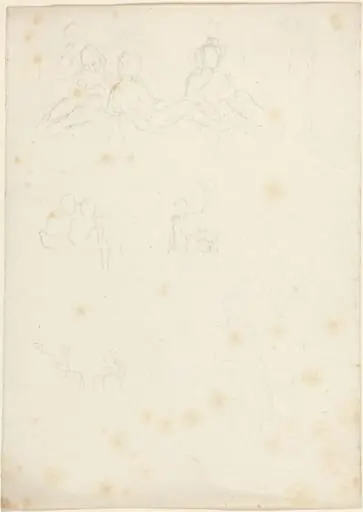
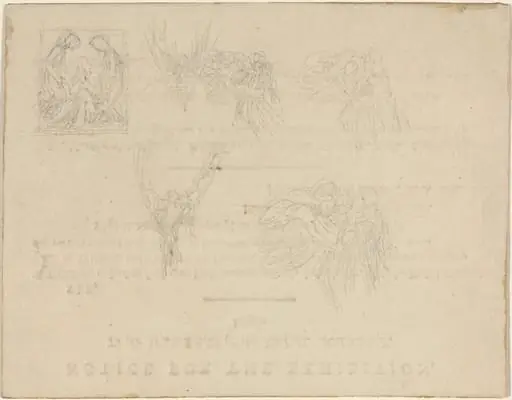
Sheet of Sketches [recto and verso]
![Sheet of Sketches [recto and verso], by John Flaxman, graphite, 1790](https://artifactworldgallery.com/img/john-flaxman--sheet-of-sketches-recto-and-verso--18d631208bf3ea60-w1024.webp)
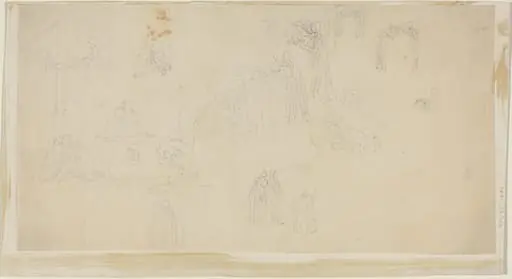
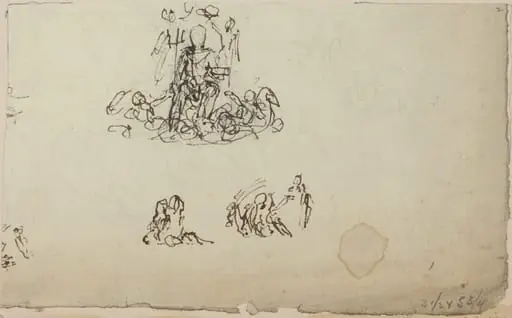
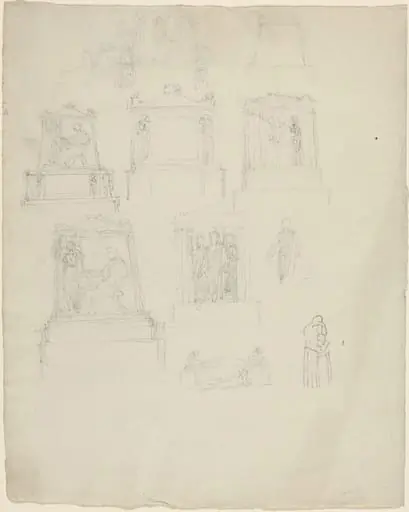
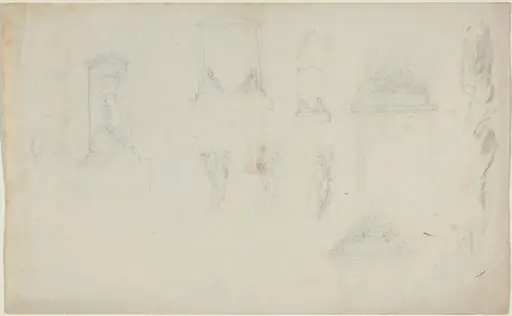
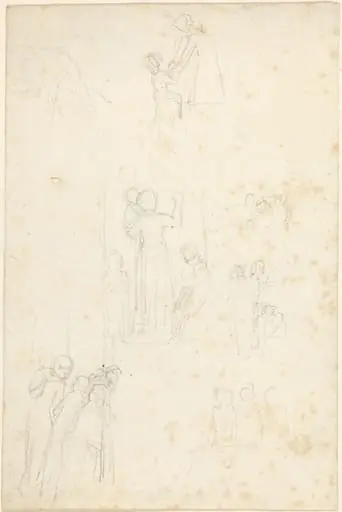
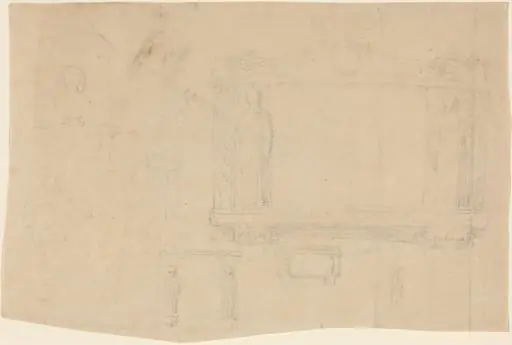
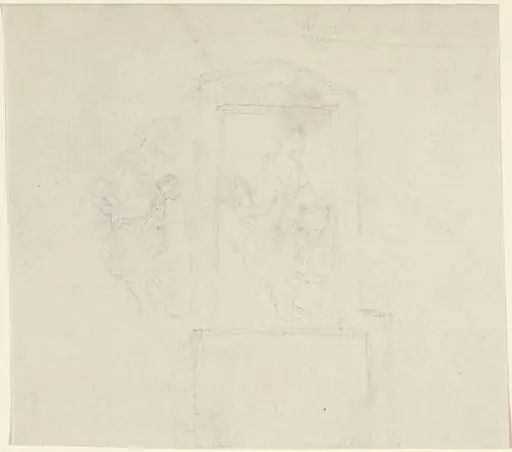
Sheet of Sketches [recto and verso] is a graphite drawing by the Romanticist artist John Flaxman. It dates from 1790 and is held in the collection of the National Gallery of Art.
About this work
Overview
It exemplifies his habit of compiling studies on single sheets, capturing fleeting observations and compositional ideas.
Created in 1790, this double-sided drawing by John Flaxman is executed in graphite on laid paper. It exemplifies his habit of compiling studies on single sheets, capturing fleeting observations and compositional ideas. As a draftsman deeply engaged with classical antiquity, Flaxman used such sketches to refine forms before translating them into larger sculptural projects or published illustrations.
Subject & Meaning
The sketches on both recto and verso depict a range of classical motifs—figures in drapery, architectural fragments, and funerary elements. These are not finished compositions but working notes, reflecting Flaxman’s interest in memorial design and ancient iconography. The recurring themes suggest his ongoing exploration of how classical forms could express solemnity and remembrance.
Technique & Style
Flaxman employed fine, controlled graphite lines to suggest volume and movement with minimal strokes. His draftsmanship is precise yet economical, favoring clarity over detail. The use of laid paper, with its subtle texture, enhances the tonal subtlety of the graphite, allowing for delicate gradations that support his linear, sculptural approach to form.
History & Provenance
This sheet emerged during Flaxman’s formative years following his return from Rome, where he immersed himself in ancient art and developed his illustrative style for publications like Homer’s epics. It likely served as preparatory material for commissions, including funerary monuments for British patrons. Its survival reflects its value as a personal working document rather than a public artifact.
Context
In late 18th-century Britain, Neoclassicism dominated artistic discourse, with artists turning to antiquity for moral and aesthetic ideals. Flaxman’s sketches align with this movement’s emphasis on purity of line and restrained emotion. His background in Wedgwood’s workshop, where classical designs were mass-produced, informed his ability to distill complex forms into essential outlines.
Legacy
Flaxman’s sketchbooks and individual sheets like this one became foundational to the study of Neoclassical draftsmanship. They reveal the quiet, iterative process behind his more public works and influenced later artists seeking to reconcile classical ideals with modern expression. These drawings remain key to understanding how ideas moved from private study to public monument.
Artist & collection
Artist
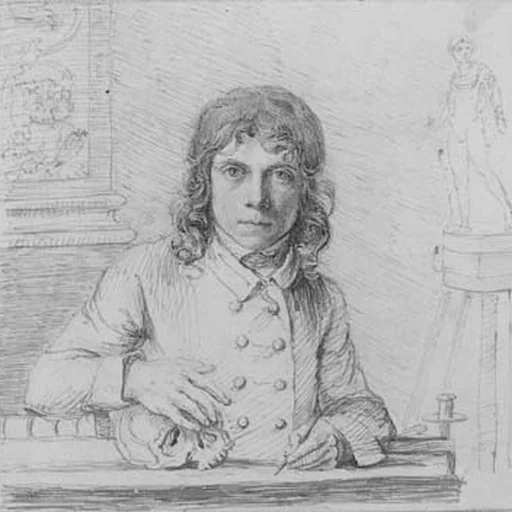
John Flaxman (6 July 1755 – 7 December 1826) was an English sculptor and draughtsman who was a leading figure in British and European Neoclassicism.

![Sheet of Studies [recto and verso], by John Flaxman](https://artifactworldgallery.com/img/john-flaxman--sheet-of-studies-recto-and-verso--3a0de97c6f7386d1-w320.webp)