Artwork
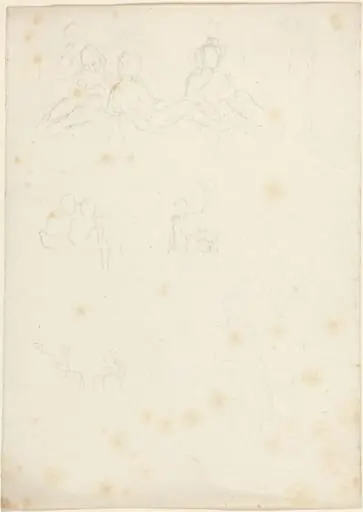
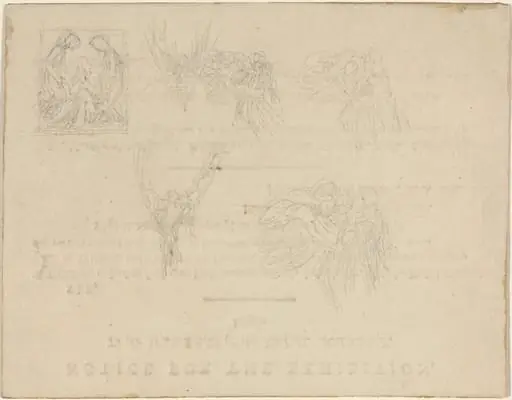
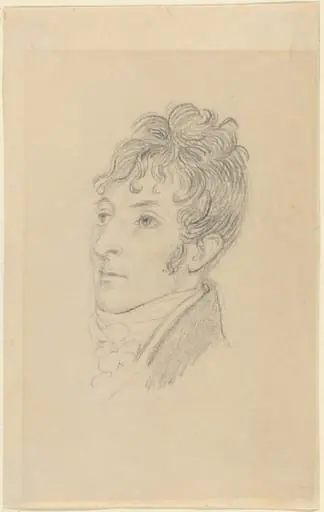
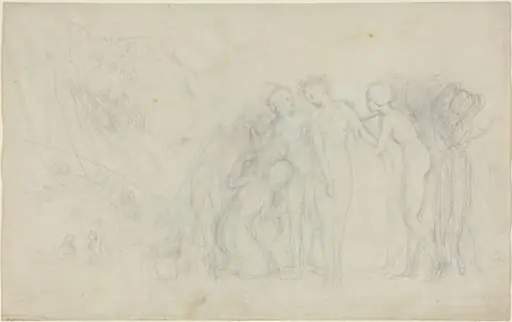
Sheet of Studies, including Warrior with Child [recto and verso]
![Sheet of Studies, including Warrior with Child [recto and verso], by John Flaxman, graphite, 1790](https://artifactworldgallery.com/img/john-flaxman--sheet-of-studies-including-warrior-with-child-recto-and-vers--5c5dd1ec083169b5-w1024.webp)
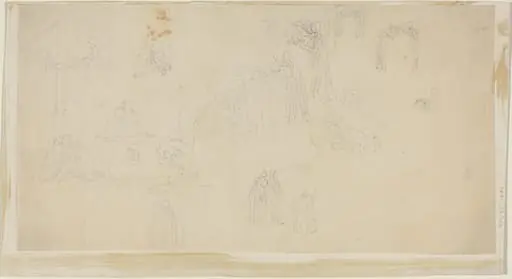
Sheet of Studies, including Warrior with Child [recto and verso] is a graphite drawing by the Romanticist artist John Flaxman. It dates from 1790 and is held in the collection of the National Gallery of Art. Created in 1790, this sheet of studies presents a quick graphite drawing enhanced with a brown wash on laid paper.
About this work
Overview
Created in 1790, this sheet of studies presents a quick graphite drawing enhanced with a brown wash on laid paper. The composition features three loosely rendered figures, the central one a spear‑bearing warrior crowned with foliage, accompanied by two secondary figures beneath a tree. The work exemplifies the artist’s facility for rapid, gestural sketching.
Subject & Meaning
The central figure, a warrior holding a spear and a leafy crown, suggests a protective or heroic role, while the presence of a child in the grouping hints at a narrative of guardianship. The surrounding figures, one with a staff, contribute to a scene of informal interaction rather than a formal tableau, emphasizing relational dynamics over precise storytelling.
Technique & Style
Flaxman employed graphite for the line work, allowing for scratchy, energetic strokes, while a light brown wash adds tonal depth and suggests shadow. The uneven shading and hurried execution reflect a focus on capturing movement and gesture, aligning with the period’s interest in expressive, immediate drawing rather than polished finish.
History & Provenance
John Flaxman, an English sculptor and draughtsman, produced this drawing during his early professional years, shortly after his apprenticeship with Josiah Wedgwood and before his extended stay in Rome. The sheet belongs to his graphic output, which ran alongside his later work on funerary monuments and larger Neoclassical projects.
Context
The drawing emerges from the Neoclassical milieu that valued classical forms and clear composition, yet its spontaneous handling anticipates the Romantic emphasis on emotion and immediacy. Flaxman’s training in pottery modeling and his Roman experience informed his ability to distill complex figures into concise studies.
Artist & collection
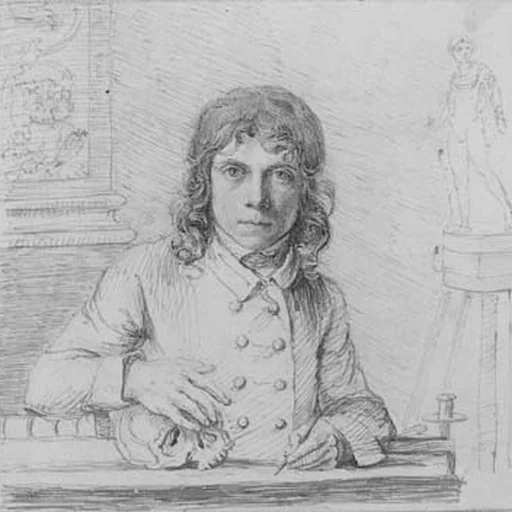
Artist
John Flaxman (6 July 1755 – 7 December 1826) was an English sculptor and draughtsman who was a leading figure in British and European Neoclassicism.

![Sheet of Studies [recto and verso], by John Flaxman](https://artifactworldgallery.com/img/john-flaxman--sheet-of-studies-recto-and-verso--92409dcb1ad1b47a-w320.webp)
![Sheet of Studies [recto and verso], by John Flaxman](https://artifactworldgallery.com/img/john-flaxman--sheet-of-studies-recto-and-verso--95f5fe7f81bc2d81-w320.webp)
![Sheet of Studies [recto and verso], by John Flaxman](https://artifactworldgallery.com/img/john-flaxman--sheet-of-studies-recto-and-verso--acf1b2004c9fc50f-w320.webp)
![Sheet of Studies [recto and verso], by John Flaxman](https://artifactworldgallery.com/img/john-flaxman--sheet-of-studies-recto-and-verso--624ac0ec758f08e5-w320.webp)
![Sheet of Studies [recto and verso], by John Flaxman](https://artifactworldgallery.com/img/john-flaxman--sheet-of-studies-recto-and-verso--5d19d38e20f446c0-w320.webp)