Artwork
Sheet of Studies [recto and verso]
![Sheet of Studies [recto and verso], by John Flaxman, ink, 1811](https://artifactworldgallery.com/img/john-flaxman--sheet-of-studies-recto-and-verso--92409dcb1ad1b47a-w1024.webp)
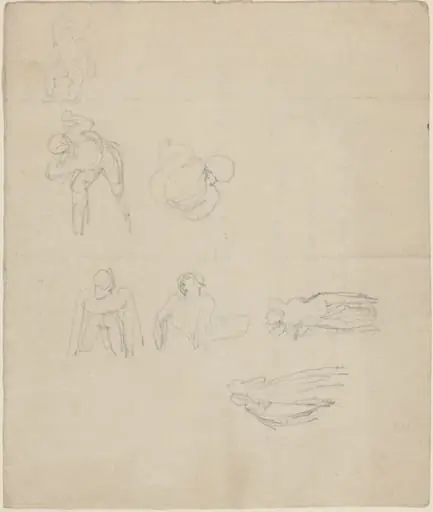
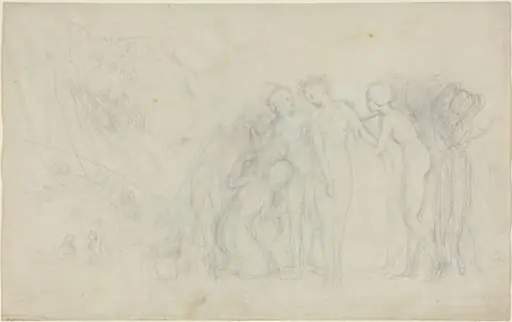
Sheet of Studies [recto and verso] is an ink drawing by the Romanticist artist John Flaxman. It dates from 1811 and is held in the collection of the National Gallery of Art.
About this work
Overview
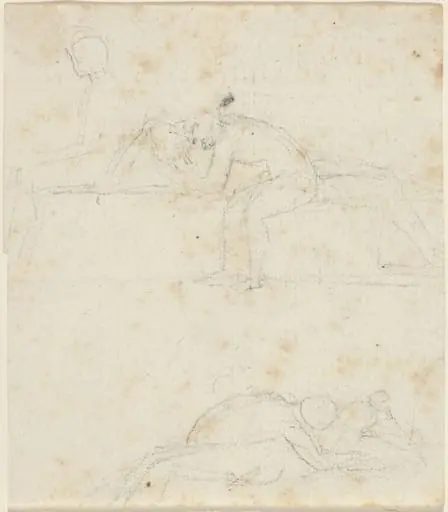
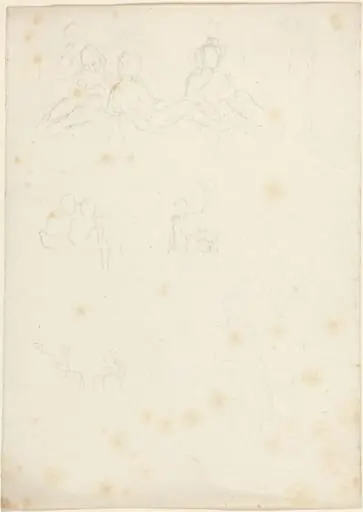
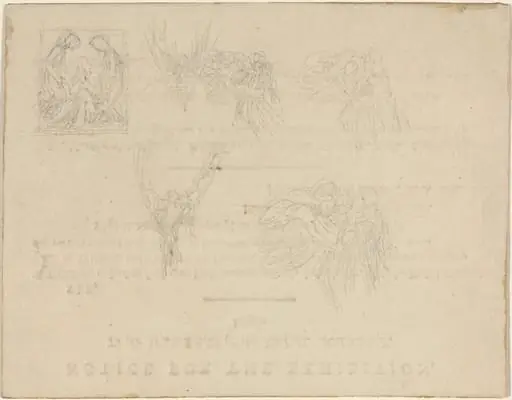
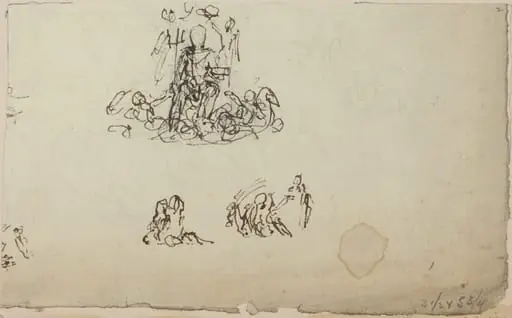
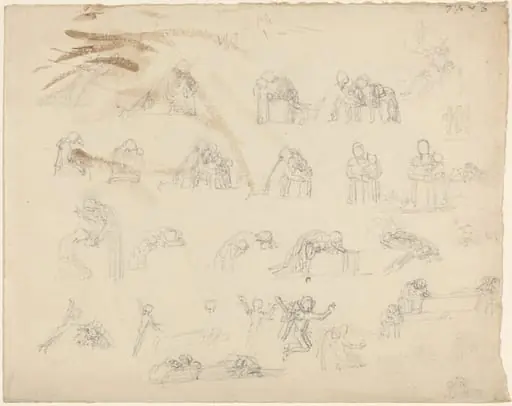
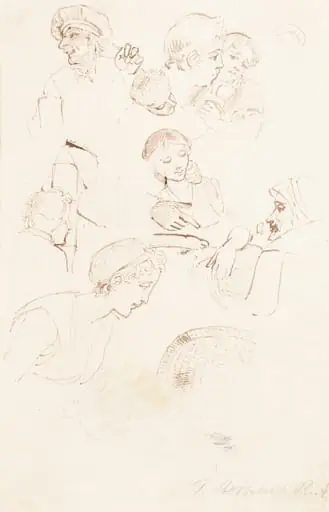
John Flaxman’s *Sheet of Studies* (1811) is a double‑sided drawing on a single sheet of paper. The recto contains pure graphite sketches, while the verso adds pen and ink over graphite. The work records rapid, gestural figures—people and horses—in various stages of movement, some barely visible, others more pronounced, reflecting an exploratory drawing process.
Subject & Meaning
The compositions capture fleeting studies of human and equine forms, arranged loosely across the surface. The figures appear in motion, suggesting that Flaxman was working out poses for larger projects, likely sculptural commissions. The juxtaposition of faint background marks with clearer foreground sketches indicates a hierarchy of ideas, from initial observation to more developed concepts.
Technique & Style
The cross‑hatching and layered strokes create subtle shading, while the quick, unrefined marks reveal a preparatory stage rather than a finished illustration.
Flaxman employed light, scratchy graphite lines to map out anatomy and movement, then reinforced selected elements with pen and ink on the verso. The cross‑hatching and layered strokes create subtle shading, while the quick, unrefined marks reveal a preparatory stage rather than a finished illustration. The dual‑medium approach highlights his practice of refining sketches through successive media.
History & Provenance
Created during Flaxman’s Roman period, the sheet exemplifies his habit of producing studies for book illustrations and funerary monuments. Trained under Josiah Wedgwood, he brought English neoclassical sensibilities to Italy, where he established a reputation as a draughtsman. The paper’s wear and use on both sides attest to its role as a working document rather than a display piece.
Context
Flaxman was a leading figure in early‑19th‑century Neoclassicism, known for his sculptural monuments and book illustrations. This sheet illustrates the methodological bridge between his preparatory drawings and the polished designs that would appear in published works or be executed in stone. It reflects the broader neoclassical emphasis on classical form, anatomical precision, and the disciplined study of movement.
Artist & collection
Artist
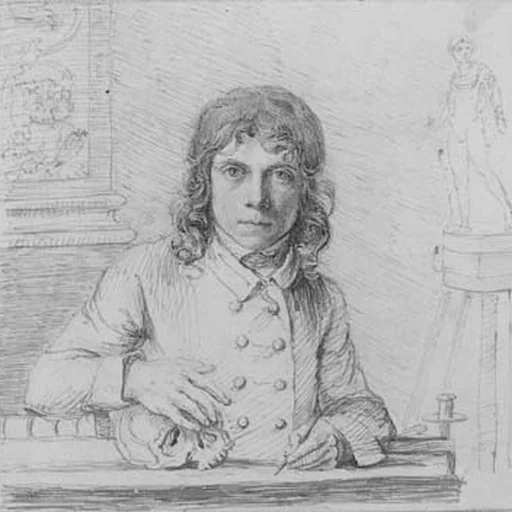
John Flaxman (6 July 1755 – 7 December 1826) was an English sculptor and draughtsman who was a leading figure in British and European Neoclassicism.

![Sheet of Studies [recto and verso], by John Flaxman](https://artifactworldgallery.com/img/john-flaxman--sheet-of-studies-recto-and-verso--acf1b2004c9fc50f-w320.webp)
![Studies of Figures [verso], by Perry, Enoch Wood, Jr.](https://artifactworldgallery.com/img/perry-enoch-wood-jr--studies-of-figures-verso--08cd7fa67b50c519-w320.webp)
![Sheet of Studies, including Warrior with Child [recto and verso], by John Flaxman](https://artifactworldgallery.com/img/john-flaxman--sheet-of-studies-including-warrior-with-child-recto-and-vers--5c5dd1ec083169b5-w320.webp)
![Sheet of Studies [recto and verso], by John Flaxman](https://artifactworldgallery.com/img/john-flaxman--sheet-of-studies-recto-and-verso--37ffe1e79b52e688-w320.webp)
![Sheet of Studies [recto and verso], by John Flaxman](https://artifactworldgallery.com/img/john-flaxman--sheet-of-studies-recto-and-verso--e428fab422bf3286-w320.webp)
![Sheet of Studies [recto and verso], by John Flaxman](https://artifactworldgallery.com/img/john-flaxman--sheet-of-studies-recto-and-verso--af59e52d5279d768-w320.webp)