Artwork
Two Groups of Figures
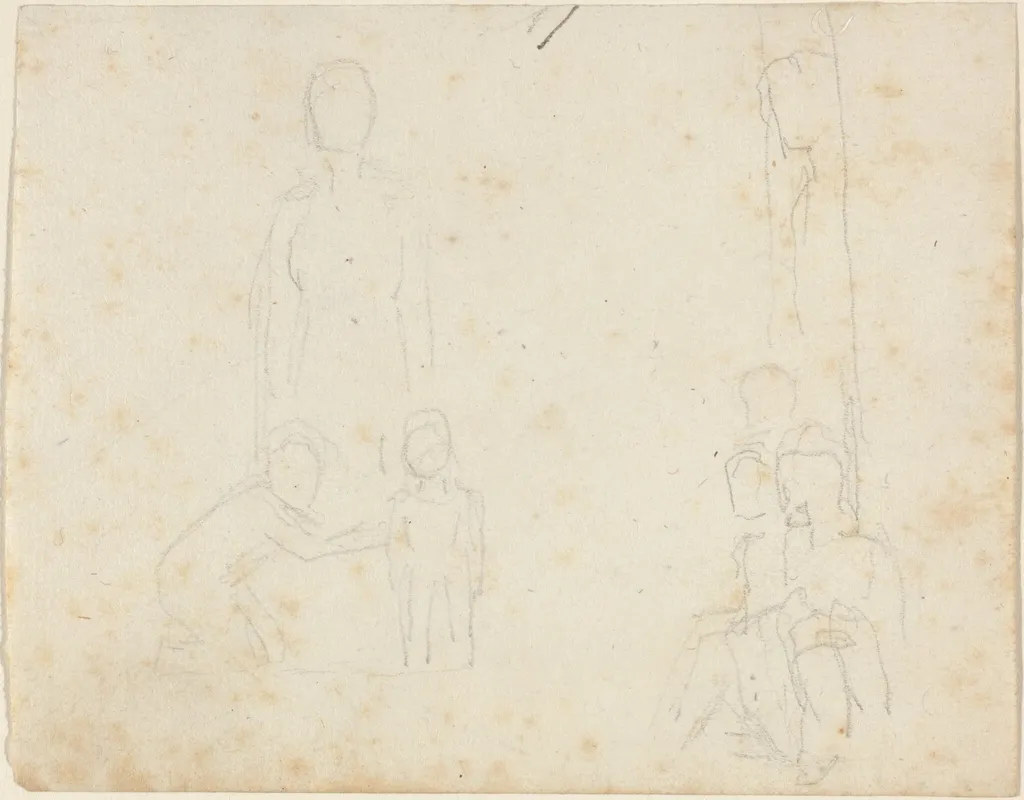
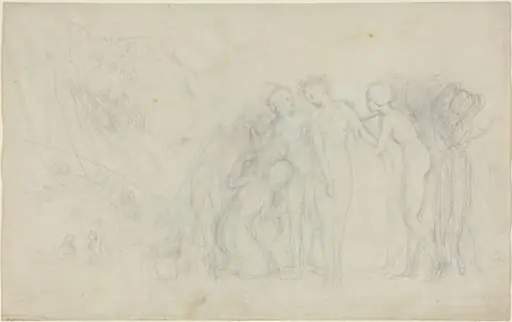
Two Groups of Figures is a graphite drawing by the Romanticist artist John Flaxman. It dates from 1790 and is held in the collection of the National Gallery of Art.
About this work
Overview
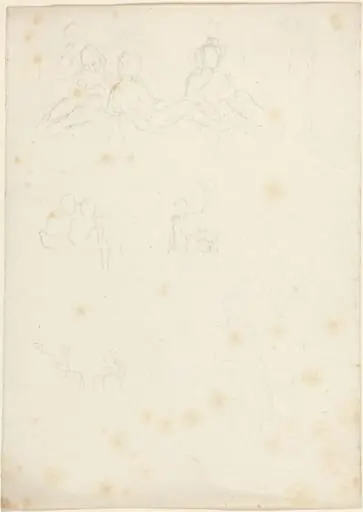
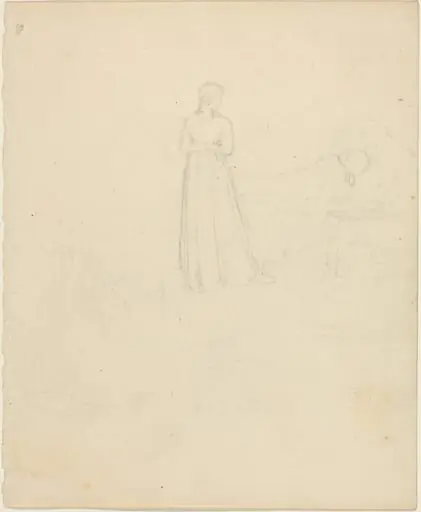
John Flaxman's drawing *Two Groups of Figures* (1790) is executed in graphite on aged paper. The composition divides the sheet into two clusters: a left group of three figures—one upright, two seated or kneeling—and a right group of four, similarly arranged with a standing figure flanked by three seated individuals. The work functions as a concise study of human poses.
Subject & Meaning
The drawing presents two separate gatherings of people, each rendered in a minimalist manner that emphasizes posture over narrative detail. By isolating the figures, Flaxman invites contemplation of classical ideals of balance and proportion, suggesting an interest in the formal qualities of the human body rather than a specific story or mythological episode.
Technique & Style
Rendered with graphite, the piece relies on clean, unembellished lines that outline the contours of each figure. The limited shading and absence of elaborate rendering focus attention on the underlying geometry of the poses, reflecting Flaxman's characteristic neoclassical precision and his preference for linear clarity over atmospheric effects.
History & Provenance
Created during Flaxman's early career, the drawing dates from the period when he was transitioning from his work as a modeller for Josiah Wedgwood to his studies in Rome. It likely served as a preparatory sketch for a larger composition or illustration, illustrating his methodical approach to figure drawing before he embarked on major book illustration projects.
Context
Flaxman's practice was shaped by the neoclassical revival that dominated late‑18th‑century British art, a movement that looked to ancient Greek and Roman models for compositional order. While the drawing’s simplicity echoes later Romantic explorations of the human form, its disciplined line work aligns it firmly with the rational aesthetic of the period’s classical revival.
Artist & collection
Artist
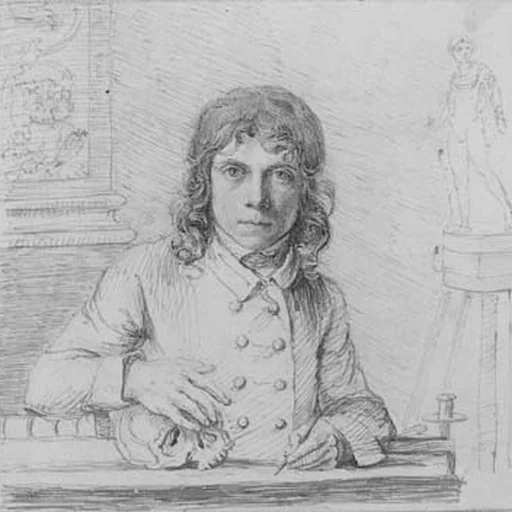
John Flaxman (6 July 1755 – 7 December 1826) was an English sculptor and draughtsman who was a leading figure in British and European Neoclassicism.

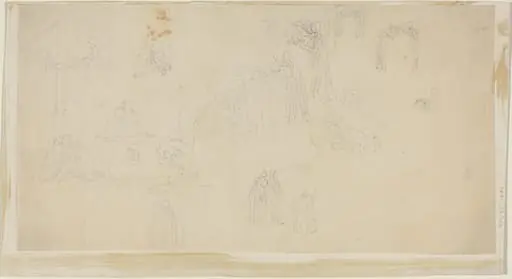
![Sheet of Studies [recto and verso], by John Flaxman](https://artifactworldgallery.com/img/john-flaxman--sheet-of-studies-recto-and-verso--acf1b2004c9fc50f-w320.webp)
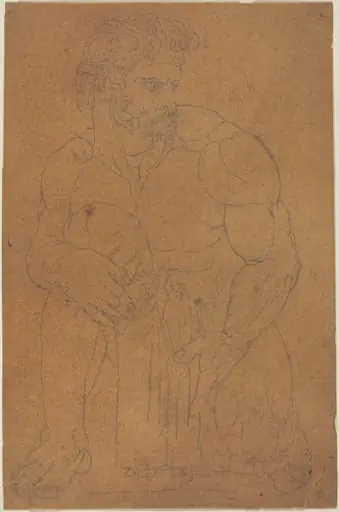
![Sheet of Studies [recto and verso], by John Flaxman](https://artifactworldgallery.com/img/john-flaxman--sheet-of-studies-recto-and-verso--e428fab422bf3286-w320.webp)
![The Fitting [verso], by Mary Cassatt](https://artifactworldgallery.com/img/mary-cassatt--the-fitting-verso--4cb02e56cd7f05bd-w320.webp)