Artwork
Study of a Man Playing a Pipe
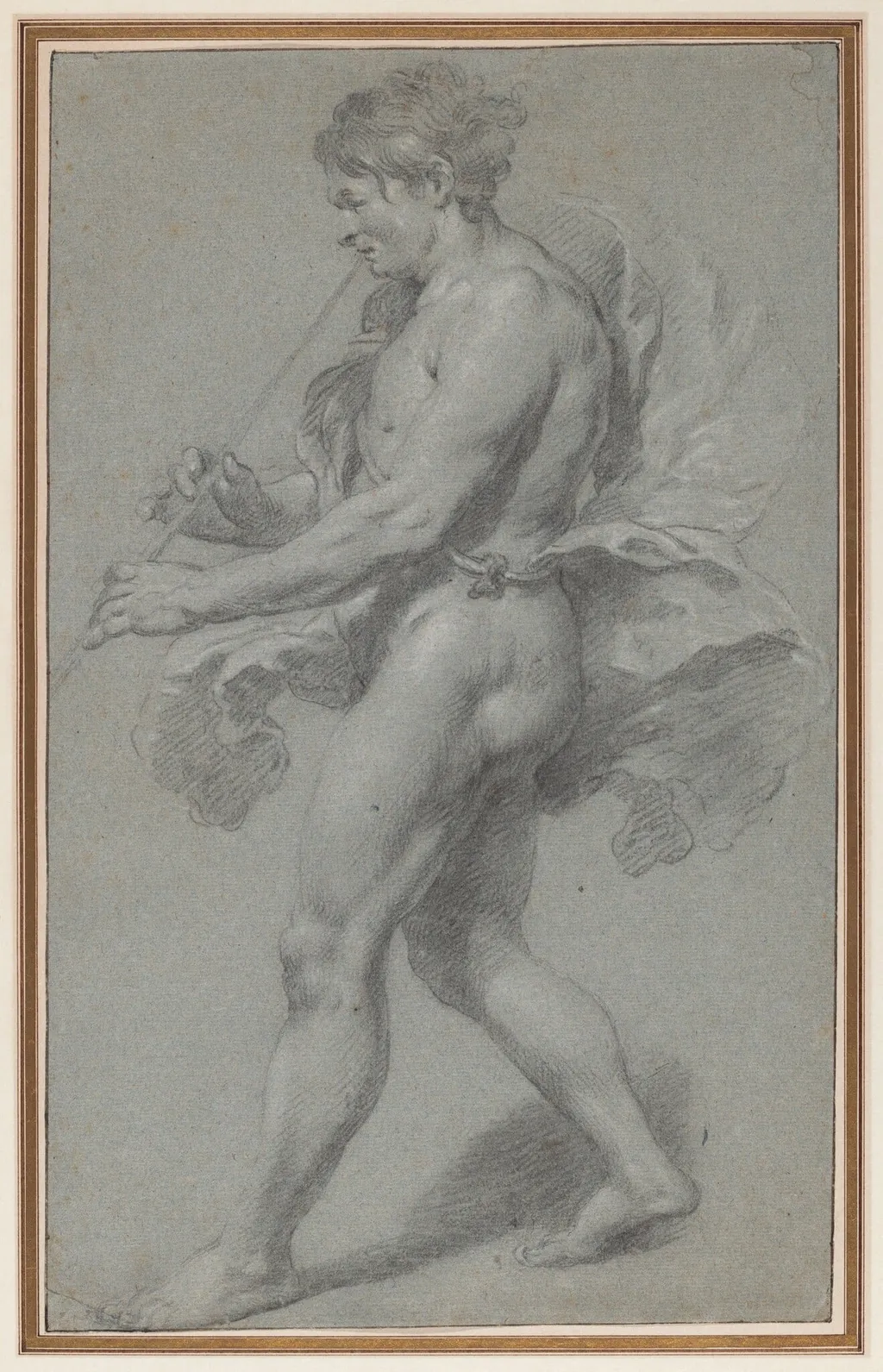
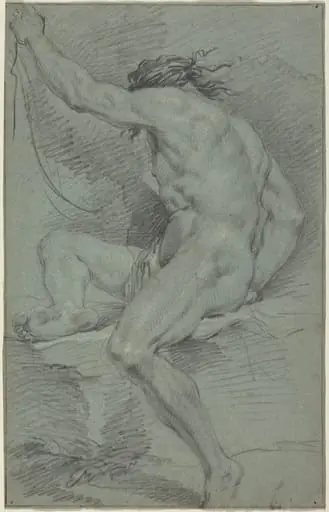
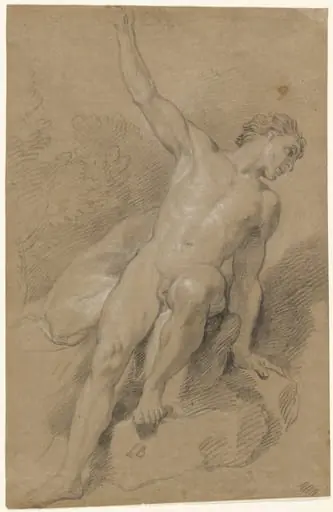
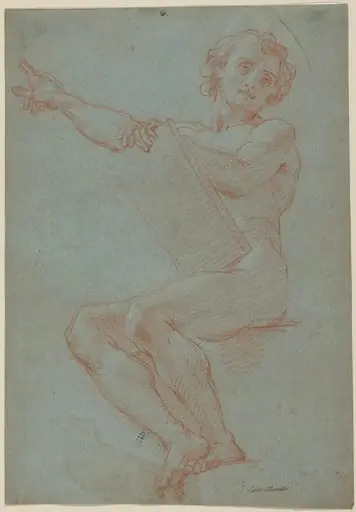
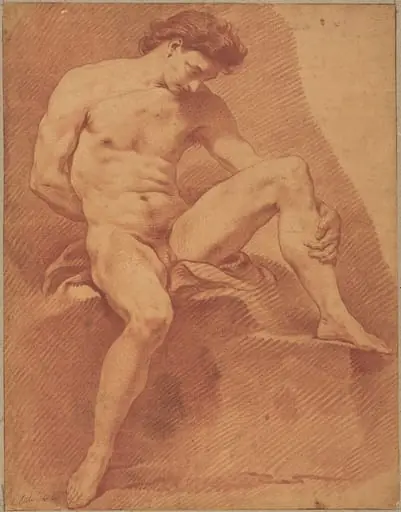
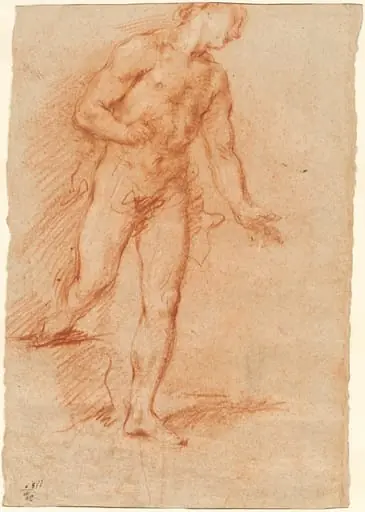
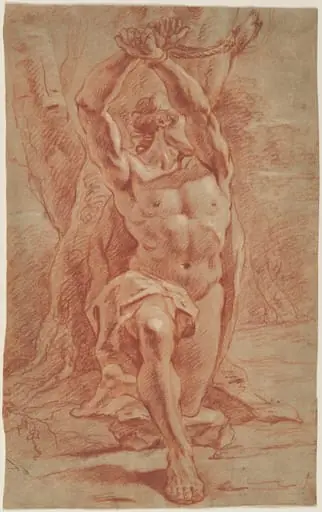
Study of a Man Playing a Pipe is a chalk drawing by the Baroque artist Govaert Flinck. It dates from 1644 and is held in the collection of the National Gallery of Art.
About this work
Overview
Govaert Flinck’s drawing, titled Study of a Man Playing a Pipe, dates from around 1644. Executed in black and white chalk on blue laid paper that has been mounted on an older album sheet, the work functions as a preparatory study rather than a finished composition. Its modest size and informal handling suggest it was intended for the artist’s own reference.
Subject & Meaning
The composition captures a robust figure seated with one arm supporting his torso while he blows into a pipe. The man’s body is turned away, yet his head is inclined upward, conveying a moment of introspection or absorption in music. The pose emphasizes the physicality of the performer, hinting at the Baroque interest in expressive, dynamic human gestures.
Technique & Style
Flinck employs only monochrome chalk on a blue ground, allowing the figure to emerge starkly against the colored substrate. Loose, rapid strokes define musculature and drapery, while cross‑hatching suggests shadow and volume. The sketch’s unfinished quality, with visible erasures and gestural lines, reveals the artist’s process of quickly recording gesture and form.
History & Provenance
The drawing is known from an album sheet that incorporates the blue laid paper, a common practice for collecting studies in the 17th‑century Dutch artistic milieu. Its exact ownership trail before entering a museum collection is not documented, but the work’s attribution to Flinck rests on stylistic comparison with his signed paintings and drawings.
Artist & collection