Artwork
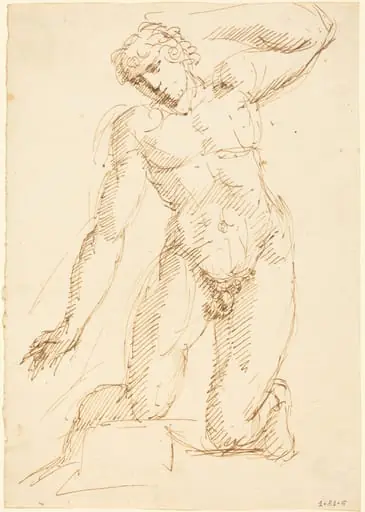
Kneeling Man Bound to a Tree
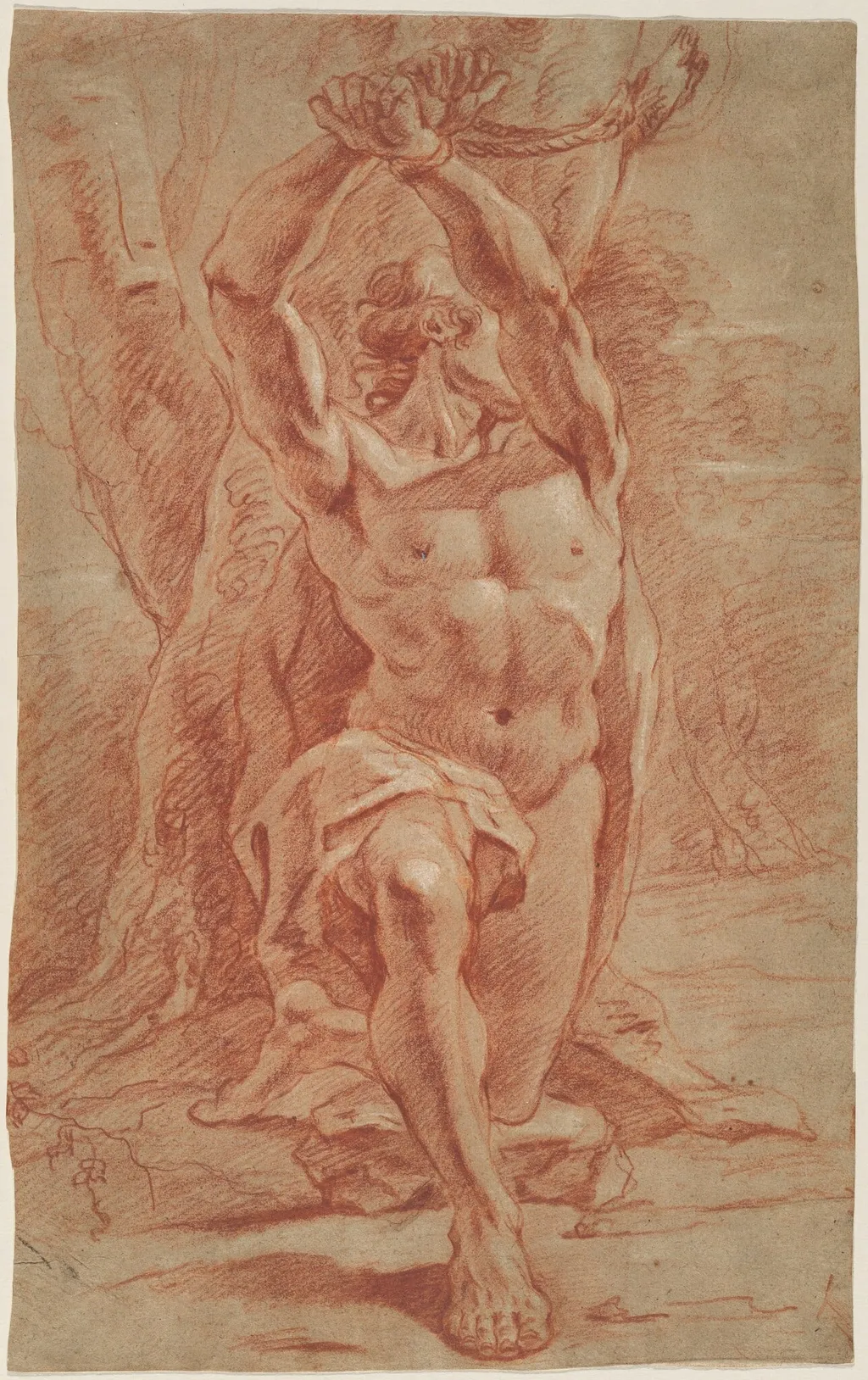
Kneeling Man Bound to a Tree is a chalk drawing by the Baroque artist French 17th Century. It dates from 1685 and is held in the collection of the National Gallery of Art.
About this work
Overview
The work titled "Kneeling Man Bound to a Tree" is a drawing executed in red chalk, with areas of white chalk added for highlights, on a sheet of gray‑brown laid paper. The medium and support give the piece a muted tonal range, emphasizing the figure’s posture and the surrounding environment.
Subject & Meaning
The composition depicts a male figure kneeling on the ground, his limbs restrained to a tree trunk. The scene suggests themes of confinement, vulnerability, or perhaps a narrative moment of punishment or ritual, inviting viewers to consider the emotional state of the bound individual.
Technique & Style
The artist employed red chalk as the primary drawing material, building form through layered strokes. White chalk is applied selectively to accentuate light on the flesh and tree, creating a subtle contrast against the gray‑brown paper. The drawing’s linear quality and limited palette reflect a focus on gesture and mood rather than detailed rendering.
History & Provenance
No specific information about the drawing’s creation date, artist, or ownership history is provided. Consequently, its provenance remains undocumented, and further research would be required to place the work within a broader artistic or collection context.
Artist & collection

Artist
Seventeenth-century French printmakers turned ink into story. Their tools were burin and acid, paper their stage. Look at the Beggar Woman with Rosary (1622), etched on laid paper, her hands folded around faith, or The…

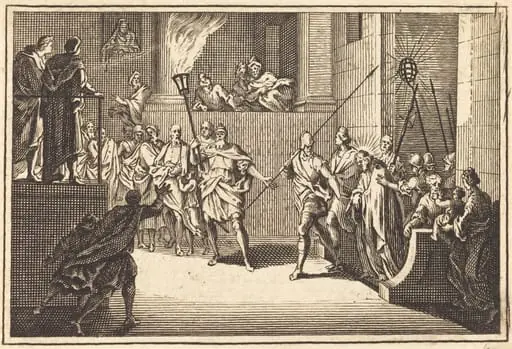
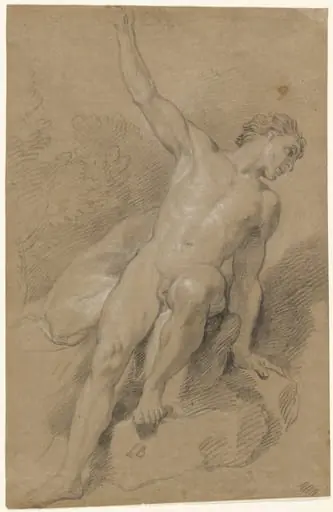 Male Nude Seated on Rocks
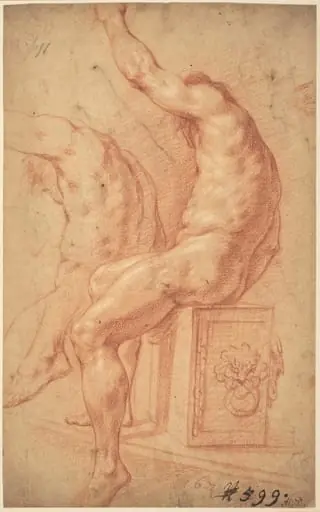 A Seated Nude
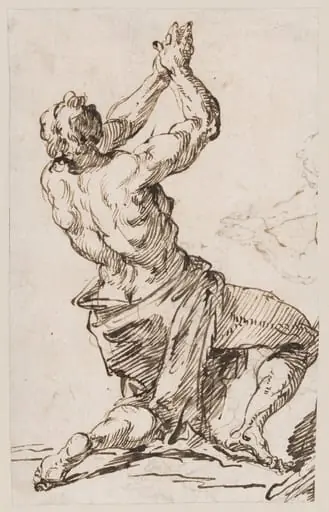 a) Study of a Man Kneeling, Looking Upward (recto); b) Studies of the Same Figure (verso)
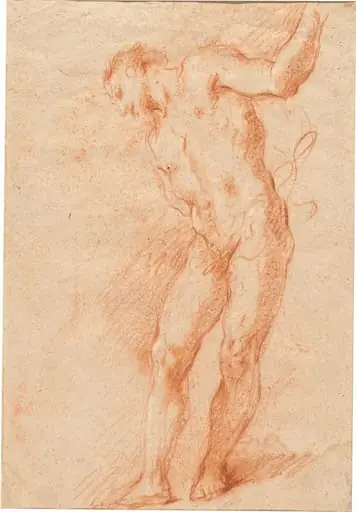 Male Nude
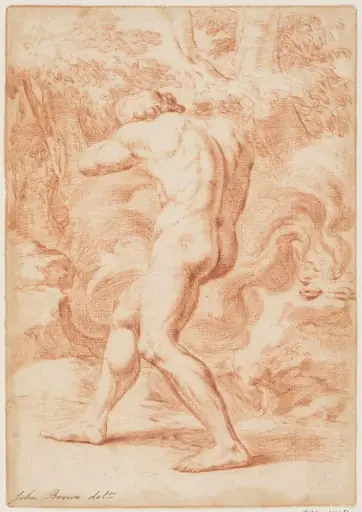 Cain after the murder of Abel
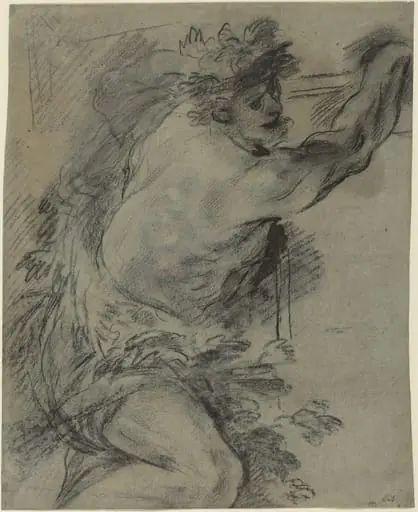 Bacchus
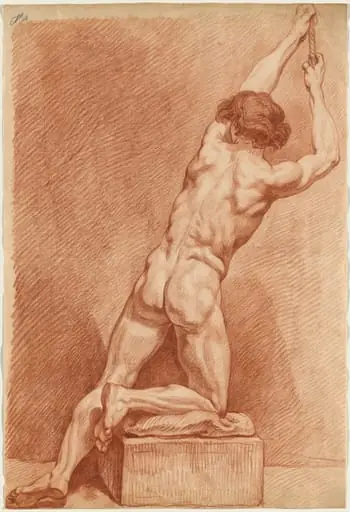 A Male Nude Seen from Behind
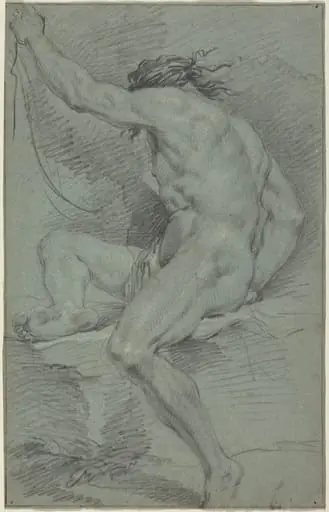 Nude Figure (academic study)
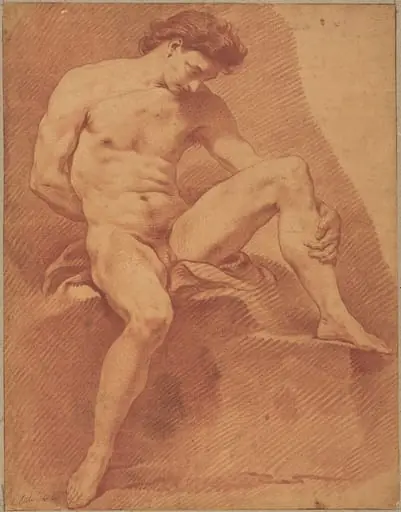 A Seated Male Nude
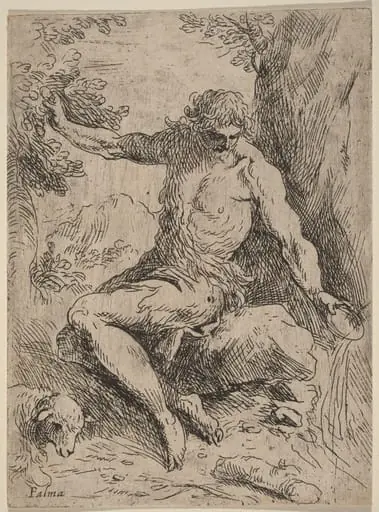 Saint John the Baptist
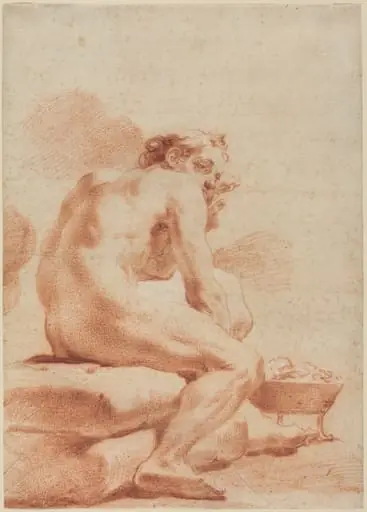 A Young Man Warming Himself at a Brazier
 A Male Nude Kneeling