Artwork
Blason de la Ville de Paris (Arms of the City of Paris)
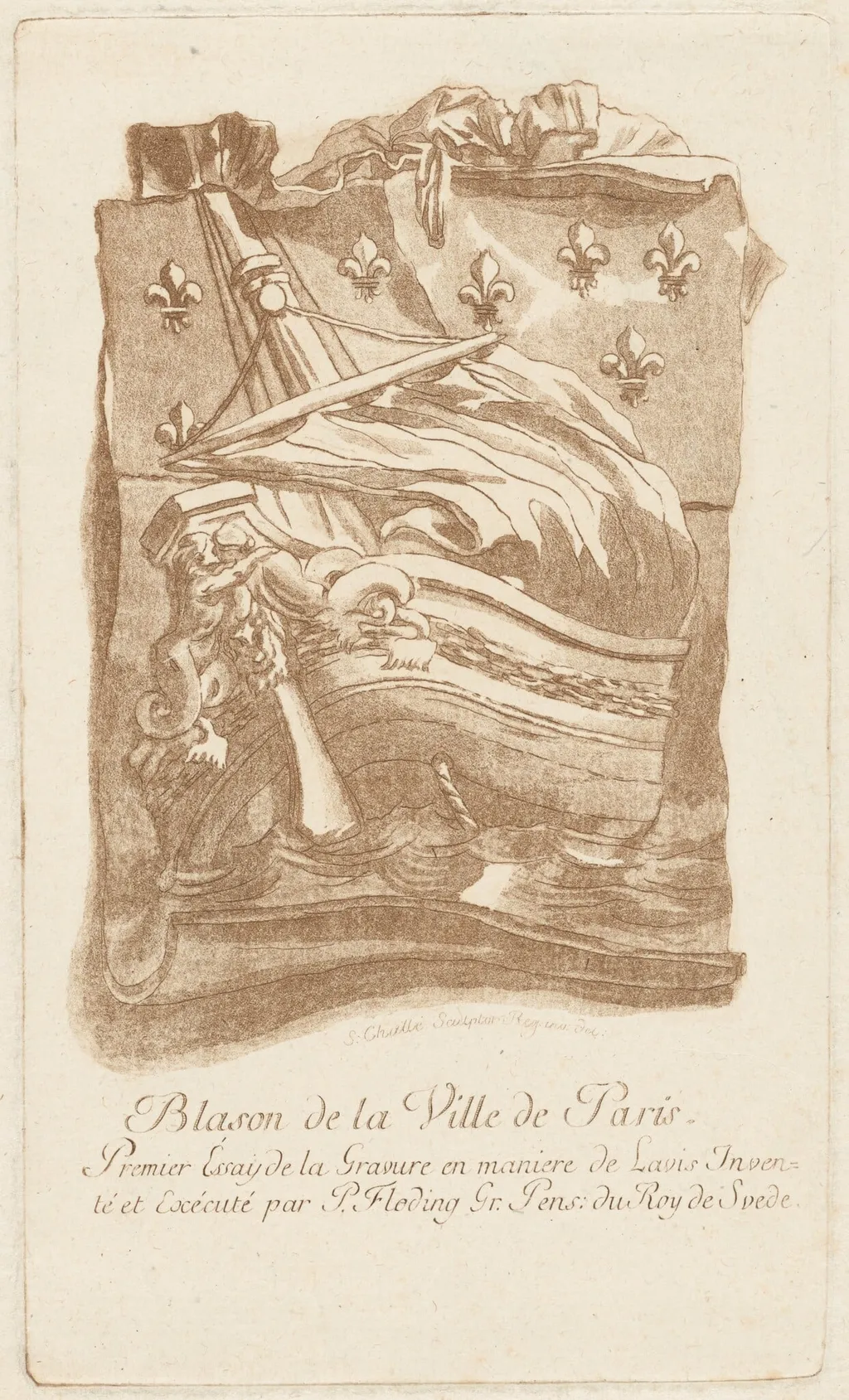
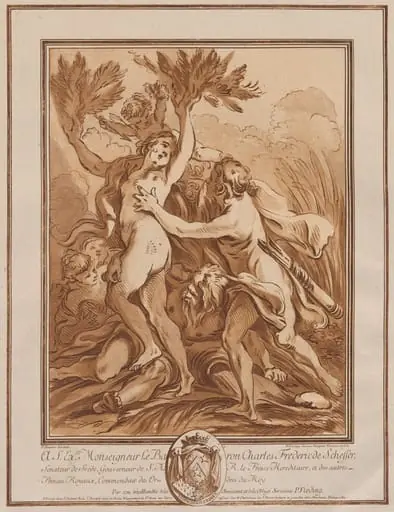
Blason de la Ville de Paris (Arms of the City of Paris) is an ink print by the Romanticist artist Per Gustaf Floding. It dates from 1761 and is held in the collection of the National Gallery of Art.
About this work
Overview
Blason de la Ville de Paris is an 18th-century print created by Per Gustaf Floding around 1761, utilizing etching and aquatint techniques on laid paper in monochromatic brown hues. It is part of the collection at the National Gallery of Art in Washington.
Subject & Meaning
The print depicts the coat of arms of the City of Paris, featuring a shield with a lion standing on a boat and holding a sword. The shield is set against a background adorned with three golden fleur-de-lis on a blue field, symbolizing the city's heraldic identity.
Technique & Style
Floding employed a combination of etching and aquatint to achieve detailed lines and shaded depths in a uniform brown print. The wavy edges of the shield, suggestive of water, add a tactile quality to the design.
History & Provenance
Created circa 1761, the print is now housed at the National Gallery of Art in Washington, D.C., as part of its collection.
Context
As an etching, this work reflects 18th-century printmaking techniques that allowed for detailed, reproducible artworks. The use of aquatint alongside etching was particularly popular during this period for achieving nuanced tonal ranges.
Legacy
While specific influence or widespread recognition of 'Blason de la Ville de Paris' beyond its archival presence is not prominently documented, it contributes to the historical record of Paris's heraldic symbols and 18th-century European printmaking practices.
Artist & collection
Artist
Per Gustaf Floding was a Swedish designer and engraver. He was an instructor at the Royal Swedish Academy of Fine Arts.l