Artwork
Guardhouse
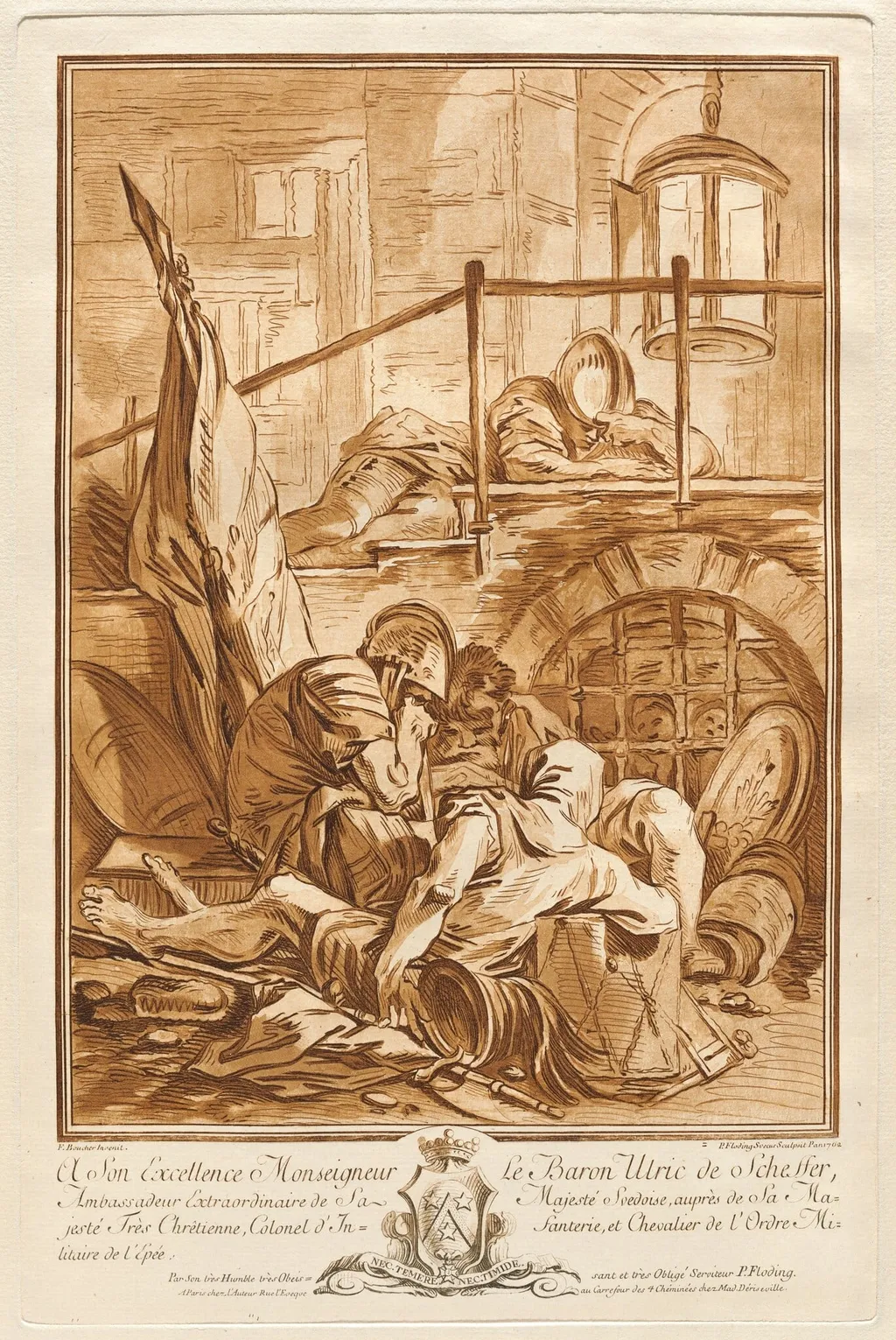
Guardhouse is an ink print by the Romanticist artist Per Gustaf Floding. It dates from 1762 and is held in the collection of the National Gallery of Art.
About this work
Overview
Created in 1762 by Per Gustaf Floding, Guardhouse is a print in etching, aquatint, and roulette, executed in brown ink on laid paper.
Created in 1762 by Per Gustaf Floding, Guardhouse is a print in etching, aquatint, and roulette, executed in brown ink on laid paper. It depicts a disordered interior space, likely a military outpost, rendered with a muted, earthy palette. The work is part of the National Gallery of Art’s collection in Washington, D.C., and exemplifies 18th-century printmaking techniques that emphasized tonal variation over precise line work.
Subject & Meaning
The scene portrays a guardhouse in disarray: figures lie sprawled or slumped, one man tends to a wounded soldier while another collapses nearby. A sentinel leans against the wall, head bowed, and weapons rest abandoned in a corner. The absence of alertness suggests neglect or exhaustion, conveying a quiet critique of military discipline—or perhaps the human cost of duty in a moment of stillness.
Technique & Style
Floding employed aquatint to achieve soft, granular tonal gradations, allowing ink to pool unevenly and create shadowed textures. Fine etched lines define forms, while the roulette tool added stippled patterns for rough surfaces like stone or fabric. The result is a sketchlike immediacy—faces and garments appear worn, as if scratched into existence, reinforcing the scene’s gritty realism.
History & Provenance
The print was made in Sweden during Floding’s active years as a printmaker and teacher. It entered the National Gallery of Art’s collection through established acquisition channels, likely as part of a broader effort to document European graphic arts of the 18th century. Its survival in good condition reflects careful preservation and scholarly interest in Nordic printmaking traditions.
Context
In mid-18th-century Sweden, military life was a common subject in graphic art, often tied to civic or moral narratives. Floding’s work aligns with a trend toward depicting everyday, unheroic moments within institutions. Unlike grand battle scenes, this image focuses on quiet decay, reflecting Enlightenment-era interest in human behavior under routine or strain.
Legacy
Guardhouse remains a rare example of Swedish etching from the period, notable for its emotional restraint and technical nuance. While Floding was not widely known outside Scandinavia, this work contributes to understanding how Nordic artists adapted continental printmaking methods to observe domestic and institutional life with subtle, unsentimental clarity.
Artist & collection
Artist
Per Gustaf Floding was a Swedish designer and engraver. He was an instructor at the Royal Swedish Academy of Fine Arts.l

 Venetian Set: Entombment of Christ
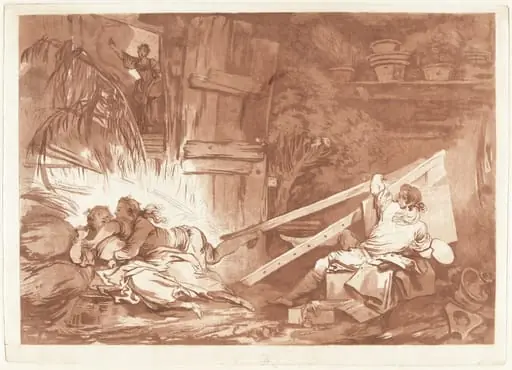 The Tumble
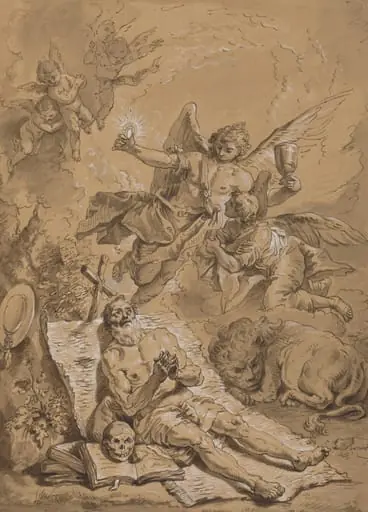 Last Communion of Saint Jerome
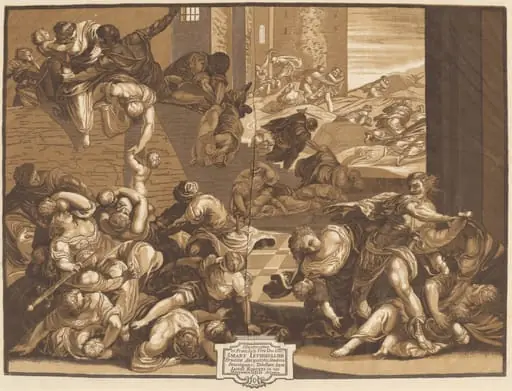 Massacre of the Innocents
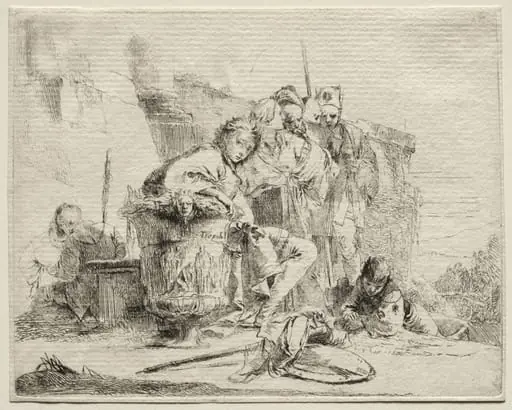 Various Caprices: Young Man Seated, Leaning Against an Urn
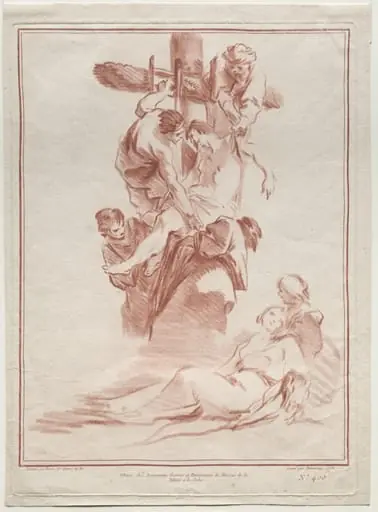 The Descent from the Cross
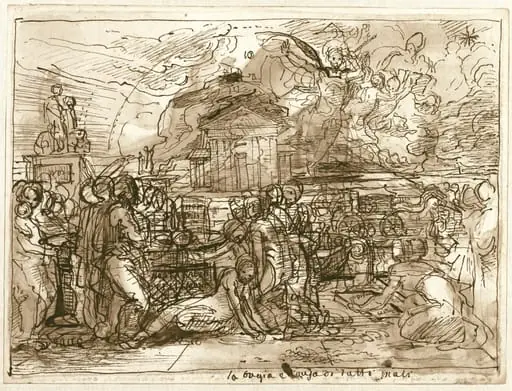 Falsehood Is the Cause of All Evil (recto); An Allegory of Truth and Falsehood (verso)
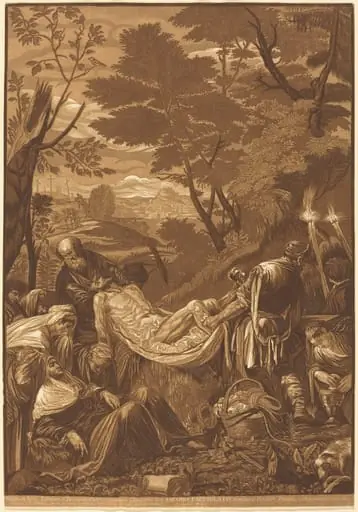 The Entombment
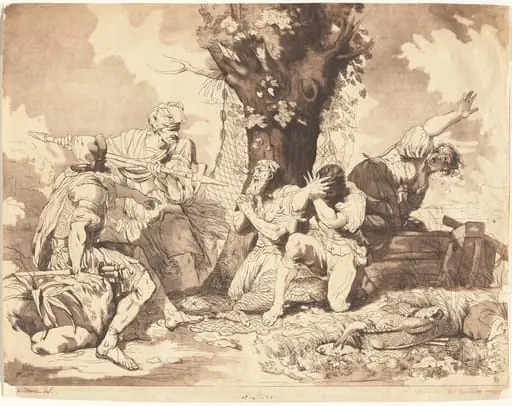 Banditti Robbing Fishermen
 Seated Woman and Standing Man Surrounded by Other Figures and Paraphernalia
 Death of Saint Jerome
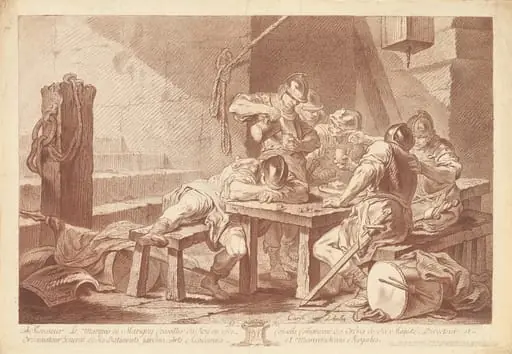 Guardhouse