Artwork
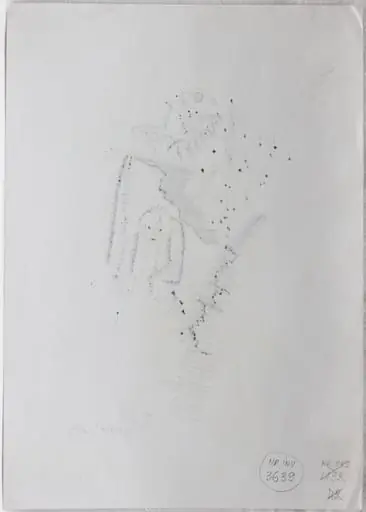
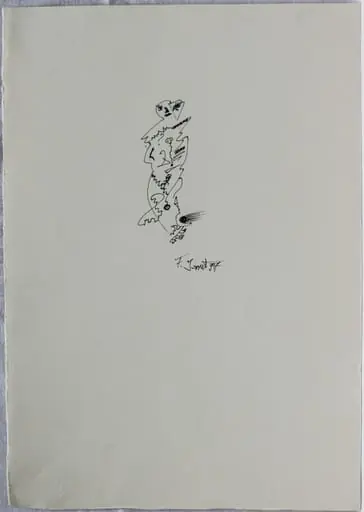
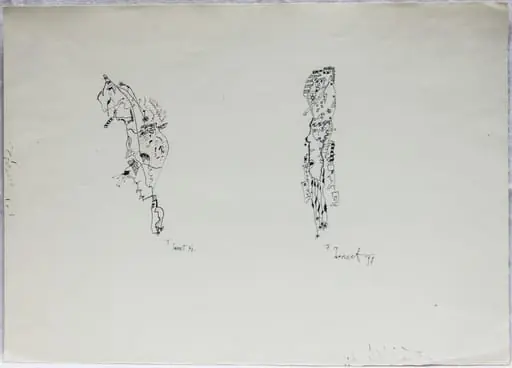
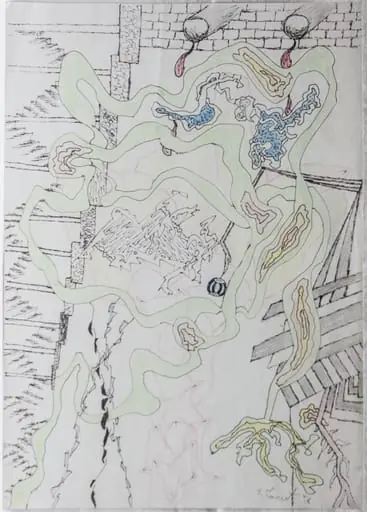
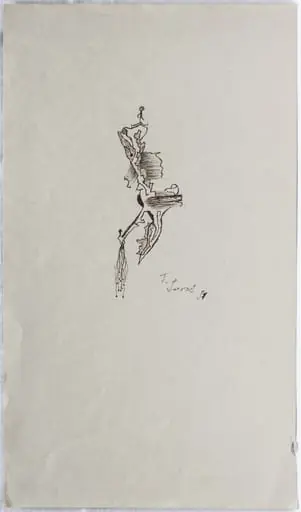
stânga: Duet feminin
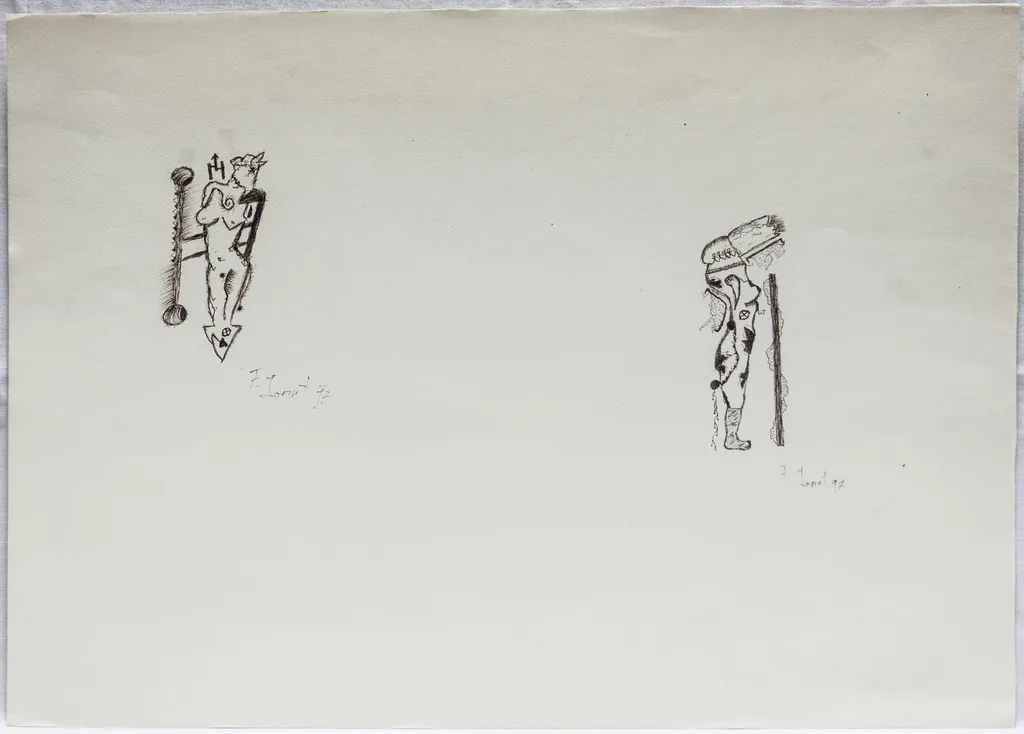
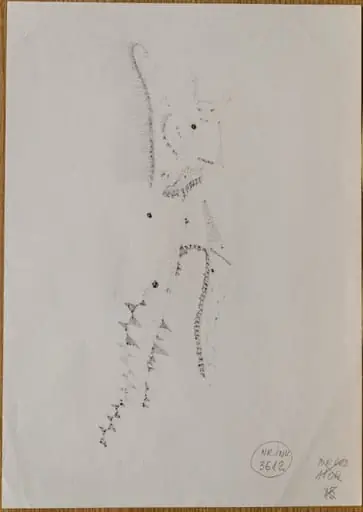
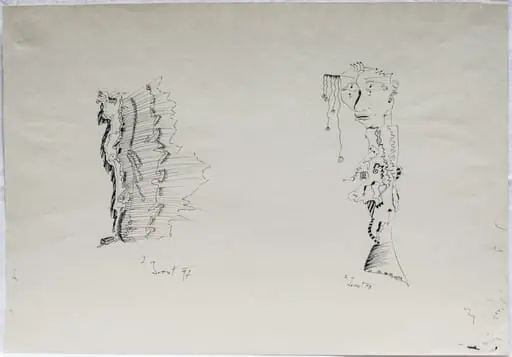
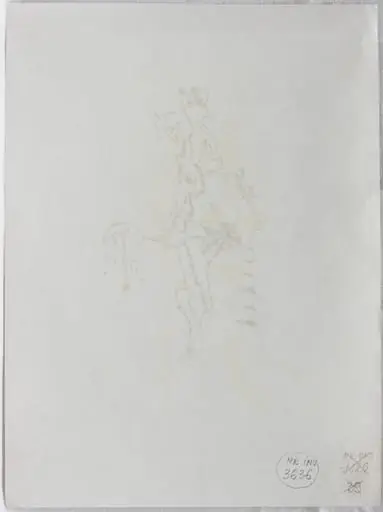
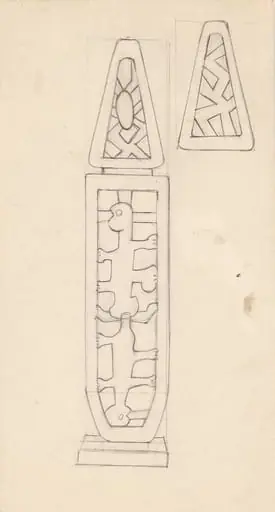
stânga: Duet feminin is a drawing by Ionuț Cătălin Florea. It dates from 1950 and is held in the collection of the Gavrila Simion Eco-Museum Research Institute Tulcea.
About this work
Overview
The work presents two simplified human forms in loose, rapid strokes, suggesting a momentary observation rather than a polished composition.
Stânga: Duet feminin is a pencil sketch attributed to Ionuț Cătălin Florea, dated around 1950. It resides in the collection of the Museum of Ethnography. The work presents two simplified human forms in loose, rapid strokes, suggesting a momentary observation rather than a polished composition. Its raw execution and minimal detail reflect an informal, possibly preparatory, approach to figure study.
Subject & Meaning
The two figures, both barefoot and distinct in posture, appear to engage in a silent, unspoken interaction. One holds a tall, rounded object, possibly a tool or staff; the other carries a burden on their back while leaning on a cane. Their isolation within the frame and lack of contextual elements suggest a focus on individual presence rather than narrative. The small mark near one foot remains unexplained, hinting at personal or symbolic intent.
Technique & Style
Florea employs swift, uneven pencil lines that convey movement and immediacy. The forms are reduced to essential contours, with no shading or modeling, relying instead on gestural marks to suggest volume. The sketch’s lightness and lack of refinement indicate a spontaneous process, possibly made outdoors or in transit. The absence of cross-hatching or texture reinforces its ephemeral quality.
History & Provenance
The work entered the Museum of Ethnography’s collection without documented prior ownership. Its dating to circa 1950 aligns with Florea’s early career, a period when he engaged with folk motifs and rural life. No exhibition history or written commentary from the artist survives, leaving its original purpose—study, sketch, or personal record—uncertain.
Context
Created in postwar Romania, the drawing reflects a broader interest in rural figures and traditional lifeways among artists of the era. While not overtly political, its focus on solitary, labor-adjacent figures echoes ethnographic documentation efforts common in state-supported cultural projects. The sketch’s informality contrasts with official art of the time, suggesting a private, observational mode.
Legacy
Stânga: Duet feminin remains a quiet example of Florea’s engagement with human form outside formal commissions. It contributes to understanding his artistic development and the role of sketching in Romanian modernist practice. Though not widely exhibited, its presence in an ethnographic museum underscores its value as a record of everyday visual inquiry rather than public art.
Artist & collection
Artist
This artist made abstract drawings and one sculpture, blending lines and shapes in ways that feel both deliberate and playful.
Museum
Gavrila Simion Eco-Museum Research Institute Tulcea
Continue through works from the same source collection.