Artwork
Στο διάστημα
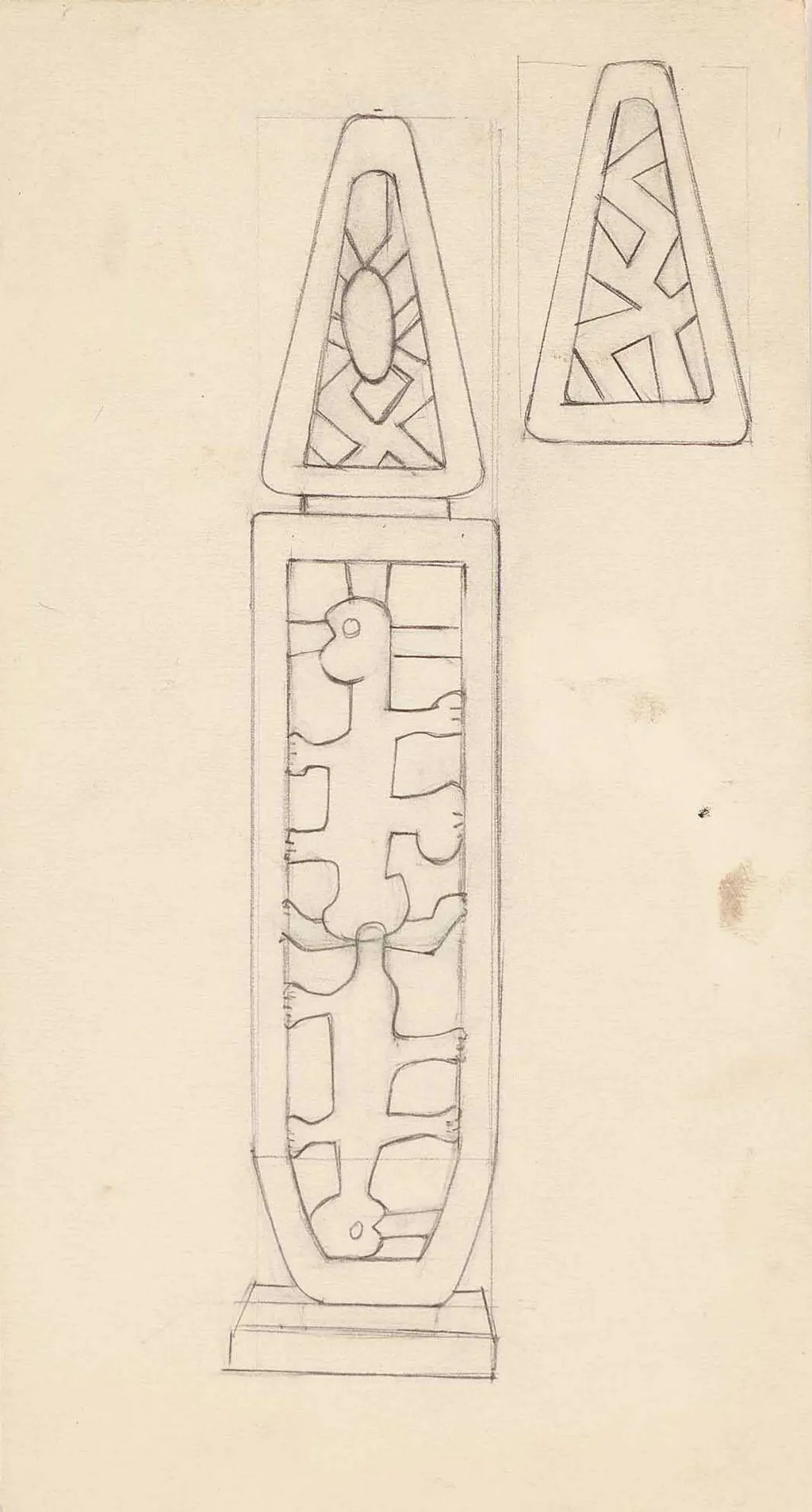
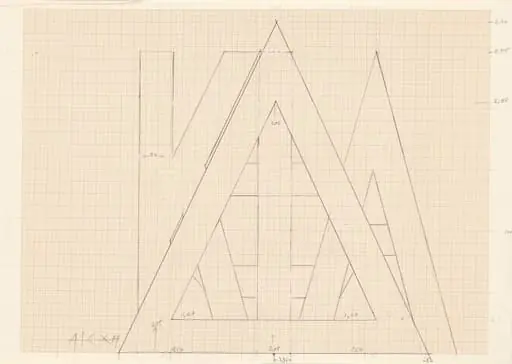
Στο διάστημα is a drawing by Alex Mylona. It dates from 1966 and is held in the collection of the Metropolitan Organisation of Museums of Visual Arts of Thessaloniki – MOMus.
About this work
The linework is all tight cross-hatching, so the drawing feels dense and mechanical.
This 1966 drawing shows a rocket’s nose cone that looks almost like a bullet. Inside it floats a human figure turned inside out—arms and legs bent the wrong way. The linework is all tight cross-hatching, so the drawing feels dense and mechanical.
Mylona was reacting to the space-race buzz in the 1960s. She later carved the shape in marble and put it on her museum roof.
Look up Alex Mylona (1920–2016) next.
Overview
Created in 1966, this drawing by Alex Mylona is a preparatory study for a sculptural work that responds to the cultural fascination with space travel during the Cold War era. The image captures a rocket’s nose cone enclosing a distorted human form, rendered in dense, mechanical cross-hatching. It was later realized in marble and installed on the roof of the museum bearing Mylona’s name, bridging two-dimensional concept with three-dimensional presence.
Subject & Meaning
The drawing presents a rocket’s tip housing a human figure inverted and contorted, as if turned inside out. This inversion suggests a psychological or physical transformation under the pressures of technological advancement. The form’s phallic silhouette introduces a layer of bodily symbolism, linking the machinery of space exploration with human vulnerability and ambition, reflecting anxieties about identity in an age of rapid scientific change.
Technique & Style
Mylona employed tightly packed cross-hatching to build volume and texture, giving the drawing a rigid, industrial quality. The absence of soft gradients or loose lines reinforces a sense of mechanical precision, mirroring the cold logic of aerospace engineering. This method contrasts with the organic, disoriented human form within, creating tension between structure and chaos, control and disorder.
History & Provenance
The 1966 drawing served as the foundation for a subsequent marble sculpture, completed and installed atop the Alex Mylona Museum. The transition from paper to stone marked a shift from conceptual sketch to permanent public statement. Its placement on the museum’s roof ensured visibility and symbolic dominance, anchoring the work within Mylona’s own artistic legacy and institutional identity.
Context
Emerging during the height of the space race, the work reflects broader societal preoccupations with technology, progress, and human expansion beyond Earth. Mylona’s interpretation diverges from celebratory narratives, instead probing the psychological cost of such endeavors. The piece aligns with European postwar art that questioned modernity’s promises, using space imagery to explore internal dislocation rather than external conquest.
Legacy
The sculpture’s enduring presence on the museum roof has made it a quiet landmark in Greek contemporary art. While not widely reproduced, its conceptual fusion of cosmic ambition and bodily distortion remains distinctive. Mylona’s choice to embed the work in her own institution underscores its personal and critical significance, positioning it as a private meditation made public.
Artist & collection
Artist
Alex Mylona (Athens, 1920 – 2016) was a Greek sculptor, known for her multidimensional and experimental approach to art.
Museum
Metropolitan Organisation of Museums of Visual Arts of Thessaloniki – MOMus
Continue through works from the same source collection.

![Sheet of Sketches [verso], by Beatrix Godwin Whistler](https://artifactworldgallery.com/img/beatrix-godwin-whistler--sheet-of-sketches-verso--3c46fb2eed4421b1-w320.webp)