Artwork
Flags of Main Enemy Troops
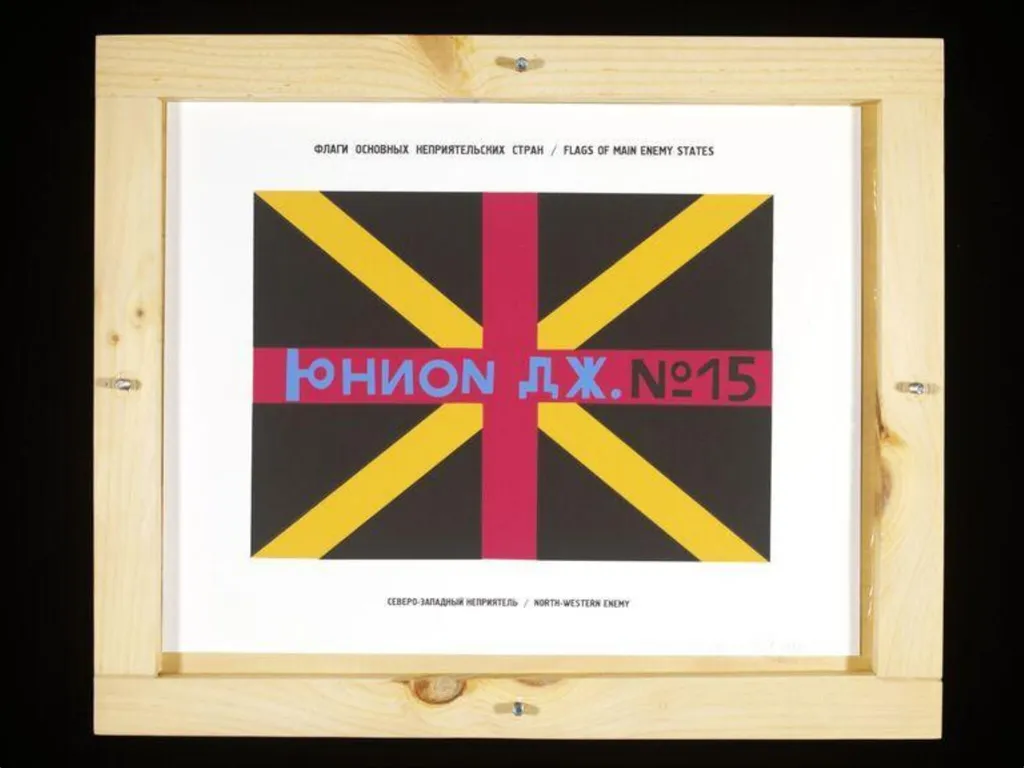
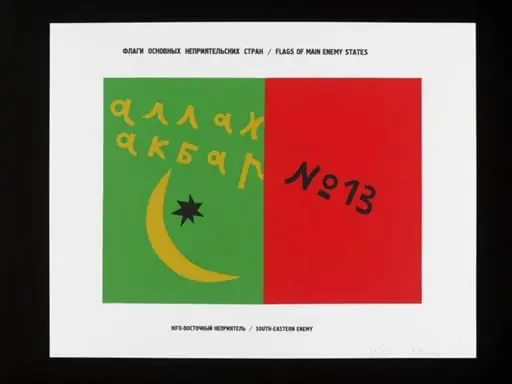
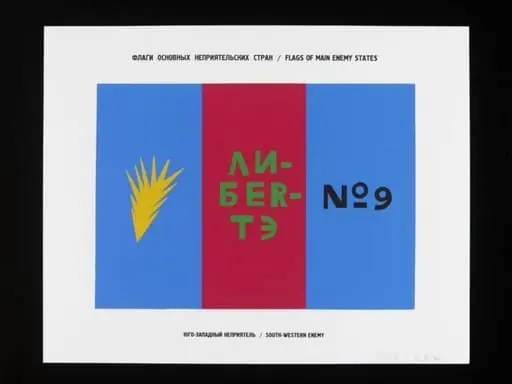
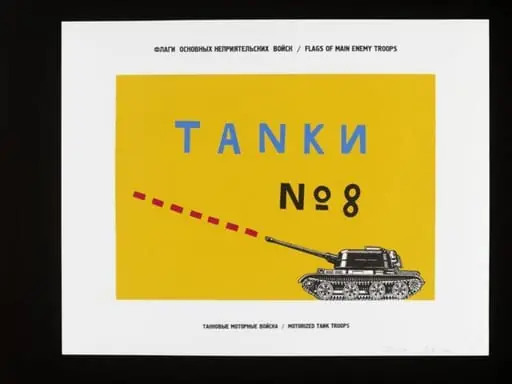
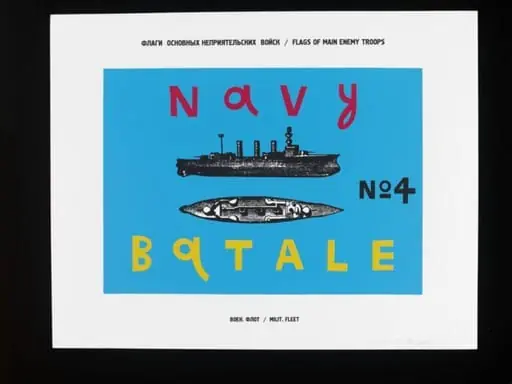
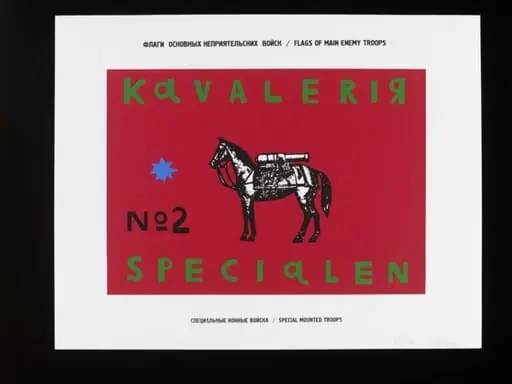
Flags of Main Enemy Troops is a print by Olga Florenskaya. It dates from 2002 and is held in the collection of the Victoria and Albert Museum.
About this work
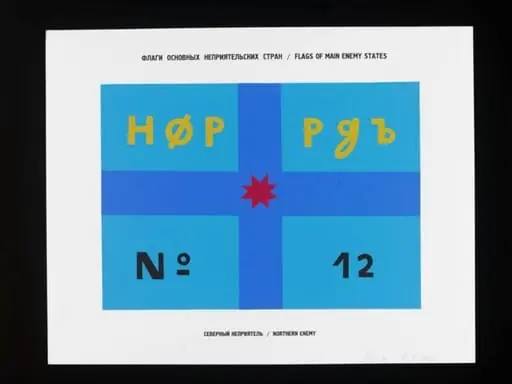
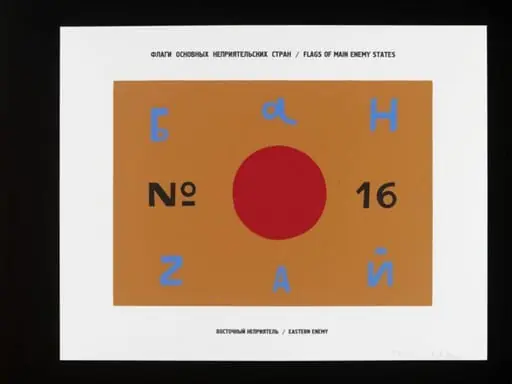
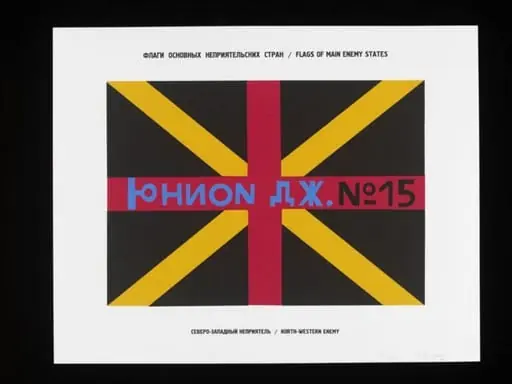
The prints look like flags you’d see in a real collection, but the labels make them absurd—like “North-Western Enemy” for Britain.
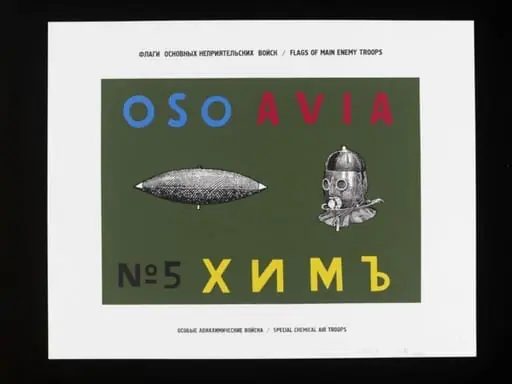
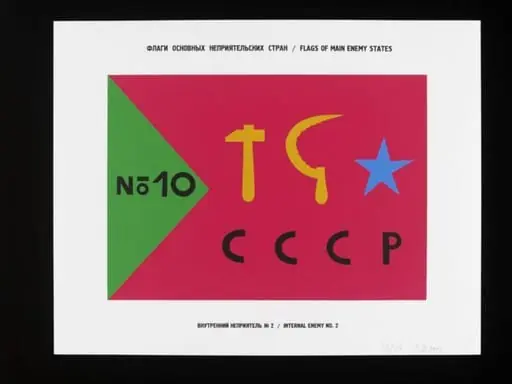
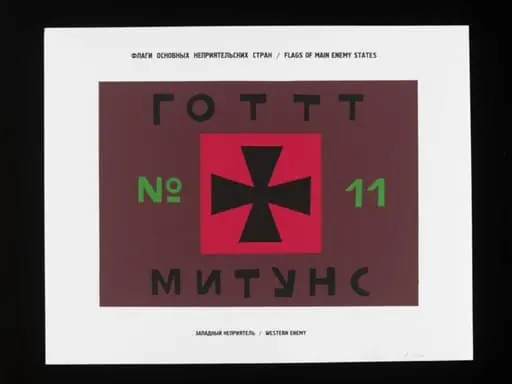
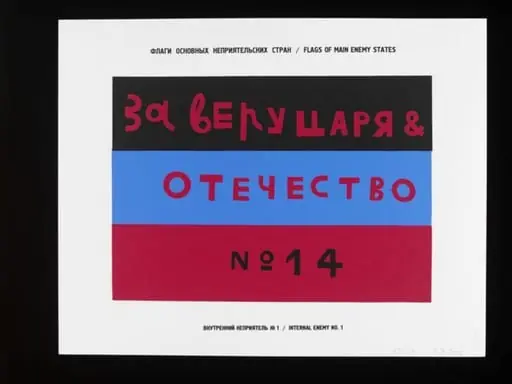
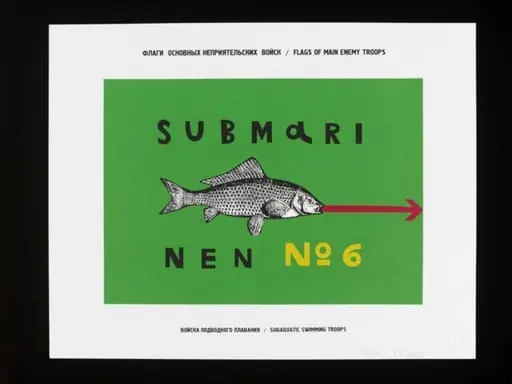
This print series pokes fun at old-school war museums. It’s called *Flags of Main Enemy Troops* and was made by Olga Florenskayain 2002. The prints look like flags you’d see in a real collection, but the labels make them absurd—like “North-Western Enemy” for Britain.
The setup is silly and sharp. It’s part of a bigger art project that mocked Russia’s long history of seeing enemies everywhere. The flags are thinly veiled jokes, not real threats.
Check out the Victoria and Albert Museum for more.
Overview
Created in 2002 by Olga Florenskaya, this set of printed flags forms part of the broader 'Russian Trophy' project, a satirical assemblage of fictional military artifacts. Presented in a sealed wooden crate marked with stenciled text and secured by wingnuts, the work mimics the aesthetic of wartime inventory, inviting viewers to treat the absurd as official record. The flags are not historical documents but deliberate fabrications, designed to critique nationalist paranoia through institutional mimicry.
Subject & Meaning
The flags represent imagined adversaries of Russia, obliquely referencing real-world rivals like Britain, France, and Japan under pseudonyms such as 'North-Western Enemy' or 'Eastern Enemy.' Additional entries—'Subaquatic Swimming Troops' or 'Military Therapy Troops'—mock the tendency to construct phantom threats. By avoiding direct naming, the work underscores how fear of the Other is sustained through ambiguity and bureaucratic formality, rather than concrete evidence.
Technique & Style
Each flag is rendered in a formal, heraldic style reminiscent of 19th- and early 20th-century military vexillology, with symmetrical layouts and muted color palettes. The typography and graphic elements emulate official military insignia, lending credibility to their absurdity. The prints are deliberately restrained in execution, contrasting with the surreal content to heighten the irony, reinforcing the project’s critique of institutional authority.
History & Provenance
The work emerged from Olga and Alexander Florensky’s 'Russian Trophy' initiative, a multi-media project that assembled fictional war relics from found materials. The flags were produced as part of this larger installation, which included sculptures, films, and banners. The crate format suggests archival preservation, positioning the work within the tradition of military museums while subverting their claims to objectivity and historical truth.
Context
The project responds to Russia’s enduring cultural narrative of siege mentality, rooted in imperial and Soviet-era ideologies that framed external powers as existential threats. By satirizing the visual language of military museums, the work reflects on how state institutions manufacture enemies to justify control and isolation. It aligns with post-Soviet artistic practices that interrogate historical memory through irony and institutional parody.
Legacy
'Flags of Main Enemy Troops' continues to be referenced in discussions of post-Soviet satire and institutional critique. Its use of bureaucratic aesthetics to expose ideological delusion has influenced later works examining nationalism and propaganda. The crate’s physical form—intact, sealed, and seemingly functional—ensures the satire endures beyond the gallery, persisting as a quiet, unsettling artifact of imagined conflict.
Artist & collection
Artist
Olga Florenskaya’s prints from 2002 turn Cold War fears into bold, graphic shapes.